Château Arnauton
- 01CityFronsac, France
- Falstaff Winery - Listed · 2026
Approaching a Fronsac château is a different proposition from arriving at the polished grands crus of the more heavily trafficked Bordeaux routes. The scale is quieter, the landscape more agricultural, and the appeal lies in seeing how a Right Bank appellation with serious history translates clay, slope and Merlot into wines built on structure rather than gloss. Château Arnauton belongs to that tradition: a rural estate setting, vineyard views, cellar-led visits and red Bordeaux blends that make the case for Fronsac as a value-driven counterweight to the region’s more expensive names.
Fronsac's slopes give the wines their argument
Fronsac has long occupied an interesting place in Bordeaux. It sits on the Right Bank, where Merlot dominates, but its profile is less saturated by trophy pricing than nearby appellations. Historically, the area carried significant prestige, with documented reputation stretching back to the eighteenth century. Today its strongest argument is not fame but proportion: ripe Merlot, firm tannin, dark-fruited depth and cellar potential without the same market pressure found elsewhere in Bordeaux.
Château Arnauton’s 62-acre estate is set on south-facing hillsides, a detail that matters in this part of the Right Bank. Exposure helps ripening, particularly for Merlot, and Fronsac’s mix of clay, limestone and gravelly soils gives the wines more frame than softness alone. The estate’s red blends draw on Merlot, Cabernet Franc, Cabernet Sauvignon and Malbec, though the house identity sits clearly in the Merlot-led Fronsac register: fruit, grip and a classical Bordeaux line.
The estate’s reputation also rests on pricing discipline. Its wines are frequently discussed in the context of bottles under $20, which is not a throwaway value claim in Bordeaux. In a region where pricing often reflects appellation hierarchy as much as what is in the glass, Fronsac can offer a sharper buying decision for drinkers who want structure and ageability without paying for grander labels. Château Arnauton fits that brief neatly.
A guided château tasting built around education, not spectacle
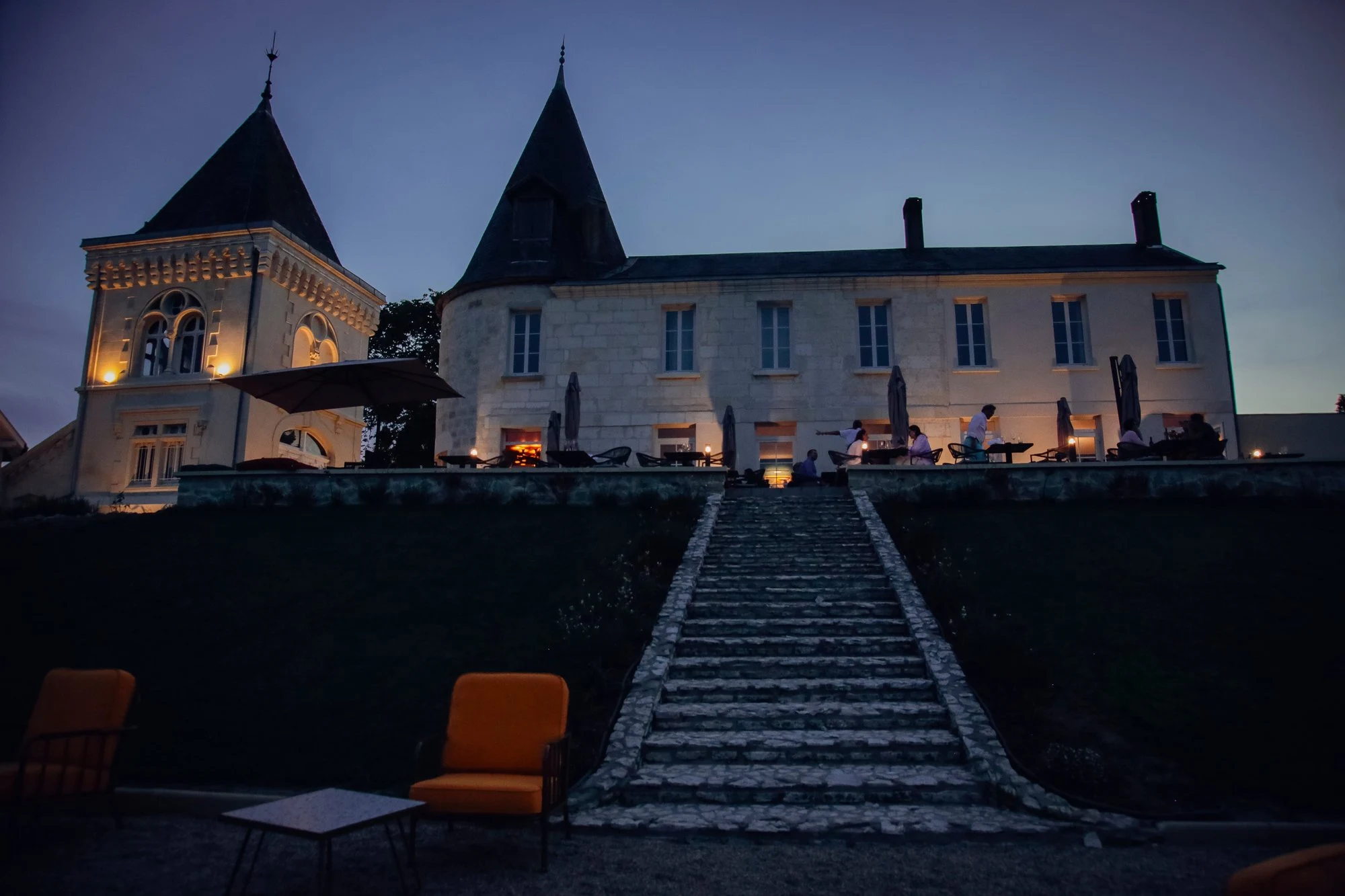
The visitor experience is conventional in the useful sense: estate grounds, vineyards, cellars and guided tastings rather than a high-design hospitality complex. Tastings are by reservation and can include estate, guided or private formats. The setting is rural and conversational, with outdoor seating and views toward vineyard and garden areas. It suits travelers who want Bordeaux explained through place, slope and blending choices rather than through a parade of luxury signals.
Production is focused on still red Bordeaux blends, including a special cuvée Grand Sol. The cuvée has earned two gold medals, while critical recognition has included a 91-point Decanter score for the 2012 vintage and an 88-point Wine Spectator score for the 2008 vintage. Those signals place the estate in the useful middle ground for Bordeaux travelers: serious enough to reward attention, accessible enough not to require collector-level commitment.
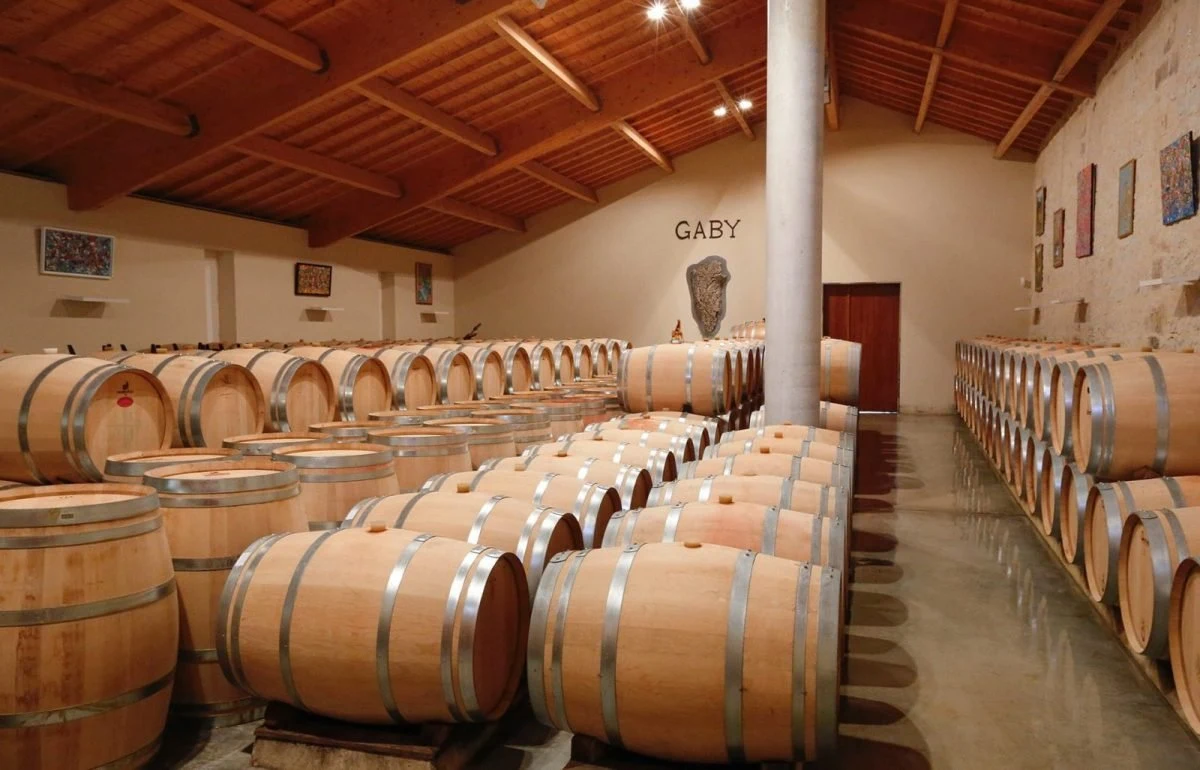
Winemaking details point to a balance of tradition and modern cellar management. Micro-oxygenation has been associated with the estate’s approach, a technique used in Bordeaux to manage tannin and support texture in red blends. Oak also plays a role, with the 2012 vintage noted for fine oak integration and a long drinking window from 2016 to 2040. The point is not experimentation for its own sake. It is the familiar Fronsac equation: ripeness from exposure, tannin from site and cépage, and enough cellar work to bring the structure into focus.
How to place it within a Fronsac wine day
Château Arnauton works well for travelers building a Fronsac itinerary around estate context rather than restaurant-style polish. On-site parking, group suitability and a small-capacity feel make it practical for wine education, a rural afternoon tasting or a slower château stop. Food pairing is not part of the format, so the visit is better treated as a wine-focused appointment before or after a meal in the area.
For a broader read on the appellation, pair this page with nearby Fronsac winery coverage, including Château Barrabaque, Château Chadenne, Château de Carlmagnus, Château de La Dauphine and Château Gaby. City-level planning sits in our full Fronsac wineries guide, alongside our full Fronsac restaurants guide, our full Fronsac hotels guide, our full Fronsac bars guide and our full Fronsac experiences guide. For a wider French and European wine itinerary, useful contrasts include A. Margaine in Villers-Marmery, Abbaye de Fontfroide in Narbonne, Abbotts & Delaunay in Marseillette, »der Steiner« Hans Steiner in Podersdorf am See and & Handwein in Mannheim.
Questions
Frequently asked
How expensive is Château Arnauton?
Château Arnauton is listed at a price level of $.
The field
How it compares
| Place | Notes |
|---|---|
| Château Arnauton | Fronsac, $ |
| Château Barrabaque | Fronsac |
| Château Chadenne | Fronsac |
| Château de Carlmagnus | Fronsac |
| Château Gaby | Fronsac |
| Château Moya | Fronsac |
| Château Toumalin | Fronsac |