Made ByWinery
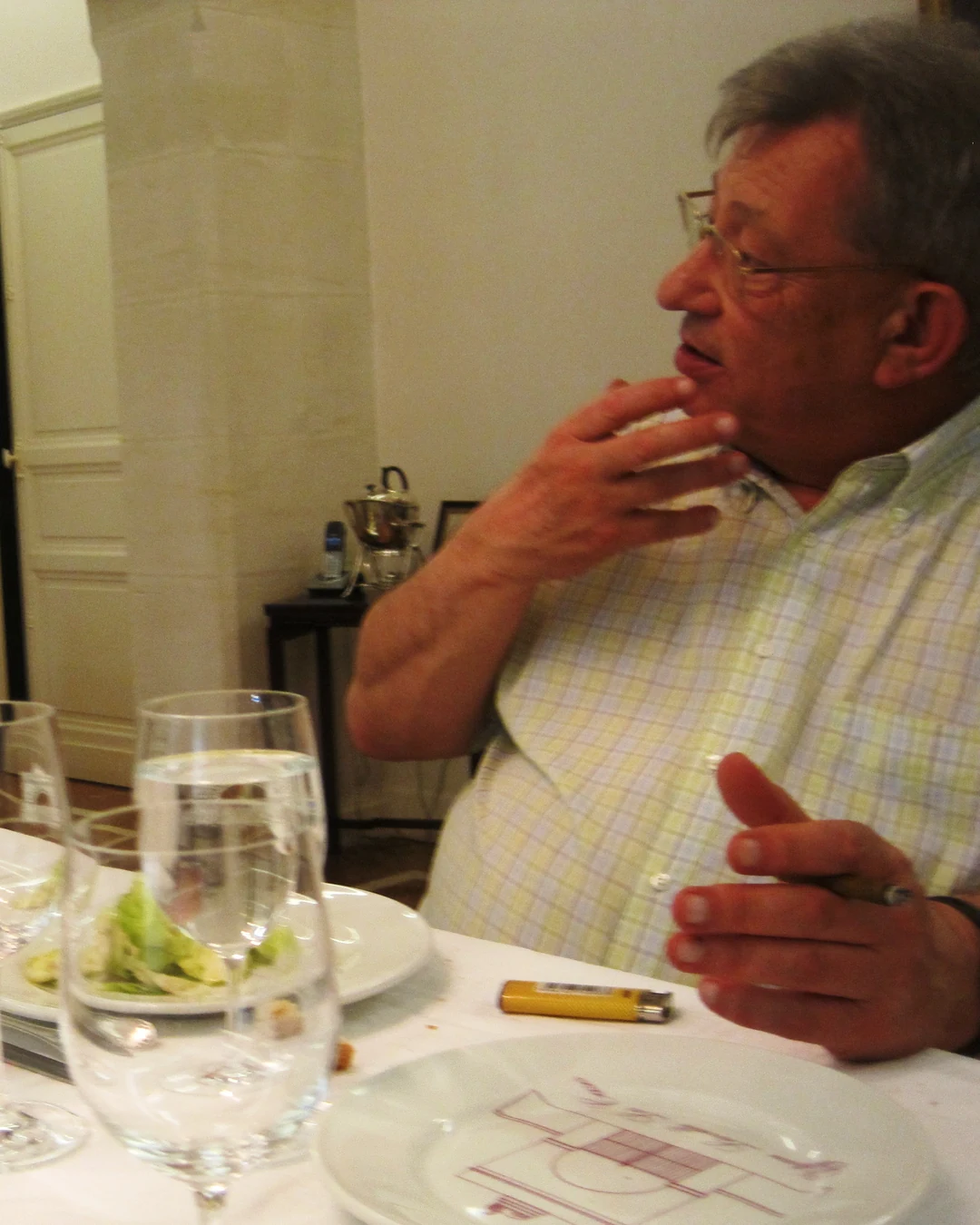
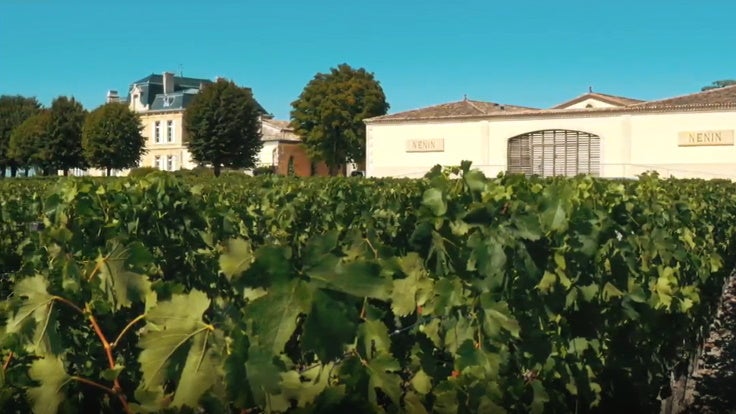
Château Nénin has been producing Pomerol from the right bank's gravel and clay plateau since 1869, with winemaker Jean-Hubert Delon overseeing an estate that earned a Pearl 4 Star Prestige rating in 2025. The property sits near Libourne, the commercial hub of right-bank Bordeaux, placing it within reach of Saint-Émilion and the broader Pomerol appellation's most compelling terroir expressions.
At a glance
- Price
- $$$$
- Neighborhood
- Pomerol
<h2>Gravel, Clay, and 150 Years of Right-Bank Bordeaux</h2><p>The road from Libourne toward the Pomerol plateau flattens quickly, the landscape shifting from riverside commerce to an almost unremarkable agricultural quiet. There are no grand gates or theatrical approaches out here, Pomerol has never traded on spectacle. What you notice instead, if you know to look, is the soil. The gravel and clay that define this corner of the right bank hold heat differently than the limestone-heavy ground of Saint-Émilion to the east, and it is this distinction that underpins the Pomerol style: wines with more flesh than austerity, more immediate texture than the structured restraint of the Médoc. Château Nénin, situated along the Route de Montagne at the edge of Libourne, draws from that same plateau character. The estate traces its roots to 1869.</p><p>Right-bank Bordeaux operates differently from the Médoc's classified-growth system. Pomerol has no official classification at all, no 1855 hierarchy, no Cru Classé tier structure to signal where a property stands. Reputation here is built through consistency, ownership, and the market's long memory. That absence of formal classification means estates like Nénin are assessed by reputation, vintage track record, and appellation address.</p><h2>What the Terroir Tells You</h2><p>Pomerol's signature comes from a specific combination: Merlot-dominant blends grown on a plateau where the subsoil transitions from gravel to clay as you move toward its centre. The clay retains moisture through dry summers and moderates the vine's stress in ways that produce rounder, fuller-bodied wines than the same grape variety achieves on leaner soils. The estate's position near the plateau, within the broader Libournais, places it in that climate and soil context. Vintages in this part of Bordeaux respond sharply to summer rainfall and harvest timing, years with even, moderate heat tend to produce wines with better natural balance than hot, compressed vintages that push extraction and alcohol.</p><p>Jean-Hubert Delon, who oversees winemaking at Château Nénin, brings a lineage closely associated with the Léoville Las Cases tradition on the left bank, a background that tends to emphasise precision and structural discipline over extraction-led richness. That training, applied to right-bank terroir, produces a particular kind of tension: the softness that Pomerol clay and Merlot tend to offer, held in check by a winemaking hand that values definition. It is a contrast worth tracking across multiple vintages rather than a single bottle. For context on how that kind of winemaker influence shapes regional identity, compare what Delon does here against how precision-driven teams handle similar terroir at <a href="https://www.enprimeurclub.com/wineries/chateau-clinet-pomerol">Château Clinet in Pomerol</a>.</p><h2>Placing Nénin in the Pomerol comparable set</h2><p>Within Pomerol, the most-referenced estates occupy a narrow band at the leading: Pétrus, Le Pin, Lafleur, Vieux Château Certan. Below that tier, a broader group of serious producers competes on appellation address, vintage track record, and ownership profile. Château Nénin sits in this second group, where the absence of a formal classification system makes peer comparisons especially instructive. The 2025 Pearl 4 Star Prestige rating reflects a sustained level of quality.</p><p>The right-bank context also rewards comparison outside Pomerol. <a href="https://www.enprimeurclub.com/wineries/chateau-belair-monange-saint-emilion-winery">Château Bélair-Monange in Saint-Émilion</a> operates from limestone plateau terroir just across the appellation boundary, producing wines with a different structural signature from the clay-gravel plateau of Pomerol, cooler, more mineral, less immediately plush. Understanding the difference between these two terroir signatures is one of the more useful exercises right-bank Bordeaux offers to anyone working through the region's geography. Further afield, left-bank comparisons like <a href="https://www.enprimeurclub.com/wineries/chateau-batailley-pauillac-winery">Château Batailley in Pauillac</a> and <a href="https://www.enprimeurclub.com/wineries/chateau-branaire-ducru-st-julien">Château Branaire Ducru in St-Julien</a> show how Cabernet Sauvignon-driven structure differs from the Merlot-led right bank, a contrast that clarifies what makes Pomerol's clay plateau distinctive rather than simply different.</p><p>For those building a wider Bordeaux framework, properties like <a href="https://www.enprimeurclub.com/wineries/chateau-cantemerle-haut-medoc">Château Cantemerle in Haut-Médoc</a>, <a href="https://www.enprimeurclub.com/wineries/chateau-boyd-cantenac-cantenac-winery">Château Boyd-Cantenac in Cantenac</a>, and <a href="https://www.enprimeurclub.com/wineries/chateau-dauzac-labarde-winery">Château Dauzac in Labarde</a> each represent the Médoc classification's mid-tier, where the training wheels of the 1855 system provide clear benchmarks. Right-bank properties must earn the same credibility without that scaffolding.</p><h2>The Libournais as a Base</h2><p>Libourne itself is a working river town rather than a wine-tourism showpiece. The bastide layout, with its central square and market days, functions as the commercial spine of the right bank, négociants, cooperages, and wine merchants have operated here for centuries, making it a more practical base than the more visited Saint-Émilion, which sits eight kilometres to the east and absorbs the bulk of tourist traffic. Visiting Château Nénin from Libourne puts you close to both appellations without committing to a single itinerary.</p><p>The en primeur calendar, which drives much of the trade activity in this part of Bordeaux, typically runs in April following the harvest. Serious buyers travelling to taste barrel samples will find Libourne a functional hub, easier to park, less crowded than Saint-Émilion's centre, and directly connected to Bordeaux by train in under thirty minutes. Visiting outside en primeur season, particularly in autumn when the harvest is underway, offers a different register: the operational reality of winemaking rather than the polished presentation of the trade week.</p><h2>Widening the Frame: Terroir Across Regions</h2><p>The question of how soil and climate express themselves through a single grape variety is not limited to Bordeaux. In Alsace, <a href="https://www.enprimeurclub.com/wineries/albert-boxler-niedermorschwihr-winery">Albert Boxler in Niedermorschwihr</a> traces similar arguments through Riesling and grand cru plots, where granite, sandstone, and limestone each produce measurably different wines from the same producer in the same vintage. In Napa, <a href="https://www.enprimeurclub.com/wineries/accendo-cellars">Accendo Cellars in St. Helena</a> works within a Cabernet-dominant framework where hillside versus valley-floor terroir drives the peer-set conversation. And at the opposite end of the style spectrum, <a href="https://www.enprimeurclub.com/wineries/chateau-desclans">Château d'Esclans in Courthézon</a> applies Provençal terroir logic to rosé. The common thread is that estate-level winemaking decisions become most legible when you understand the soil and climate they are working with, rather than reading them as expressions of individual taste alone.</p><p>Other comparison points worth holding: <a href="https://www.enprimeurclub.com/wineries/chateau-bastor-lamontagne">Château Bastor-Lamontagne in Preignac</a> shows how Sauternes handles entirely different climatic conditions for sweet wine production, while <a href="https://www.enprimeurclub.com/wineries/chateau-d-arche-sauternes-winery">Château d'Arche in Sauternes</a> works within the same appellation logic. Both are useful reminders that Bordeaux's diversity across appellations is wider than its red-wine reputation suggests. Across entirely different categories, <a href="https://www.enprimeurclub.com/wineries/chartreuse-voiron-winery">Chartreuse in Voiron</a> and <a href="https://www.enprimeurclub.com/wineries/aberlour-aberlour-winery">Aberlour in Aberlour</a> each represent how production traditions with long institutional histories carry their own form of terroir argument, place and process as inseparable as they are in Pomerol.</p><h2>Planning a Visit</h2><p>Château Nénin is located at 66 Route de Montagne, 33500 Libourne. Contact the estate directly before arrival. Right-bank Bordeaux estates vary considerably in their openness to independent visits, some maintain active tasting rooms and welcome trade and consumer visitors throughout the year, while others operate primarily through négociants and have limited direct-visit infrastructure. The estate's position near Libourne makes it accessible from the town centre without significant travel time.</p><div class="faq-section">
Know before you go
- Dress code
- smart_casual
- Reservations
- appointment_only
- Parking
- on_site_lot
Frequently asked
What's the atmosphere like at Château Nénin?
Pomerol operates without the polished tourist infrastructure surrounding Saint-Émilion, and Nénin reflects that working agricultural register. The estate sits along the Route de Montagne outside Libourne, a river town built around commerce rather than wine tourism. Visits here are closer to a producer encounter than a curated château experience — which, for serious wine travellers, is the point.
What accolades does Château Nénin have?
Château Nénin has received recognition including: Pearl 4 Star Prestige (2025).
What should I taste at Château Nénin?
The estate's Pomerol appellation position means Merlot-dominant wines shaped by a plateau subsoil that transitions from gravel to clay with depth — the same geological logic that defines the appellation's broader character. Winemaker Jean-Hubert Delon brings a structural sensibility associated with left-bank discipline, which gives Nénin's wines a different frame of reference from many of its Pomerol neighbours. The 2025 Pearl 4 Star Prestige award signals consistent quality at the producer level.
Where exactly is Château Nénin?
Château Nénin is located at Château Nenin, 66 Rte de Montagne, 33500 Libourne, Libourne.
What's the defining thing about Château Nénin?
A documented first vintage of 1869 and a winemaker whose background runs against the appellation grain: Jean-Hubert Delon applies the structural approach of the Médoc to Pomerol's clay-gravel terroir. In an appellation with no formal classification system, that combination of historical depth and cross-regional winemaking philosophy gives Nénin a distinct reference point among the broader Pomerol comparable set.
Address
Château Nenin, 66 Rte de Montagne, 33500 Libourne
Pomerol · Bordeaux
How it compares
- Cuisine
- Merlot, Cabernet Franc
- Price
- $$$$
- Awards
- 1 recognition
- Notes
- Pomerol
- Cuisine
- Cabernet Sauvignon, Cabernet Franc
- Price
- $$$$
- Awards
- 1 recognition
- Notes
- Saint-Emilion
- Cuisine
- Merlot, Cabernet Franc
- Price
- $$$$
- Awards
- 1 recognition
- Notes
- Saint-Emilion
- Cuisine
- Merlot, Cabernet Franc
- Price
- $$$$
- Awards
- 1 recognition
- Notes
- Saint-Emilion
- Cuisine
- Merlot, Cabernet Franc
- Price
- $$$$
- Awards
- 1 recognition
- Notes
- Pomerol
- Cuisine
- Merlot, Cabernet Franc
- Price
- $$$$
- Awards
- 1 recognition
- Notes
- Saint-Emilion