Made ByWinery
Penfolds

Chef in Residence
Max Schubert
Winemaker
- 01CityAdelaide, Australia
- 02RecognitionWorld's 50 Best — No. 13
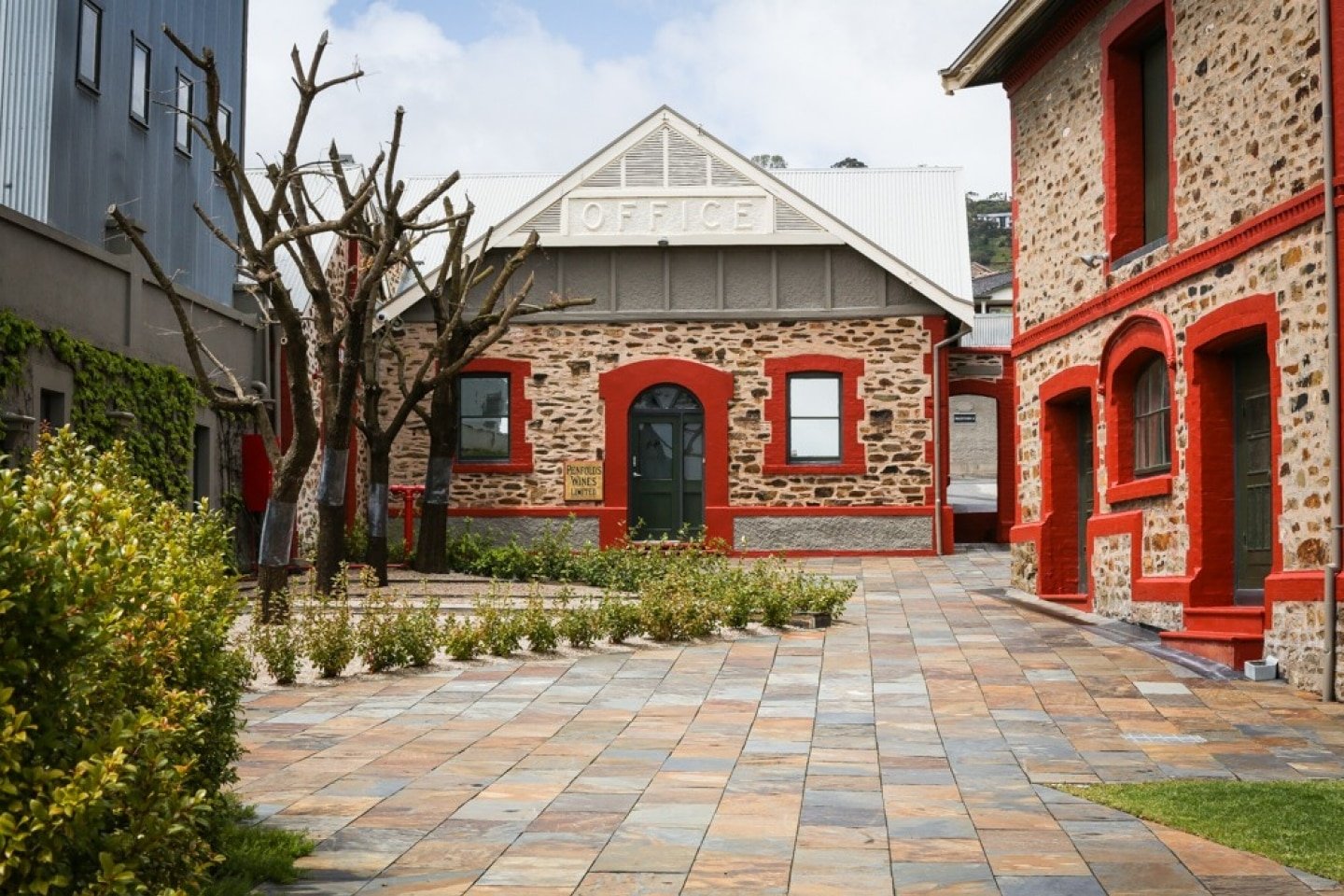
Penfolds gives Adelaide a rare urban winery with national consequence: a Magill address, an 1844 origin story, and a reputation built on changing international expectations of Australian Shiraz. With Pearl 5 Star Prestige recognition in 2025 and Peter Gago named as winemaker, it belongs in the serious-wine tier rather than the casual cellar-door circuit.
- World's 50 Best · #13
At a glance
- Price
- $$$$
- Neighborhood
- Magill
<h2>Approaching Magill, Adelaide's wine story turns urban</h2><p>The approach to Penfolds is not the pastoral cliché of a long country drive and a cellar door at the end of a gravel road. The address, 78 Penfold Rd in Magill, places one of Australia’s defining wine names inside Adelaide’s metropolitan orbit, where suburb, hillside and vineyard history meet in close range. That urban position matters. South Australia is often discussed through regions beyond the city, from the Barossa to McLaren Vale and the Adelaide Hills, yet this site makes the argument that wine culture in Adelaide is not only a day-trip pursuit. It is built into the city’s eastern edge.</p><p>The editorial reason to pay attention here is not scale alone. Penfolds carries a Pearl 5 Star Prestige rating for 2025, and the house’s record makes a sharper claim: it changed how the world looks at Australian Shiraz. That is a large statement, but it is also the correct lens. The visit belongs less to the category of casual tasting stop and more to the category of Australian wine literacy, where one address can explain how a grape, a climate and a national export identity became linked in the minds of collectors.</p><h2>Terroir, but not in the narrow European sense</h2><p>Australian Shiraz is often judged through fruit weight, warmth and power, but Adelaide complicates that shorthand. The city sits near several contrasting wine zones, each with different elevations, coastal influences and ripening patterns. A serious tasting in this context should not ask only whether a wine is generous or restrained. It should ask how South Australian sunlight, heat management, vineyard sourcing and cellar decisions translate into structure. Penfolds, founded in 1844 by a British doctor and his wife, sits at the older end of that conversation.</p><p>Terroir here is not a postcard of a single slope. It is a broader Australian model: vineyard material, regional blending traditions, house style and long cellaring expectations all working together. That distinction separates major Australian wine houses from smaller estate-only producers. A Burgundy-minded visitor may arrive looking for one parcel and one village; the South Australian lesson is that place can be expressed through a network of sites and a consistent cellar language. The result can be no less serious, but it asks for a different critical vocabulary.</p><h2>Why Shiraz became the argument</h2><p>Shiraz became the grape through which Australia spoke internationally because it could carry ripeness, depth and longevity without requiring apology for warmth. In cooler European frames, power is often treated as a problem to solve. In South Australia, it became part of the signature, provided the wines carried form as well as weight.</p><p>This is where the Magill address becomes more than an origin point. Adelaide’s wine culture has always been unusually close to its production zones, and that proximity shaped a style of serious wine tourism different from the tasting-room clusters in rural districts. Visitors can move from a city hotel to a historically significant winery without surrendering a full day to logistics. That convenience does not make the experience lightweight. It makes the city unusually efficient for travellers who want context before committing to regional touring.</p><h2>The prestige tier in Adelaide wine tourism</h2><p>Adelaide has many ways to drink well, but not all venues serve the same purpose. Some are built around neighbourhood conviviality, some around small-batch spirits, and some around cellar-door access. Penfolds belongs to the prestige-and-heritage tier, with Pearl 5 Star Prestige recognition in 2025 and a founding date in 1844 placing it in a different comparable set from newer producers.</p><p>That comparable set also changes how expectations should be calibrated. A winery with this level of recognition is not competing with a casual flight in a regional shed. It competes with the kind of historic houses that anchor wine regions internationally, where brand memory, collectability and education form part of the experience. For readers comparing Australian wine stops with overseas reference points, the closer analogy is not a small family cellar door in a village. It is a serious institutional house with a long archive and a public-facing role in defining a category.</p><h2>Peter Gago and the role of the winemaker</h2><p>Winemaker Max Schubert is part of the contemporary Penfolds story, but the more useful point is structural. In large, historically significant wine houses, the winemaker is not simply a personality attached to a vintage. The role carries continuity, stewardship and judgement across a house style already loaded with market expectations. That is a different job from launching a small-label expression around a single personal aesthetic.</p><p>For the visitor, that means the wines should be read through lineage as much as through the current release. A glass can point backwards to a house grammar built over decades, and forward to how Australian Shiraz will be interpreted by collectors in warmer vintages and changing markets. The name attached to winemaking matters because it signals accountability within a recognised system, not because the visit should become a biography.</p><h2>How Penfolds compares with Adelaide's wider drinking culture</h2><p>Adelaide’s drinking scene is unusually layered for a city of its size. It has serious wine access, a compact bar culture, and a distilling scene that has grown more visible over the past decade. A traveller building a drinks itinerary can use Penfolds as the wine anchor, then compare the city’s grain-and-botanical side through <a href="https://www.enprimeurclub.com/wineries/imperial-measures-distilling-adelaide-winery">Imperial Measures Distilling</a>, <a href="https://www.enprimeurclub.com/wineries/prohibition-liquor-co-adelaide-winery">Prohibition Liquor Co</a>, and <a href="https://www.enprimeurclub.com/wineries/tin-shed-distilling-co-iniquity-adelaide-winery">Tin Shed Distilling Co (Iniquity)</a>. That contrast is instructive: wine gives Adelaide its historical depth, while spirits show the city’s newer appetite for small-format production.</p><p>Food planning should follow the same logic. A tasting at a serious winery has more value when placed beside the city’s dining rooms and bars rather than treated as an isolated appointment. For broader planning, the city coverage can extend the itinerary through <a href="https://www.enprimeurclub.com/restaurants/adelaide-rome-restaurant"> The point is sequencing: wine first for context, restaurants and bars afterwards for how the city drinks now.</p><h2>Australia's regional counterpoints</h2><p>Penfolds also makes more sense when compared with other Australian wine regions rather than viewed only within Adelaide. Mornington Peninsula’s cool-climate framing, represented in EP Club by <a href="https://www.enprimeurclub.com/wineries/crittenden-estate-mornington-peninsula-winery">Crittenden Estate in Mornington Peninsula</a>, pulls the conversation toward Pinot Noir, Chardonnay and maritime influence. Western Australia shifts the register again: <a href="https://www.enprimeurclub.com/wineries/castle-rock-estate-porongurup-winery">Castle Rock Estate in Porongurup</a> and <a href="https://www.enprimeurclub.com/wineries/plantagenet-wines-great-southern-winery">Plantagenet Wines in Great Southern</a> point to the Great Southern’s cooler, expansive geography, while <a href="https://www.enprimeurclub.com/wineries/leeuwin-estate-margaret-river-winery">Leeuwin Estate in Margaret River</a> belongs to a region often associated with Cabernet and Chardonnay shaped by ocean influence.</p><p>That comparison clarifies the South Australian position. If Mornington is often about cool-climate precision and Margaret River about coastal structure, Adelaide’s Penfolds chapter is about the cultural weight of Shiraz and the institutional memory behind it. Even <a href="https://www.enprimeurclub.com/wineries/moorilla-estate-hobart-winery">Moorilla Estate in Hobart</a>, with Tasmania’s cooler island context, sits in a different climate conversation. These contrasts do not rank one region above another. They show how Australian wine resists a single national style.</p><h2>International reference points for serious wine travellers</h2><p>For travellers who think in global wine maps, Penfolds offers a useful Australian counterpoint to different forms of prestige. <a href="https://www.enprimeurclub.com/wineries/bodegas-ysios-laguardia-winery">Bodegas Ysios in Laguardia</a> connects Rioja to architecture, regional identity and Tempranillo tradition. <a href="https://www.enprimeurclub.com/wineries/cakebread-cellars">Cakebread Cellars in Rutherford</a> belongs to Napa Valley’s Cabernet-driven culture, where estate hospitality and cellar-door recognition have become part of the region’s global language. Adelaide’s version is less about monumental rural arrival and more about the collision of city access, nineteenth-century foundation and Shiraz as an international calling card.</p><p>That is why the Magill setting is so valuable for a travelling reader. It compresses a national wine argument into a manageable visit. The site can be read through history, through climate, through Australia’s export reputation and through the changing expectations of visitors who want more than a tasting list. Serious wine tourism now rewards context as much as rarity, and this is one of the Adelaide addresses where context is the main event.</p><h2>Planning the visit without overcomplicating it</h2><p>The practical information available is the address at 78 Penfold Rd, Magill SA 5072, Australia. That absence should shape planning. Treat the visit as one that merits advance verification through official channels rather than a casual turn-up between other errands. For an Adelaide itinerary, the sensible move is to place it on a day when eastern-suburb travel is convenient and to avoid stacking too many fixed appointments around it unless current opening details have been confirmed.</p><p>The price tier is 4, so expect a premium context. Pearl 5 Star Prestige recognition and the house’s historic status indicate a premium context, but exact tasting fees, tour formats or retail pricing should be checked before travel. The same applies to walk-in assumptions. Urban location makes access easier than a remote winery, but convenience should not be mistaken for availability.</p><h2>Who should prioritise it</h2><p>Penfolds is most valuable for travellers who want to understand how Australian wine gained authority beyond its own market. It is less suited to visitors looking only for a relaxed rural afternoon with vineyard views and a loose schedule. The editorial payoff is historical and comparative: an Adelaide site founded in 1844, associated with a major shift in the perception of Australian Shiraz, and recognised by Pearl 5 Star Prestige in 2025.</p><p>That combination makes the visit particularly useful at the beginning of a South Australian wine trip. Start here, and the surrounding regions become easier to read. The Barossa’s power, the Adelaide Hills’ altitude, McLaren Vale’s coastal warmth and the city’s own cellar culture all sit in clearer relation to a house that helped define the national conversation. In that sense, Magill is not a detour from Adelaide. It is one of the city’s strongest arguments for why wine belongs inside the urban itinerary.</p>
Know before you go
- Dress code
- smart_casual
- Reservations
- recommended
- Parking
- on_site_lot
Frequently asked
What's the vibe at Penfolds?
Penfolds has the feel of an urban wine institution rather than a relaxed countryside cellar door. Its Magill address in Adelaide and Pearl 5 Star Prestige (2025) recognition place it in a serious tasting category.
What accolades does Penfolds have?
Penfolds has received recognition including: Pearl 5 Star Prestige (2025); Penfolds has changed how the whole world looks at Australian Shiraz. An urban winery founded in 1844 by a British doctor and his wife, the first stop on the ‘Ul; Penfolds has changed how the whole world looks a….
What's Penfolds's location?
Penfolds is located at 78 Penfold Rd, Magill SA 5072, Australia, Adelaide.
What makes Penfolds worth visiting?
The draw is historical and geographic: Penfolds was founded in 1844 and operates from 78 Penfold Rd, Magill SA 5072, Australia. That makes it a useful stop for travellers tracing how Australian Shiraz gained international authority.
Do they take walk-ins at Penfolds?
The safest planning assumption is to verify access before heading to 78 Penfold Rd, Magill SA 5072. Check the venue's official channels for the latest details.
What's the must-try wine at Penfolds?
The record does not name a current bottle, so a specific recommendation would be guesswork. The strongest through-line is Shiraz, which aligns with Penfolds’ long role in shaping the category and with Peter Gago’s winemaking leadership.
Address
78 Penfold Rd, Magill SA 5072, Australia
Magill · Australia
How it compares
- Cuisine
- Shiraz, Cabernet Sauvignon
- Awards
- World's 50 Best #13
- Notes
- Magill, $$$$
- Cuisine
- Winery
- Awards
- 1 recognition
- Notes
- Thebarton, $$
Tin Shed Distilling Co (Iniquity)
- Cuisine
- Winery
- Awards
- 1 recognition
- Notes
- Adelaide Hills, $$$
- Cuisine
- Adelaide
- Awards
- 1 recognition
- Notes
- Adelaide CBD, $$
- Cuisine
- Shiraz, Grenache
- Awards
- World's 50 Best #17
- Notes
- McLaren Vale, $$$
- Cuisine
- shiraz, riesling
- Awards
- World's 50 Best #25
- Notes
- Keyneton, $$$$