Cibus
- 01CuisineTraditional Apulian
- 02CityCeglie Messapica, Italy
- Michelin Bib Gourmand · Michelin Guide
- Michelin Bib Gourmand · 2026
- Michelin Bib Gourmand · 2025
- Michelin Bib Gourmand · 2024
Stone Arches, Courtyard Tables, and the Weight of Apulian Tradition
Ceglie Messapica sits in the Valle d'Itria, roughly equidistant between Brindisi and Taranto, and it carries a reputation in Puglia that far exceeds its modest size. The town is spoken of locally as something close to the region's culinary conscience: a place where the old recipes were never abandoned in favour of coastal shortcuts or tourist shortcuts. Walking the lanes of the centro storico, past whitewashed walls and the occasional fig tree pushing through a gap in the stone, it becomes clear why a restaurant like Cibus landed here rather than in Lecce or Bari. The setting does a large part of the editorial work before a single dish arrives.
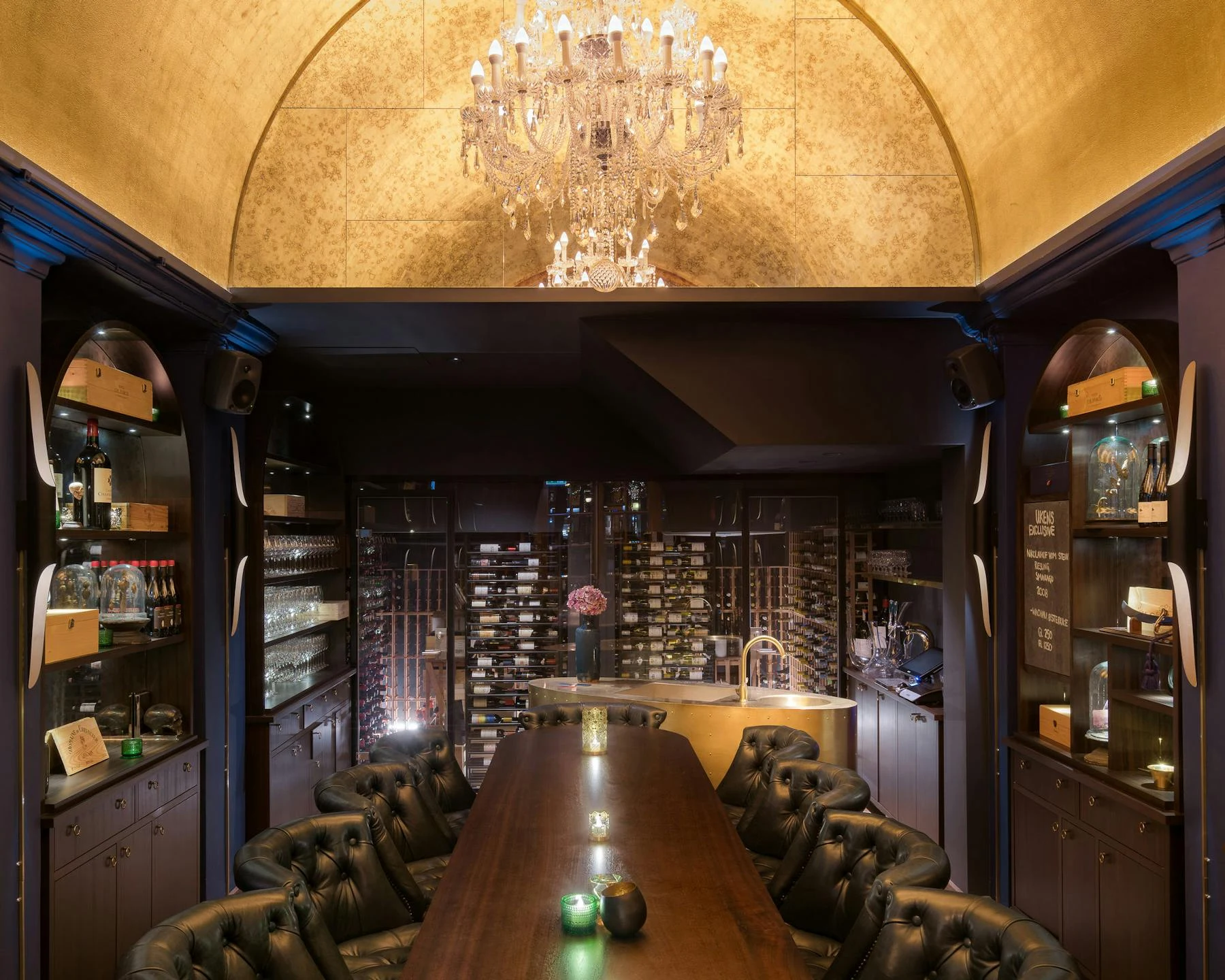
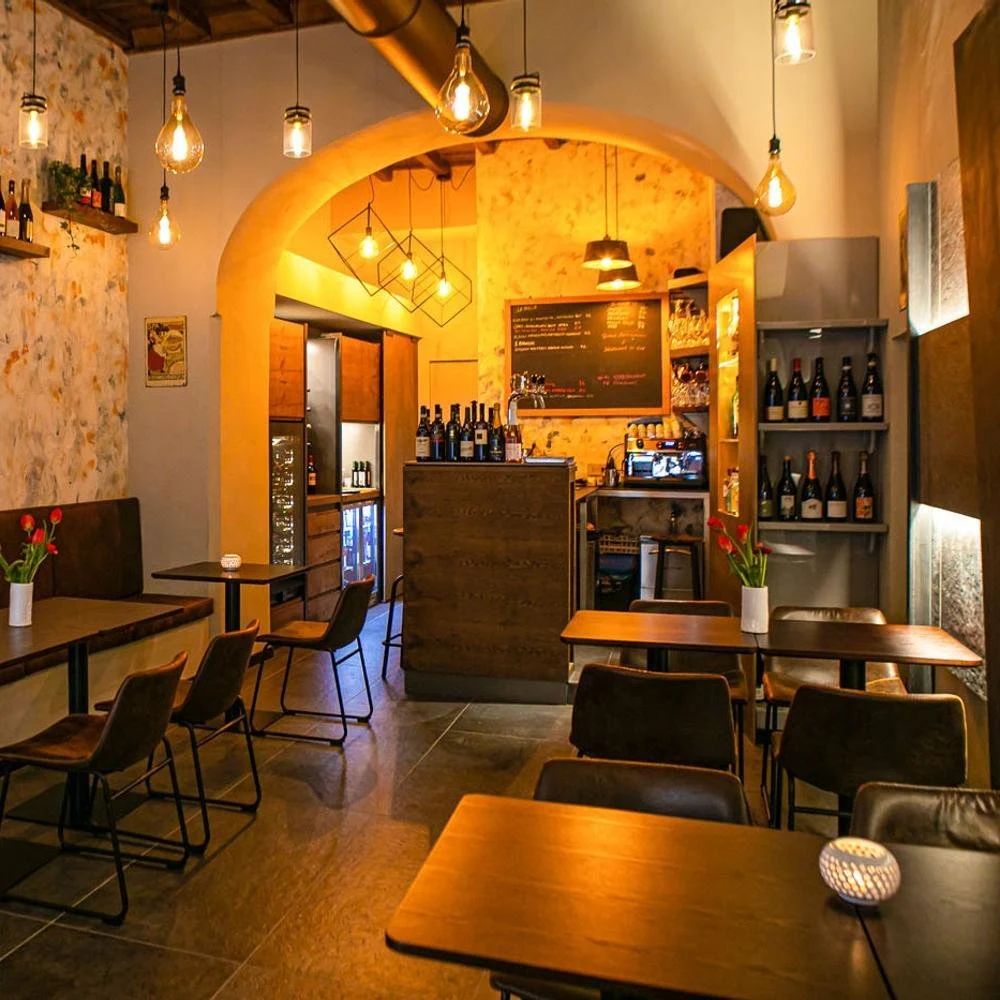
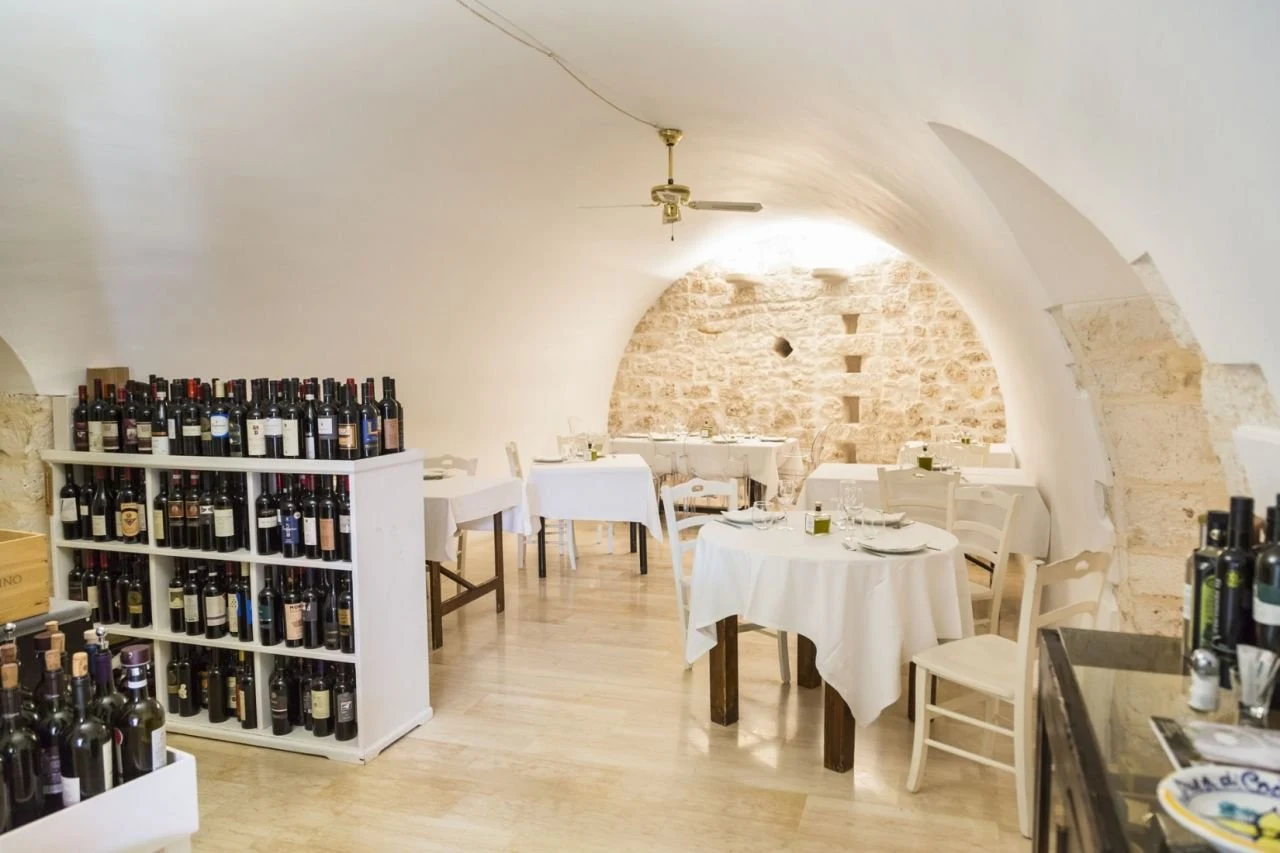
The room at Via Chianche di Scarano occupies a barrel-vaulted interior that belongs to the architectural grammar of this part of southern Italy: thick tufa walls, low curved ceilings that hold the cool of the stone through the heat of the day, and an internal courtyard where tables are arranged beneath arcades. It is the kind of space that makes northern Italian fine dining feel like a different sport entirely. Where a room like Enoteca Pinchiorri in Florence signals its ambitions through gilded ceilings and white tablecloth formality, or Le Calandre in Rubano through modernist architecture, Cibus leans into something older and more deliberate: the physical memory of a region.
What the Bib Gourmand Signals in This Context
Michelin awarded Cibus its Bib Gourmand in both 2024 and 2025. The Bib is not a consolation prize below star level; it is a quality signal aimed at kitchens that deliver serious cooking at accessible prices. At the €€ tier, Cibus sits in a different conversation from the three-star Italian addresses that define the country's most written-about tables. Osteria Francescana in Modena, Dal Pescatore in Runate, or Atelier Moessmer Norbert Niederkofler in Brunico operate in a price bracket that closes off large portions of the travelling public. Cibus does not. The consecutive recognition suggests the kitchen has maintained both standard and value across two inspection cycles, which is harder than it sounds in a region where ingredient costs and seasonal tourism create pressure in both directions.
For Puglia specifically, the award places Cibus in a small peer group. Apulian cooking at this level of recognition is not as densely represented as Emilian or Lombard cuisine in Michelin's annual guides, which makes the signal more meaningful. The region's culinary identity, built around durum wheat pasta, wild greens, legumes, aged ricotta, and olive oil of genuine provenance, does not lend itself to the kind of chef-as-auteur theatrics that generate column inches further north. What it does produce, when handled carefully, is food that reads as irreducibly of its place.
Tim Kolanko and the Discipline of Regional Cooking
Tim Kolanko leads the kitchen, working within a tight regional frame. It is what the choice of culinary discipline implies. Tim Kolanko works within a tight regional frame: Apulian recipes, carefully chosen local ingredients, and a kitchen that does not appear to reach outside that brief for creative validation. In a period when much of Italy's ambitious cooking has moved toward creative or progressive formats, with chefs like those at Piazza Duomo in Alba, Reale in Castel di Sangro, or Enrico Bartolini in Milan pushing technique and abstraction, the decision to anchor a kitchen in regional tradition is itself a position. It is not nostalgia or commercial conservatism; it is a bet that the recipes have not been exhausted.
The Apulian canon Kolanko draws from is deeper than it first appears to outside visitors. Pasta formats like orecchiette, ciceri e tria, and sagne 'ncannulate represent centuries of domestic technique refined through scarcity. The vegetable-forward cooking of the Murge plateau, where meat was historically expensive and pulses and greens filled the gap, produces dishes that have a structural logic invisible to anyone approaching them as rustic simplicity. A kitchen that honours that logic rather than decorating over it is making a genuine claim.
Cibus does not stand alone in Puglia at this level. Casa Sgarra in Trani and Pashà in Conversano represent different points on the regional ambition spectrum, with Pashà operating at star level and a more contemporary register. Cibus occupies the Bib tier but serves a similar function within a broader argument about what Apulian cooking can achieve when it is taken seriously rather than packaged for mass tourism.
The Practical Case for Booking in Advance
Ceglie Messapica draws food travellers specifically, not incidentally. People come here because they have heard about the town's culinary reputation, which means the better tables fill up faster than the town's population of roughly 20,000 might suggest. Cibus, with its courtyard and vaulted interior, has a physical capacity that cannot scale to match demand in the summer months, when the Valle d'Itria fills with both Italian and international visitors. Booking ahead is not a suggestion but a functional requirement, particularly between June and September.
The restaurant sits on Via Chianche di Scarano in the historic centre, reachable on foot from most points in the old town. For visitors combining Cibus with a broader stay in the region, the accommodation and dining options across the valley are worth mapping in advance:
The price range at Cibus sits at the €€ level, which in Italian restaurant terms places the meal within reach of most travellers who have made the effort to reach this part of Puglia. That combination of Michelin recognition, accessible pricing, and a setting with genuine architectural weight makes it one of the more clear-cut planning decisions in the region.
For a broader map of how Cibus fits within southern Italy's serious restaurant tier, comparable regional addresses worth considering on a longer itinerary include Quattro Passi in Marina del Cantone, Uliassi in Senigallia, and Casa Perbellini 12 Apostoli in Verona, each representing a different regional tradition operating at a similar level of critical seriousness.
Questions
Frequently asked
What recognition does Cibus hold?
Cibus holds a Michelin Bib Gourmand.
How expensive is Cibus?
Cibus is listed at a price level of $$.
Where is Cibus and what does it serve?
Cibus is in historic centre, Ceglie Messapica, serving Traditional Apulian.
The field
How it compares
| Place | Cuisine | Notes | Awards |
|---|---|---|---|
| Cibus | Traditional Apulian | historic centre, $$ | · |
| Addison | Modern California Fusion Fine Dining | San Diego | Michelin 3 Stars, World's 50 Best |
| Alchemist | Avant-Garde Molecular Gastronomy with Social Commentary | Copenhagen | Michelin 2 Stars, World's 50 Best |
| Antichi Sapori | Traditional Apulian | Montegrosso | · |
| Le Bernardin | French Seafood Fine Dining | New York City | Michelin 3 Stars, World's 50 Best |
| Quince | Modern French Fine Dining | San Francisco | Michelin 3 Stars, World's 50 Best |
| Vea | Modern Chinese-French Fusion | Hong Kong | Michelin 1 Star, World's 50 Best |
Similar places
Modern California Fusion Fine Dining
Addison
San Diego, United States
★★★ · 50 Best
Avant-Garde Molecular Gastronomy with Social Commentary
Alchemist
Copenhagen, Denmark
★★ · 50 Best
Traditional Apulian
Antichi Sapori
Montegrosso, Italy
French Seafood Fine Dining
Le Bernardin
New York City, United States
★★★ · 50 Best
Modern French Fine Dining
Quince
San Francisco, United States
★★★ · 50 Best
Modern Chinese-French Fusion
Vea
Hong Kong, Hong Kong
★ · 50 Best