Colle Corviano
- 01CityLoreto Aprutino, Italy
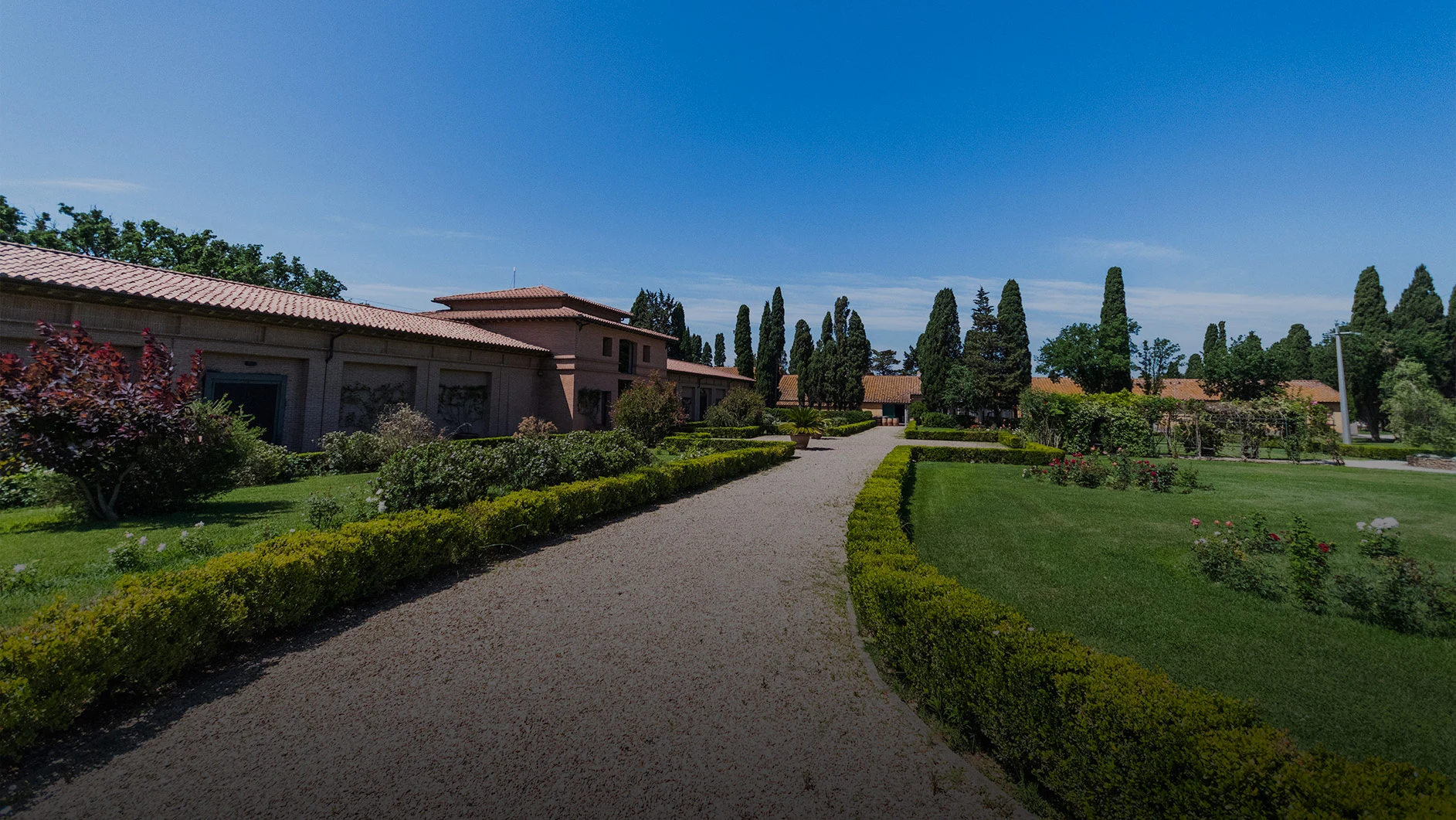
Approaching wine in Loreto Aprutino means reading the slope before the label. Abruzzo’s inland hills sit in dialogue with the Adriatic on one side and the Apennines on the other, and the wines that make sense here tend to carry that tension: sun, limestone, altitude and a certain agricultural directness. Colle Corviano belongs to that register, with vineyard blocks around 300 meters above sea level on stony, well-drained limestone soils and a cellar language built around place rather than fashion.
This is not the grand-estate model of Italian wine tourism. The better lens is family-run Abruzzo: quieter, more agrarian, less stage-managed, with Montepulciano d’Abruzzo DOC and Trebbiano d’Abruzzo DOC doing the heavy cultural work. The estate’s price positioning sits in the $$ bracket, which matters in a region where value is often part of the identity but where serious vineyard detail can be overlooked by visitors trained on Tuscany or Piedmont.
The Sunday email
Read about the people behind wineries like Colle Corviano in the Sunday email.
Every Sunday we send a lead story and up to four more about the chefs, winemakers, sommeliers and hoteliers behind the restaurants, bars, wineries and hotels we cover.
Recent stories
Free. One email a week, and you can unsubscribe from any issue.
Limestone, altitude and the Abruzzo middle ground
The central argument here is terroir expression. Colle Corviano’s setting places the vineyards at roughly 300 meters, with limestone and stony drainage shaping the fruit before winemaking technique enters the discussion. That altitude is important in Abruzzo: too close to the coast and wines can lose tension; too high and ripening becomes a different calculation. The Loreto Aprutino area sits in a useful middle zone, where Montepulciano can keep breadth without turning heavy and white varieties can hold freshness.
The estate works with Montepulciano, Trebbiano and Pinot Grigio, a portfolio that maps the practical reality of central Italian drinking rather than chasing novelty. Montepulciano d’Abruzzo DOC remains the red reference point, while Trebbiano d’Abruzzo DOC is the white that most clearly ties the winery to regional tradition. Pinot Grigio, under the Colline Pescaresi IGP frame, broadens the range without pulling the estate away from the local climate and soil story.
One useful production signal is the separate vinification of vineyard blocks. In a region where large-volume Montepulciano can blur site character, block-by-block handling suggests a more granular reading of land. The estate’s plantings include Montepulciano and Trebbiano parcels associated with 1973, giving the wines an agricultural timeline rather than a purely branding-led identity. Sustainability also has a concrete role here: SNQPI certification, wind-farm power, organic compost and no irrigation point to farming choices that shape vine stress, water use and soil health.
The wines to understand first
The Montepulciano d’Abruzzo DOC carries the clearest trust signal: a Gold Medal at Mundus Vini and a Vivino score of 3.9. The 2022 vintage is listed at 13% alcohol, with six months in oak barrels and two months in bottle. That combination places it in a familiar but disciplined Abruzzo lane: fruit-led Montepulciano with oak used for frame rather than dominance.
Trebbiano d’Abruzzo is the wine to use as a regional calibration point. The 2019 vintage is listed at 13% alcohol, a dry white profile and the kind of aperitif-and-table versatility that explains why Trebbiano persists in Abruzzo despite international varieties crowding many Italian shelves. Pinot Grigio Colline Pescaresi IGP, listed as 100% Pinot Grigio at 12.5% alcohol, is the counterpoint: an accessible white shaped by the same limestone and elevation, but framed through a variety better known to international drinkers.
There is also Sangiovese Terre di Chieti IGP in the range, though the estate’s strongest regional logic remains Montepulciano, Trebbiano and Pinot Grigio. That matters for visitors choosing a tasting: the point is not to collect as many labels as possible, but to compare how Abruzzo’s soils and altitude behave across red and white varieties.
How to place it in a Loreto Aprutino wine day
Colle Corviano suits visitors who prefer vineyard education and private tasting formats over drop-in sampling. The atmosphere is rustic, scenic and quiet, with vineyard views and an appointment-only structure. Casual dress fits the setting. Groups can work well here, and the estate is tagged for wine education, special occasions and group outings, but the format is adult-focused rather than child- or dog-oriented.
For a fuller Loreto Aprutino wine itinerary, use Colle Corviano as a terroir study rather than a quick stop. Nearby editorial context can come from Ciavolich and Marchesi de' Cordano, while broader planning sits in Our full Loreto Aprutino wineries guide. Pair the wine day with Our full Loreto Aprutino restaurants guide, Our full Loreto Aprutino hotels guide, Our full Loreto Aprutino bars guide and Our full Loreto Aprutino experiences guide rather than treating the winery as an isolated stop.
Readers building a wider Italian wine map can also compare regional formats across 3GP SRL in Treviso, 47 Anno Domini in Trebaseleghe, A Mano Wine in Noci, a6mani in Fragagnano, Abbadia Ardenga in Torrenieri, Abbazia di Crapolla in Neapel, plus cross-border references such as »der Steiner« Hans Steiner in Podersdorf am See and & Handwein in Mannheim. Against that wider spread, Colle Corviano’s value is its focused Abruzzo grammar: limestone, altitude, Montepulciano and a tasting format that gives the land room to speak.
Questions
Frequently asked
How expensive is Colle Corviano?
Colle Corviano is listed at a price level of $$.
The field
How it compares
| Place | Notes | Awards |
|---|---|---|
| Colle Corviano | Loreto Aprutino, $$ | · |
| Chateau Petrus | Pomerol | · |
| Ciavolich | Loreto Aprutino | · |
| Domaine Bruno Clair | Marsannay-la-Côte | · |
| Marchesi de' Cordano | Loreto Aprutino | · |
| Mission Hill Family Estate | West Kelowna | 50 Best |
| Tenuta San Guido | Bolgheri | · |
Similar places
The Sunday email
Read about the people behind wineries like Colle Corviano in the Sunday email.
Every Sunday we send a lead story and up to four more about the chefs, winemakers, sommeliers and hoteliers behind the restaurants, bars, wineries and hotels we cover.
Recent stories
Free. One email a week, and you can unsubscribe from any issue.