Lamb held between braise and roast
- Opinionated About Dining Top Restaurants in North America Recommended · 2026
- Michelin Plate · 2025
- Opinionated About Dining Top Restaurants in North America Ranked #379 · 2025
- Opinionated About Dining Top Restaurants in North America Ranked #393 · 2024
- Michelin Plate · 2024
- Opinionated About Dining Top Restaurants in North America Recommended · 2023
Lamb set against the pass
At the pass, Cranes in Washington DC braises lamb neck and roasts loin in a room built around Spanish Kaiseki. The plate of Braised and Roasted Lamb carries the whole argument: structure first, then contrast, then restraint. Richness does not get to sit alone. Farro, white balsamic, pickled ramps, and shallot keep the lamb moving, so depth has weight without becoming heavy. The restaurant’s own language is Spanish Kaiseki, and the kitchen meets that idea through control rather than decoration. Each element has a job. Nothing asks to be admired twice.
Spanish Kaiseki by course and counter
The program at Cranes moves between omakase, tasting menu, small plates, and a la carte, with a sake and wine program running beside the kitchen. The house opened on February 8, 2020, in Penn Quarter, in a 12,000-square-foot space with a bar, sake lounge, raised dining area, open kitchen, and private room. The cooking leans on the shared grammar of Japanese and Spanish kitchens: searing, fermenting, broths built for umami, acidity used as a tool, texture set against texture. Scallops, duck gyoza, churros, omakase, mushroom gyoza, pork ribs with gochujang glaze, lamb canelon with Manchego, karage chicken, matcha Basque cheesecake, and bok choy all sit inside that frame. The point is not fusion as a flourish. It is sequencing, seasoning, and the patience to let a course resolve before the next one arrives. A dumpling can carry the counter’s crispness; a dessert can pull miso caramel into the register of a Spanish finish.
The Sunday letter
Find new places through the people who run them.
Our Sunday email brings you the chefs, winemakers and hoteliers behind our newest stories. See a sample before you subscribe.
See a sample of the Sunday emailOne email a week. Unsubscribe from any issue.
The room around the open kitchen
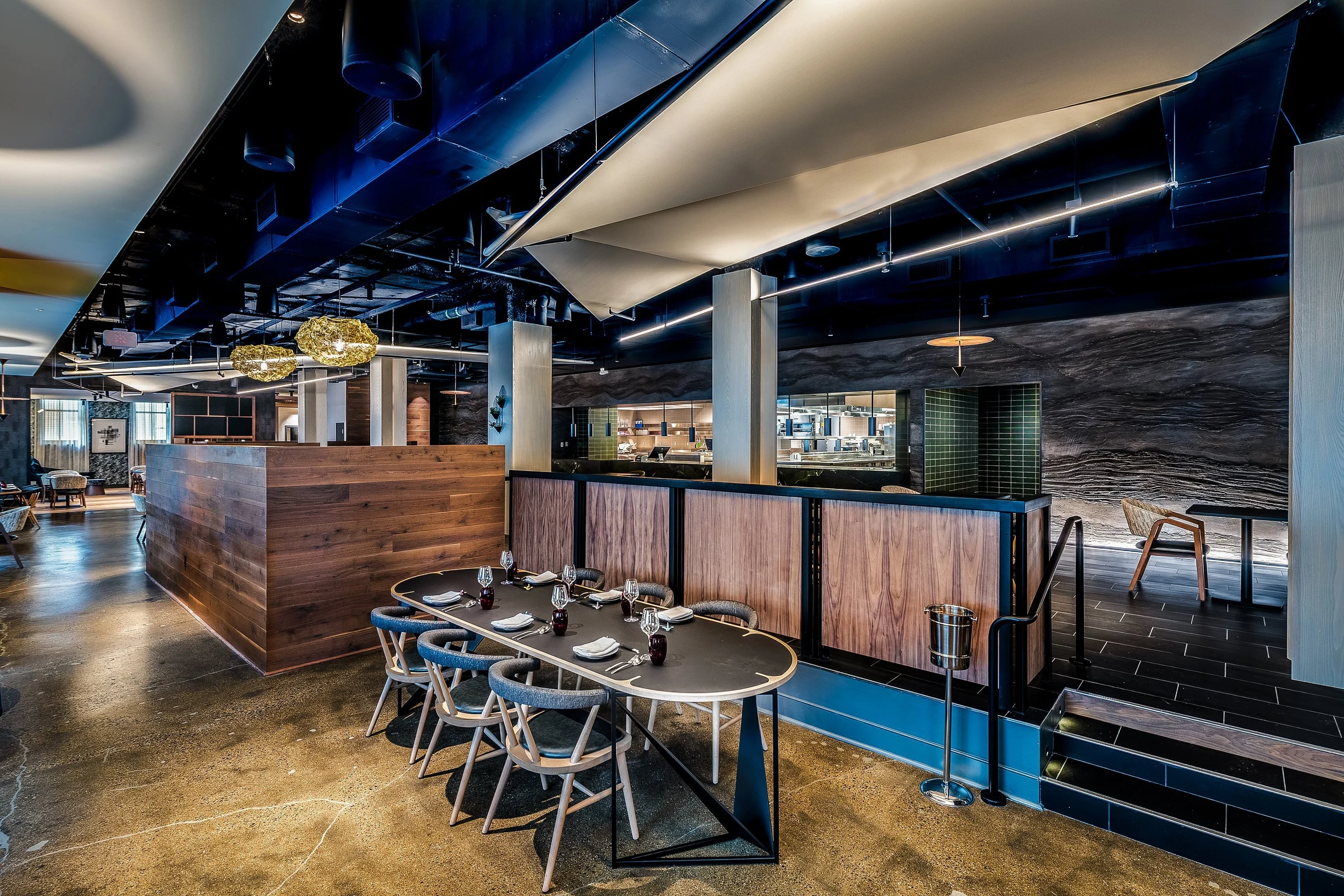
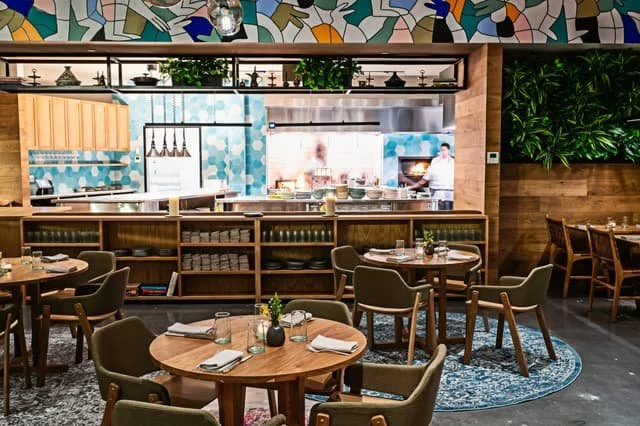
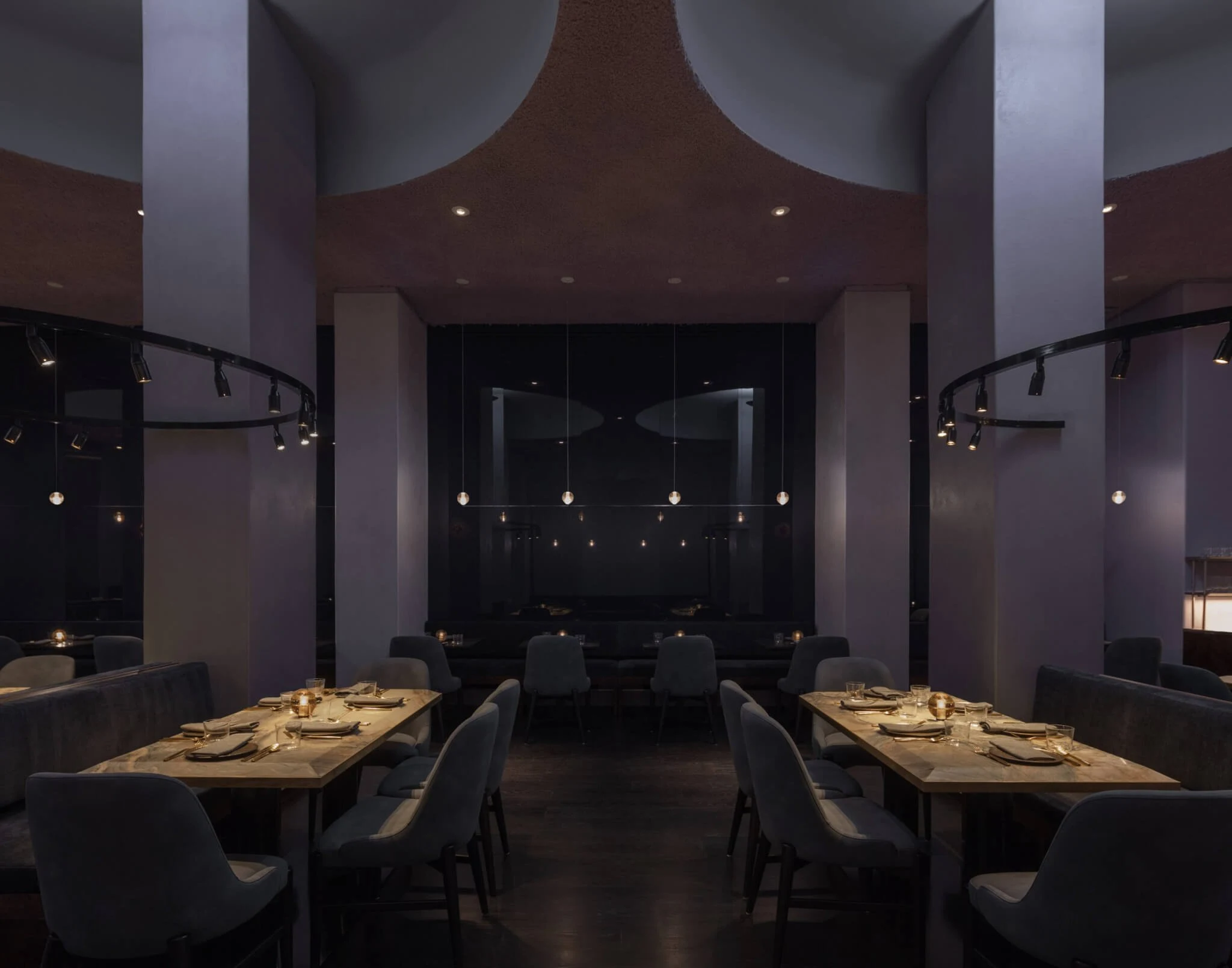
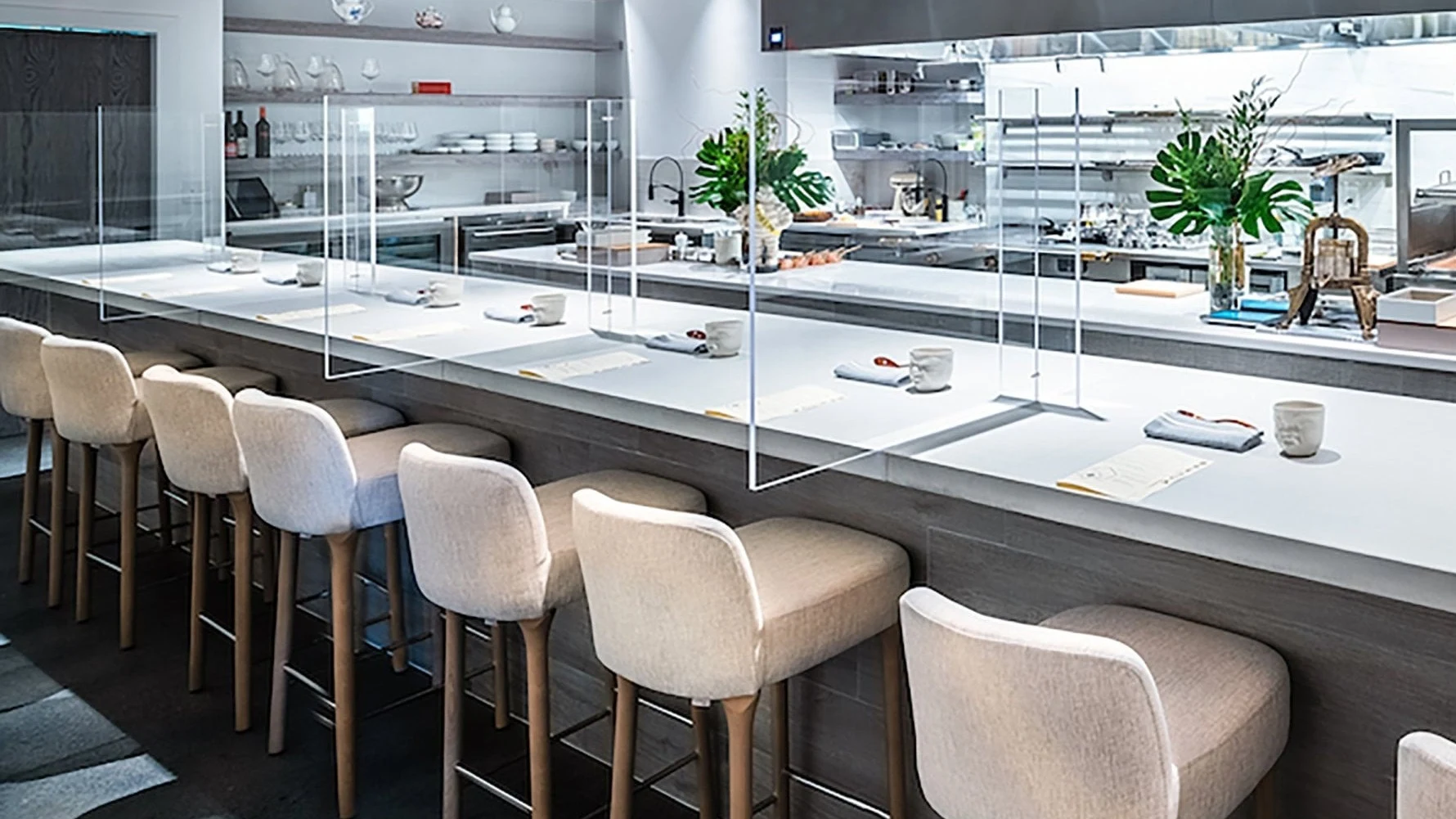
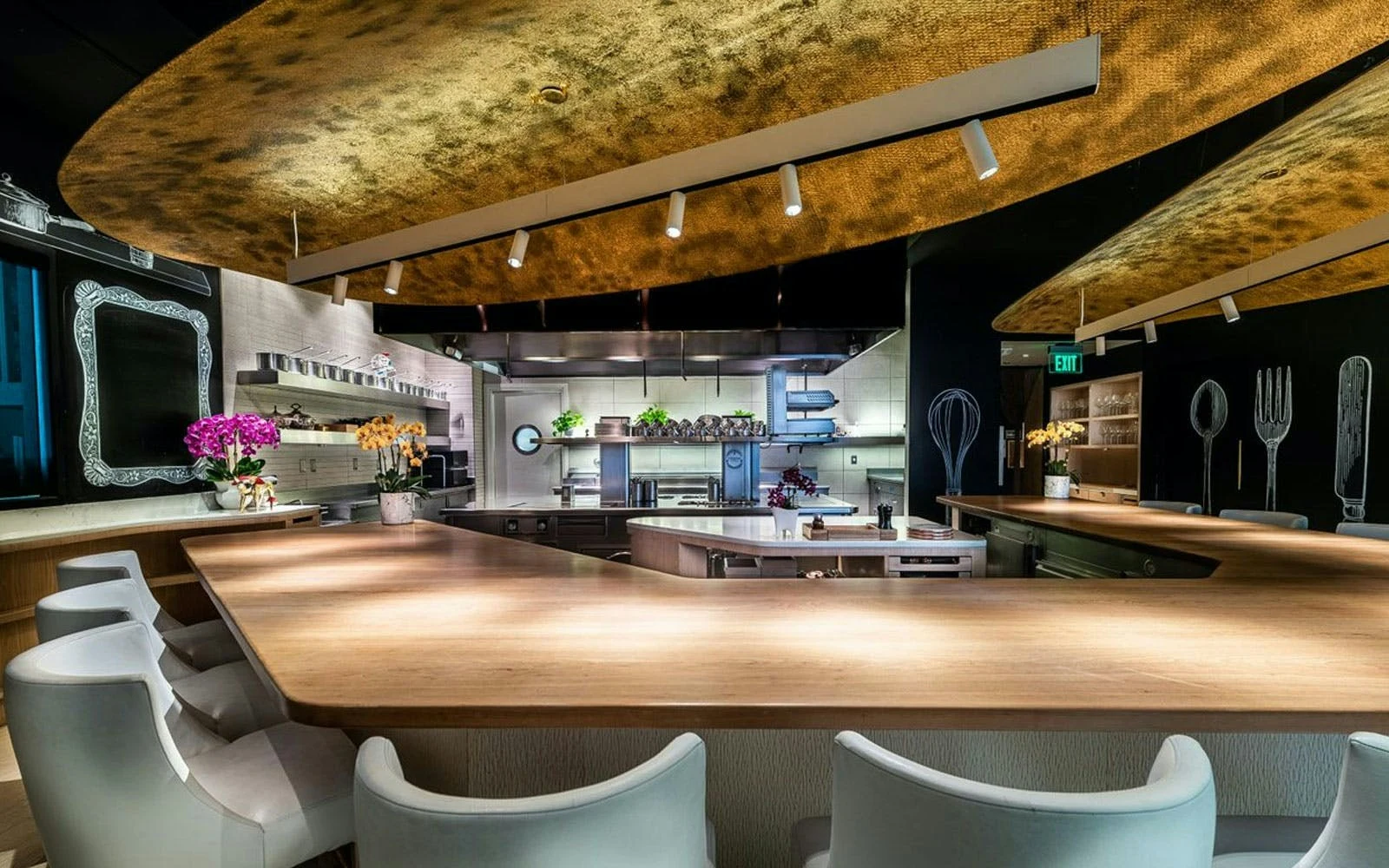
The room is sleek without asking for attention, all understated earth tones, a raised dining area, and the visibility of an open kitchen. The pass gives the place its tempo. Plates leave with the polish expected of a large restaurant, while the bar and sake lounge make the beverage program part of the same conversation rather than a separate performance. Cranes sits in Penn Quarter near convention traffic and theater movement, and the description that fits is bench-side: cooks working through a broad menu under quiet pressure, servers moving between tasting-menu pacing and small-plate rhythm, glasses filled to match salt, smoke, acid, and heat. The atmosphere stays conversational. The work at the counter keeps the room from drifting into gloss.
A recognition held in the work
Cranes earned a Michelin star in 2021 and later lost it in the 2023 Guide, a public arc that belongs to this address. Awards count, but the kitchen has to repeat itself in service, not in memory. The attention stays on the plate: lamb held between braise and roast, acidity doing its work, and a dining room arranged so the hand is visible. The cooking ends where it began, at the pass with Braised and Roasted Lamb.
Questions
Frequently asked
What kind of restaurant is Cranes?
Cranes is a Spanish Kaiseki restaurant in Penn Quarter, Washington DC, with a program that moves between omakase, tasting menu, small plates and a la carte.
What is the kitchen known for?
The cooking at Cranes works through the shared grammar of Japanese and Spanish kitchens, with dishes such as scallops, duck gyoza, churros, mushroom gyoza, pork ribs with gochujang glaze, lamb canelon with Manchego, karage chicken, matcha Basque cheesecake and bok choy.
Has Cranes received Michelin recognition?
Cranes earned a Michelin star in 2021 and later lost it in the 2023 Guide.
How do reservations work?
Reservations are recommended, and booking is handled direct.
What should I know about the practical details?
Cranes is at 724 9th St NW, Washington, DC 20001. It is open Monday to Friday from 11 AM to 3 PM and 4 PM to 9 PM, Saturday from 11:30 AM to 1:30 PM and 4 PM to 9 PM, and closed on Sunday. The dress code is smart casual, parking is street, and the price tier is $$$$ with an approximate spend of $150 per person.
The field
How it compares
| Place | Cuisine | Notes | Awards |
|---|---|---|---|
| Cranes | Spanish Kaiseki | Penn Quarter, $$$$ | · |
| Albi | Modern Levantine Fine Dining | Washington DC | Michelin 1 Star, World's 50 Best |
| Dōgon | Modern Afro-Caribbean | Washington DC | World's 50 Best |
| Jônt | Modern Japanese Fine Dining | Washington DC | Michelin 2 Stars |
| minibar | Avant-Garde Molecular Gastronomy | Washington DC | Michelin 2 Stars |
| Moon Rabbit | Creative Vietnamese-Cajun Fusion | Washington DC | World's 50 Best |
| Oyster Oyster | Modern Vegetable-Focused Tasting Menu | Washington DC | Michelin 1 Star |
In residence
Similar places
Modern Levantine Fine Dining
Albi
Washington DC, United States
★ · 50 Best
Modern Afro-Caribbean
Dōgon
Washington DC, United States
50 Best
Modern Japanese Fine Dining
Jônt
Washington DC, United States
★★
Avant-Garde Molecular Gastronomy
minibar
Washington DC, United States
★★
Creative Vietnamese-Cajun Fusion
Moon Rabbit
Washington DC, United States
50 Best
Modern Vegetable-Focused Tasting Menu
Oyster Oyster
Washington DC, United States
★
The Sunday letter
Get the next Made By story in your inbox.
We send one email every Sunday morning with the places and people we covered that week.
See a sample of the Sunday emailOne email a week. Unsubscribe from any issue.