Crystal Jade Golden Palace
In Residence
Martin Foo
Chef
- 01CuisineContemporary Cantonese & Teochew Fine Dining
- 02CitySingapore, Singapore
- Opinionated About Dining Top Restaurants in Asia Recommended · 2026
- Opinionated About Dining Top Restaurants in Asia Ranked #340 · 2025
- Michelin Plate · 2024
- Opinionated About Dining Top Restaurants in Asia Ranked #336 · 2024
- Opinionated About Dining Top Restaurants in Asia Recommended · 2023
Orchard Road's Cantonese Anchor
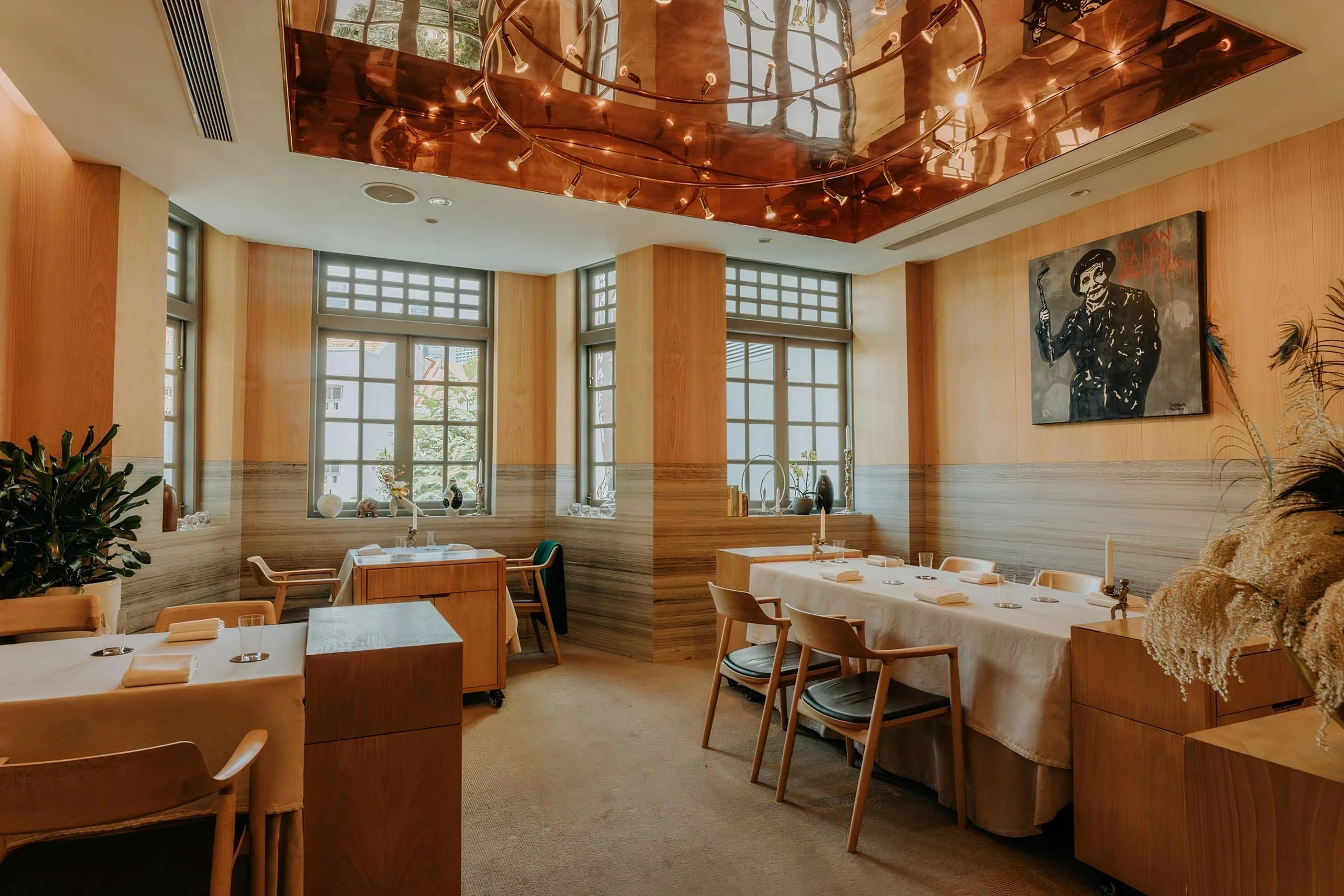
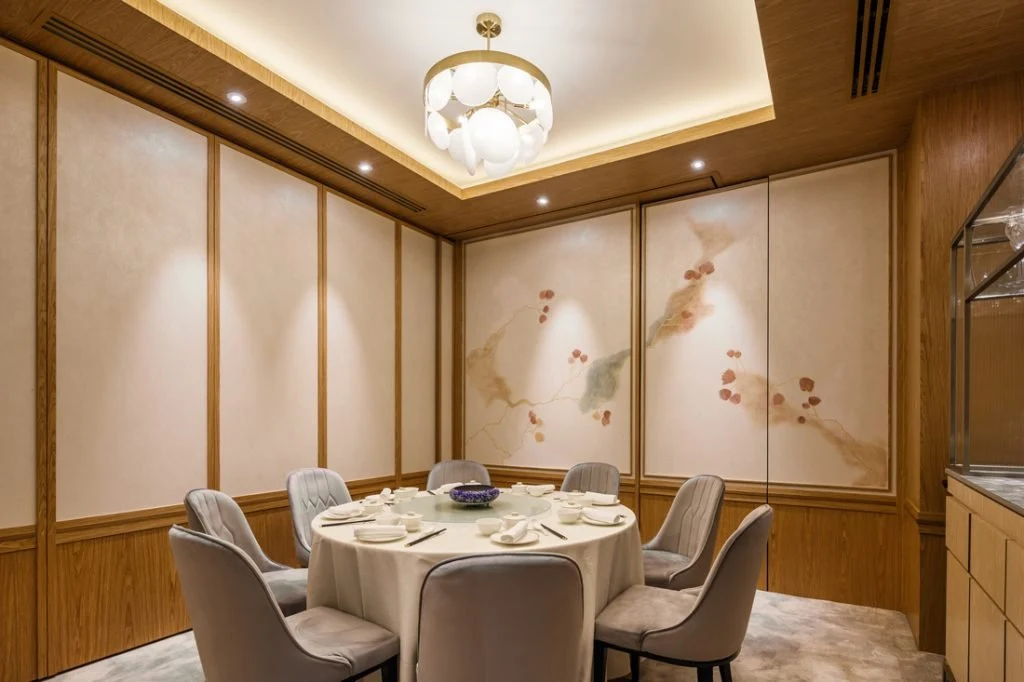
The fifth floor of Paragon shopping centre on Orchard Road is a different proposition from the street-level retail below. Up here, the pace slows, the lighting softens, and the room at Crystal Jade Golden Palace reads as deliberately formal without tipping into stiffness, the kind of Chinese dining room that signals a serious meal without demanding ceremony from its guests. The room reflects that positioning: table spacing is generous, service moves with a measured confidence, and the overall register sits closer to a Hong Kong private dining club than a busy dim sum hall.
That physical remove from the street matters. Singapore's Cantonese dining scene clusters at two poles: the high-volume weekend dim sum house and the occasion-dining room that prices against the city's French and European fine-dining tier. Crystal Jade Golden Palace occupies a middle ground that has become increasingly rare, formal enough for corporate lunches and anniversary dinners, priced at $$$ rather than the $$$$ commanded by tables like Zén or Les Amis, and consistent enough to sustain a two-decade run on the same floor of the same building.
A Teochew Strand Inside a Cantonese Frame
What separates Golden Palace from other branches of the Crystal Jade group, and from most of its immediate competitors in the Orchard corridor, is its Teochew specialisation. Teochew cooking and Cantonese cooking are frequently lumped together under the broader banner of southern Chinese cuisine, but they operate on different principles. Where Cantonese technique reaches for wok heat and rich sauces, Teochew cooking favours restraint: cold preparations, subtle braising, and a precision with seafood that relies on freshness rather than transformation. Cold crab, served at room temperature or chilled and dressed simply, is a litmus test dish for any kitchen claiming Teochew credentials. Sugar-coated yam, caramelised at the table or served lacquered and crisp, is another marker of the tradition.
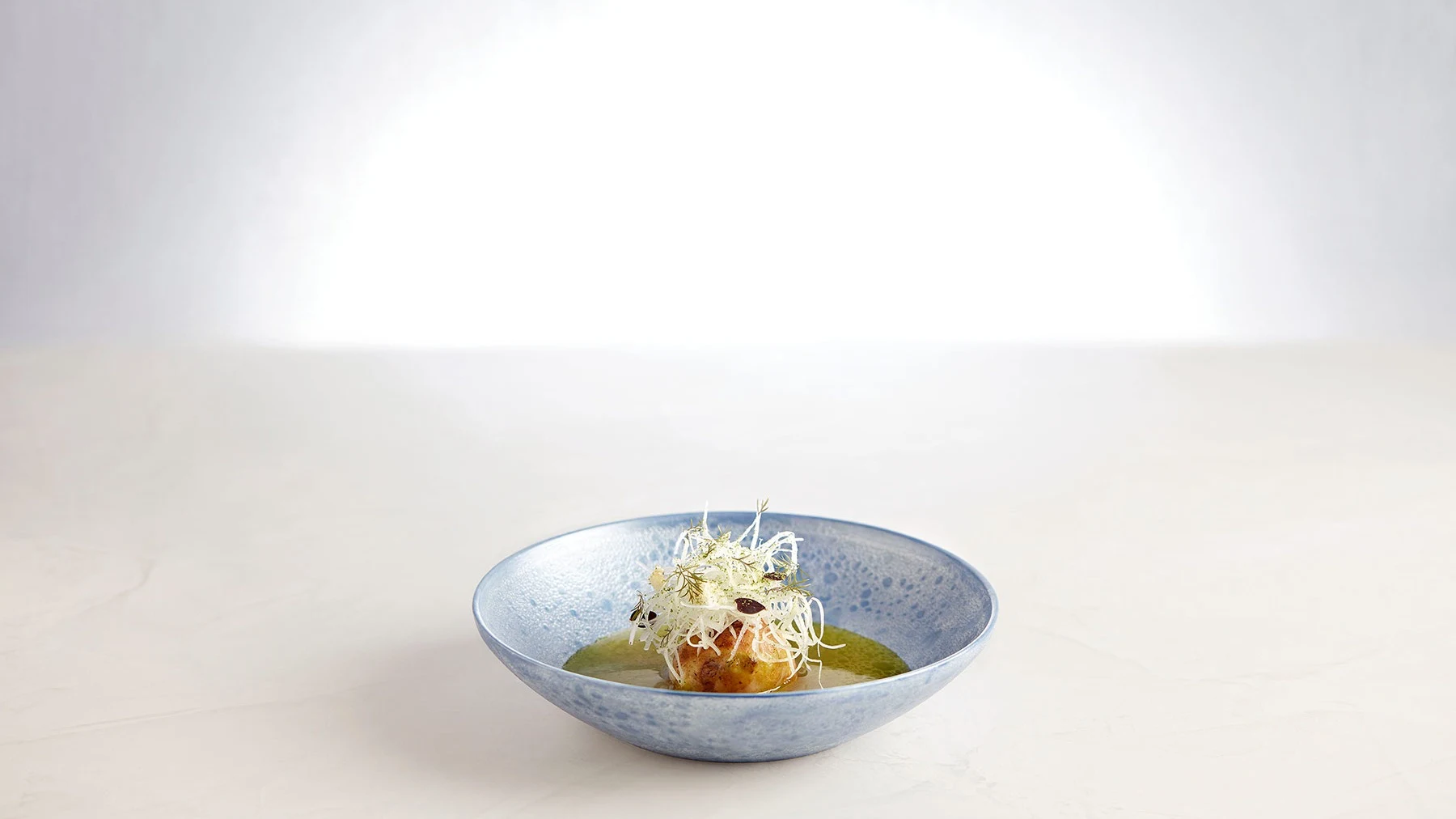
The menu here carries both, placing them alongside the Cantonese barbecue programme and assorted seafood dishes that define the group's broader identity. More contemporary additions, chilled foie gras prepared with sake, roasted suckling pig finished with black truffle, run alongside these classics without displacing them. The result is a menu that functions as a record of how Chinese restaurant cooking in Singapore has absorbed international luxury ingredients without abandoning its technical foundation. For regional comparison, diners tracking similar Cantonese standards across Asia will find useful reference points at The Chairman in Hong Kong and Sun Tung Lok, also in Hong Kong, while Lei Garden in Singapore sits within the same local competitive tier.
The Wine Cellar as Editorial Statement
Chinese fine dining has long had a complicated relationship with wine. For decades, the default pairing at high-end Cantonese tables was either cognac or tea, and wine lists, when they existed, leaned heavily on Bordeaux with little curatorial intent. The shift toward genuinely considered wine programmes at Chinese restaurants is a relatively recent development in Asia, and it has been uneven, most houses still offer wine as an afterthought rather than as an integrated part of the dining experience.
The wine cellar draws on an international selection with enough breadth to suggest active curation rather than passive stocking. In a restaurant operating at the $$ price tier, a wine cellar that draws editorial comment is an unusual asset. It signals that the kitchen and the floor are working toward a coherent dining proposition rather than treating wine as a margin exercise. For context, the kind of wine programme depth that earns specific mention in OAD notes is typically associated with European fine dining rooms, Odette and Jaan by Kirk Westaway both operate serious cellars, which makes its presence here a meaningful differentiator within the Chinese dining category specifically. Internationally, Shang Palace in Paris offers a useful comparison for how Cantonese kitchens in formal hotel settings have approached the wine question in a European context, while Le Bernardin in New York demonstrates how wine programme depth can anchor a seafood-forward formal dining room across cultures.
The pairing logic at a table like this rewards some thought. Teochew cold crab and chilled preparations generally suit lower-alcohol whites with textural weight, Burgundian Chardonnay or aged white Bordeaux both work against the subtle sweetness of well-prepared crab. The more contemporary dishes, particularly the foie gras with sake and the black truffle suckling pig, open the list toward richer reds and off-dry wines in ways that would stretch most Chinese restaurant wine programmes to their limits. A cellar with genuine international breadth is the practical infrastructure that makes those pairings available.
Recognition and Peer Positioning
Opinionated About Dining, which surveys frequent high-end diners rather than professional critics, has listed Crystal Jade Golden Palace consistently across multiple years: Recommended in 2023, ranked #336 in Asia in 2024, and #340 in 2025. Sustaining a position in the top 340 restaurants across a continent-wide survey over three consecutive years is a signal of consistent execution. The Google rating of 4.3 across 850 reviews adds a volume-weighted data point in the same direction.
For regional Cantonese comparison, The Eight in Macau, Cai Yi Xuan in Beijing, Above & Beyond in Hong Kong, and Royal China Club in Shanghai occupy comparable positions in their respective cities, formal Cantonese rooms with serious wine programmes and menus that integrate classical technique with contemporary additions. Golden Palace's distinctive Teochew strand remains its clearest differentiator within that peer group.
Questions
Frequently asked
Who works at Crystal Jade Golden Palace?
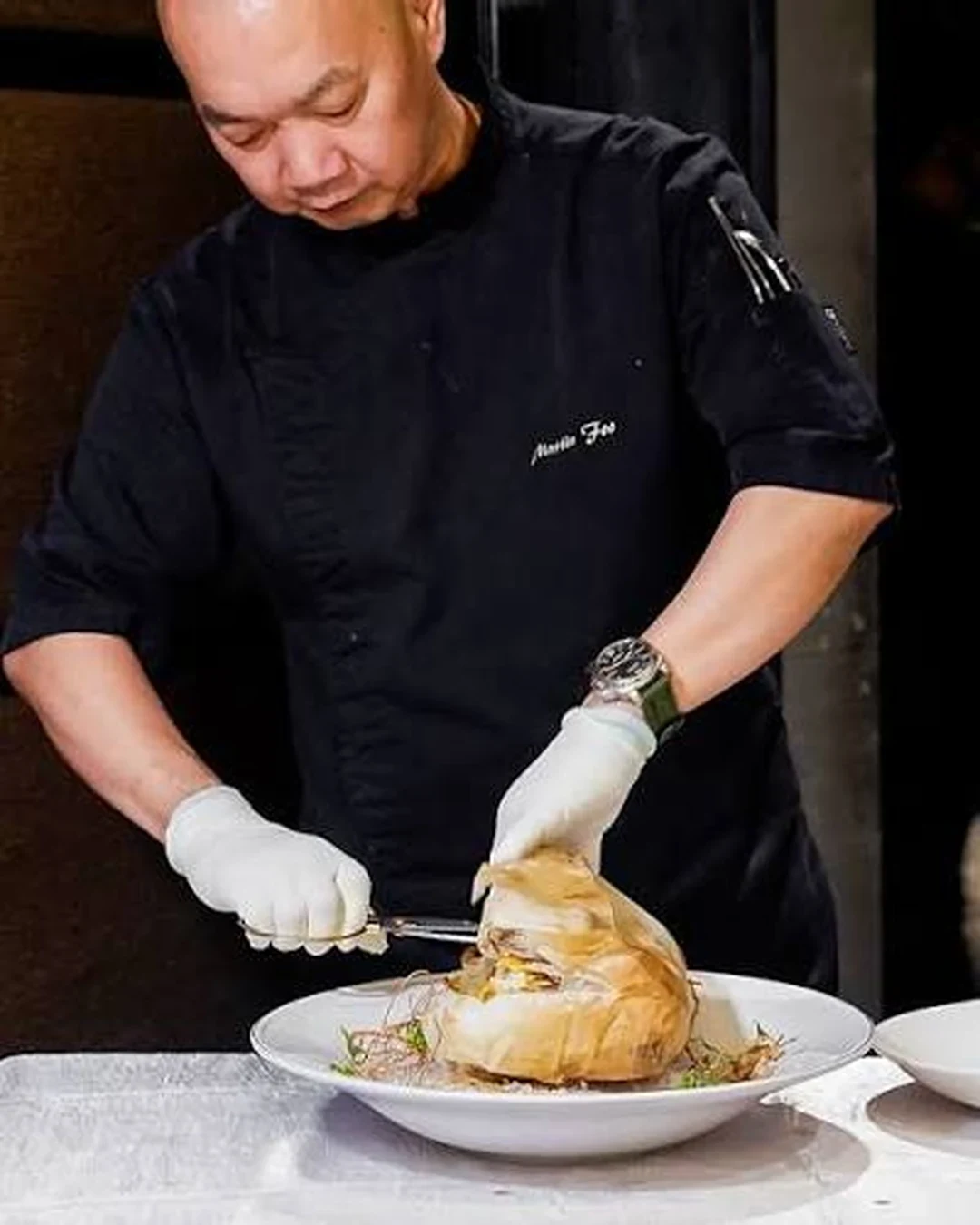
Made By profiles Martin Foo (Chef) at Crystal Jade Golden Palace.
How expensive is Crystal Jade Golden Palace?
Crystal Jade Golden Palace is listed at a price level of $$$.
Where is Crystal Jade Golden Palace and what does it serve?
Crystal Jade Golden Palace is in BOULEVARD, Singapore, serving Contemporary Cantonese & Teochew Fine Dining.
The field
How it compares
| Place | Cuisine | Notes | Awards |
|---|---|---|---|
| Crystal Jade Golden Palace | Contemporary Cantonese & Teochew Fine Dining | BOULEVARD, $$$ | · |
| Born | Contemporary Fusion Fine Dining | Singapore | Michelin 1 Star, World's 50 Best |
| Burnt Ends | Modern Australian Barbecue | Singapore | Michelin 1 Star, World's 50 Best |
| Jaan by Kirk Westaway | Modern British Fine Dining | Singapore | Michelin 2 Stars, World's 50 Best |
| Les Amis | Classic French Haute Cuisine | Singapore | Michelin 3 Stars, World's 50 Best |
| Odette | Modern French Fine Dining | Singapore | Michelin 3 Stars, World's 50 Best |
| Zén | Neo-Nordic with Japanese Influences | Singapore | Michelin 3 Stars, World's 50 Best |
In residence
Similar places
Contemporary Fusion Fine Dining
Born
Singapore, Singapore
★ · 50 Best
Modern Australian Barbecue
Burnt Ends
Singapore, Singapore
★ · 50 Best
Modern British Fine Dining
Jaan by Kirk Westaway
Singapore, Singapore
★★ · 50 Best
Classic French Haute Cuisine
Les Amis
Singapore, Singapore
★★★ · 50 Best
Modern French Fine Dining
Odette
Singapore, Singapore
★★★ · 50 Best
Neo-Nordic with Japanese Influences
Zén
Singapore, Singapore
★★★ · 50 Best