Cul de Sac
- 01CuisineTraditional Italian Wine Bar
- 02CityRome, Italy
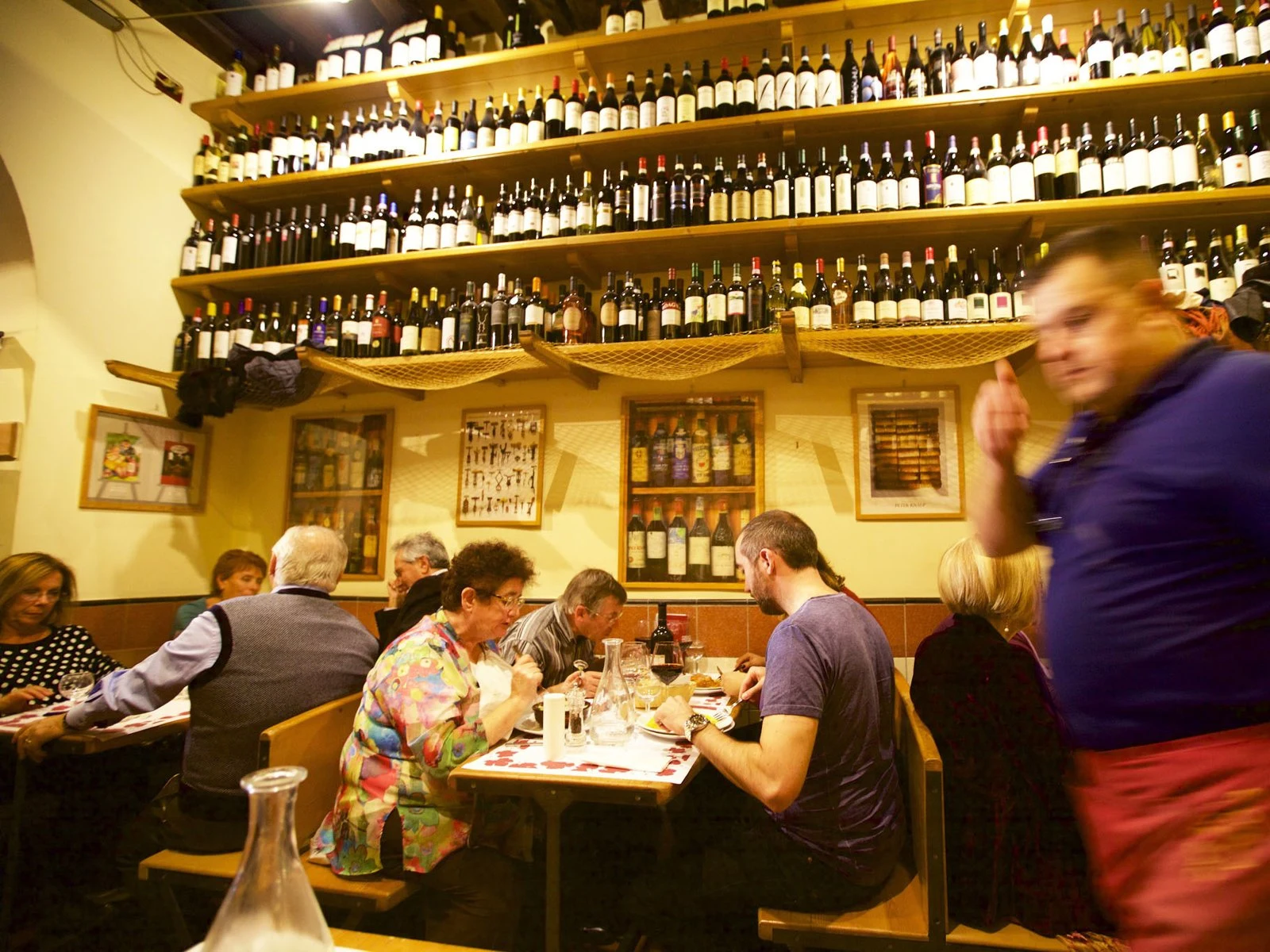
Over 1500 Italian wines daily
- Star Wine List · 2026
- Falstaff Wine Bar - 90 Falstaff Points · 2026
A Roman bench held to Italian form
The pâtés arrive from the cold station before the first glass is chosen, which is the working order at Cul de Sac in Rome. Wine comes first in the room, but the kitchen has to hold its line beside it: oxtail stew, ravioli Roman, salumi, cheeses, lentil soup, rolled beef Roman style, salmon baked in paper. The house began as a Vini e Oli establishment in the early 1900s, and the old marble counter still testifies to that era. Its current form opened in 1977, when the Roman wine bar was still becoming a public language rather than a category, and the enoteca is credited with pioneering that phenomenon in the city. Cul de Sac has been family-run for over 30 years, and its reputation rests less on a single plate than on repetition: Roman dishes, house-made pâtés, quick hands, and a cellar deep enough to make the kitchen keep its discipline.
The wine list sets the measure
The program carries over 1500 Italian wines available daily, with 2800 labels moving through the year, and the house also supplies wine to other restaurants and offers enogastronomic consultation. Those numbers matter because they change the scale of the kitchen's task. A plate of pâté cannot be vague beside that much cellar work. Ravioli Roman with spinach and tomato sauce needs clean edges; oxtail stew needs time in the sauce; a cold meat and cheese platter needs products that do not collapse under whichever bottle the table has chosen. The menu stays modular: antipasti, pâtés, Roman and Italian primi, secondi, salumi, formaggi, desserts. The method is not presented as chef theater. It is service architecture for wine, a way of letting different appetites sit at the same narrow table without forcing a fixed path. Stewing, baking in paper, slicing, assembling, seasoning, sending. The discipline is in proportion, and the emphasis across the list falls on regional character, on aroma, strength and body rather than on labels.
Hard benches, close tables, the Pasquino outside
The room is long and narrow, often compared to third-class train cars from the 1960s, with hard wooden benches and fishing nets overhead. The name means dead end in French, and it was chosen for that shape. That detail could sound decorative if the place were looser. Here it makes sense. The counter, the benches, the tight run of tables and the small terrace compress the work into short distances. Staff move with bottles, boards, bowls and plates; the conversation stays low enough for the next recommendation to land, and after 8pm the room is generally full.
Why the address holds
Outside, Piazza di Pasquino gives the address its Roman scale. One of the city's two talking statues stands nearby, and Piazza Navona sits close enough to pull the wrong kind of crowd to many rooms. Cul de Sac has survived by doing the opposite of performance. It keeps the bench close, the cellar visible in the work, and the food plain enough to hold its shape beside 1500 Italian wines. End the meal on ravioli Roman, or on pâté and a last glass chosen near the Pasquino statue.
Questions
Frequently asked
What kind of place is Cul de Sac?
Cul de Sac is a Roman wine bar and restaurant in Parione, known for pairing traditional Italian and Roman dishes with a large wine list. It was founded in its current form in 1977, and the house traces back to an early 1900s Vini e Oli establishment.
What food is it known for?
The kitchen serves Roman plates alongside house-made pâtés, with oxtail stew, ravioli Roman, salumi, cheeses, lentil soup, rolled beef Roman style, and salmon baked in paper among the dishes mentioned on the page copy.
How large is the wine selection?
The wine program lists more than 1500 Italian wines available daily, with 2800 labels moving through the year. The house also supplies wine to other restaurants and offers enogastronomic consultation.
Do you need to book ahead?
Reservation is recommended. The room is described as often full after 8pm, so booking makes sense if you want a table.
What is the atmosphere like?
The room is long and narrow, with hard wooden benches, close tables and fishing nets overhead. It is described as casual, with service shaped around the wine list rather than theatrical presentation.
The field
How it compares
| Place | Cuisine | Notes | Awards |
|---|---|---|---|
| Cul de Sac | Traditional Italian Wine Bar | Parione, $$ | · |
| Acquolina | Modern Mediterranean Seafood Fine Dining | Rome | Michelin 2 Stars |
| Enoteca La Torre | Modern Italian Fine Dining | Rome | Michelin 2 Stars |
| Idylio by Apreda | Modern Mediterranean-Asian Fusion | Rome | Michelin 1 Star |
| Il Pagliaccio | Modern Italian-Japanese Fusion Fine Dining | Rome | Michelin 2 Stars |
| Imàgo | Modern Italian Fine Dining | Rome | Michelin 1 Star |
| La Pergola | Modern Italian Fine Dining | Rome | Michelin 3 Stars |
Similar places
Modern Mediterranean Seafood Fine Dining
Acquolina
Rome, Italy
★★
Modern Italian Fine Dining
Enoteca La Torre
Rome, Italy
★★
Modern Mediterranean-Asian Fusion
Idylio by Apreda
Rome, Italy
★
Modern Italian-Japanese Fusion Fine Dining
Il Pagliaccio
Rome, Italy
★★
Modern Italian Fine Dining
Imàgo
Rome, Italy
★
Modern Italian Fine Dining
La Pergola
Rome, Italy
★★★