Negroamaro in stainless steel
- Falstaff Winery - Listed · 2026
Stainless steel before the old name
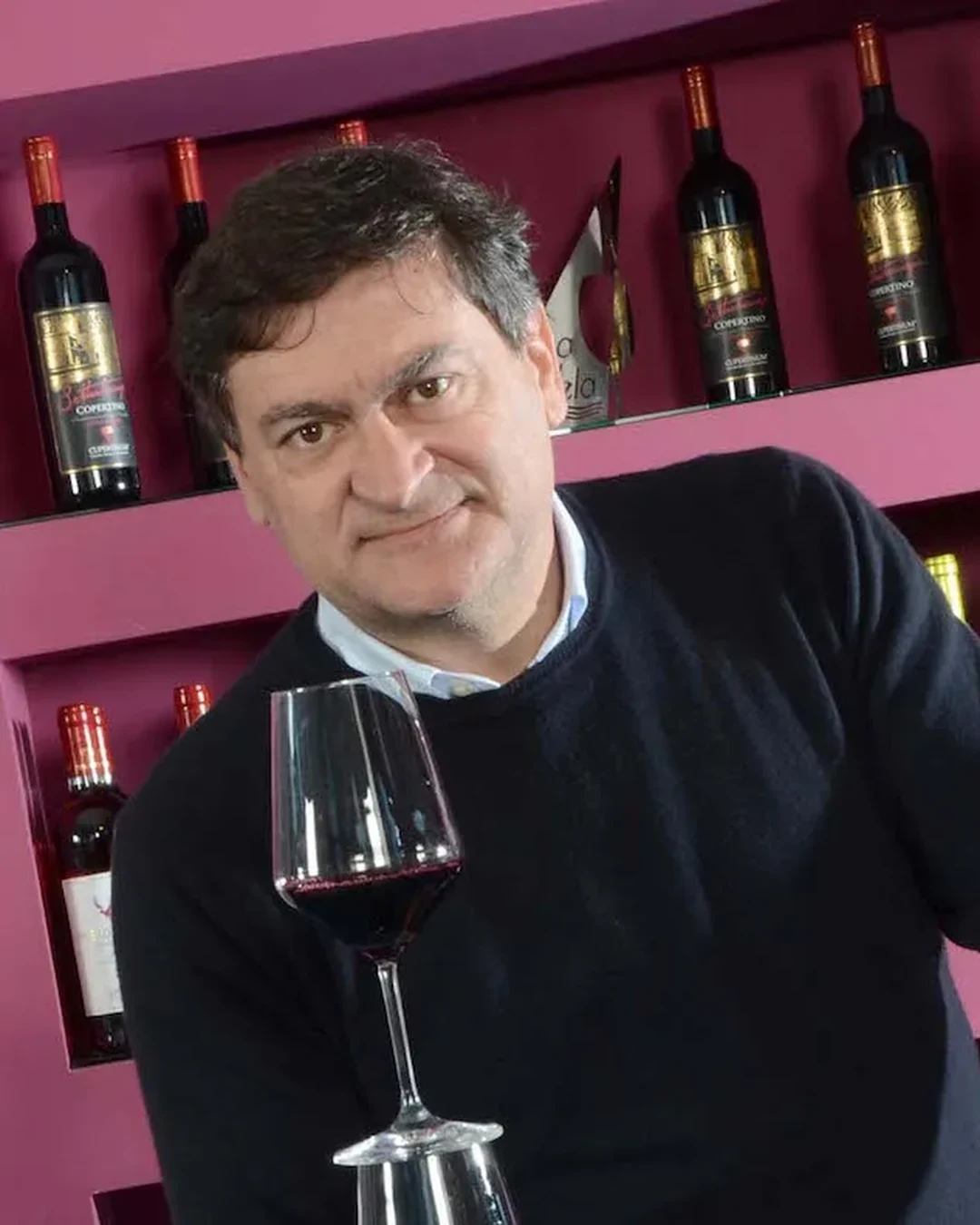
Stainless steel keeps the fruit in view as Giuseppe Pizzolante Leuzzi, oenologist at Cupertinum in Copertino, works the cellar discipline around Negroamaro. Since 2010, his station has been inside a cooperative that began in 1935, when 36 local viticulturists chose the collective route for grapes, processing and trade. That structure still matters. Cupertinum is not an estate built around one owner’s vineyard, but a cantina sociale, a working cellar fed by member growers across Copertino and the broader Salento. Leuzzi’s role sits between continuity and correction: preserving the local grammar of Negroamaro, Malvasia Nera and Primitivo while using modern winemaking to keep the wines clean, direct and legible. The house frames the project as singular rather than derivative; Leuzzi has called it “a unique and original project that has no precedent either in Italy or abroad.” In the glass, that conviction is less slogan than method. The cooperative’s old social purpose, shared access to quality control and market reach, becomes a daily cellar question: how to make many hands read as one wine without sanding off the place.
Negroamaro held to its proportions
The program is built on indigenous red varieties, with Negroamaro carrying the main weight of the Copertino DOC wines. For the Copertino DOC Rosso Riserva, the published protocol gives the proportion plainly: 90% Negroamaro and 10% Malvasia Nera. Fermentation and aging take place primarily in stainless steel, a choice that keeps the register away from heavy oak and closer to the red fruit, Mediterranean scrub and evolved leather notes associated with the Riserva. The wine sits at 13% ABV, a number that speaks to Salento ripeness without pushing the frame out of balance. Around the cellar, the growers’ work is the other half of the method. Cupertinum draws from a cooperative base of 300 members and about 300 hectares, rooted in the red land of Copertino, where vines and olive trees share the agricultural pattern. The old tree-shaped training remains part of the local image of strength and yield restraint. The DOC itself was established in 1976, after the cooperative and its peers had spent decades tightening quality around these grapes.
A cooperative cellar, not a stage set
The cellar and shop keep a practical tone: quiet, rustic, arranged around bottles and the business of local wine rather than spectacle. This is Salento between the Ionian and Adriatic seas, but the room does not lean on seaside theatre. It leans on the cooperative counter, the tasting glass, the continuity of labels such as Glykós, Copertino Doc Rosso Riserva, Spinello dei Falconi Rosato Igt Salento and Squarciafico. The place reads as a working regional cellar because that is what it is. Member fruit arrives with the season; the cellar absorbs the differences and asks them to meet the house line. Leuzzi’s phrase, “modern winemaking that respects tradition,” lands here without decoration, in the steel, the red varieties and the steady return to Copertino Doc Rosso Riserva.
Questions
Frequently asked
Who makes the wines at Cupertinum?
Giuseppe Pizzolante Leuzzi is the oenologist at Cupertinum in Copertino, working the cellar since 2010. The winery is a cantina sociale, fed by member growers across Copertino and the broader Salento.
What is Cupertinum known for?
Cupertinum works mainly with indigenous red varieties, especially Negroamaro, with Malvasia Nera and Primitivo also part of the programme. The Copertino DOC Rosso Riserva is made from 90% Negroamaro and 10% Malvasia Nera.
What style of winemaking does the cellar use?
Fermentation and aging take place primarily in stainless steel, which keeps the wines clean, direct and close to the fruit. The approach is meant to preserve the local grammar of the grapes rather than hide it under heavy oak.
Do you need a reservation to visit Cupertinum?
The venue is walk-in friendly.
The field
How it compares
| Place | Notes | Awards |
|---|---|---|
| Cupertinum | Copertino, $$ | · |
| Azienda Monaci | Copertino | · |
| Château Margaux | Margaux | World's 50 Best |
| Château Palmer | Margaux | · |
| Domaine Emmanuel Rouget | Flagey-Echézeaux | · |
| Garofano | Copertino | · |
| Masseto | Castagneto Carducci | · |