Da Enzo al 29
- 01CuisineTraditional Roman Trattoria
- 02CityRome, Italy
From the people index
Recommended by
One trusted voice points here.

- Opinionated About Dining Casual in Europe Highly Recommended · 2026
- Opinionated About Dining Casual in Europe Ranked #52 · 2024
- Opinionated About Dining Casual in Europe Ranked #139 · 2023
Trastevere's Trattoria Tradition, Taken Seriously
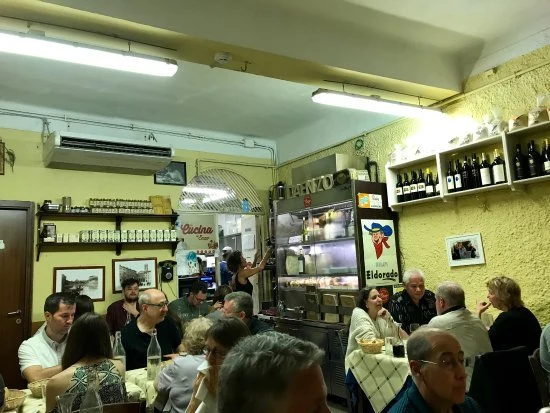
Via dei Vascellari is the kind of Roman street that resists embellishment. The cobblestones are uneven, the palazzi are ochre-stained, and the sound in the evening is mostly chairs scraping and the low register of neighbourhood conversation. Da Enzo al 29 sits on this street at number 29, its facade as understated as the address suggests. There is no ambient lighting engineered for social media, no playlist chosen to signal coolness. What you get, before you even open the door, is the particular stillness of a place that has decided exactly what it is.
Trastevere has always had trattorias. What it has lost, progressively, is trattorias that cook for the neighbourhood rather than around it. The tourist economy of the rione rewards visual appeal and predictable carbonara over the harder, more serious business of sourcing and technique. Da Enzo operates in deliberate contrast to that drift, and the Opinionated About Dining rankings reflect it: the restaurant reached #52 on the Casual in Europe list in 2024, up from #139 in 2023. That kind of movement in a single year is not incidental.
The Logic of Provenance in a Roman Kitchen
Classical Roman cooking is, at its core, a cuisine of constraint transformed by precision. The historical pantry was not expensive: offal, dried pasta, pecorino, guanciale, canned tomatoes in winter. The elevation came from understanding each ingredient's exact behaviour and refusing to dilute it. That logic survives in kitchens that still treat provenance as the foundation rather than a marketing add-on.
The Roman tradition has always leaned on DOP-designated products: Pecorino Romano DOP, with its dry, saline edge that separates cacio e pepe from any imitation made with generic sheep's cheese; Guanciale from Amatrice or the hills around Rieti, cured pork cheek with a fat-to-lean ratio that cannot be replaced by pancetta without changing the dish's character entirely. These are not interchangeable commodity inputs. The trattorie that understand this maintain supplier relationships, buy seasonally, and adjust menus to what the market delivers rather than running a fixed card year-round. Da Enzo works within this framework, and it is the reason the cooking holds up against the scrutiny that a top-60 Casual Europe ranking brings.
For context on where the ingredient-led trattoria tradition fits within Rome's broader dining spectrum: the city's fine-dining tier, anchored by addresses like La Pergola (three Michelin stars) and the creative programmes at Enoteca La Torre and Acquolina, operates with entirely different intentions. Those kitchens reinterpret; Da Enzo preserves and refines. Neither project is more serious than the other, but they answer different questions about what Roman food is for.
What Roman Trattoria Cooking Actually Demands
There are five canonical Roman pasta dishes: cacio e pepe, carbonara, amatriciana, gricia, and coda alla vaccinara's braised relative, pajata. Each one punishes imprecision. Carbonara with a broken emulsion, carbonara made with cream, carbonara served cold on a warm plate, these are not minor variations. They are failures that reveal exactly where the kitchen cut corners. The same is true of cacio e pepe: the sauce must form from pasta water and pecorino alone, the starch balance calibrated so the cheese coheres rather than clumping. Getting this right consistently, across a hundred covers and two services, is harder than it looks from the outside.
Offal, the other pillar of the cucina romana povera tradition, demands a different kind of nerve. Rigatoni con la pajata (pasta with milk-fed veal intestine), trippa alla romana, and coda alla vaccinara (oxtail braised with cocoa and pine nuts) require cooking times and temperatures that cannot be rushed, and ingredients that must be sourced from suppliers who still handle them properly. The decline of offal cooking in Rome's tourist-facing trattorias is partly a supply problem: finding guanciale, pajata, and sweetbreads of consistent quality requires maintained relationships with specific butchers and market vendors. This is unglamorous, operational work. It is also what separates a kitchen with standards from one running on reputation alone.
Trastevere's Position Within Rome's Dining Geography
Trastevere sits on the western bank of the Tiber, and its trattoria culture overlaps with, but is distinct from, the Testaccio tradition further south. Testaccio, Rome's old slaughterhouse quarter, has a more explicit connection to the quinto quarto (fifth quarter) offal tradition; trattorias there like Flavio Al Velevodetto and Velavevodetto ai Quiriti operate within that specific neighbourhood identity. Trastevere's version of the trattoria tradition is slightly more varied in its seasonal produce, slightly more porous to Roman Jewish cooking influences from the nearby Ghetto, but equally serious about classical execution when the kitchen commits to it.
Da Enzo is open for lunch and dinner Monday through Saturday, closed Sunday. Booking ahead is advisable. The address is walkable from multiple points in Trastevere; arriving on foot from the Piazza Santa Maria direction takes you through the denser, older part of the rione rather than the tourist-facing perimeter.
For Italian fine dining at the opposite end of the register, Osteria Francescana in Modena, Dal Pescatore in Runate, Enoteca Pinchiorri in Florence, Enrico Bartolini in Milan, Le Calandre in Rubano, and the Alpine sourcing philosophy at Atelier Moessmer Norbert Niederkofler in Brunico each represent a different strand of what Italian kitchens are doing at serious level. Internationally, the technical ambition at Le Bernardin in New York and the tasting-menu precision of Atomix in New York offer a useful reference point for how differently ingredient obsession expresses itself across culinary traditions.
Planning Your Visit
Da Enzo al 29 is at Via dei Vascellari, 29, in Trastevere, Rome. Service runs Monday to Saturday, 12 to 3 pm and 7 to 11 pm; the restaurant is closed on Sundays. With a 4.3 Google rating across 9,466 reviews and a current Opinionated About Dining Casual Europe ranking of #52, demand is consistent across both local and visiting audiences. Book in advance, particularly for weekend lunch and Friday evening, which tend to fill earliest.
Questions
Frequently asked
How expensive is Da Enzo al 29?
Da Enzo al 29 is listed at a price level of $$.
Where is Da Enzo al 29 and what does it serve?
Da Enzo al 29 is in Trastevere, Rome, serving Traditional Roman Trattoria.
The field
How it compares
| Place | Cuisine | Notes | Awards |
|---|---|---|---|
| Da Enzo al 29 | Traditional Roman Trattoria | Trastevere, $$ | · |
| Acquolina | Modern Mediterranean Seafood Fine Dining | Rome | Michelin 2 Stars |
| Enoteca La Torre | Modern Italian Fine Dining | Rome | Michelin 2 Stars |
| Idylio by Apreda | Modern Mediterranean-Asian Fusion | Rome | Michelin 1 Star |
| Il Pagliaccio | Modern Italian-Japanese Fusion Fine Dining | Rome | Michelin 2 Stars |
| Imàgo | Modern Italian Fine Dining | Rome | Michelin 1 Star |
| La Pergola | Modern Italian Fine Dining | Rome | Michelin 3 Stars |
Similar places
Modern Mediterranean Seafood Fine Dining
Acquolina
Rome, Italy
★★
Modern Italian Fine Dining
Enoteca La Torre
Rome, Italy
★★
Modern Mediterranean-Asian Fusion
Idylio by Apreda
Rome, Italy
★
Modern Italian-Japanese Fusion Fine Dining
Il Pagliaccio
Rome, Italy
★★
Modern Italian Fine Dining
Imàgo
Rome, Italy
★
Modern Italian Fine Dining
La Pergola
Rome, Italy
★★★