Daesungjip
- 01CuisineTraditional Korean Doganitang
- 02CitySeoul, South Korea
- Michelin Bib Gourmand · Michelin Guide
- Michelin Bib Gourmand · 2026
- Michelin Bib Gourmand · 2025
- Michelin Bib Gourmand · 2024
Jongno's Soup Discipline
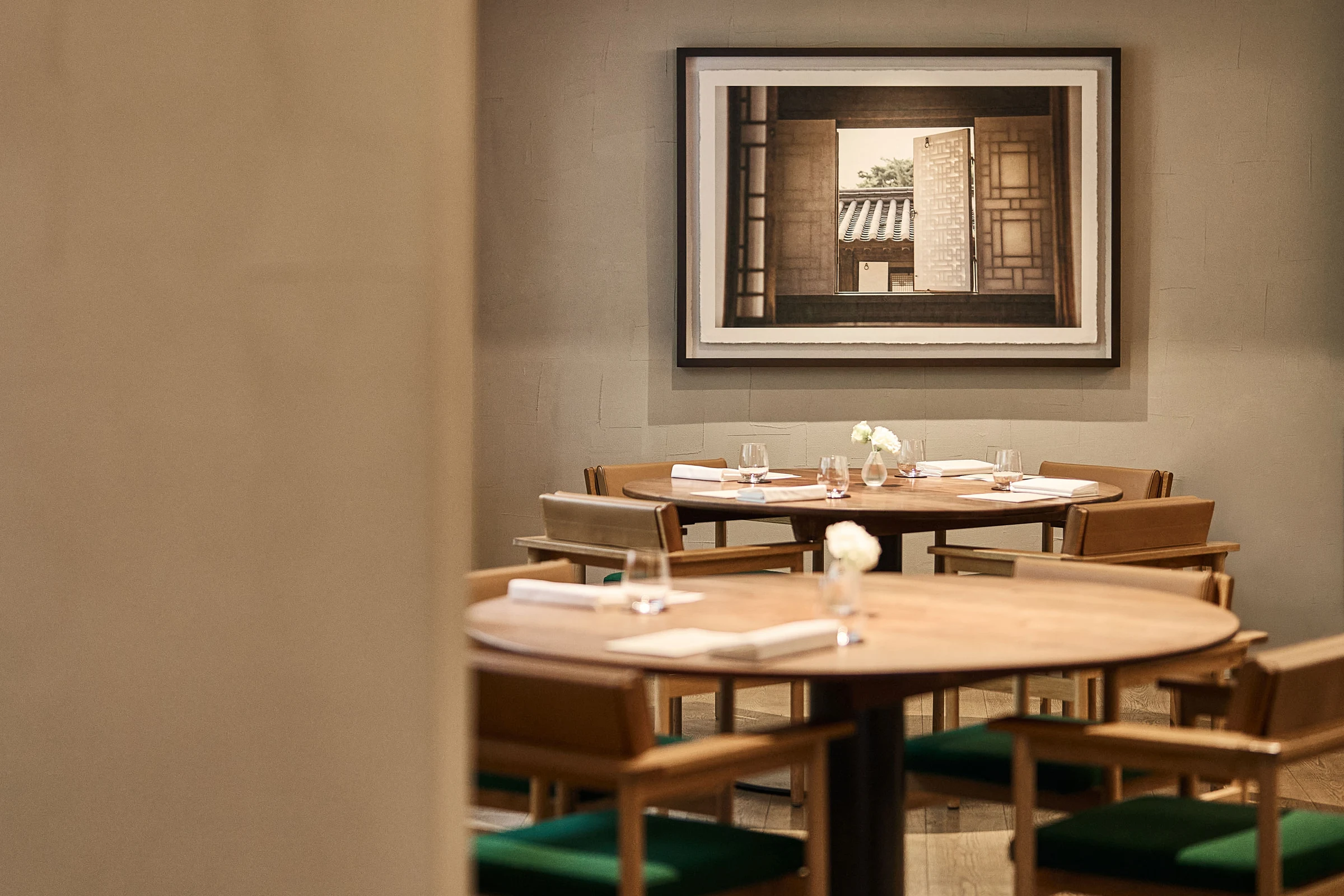
In Seoul's Jongno District, the streets running off Sajik-ro carry a particular kind of institutional weight. The neighbourhood sits adjacent to Gyeongbokgung Palace and has fed government workers, scholars, and tradespeople for generations. The restaurant culture here skews toward singular, deeply practised formats rather than menus with range. A kitchen that has spent decades on one pot is not an outlier in Jongno; it is the norm. Daesungjip is a restaurant at 5 Sajik-ro in Jongno District, Seoul, serving Traditional Korean Doganitang.
The approach at this address is doganitang, a slow-cooked soup built around beef knee cartilage, a cut that demands long hours of heat to coax its dense collagen into something yielding. Among Seoul's guk and tang repertoire, doganitang occupies a specialist position. It is not the city's most approachable entry point for visitors, but it is one of the more technically demanding soups to execute well, and Michelin recognised Daesungjip with Bib Gourmand awards in 2024 and 2025.
What Bib Gourmand Recognition Means Here
The Bib Gourmand category is worth pausing on. In Seoul, the Michelin guide uses it to flag restaurants where the quality-to-price ratio is measurably strong rather than merely adequate. The distinction matters in a city where the starred tier runs from formal multi-course Korean tasting menus at venues like Gaon in Seoul and Kwonsooksoo through to contemporary Korean-French innovation at Mingles and Soigné. Daesungjip sits in a completely different competitive set: single-dish specialists at the lowest price tier, where the only variable being judged is whether the soup is worth crossing the city for.
Two consecutive years of Bib Gourmand recognition is not automatic. A listing held across multiple editions implies consistency of production rather than a one-off strong service. For a format as unforgiving as doganitang, where there is no tasting menu structure to redistribute attention and no dessert course to recover goodwill, that consistency is the entire point.
The Kitchen and Its Collaboration
Chef Jo Won-hyeon leads the kitchen, though in a format this focused, the distinction between chef, support team, and service is less hierarchical than it might appear. Doganitang production operates more like a craft workshop than a brigade kitchen. The broth begins hours before service, and the cartilage requires monitoring across its long cooking window. The front-of-house role in a soup house of this type is equally load-bearing: pacing tables through a format where every guest orders from the same narrow range means the floor team determines the rhythm of the entire operation.
At a specialist like Daesungjip, the team dynamic is often invisible precisely because it functions well. There is no tableside theatre, no elaborate plating sequence that requires a sommelier or a senior chef to execute in the dining room. What the floor team manages is the practical coordination of a high-turnover format where quality control depends on timing: soup served at the correct temperature and the pace calibrated so that a table of two finishes at roughly the same time. That kind of operational fluency is what sustains a Bib Gourmand listing across multiple years.
Where Daesungjip Fits in Seoul's Dining Spectrum
Seoul's fine-dining tier skews toward contemporary ambition. Jungsik and alla prima represent the city's appetite for progressive technique. 권숙수 in Gangnam-gu and similar addresses have pushed Korean fine dining toward formats that command price points comparable to their Tokyo or New York counterparts, a comparable set that includes addresses like Atomix in New York City. Against that backdrop, the Bib Gourmand tier performs a different cultural function: it keeps the guide connected to the everyday eating that defines how most Seoulites actually use their city.
Doganitang as a category sits at the intersection of traditional Korean restorative cooking and the city's longstanding culture of specialist soup houses. The dish is linked historically to colder months, when collagen-rich broths were prized for their warming and restorative qualities, though dedicated practitioners serve it year-round. Within the broader guk and tang canon, it is less well-known internationally than gomtang or seolleongtang, which means Daesungjip is operating in a niche that the Michelin guide is actively legitimising for a broader audience. For comparable regional precision in Korean temple cooking traditions, Baegyangsa Temple demonstrates a similar commitment to a single culinary lineage.
Planning a Visit
Daesungjip is on Sajik-ro in Jongno District, placing it within walking distance of Gyeongbokgung Palace and the broader Bukchon corridor. The price tier is single-won, meaning a full meal here sits at a fraction of what the starred tier in Gangnam commands. That positioning makes it accessible for visitors structuring a day around the northern historic districts, where a lunch stop at this address pairs logically with afternoon visits to the palace or Bukchon Hanok Village.
Arriving early, particularly at lunch, is the pragmatic approach for a restaurant with this level of recognition and price point. Google review data puts Daesungjip at 4.3 across 2,073 reviews. For visitors extending travel into the wider Korean peninsula, Mori in Busan and The Flying Hog in Seogwipo represent contrasting regional reference points. The Seoul wineries guide covers the city's emerging natural wine scene for those building an evening after a Jongno lunch.
Questions
Frequently asked
What recognition does Daesungjip hold?
Daesungjip holds a Michelin Bib Gourmand.
How expensive is Daesungjip?
Daesungjip is listed at a price level of $$.
Where is Daesungjip and what does it serve?
Daesungjip is in 무악동, Seoul, serving Traditional Korean Doganitang.
The field
How it compares
| Place | Cuisine | Notes | Awards |
|---|---|---|---|
| Daesungjip | Traditional Korean Doganitang | 무악동, $$ | · |
| alla prima | Modern Fusion Fine Dining | Seoul | Michelin 2 Stars, World's 50 Best |
| Eatanic Garden | Modern Korean Contemporary | Seoul | Michelin 1 Star, World's 50 Best |
| Evett | Modern Innovative Korean | Seoul | Michelin 2 Stars |
| Jungsik | Modern Korean Fine Dining | Seoul | Michelin 2 Stars, World's 50 Best |
| Mingles | Modern Korean Fine Dining | Seoul | Michelin 3 Stars, World's 50 Best |
| Onjium | Modern Korean Royal Court Cuisine | Seoul | Michelin 1 Star, World's 50 Best |
Similar places
Modern Fusion Fine Dining
alla prima
Seoul, South Korea
★★ · 50 Best
Modern Korean Contemporary
Eatanic Garden
Seoul, South Korea
★ · 50 Best
Modern Innovative Korean
Evett
Seoul, South Korea
★★
Modern Korean Fine Dining
Jungsik
Seoul, South Korea
★★ · 50 Best
Modern Korean Fine Dining
Mingles
Seoul, South Korea
★★★ · 50 Best
Modern Korean Royal Court Cuisine
Onjium
Seoul, South Korea
★ · 50 Best