De Leuf
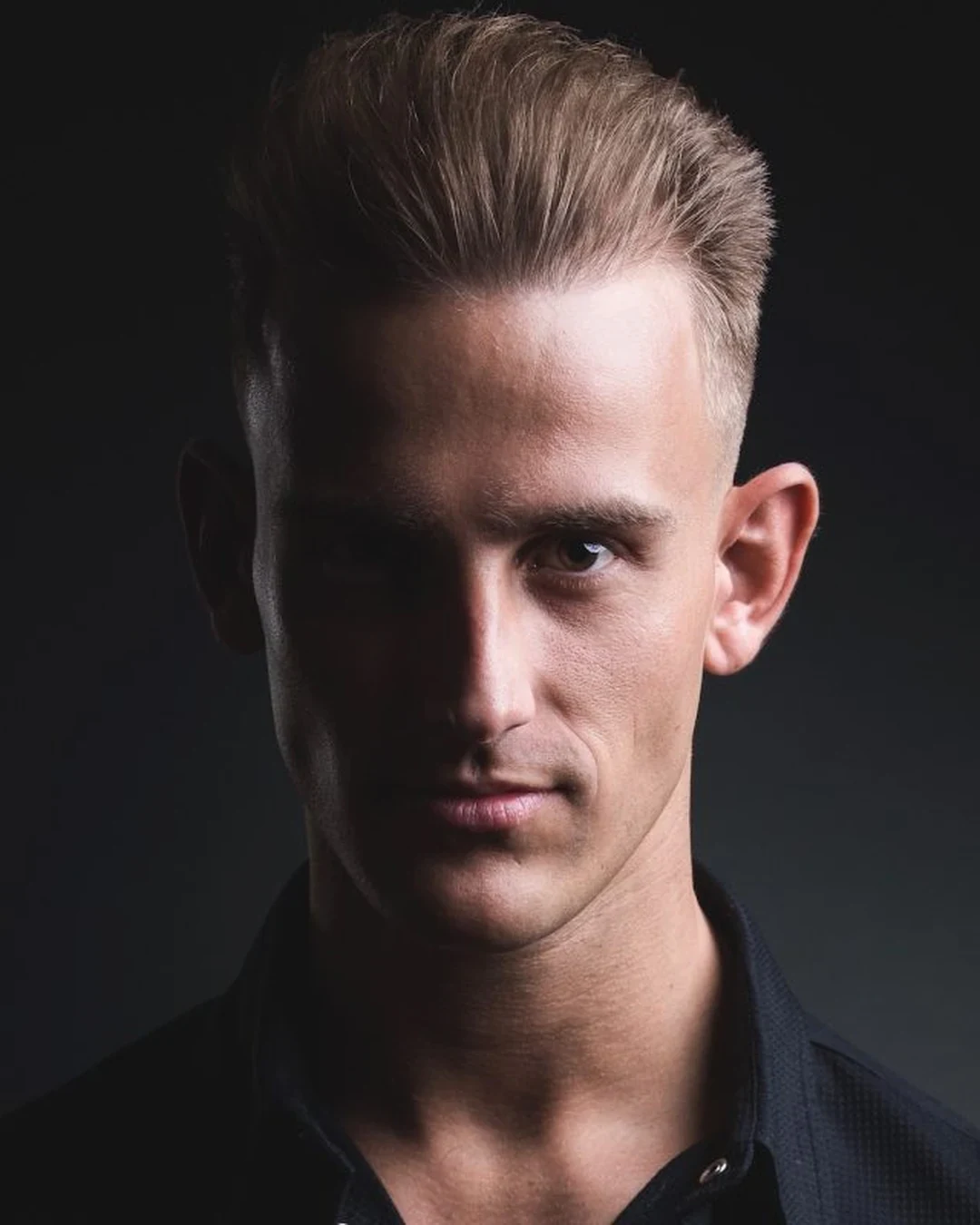
In Residence
Robin van de Bunt
Chef
- 01CuisineModern Fusion with Asian Flavours
- 02CityUbachsberg, Netherlands
- 03RecognitionOne Michelin Star
- 1 Michelin Star · Michelin Guide
- Michelin 1 Star · 2025
- Opinionated About Dining Classical in Europe Ranked #265 · 2025
- The Best Chef One Knife · 2025
- Michelin 1 Star · 2024
- Opinionated About Dining Classical in Europe Ranked #335 · 2024
- Opinionated About Dining Classical in Europe Recommended · 2023
A Farmhouse Setting That Earns Its Keep
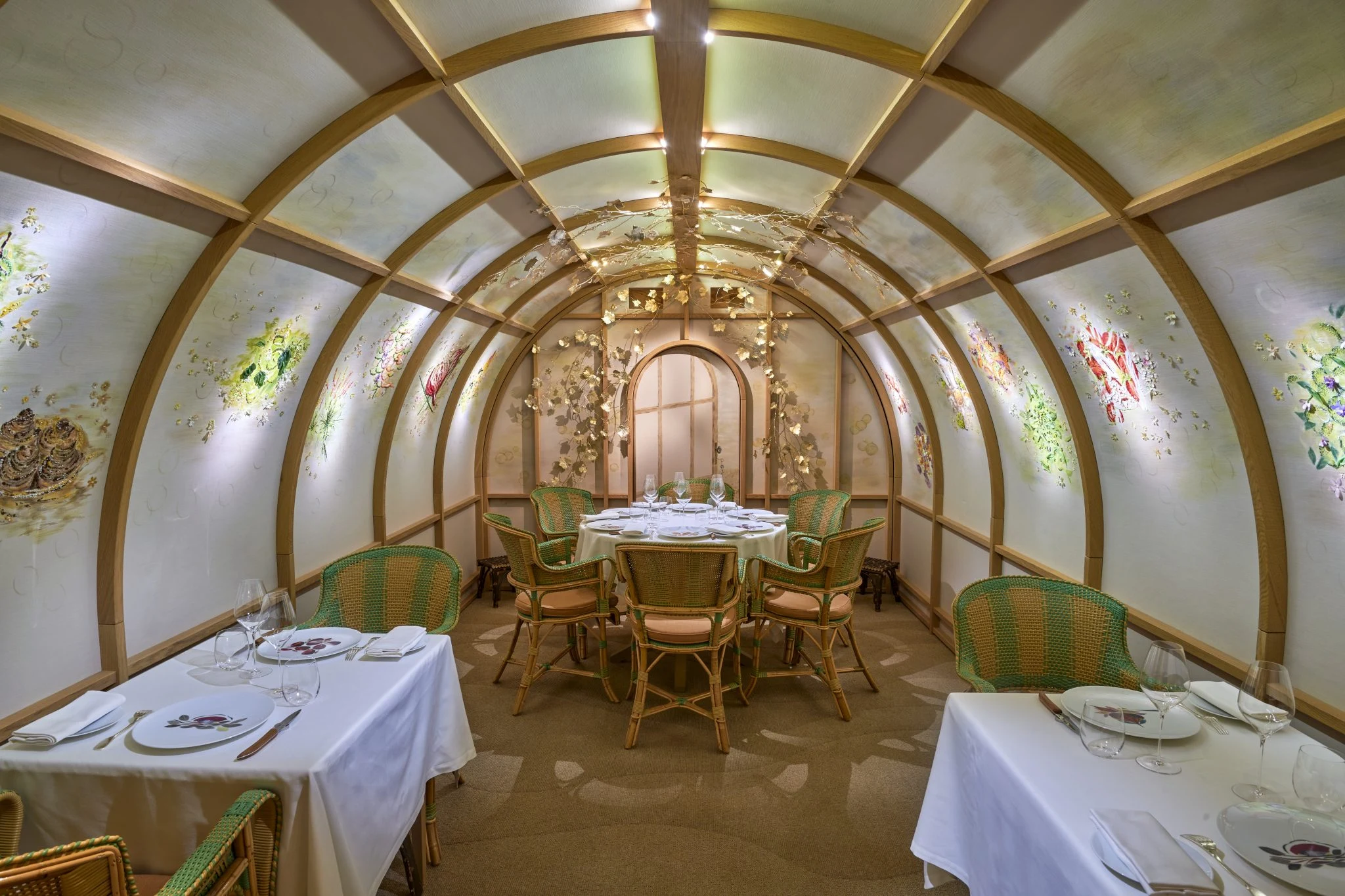
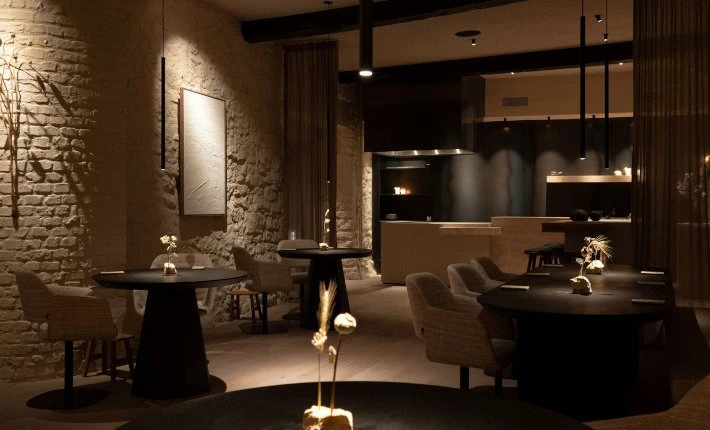
South Limburg sits at the southern tip of the Netherlands, where the landscape folds into low hills and half-timbered villages that read nothing like the flat, canal-threaded image most visitors carry of the country. Ubachsberg, a hamlet within the municipality of Voerendaal, belongs to this quieter register. The drive to Dalstraat 2 takes you past rolling agricultural land and compact stone buildings; the restaurant itself, a farmhouse dated to 1769, fits without effort into that fabric. The half-timbered structure has been updated with a Japanese zen sensibility in its interior, a combination that sounds incongruous on paper but holds its logic once you understand what is being cooked inside.
This kind of setting carries its own expectations in the Dutch fine-dining conversation. Properties that occupy historic rural buildings often lean on heritage as a crutch, letting atmosphere do the work that the kitchen should do. De Leuf does not operate that way. The Michelin star, the 2025 Opinionated About Dining Classical in Europe ranking at #265, and a Google score of 4.8 from 408 reviews establish a credibility that the surroundings amplify rather than substitute for.
Where the Kitchen Sits in the Dutch Creative Scene
The Netherlands has produced a dense tier of Michelin-recognised creative kitchens in recent years. At the upper end of that bracket sit houses like De Librije in Zwolle at three stars and 't Nonnetje in Harderwijk and De Lindehof in Nuenen at two. De Leuf operates one rung below that in star count but runs at the same price tier: a four-symbol bracket shared with peers including Aan de Poel in Amstelveen, Ciel Bleu in Amsterdam, and De Bokkedoorns in Overveen. The OAD ranking places it meaningfully ahead of several starred peers in terms of critical regard.
The creative category in the Netherlands spans a range from vegetable-forward naturalism, as at De Nieuwe Winkel in Nijmegen, to French-influenced classicism, as at FG - François Geurds in Rotterdam. De Leuf sits on a different axis: European classical structure with Asian flavour principles woven through the menu. That positioning is less common in the Dutch dining scene and gives the kitchen a distinct competitive identity rather than a niche one. For readers who also follow creative programming elsewhere in Europe, the comparison to Platán Gourmet in Tata offers a useful lens on how Central European kitchens are working the same East-meets-classical tension.
The Kitchen's Logic: Classical Training, Asian Orientation
De Leuf has clear precedents in this culinary conversation. Over the past two decades, a significant number of European chefs trained in classical technique have built menus that draw on Japanese and broader Asian flavour frameworks: fermentation-forward umami, precise temperature work, the interplay of fat and acid rather than fat and richness. What distinguishes the approach here from simple fusion is that Robin van de Bunt works from a classical foundation and uses Asian references as an expressive layer rather than as a theme.
OAD's published notes are specific on this point. The miso-marinated sea bass served with crispy flattened rice and a shiitake-and-bonito sauce is described not as a departure from European technique but as an extension of it: the sauce logic is European in structure, the umami sourcing is Japanese. The shiso leaf ice cream entry, paired with lukewarm rice and sakura-and-black-sesame coulis, arrives at the dining counter as an aperitif sequence, setting the register before the main courses begin. These details, drawn directly from OAD's assessment, suggest a kitchen that has internalised rather than borrowed its Asian references.
The OAD notes also flag that local produce remains the primary ingredient source. It is using local Limburg ingredients and applying a flavour vocabulary shaped by the chef's travel through Asia. That combination, local sourcing and Eastern seasoning, has become a template across several European kitchens, but it is less common in the Dutch south than in cities like Amsterdam or Rotterdam. The relative scarcity of this approach in the region gives De Leuf a more distinct position than its star count alone would suggest.
The Family Structure as a Service Model
Family-run fine-dining houses in Europe occupy a particular position in the OAD classical tradition. The guide has consistently recognised properties where ownership, front-of-house, and kitchen are integrated at family level, and De Leuf fits that model precisely. Sandra van de Bunt holds the hosting role, her daughter Michelle works the room, and Robin runs the kitchen. The OAD citation describes the trio's enthusiasm and dedication as extraordinary, which in the context of a guide that prizes classical hospitality standards is not casual praise.
In practical terms, this structure means service continuity that larger brigade operations rarely achieve. The dining counter where guests receive initial aperitifs on arrival is a deliberate choreographic decision: it places the kitchen and the dining room in direct contact from the first moment, and in a family operation, that contact is personal rather than procedural. For guests who have eaten at comparably priced houses where the front-of-house is managed by hired professionals with higher turnover, the difference in texture is noticeable. Nearby Brut172 in Reijmerstok and De Treeswijkhoeve in Waalre offer points of regional comparison for readers assessing the South Limburg and North Brabant fine-dining cluster more broadly.
Planning a Visit: Hours, Timing, and the Regional Context
De Leuf operates on a schedule that reflects both the demands of a kitchen at this level and the rhythms of a family business. Lunch service runs Thursday through Saturday from noon to 1 PM. Dinner runs Tuesday, Thursday, Friday, and Saturday from 6:30 PM to 8 PM. The restaurant is closed Sunday, Monday, and Wednesday. That five-service week is tight by any measure, and the implication for planning is clear: availability is structurally limited even before accounting for demand. Advance booking is not a courtesy here; it is a logistical requirement.
Ubachsberg itself is not a destination with supporting hospitality infrastructure at the same level as Amsterdam or Maastricht, which lies roughly 20 kilometres to the south. Guests driving from Maastricht will find the journey short; those arriving from Amsterdam or other major Dutch cities should factor in around two hours by car and consider whether to overnight in the Voerendaal or Maastricht area. For those wanting to build a wider regional trip, our full Ubachsberg restaurants guide, hotels guide, bars guide, wineries guide, and experiences guide cover the broader area in detail. The South Limburg wine and gastronomy scene has been building steadily, and De Leuf is its most critically recognised anchor.
The four-symbol price tier places a meal here at the upper end of Dutch restaurant spending. For context, that is the same tier as the comparison venues listed above, including two- and three-star properties in larger cities with higher operating costs. The value calculation in a rural farmhouse setting is different from a city-centre address. What you are paying for is access to a kitchen that has earned sustained critical recognition and a hospitality model that is harder to find at this level than the star count might suggest.
Questions
Frequently asked
What recognition does De Leuf hold?
De Leuf holds 1 Michelin star.
Who works at De Leuf?
Made By profiles Robin van de Bunt (Chef) at De Leuf.
How expensive is De Leuf?
De Leuf is listed at a price level of $$$$.
Where is De Leuf and what does it serve?
De Leuf is in Ubachsberg, Ubachsberg, serving Modern Fusion with Asian Flavours.
The field
How it compares
| Place | Awards | Cuisine | Notes |
|---|---|---|---|
| De Leuf | Michelin 1 Star | Modern Fusion with Asian Flavours | Ubachsberg, $$$$ |
| Arpège | Michelin 3 Stars, World's 50 Best | Vegetable-Focused French Fine Dining | Paris |
| Martin Berasategui | Michelin 3 Stars, World's 50 Best | Modern Basque Fine Dining | Lasarte - Oria |
| Odette | Michelin 3 Stars, World's 50 Best | Modern French Fine Dining | Singapore |
| Quince | Michelin 3 Stars, World's 50 Best | Modern French Fine Dining | San Francisco |
| Restaurant Sat Bains | Michelin 2 Stars | Modern British Fine Dining | Nottingham |
| The Fat Duck | Michelin 3 Stars, World's 50 Best | Modern British Molecular Gastronomy | Bray |
In residence
Similar places
Vegetable-Focused French Fine Dining
Arpège
Paris, France
★★★ · 50 Best
Modern Basque Fine Dining
Martin Berasategui
Lasarte - Oria, Spain
★★★ · 50 Best
Modern French Fine Dining
Odette
Singapore, Singapore
★★★ · 50 Best
Modern French Fine Dining
Quince
San Francisco, United States
★★★ · 50 Best
Modern British Fine Dining
Restaurant Sat Bains
Nottingham, United Kingdom
★★
Modern British Molecular Gastronomy
The Fat Duck
Bray, United Kingdom
★★★ · 50 Best