Organic Barolo aged in large botti
- Falstaff Winery - Listed · 2026
Vineyard first, cellar second
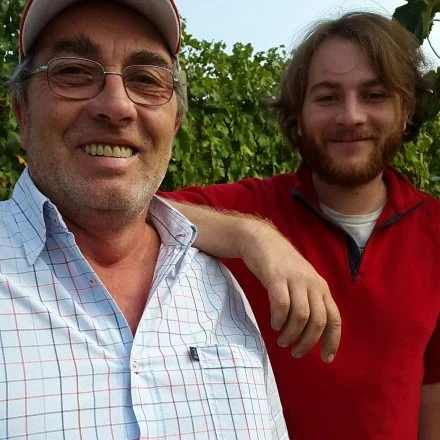
Nebbiolo sets the terms before the cellar begins. Diego Conterno, winemaker at Diego Conterno in Monforte d'Alba, works from vineyards that keep Barolo close to its source. His formation runs through Umberto 1 Enological School, then through the years he spent as co-founder of Conterno-Fantino in Monforte d'Alba from 1982-2000. Since 2000, he has carried his own name on the label as founder and wine producer, with the same commune still doing the principal work. The estate began with a first vintage in 2003, when Conterno bottled 1,300 bottles of Barolo. That scale matters here because the house has grown without changing its center of gravity: organically farmed vineyards in Monforte d'Alba, traditional Piedmontese wines, and a cellar vocabulary built around patience rather than correction. His own line gives the measure of it: “My life and my story are tied to Monforte d'Alba — to its people, its vineyards, and its wines.” The sentence names the order of obligation. People, vineyards, wines. The winery follows that order.
Large botti and the long wait
The method at Diego Conterno belongs to traditional Barolo: Nebbiolo for Barolo DOCG, supported by Dolcetto, Barbera, and Nascetta in the wider cellar. The estate farms 20 acres (7.5 hectares) organically, working without synthetic pesticides, herbicides, or fertilizers. In the cellar, fermentation follows a low-intervention line, with long maceration and aging in large, neutral oak botti rather than small barriques. The point is not to erase the hand. It is to keep the hand from speaking louder than Monforte d'Alba. Barolo DOCG requires 38 months of aging, including at least 18 months in wood; this house often lets its Barolo rest for 4-5 years before release. Those months are part of the structure, not a decorative claim. The tannin has to carry the wine, the fruit has to hold its place, and the oak has to remain in the background. Production is about 45,000 bottles annually, roughly 3,750 cases, still small enough for the vineyard and the cellar to remain in direct conversation.
A quiet estate above its rows
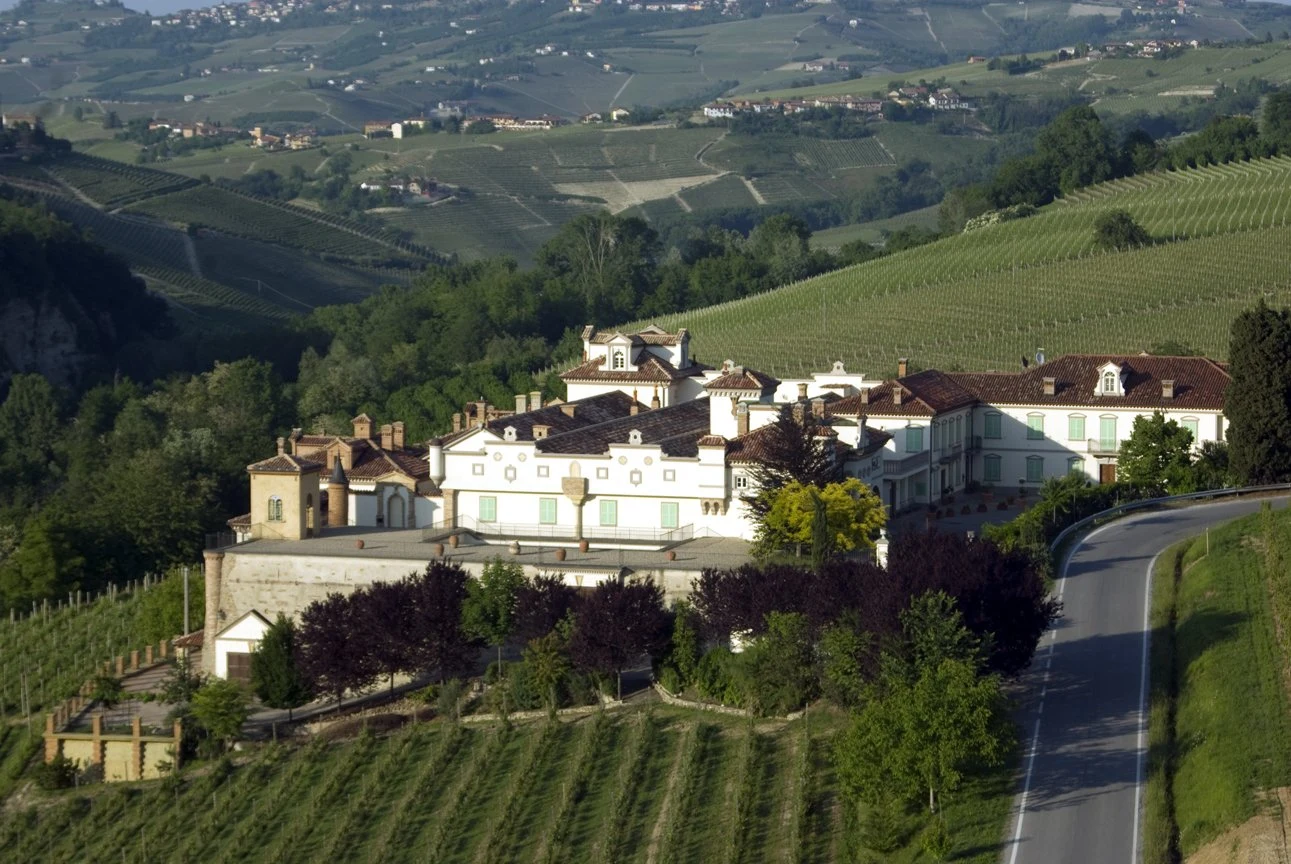
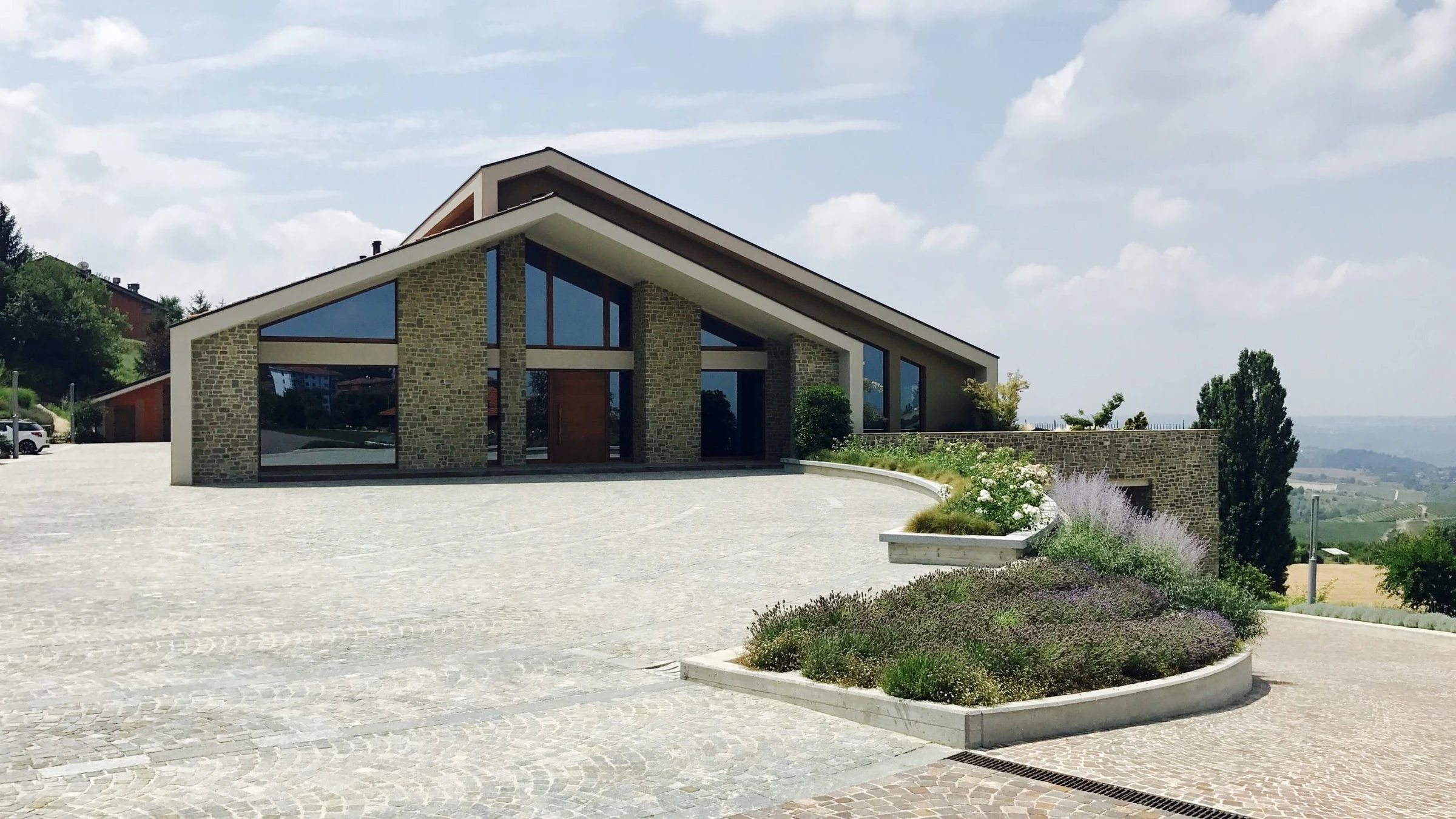
The tasting room reads as an extension of the cellar, not as a separate performance. The estate sits on the outskirts of Monforte d'Alba, overlooking several of its own vineyards, so the line between glass and row stays visible. Tastings here are built around Barolo, commune identity, and the cellar itself: classic Barolo tastings, Monforte-focused pours, and private cellar visits that return the conversation to soil, maceration, botti, and release. The atmosphere is quiet, family-run, and close to the work. There is no need for noise when the vineyard is in view. Nebbiolo, Dolcetto, and Barbera give the room its working grammar, while Langhe Bianco Nascetta keeps the portfolio from narrowing into a single note. Barolo Ginestra holds the house line most clearly.
Questions
Frequently asked
What kind of winery is Diego Conterno?
Diego Conterno is a quiet, cellar-led winery in Monforte d'Alba that makes organic Barolo and other traditional Piedmontese wines.
Who is behind the wines here?
The wines are made by Diego Conterno, who studied at Umberto 1 Enological School and worked as co-founder of Conterno-Fantino in Monforte d'Alba from 1982 to 2000 before founding the estate under his own name in 2000.
What is the house style?
The estate farms its vineyards organically and works with low-intervention cellar methods, including long maceration and aging in large, neutral oak botti rather than small barriques.
How do visits work?
Visits are by appointment only, and the tasting room looks over several of the estate's own vineyards on the outskirts of Monforte d'Alba.
The field
How it compares
| Place | Notes |
|---|---|
| Diego Conterno | Monforte d'Alba, $$$ |
| Aldo Conterno | Monforte d'Alba |
| Giacomo Conterno | Monforte d'Alba |
| Gianfranco Alessandria | Monforte d'Alba |
| Parusso | Monforte d'Alba |
| Piero Benevelli | Monforte d'Alba |
| Tre Pile | Monforte d'Alba |