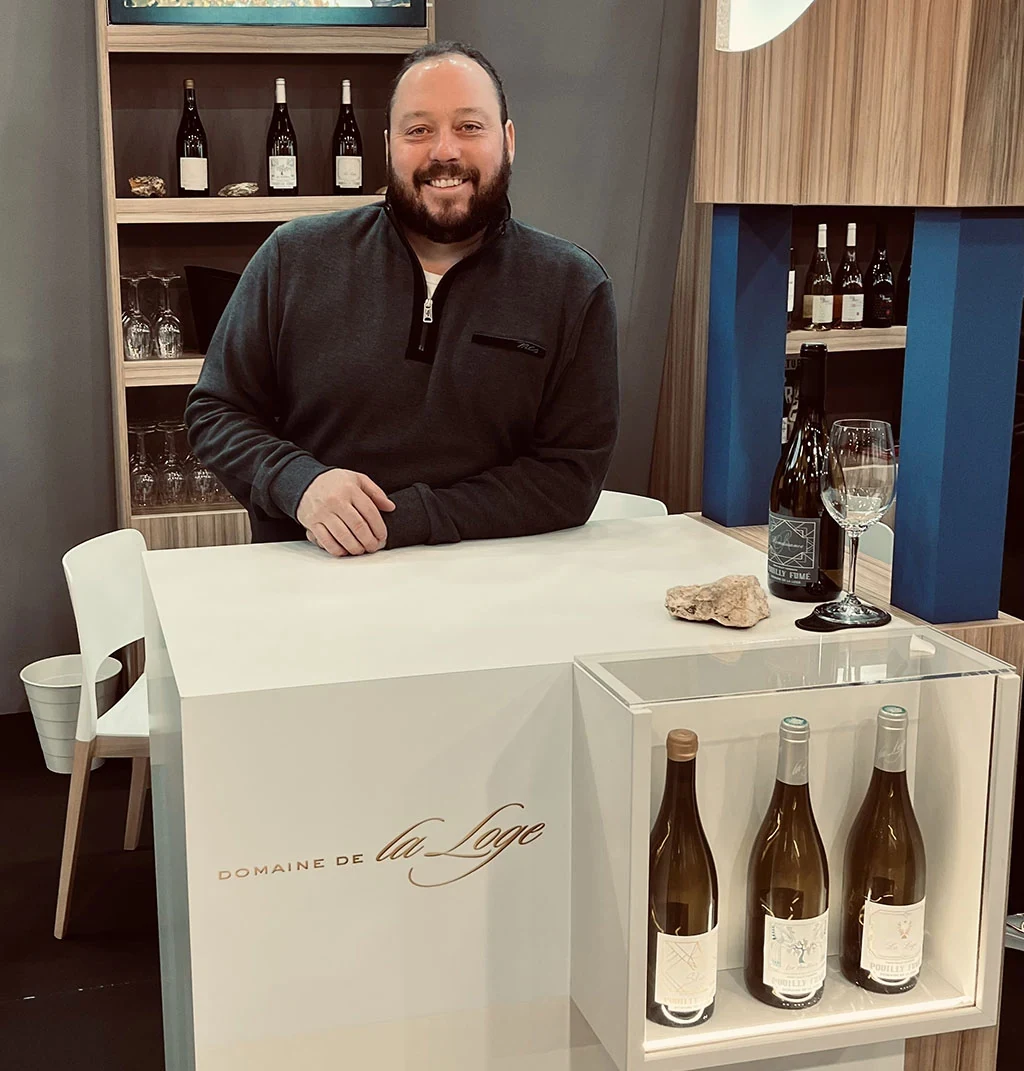
David Millet makes Pouilly-Fumé as winemaker at Domaine de la Loge in Saint-Andelain, working family parcels in Soumard.
David Millet keeps the line from parcel to bottle as winemaker at Domaine de la Loge in Saint-Andelain, with Sauvignon Blanc and Chasselas at the center of the bench. In the hamlet of Soumard, he works a family estate whose present shape follows the Millet household: Hervé Millet before him, and David now carrying the domaine’s wine work as its main discipline. His formation at Liceo Hotelero Yzeure gave him a service-trained sense of order before the vineyard became the station. That background matters here because the cellar asks for sequence, cleanliness, timing, and a refusal to hurry the decision that belongs to the fruit. The estate’s roots reach to the 19th century, but the current work is not held in place by nostalgia. After 2016, the domaine left livestock behind and put its full weight into wine. David Millet now holds that focus through Pouilly-Fumé and Pouilly-sur-Loire, reading the family parcels not as a backdrop, but as the working material. The house speaks plainly through named cuvées: La Loge, Les Aveillons, Silex, Renaissance, and Cuvée Ephémère. Each name marks a choice about soil, vessel, age, or style.
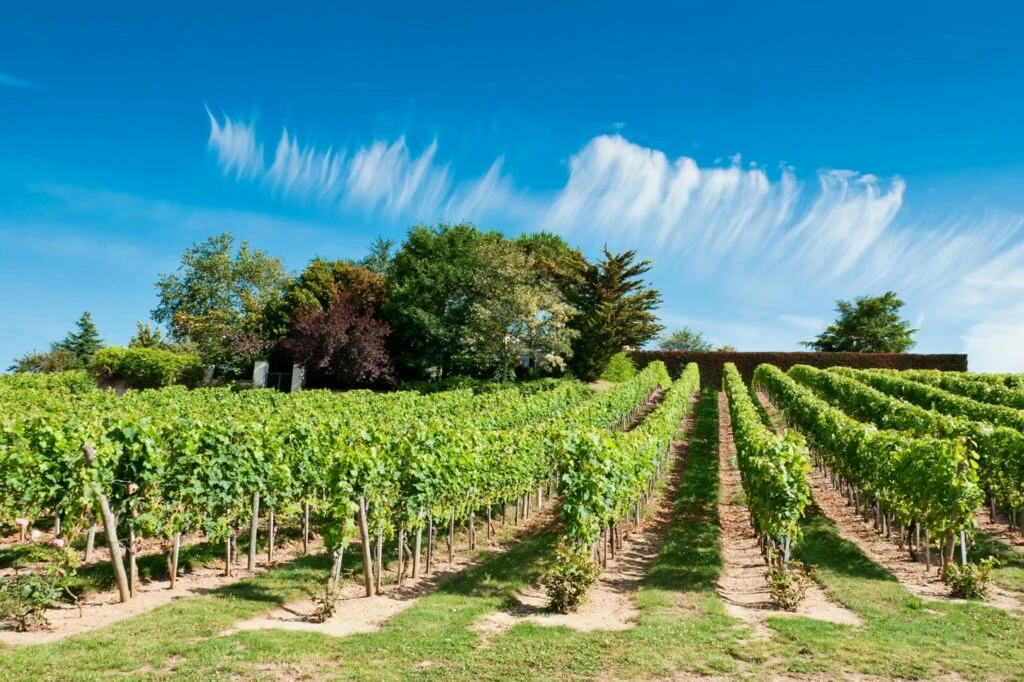
The domaine farms 19 hectares with south-west-facing vines on clay, flint, argileous sands, marl, and sandy-clay soils. Those words are not decoration in Pouilly-Fumé. Flint gives the wines their pierre à fusil register; marl and clay bring another weight to the fruit; the blends let Millet set one parcel against another without losing the appellation’s line. La Loge assembles several terroirs, including flint, marl, argilo-calcaire, and argileous sands, into the estate’s central Pouilly-Fumé. Les Aveillons comes from 65-year-old vines on marl and spends 9 months in stainless steel tanks, a vessel choice that keeps the wine close to its cut and aromatic clarity. Renaissance moves differently: 80-year-old vines on red flint and marl, vinified in 500L ovoïde tanks for one year. The shape keeps the wine in motion without turning the vessel into the subject. Silex stays closer to the flint signature, while Cuvée Ephémère carries Sauvignon Blanc and Chasselas into a traditional method sparkling wine. The program is conventional in philosophy, but not careless; tradition and modern technique meet where the wine needs them.
The cellar at Domaine de la Loge is rural before it is theatrical. Tastings happen at a conversational pace, with the family’s hospitality built around time rather than ceremony. The room belongs to the wines first: still whites from Pouilly-Fumé and Pouilly-sur-Loire, a sparkling cuvée when the release is on the table, and the steady return to Sauvignon Blanc as the domaine’s main tongue. Soumard sits inside Saint-Andelain rather than on a grand avenue of wine tourism, and that scale changes the encounter. The tasting room, the cellar, and the vineyard read as parts of one working estate. There is talk, but the talk follows the glass. A visitor may arrive for Silex and leave understanding why Les Aveillons needs steel, why Renaissance takes the ovoïde tank, and why Chasselas still has a place beside Sauvignon Blanc here.
The important turn in the recent life of the estate is practical: after 2016, Domaine de la Loge focused solely on wine production. That narrowing gave Millet a clearer frame for the family name, the parcels, and the cellar work. Nothing here asks to be enlarged for effect. The next measure is the same one already in the glass, how Soumard continues through David Millet’s hands.
Saint-Andelain, Bourgogne-Franche-Comté, Frankreich
Soumard