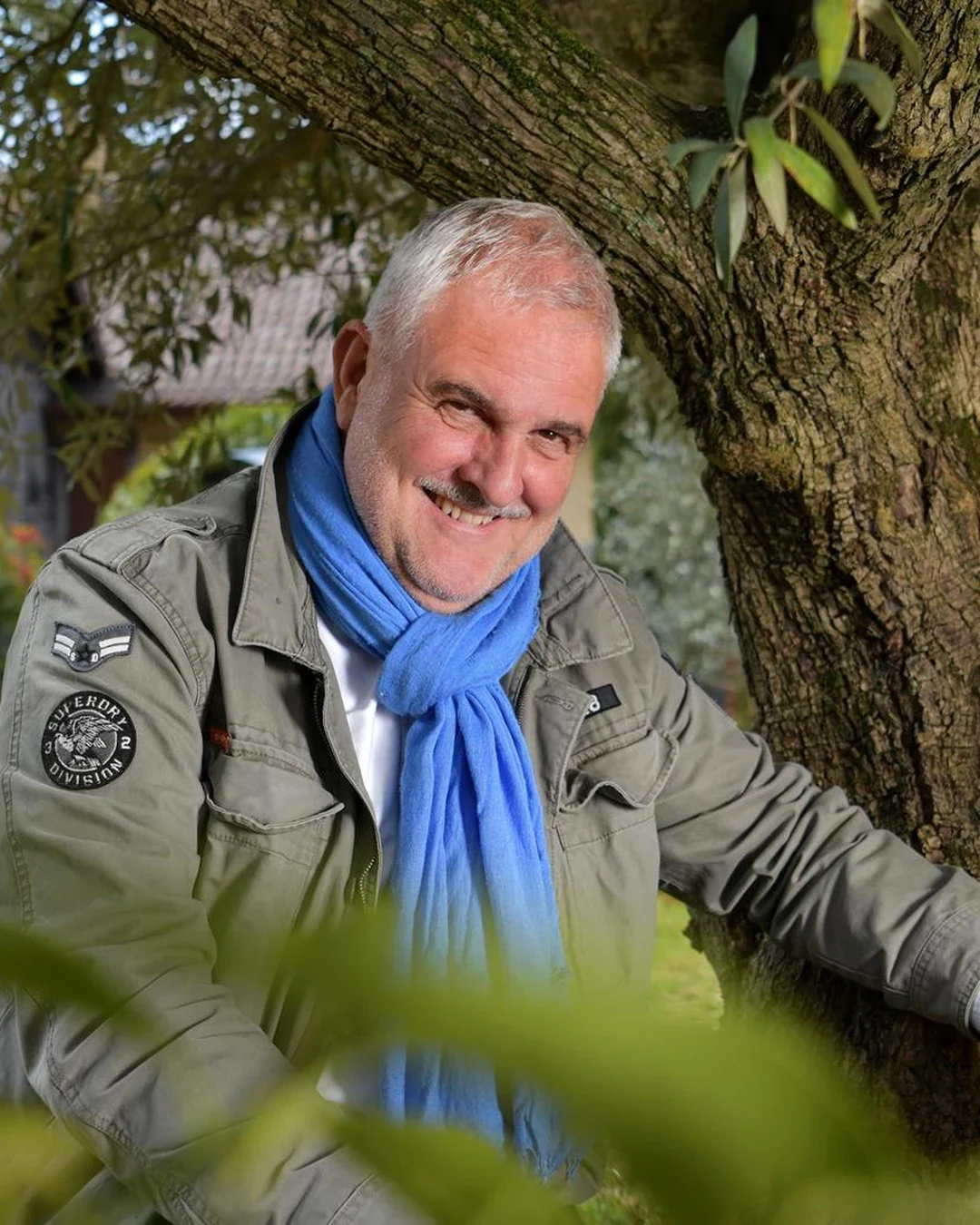
Philippe Gex, winemaker at Domaine de la Pierre Latin in Yvorne, carefully works Chasselas from steep Chablais parcels.
The blend begins on steep ground: Philippe Gex works as winemaker Philippe Gex at Domaine de la Pierre Latin in Yvorne, drawing Chasselas from the Chablais slopes before the cellar decides its pace. The estate sits in the village of Yvorne, in Vaud, where the vineyard climbs in terraces and the language of the glass stays close to the land. Gex’s role is not described through a public apprenticeship or a named predecessor; the house places him here, at this family domaine, with the seasonal decisions of a small Swiss estate in his hands. That means the work starts before any vessel is filled. The parcels face west and southwest, taking their light later in the day, and the altitude runs between 400 and 500 meters. The gradients reach 35% to 40%, enough that vineyard work carries its own physical discipline. In this place, winemaking is less a signature imposed on fruit than a sequence of restraints: picking from the right slope, keeping the site legible, and letting Yvorne AOC carry the line.
L’Yvorne Grand Cru Blanc gives the clearest view of the method. The wine comes from eight small parcels and stays entirely with Chasselas, the Vaud grape that can turn broad if handled loosely and severe if stripped too far. Here, the cellar divides the raising between two-thirds stainless steel and one-third cement egg vessels. The steel protects freshness and clean aromatic edges; the cement gives movement and texture without the taste of oak. After fermentation, the wine spends a year on fine lees before bottling. Those figures matter because they show the discipline of the program without dressing it up. The wine’s register is not built from extraction or new wood. It is built from slope, vessel, and time. Published tasting notes for the Grand Cru Blanc point to fennel, dried honey, raw almonds, and dried strawberries, a set of aromas that suits Chasselas when the lees work has added breadth but not weight. The estate also produces a range of Chablais and Yvorne AOC wines, including still white, red, and rosé, though the Grand Cru Blanc is the bottle with the most clearly stated method.
The room here is quiet in the way small family wineries often are: not arranged for spectacle, but for the passage from vineyard to tank to bottle. The cellar sits within a rural Vaudois setting, with Yvorne’s terraced vineyards around it and the Chablais slopes falling away beyond the village. The tasting room, when opened to guests by arrangement, belongs to that same scale. It is intimate because the estate is intimate, and because the work does not separate hospitality from production by much distance. The view is part of the place, but not the subject. The subject is the way the hillside returns in the glass, through Chasselas grown on steep ground, raised partly in cement, and left on its fine lees long enough to gather texture.
The estate’s current public recognition comes from the bottle that carries its name into the wider market. L’Yvorne Grand Cru Blanc fixes the domaine’s argument in a plain form: Chasselas from eight parcels, west and southwest exposure, high Vaud slopes, steel, cement, and a year on lees. That sequence keeps the place specific, down to L’Yvorne Grand Cru Blanc.
Yvorne, Chablais Vaudois, Canton of Vaud, Schweiz
Yvorne