Made ByWinery
Domaine de la Vougeraie is a Burgundy estate in Premeaux-Prissey producing Pinot Noir and Chardonnay across parcels that span some of the Côte de Nuits' most consequential appellations. Under winemaker Pierre Vincent, the domaine has worked since its 1999 founding toward a biodynamic approach that prioritises site expression over stylistic intervention. It holds a Pearl 3 Star Prestige rating for 2025.
At a glance
- Price
- $$$$
- Neighborhood
- Premeaux-Prissey
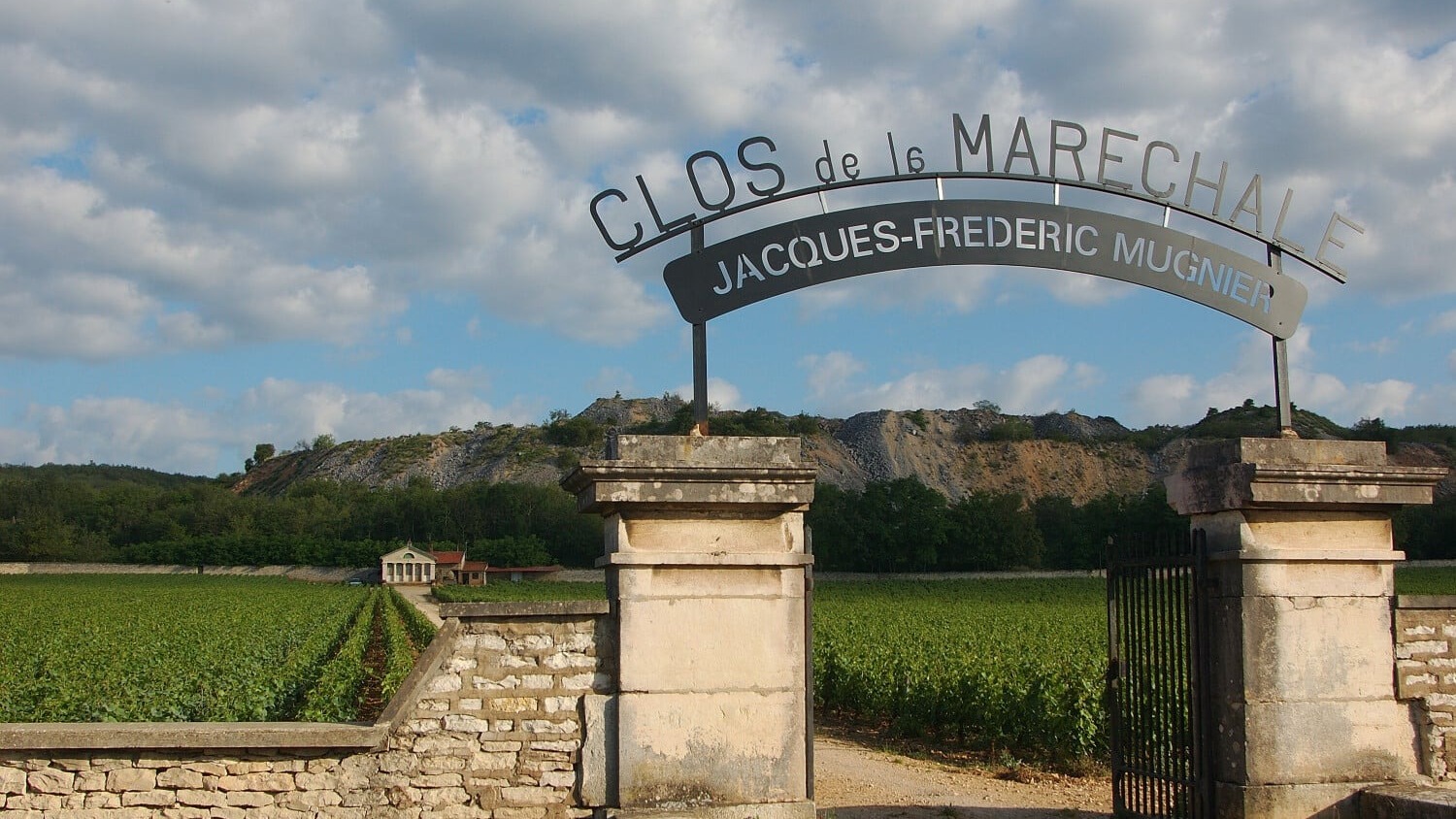
<h2>What the Côte de Nuits Looks Like from the Bottom Up</h2><p>Domaine de la Vougeraie is a winery in Premeaux-Prissey, Burgundy, under winemaker Pierre Vincent. This positioning matters. Estates working here must reckon with a patchwork of classification levels simultaneously: their home appellation's village and premier cru parcels, plus the grand cru holdings further north that give Burgundy much of its international price architecture. Domaine de la Vougeraie operates across this full vertical, with parcels ranging from village-level land to grand cru sites, which means the domaine functions as something of a cross-section of Burgundian terroir logic rather than a single-appellation specialist.</p><p>That breadth makes it a useful lens for understanding how Burgundy's classification system actually translates into the glass. The same winemaking philosophy applied to a Gevrey-Chambertin premier cru and a Vougeot grand cru will yield different wines not because the winemaker changed approach but because the soils, drainage, and microclimate shifted. This is the argument Burgundy has always made about itself, and estates with cross-appellation holdings are where that argument gets tested most rigorously.</p><h2>Biodynamic Practice as Site Intelligence</h2><p>The broader shift toward biodynamic viticulture in Burgundy over the past two decades has moved from fringe credibility to something close to mainstream expectation among the appellation's most respected producers. What distinguishes the better-executed biodynamic programs from the performative ones is whether the practice appears to sharpen site expression or simply add a certification. Domaine de la Vougeraie, working biodynamically across its holdings since the early 2000s, belongs to the former category. The approach, under winemaker Pierre Vincent, treats the vineyard calendar and soil biology as tools for amplifying what each parcel communicates rather than standardising output across the estate.</p><p>In practice, this means that the estate's wines from different appellations read differently in the glass, which is exactly the point. A Bonnes-Mares should not taste like a scaled-up Nuits-Saint-Georges, and a Vougeot should carry the particular clay heaviness of its low-lying parcels. Whether that differentiation is being achieved consistently is the question a serious tasting would answer, and Pierre Vincent's tenure provides enough vintage depth, the domaine's first vintage was 1999, to assess trajectory rather than just snapshot.</p><p>For context, comparable biodynamic-leaning Côte de Nuits estates like <a href="https://www.enprimeurclub.com/wineries/domaine-jerome-chezeaux-premeaux-prissey-winery">Domaine Jérôme Chezeaux</a>, also based in Premeaux-Prissey, and <a href="https://www.enprimeurclub.com/wineries/domaine-jacques-frederic-mugnier">Domaine Jacques-Frédéric Mugnier</a> further north in Chambolle-Musigny have established that restraint in the cellar does not require sacrifice in structure or ageability. Vougeraie sits within that conversation, though its scale, holding parcels across multiple appellations, creates a different kind of complexity than single-commune specialists face.</p><h2>Reading the Terroir Through the Appellation Map</h2><p>The domaine's name references Vougeot, the commune most associated with its holdings, but the estate's range extends across a span of Côte de Nuits appellations. This is not unusual for larger Burgundian estates but it creates an interpretive challenge for buyers: what is the house style, and how much of each wine is site versus cellar signature? The answer, in Vougeraie's case, leans toward site. The 1999 founding date coincided with a deliberate decision to assemble holdings that could make a case for appellation-level differentiation rather than blending toward a branded profile.</p><p>The Côte de Nuits limestone backbone expresses itself differently depending on altitude, slope aspect, and the proportion of clay versus gravel in the topsoil. Parcels above the tree line on the slope tend toward iron-minerality and tighter tannin structure; lower parcels carry more weight and earlier accessibility. Estates that span this range produce wines that require more engagement from the buyer, the entry-level wines may not hint at what the estate's leading parcels can do, but they also offer a more complete picture of what the region is capable of. Vougeraie's 2025 Pearl 3 Star Prestige recognition reflects sustained quality across that range, not just a single standout bottling.</p><p>Buyers approaching Burgundy from other French wine regions will find useful comparison points in how other prestige-oriented French estates manage appellation complexity. <a href="https://www.enprimeurclub.com/wineries/chateau-bastor-lamontagne">Château Bastor-Lamontagne in Preignac</a> and <a href="https://www.enprimeurclub.com/wineries/chateau-branaire-ducru-st-julien">Château Branaire Ducru in St-Julien</a> both operate within appellation systems where classification strongly influences pricing, making the discipline of consistent cross-tier quality a shared challenge. <a href="https://www.enprimeurclub.com/wineries/chateau-cantemerle-haut-medoc">Château Cantemerle in Haut-Médoc</a> and <a href="https://www.enprimeurclub.com/wineries/chateau-clinet-pomerol">Château Clinet in Pomerol</a> offer additional reference points for prestige French estates working at the intersection of terroir and sustained critical recognition.</p><h2>The Case for Visiting Premeaux-Prissey</h2><p>The village is small and quiet in the way that most of the Côte de Nuits is small and quiet outside of harvest. The address, 7 bis Rue de l'Église, puts the domaine within the village's historic core, alongside the church and the tight lanes that predate modern road planning. Approaching by car from Nuits-Saint-Georges to the north, the transition from town to village happens within minutes; Premeaux-Prissey is functionally adjacent but retains a distinctly agricultural character that Nuits-Saint-Georges, with its tourist infrastructure, has partially shed.</p><p>Visits to the domaine should be arranged in advance. The most productive visiting windows tend to be late spring, after the vine work of early season has stabilised, or autumn before harvest schedules compress the winemaking team's availability. Avoid August, when much of Burgundy operates on reduced staffing.</p><p>For those building a broader Burgundian itinerary, the Côte de Nuits is compact enough to cover significant ground in two to three days. Pairing Vougeraie with a visit to <a href="https://www.enprimeurclub.com/wineries/domaine-jerome-chezeaux-premeaux-prissey-winery">Domaine Jérôme Chezeaux</a> in the same village creates a useful local comparison. Expanding to <a href="https://www.enprimeurclub.com/wineries/domaine-jacques-frederic-mugnier">Domaine Jacques-Frédéric Mugnier</a> in Chambolle-Musigny adds a contrasting commune and a house whose Chambolle style differs markedly from Vougeraie's Nuits-adjacent approach.</p><p>For wine travellers whose itineraries extend beyond Burgundy, French prestige production covers considerable ground: <a href="https://www.enprimeurclub.com/wineries/albert-boxler-niedermorschwihr-winery">Albert Boxler in Niedermorschwihr</a> represents Alsace's top-tier Riesling and Pinot Gris production, and <a href="https://www.enprimeurclub.com/wineries/chartreuse-voiron-winery">Chartreuse in Voiron</a> offers a completely different frame for understanding French terroir-linked production. Further afield, <a href="https://www.enprimeurclub.com/wineries/chateau-belair-monange-saint-emilion-winery">Château Bélair-Monange in Saint-Emilion</a>, <a href="https://www.enprimeurclub.com/wineries/chateau-batailley-pauillac-winery">Château Batailley in Pauillac</a>, <a href="https://www.enprimeurclub.com/wineries/chateau-boyd-cantenac-cantenac-winery">Château Boyd-Cantenac in Cantenac</a>, and <a href="https://www.enprimeurclub.com/wineries/chateau-d-arche-sauternes-winery">Château d'Arche in Sauternes</a> form a Bordeaux circuit that contextualises Burgundy's terroir arguments against the Left and Right Bank's very different approaches to prestige production. For those with a broader international itinerary, <a href="https://www.enprimeurclub.com/wineries/aberlour-aberlour-winery">Aberlour in Aberlour</a> and <a href="https://www.enprimeurclub.com/wineries/accendo-cellars">Accendo Cellars in St. Helena</a> represent the Speyside and Napa Valley prestige tiers respectively.</p>
Know before you go
- Dress code
- smart_casual
- Reservations
- appointment_only
- Parking
- on_site_lot
Frequently asked
What's the address for Domaine de la Vougeraie?
Domaine de la Vougeraie is located at 7 bis Rue de l'Église, 21700 Premeaux-Prissey, Premeaux-Prissey.
Has Domaine de la Vougeraie won any awards?
Domaine de la Vougeraie has received recognition including: Pearl 3 Star Prestige (2025).
What's the must-try wine at Domaine de la Vougeraie?
The domaine's name references Vougeot, signalling where its grand cru ambitions are anchored, and those Vougeot holdings are the clearest argument for the estate's Pearl 3 Star Prestige recognition in 2025. Winemaker Pierre Vincent applies biodynamic principles across the full range, so the premier cru bottlings from Nuits-Saint-Georges also reward attention, particularly for tracking how site differences read across a single producer's hand.
What should I know about Domaine de la Vougeraie before I go?
The estate is based at 7 bis Rue de l'Église in Premeaux-Prissey, a village at the southern edge of the Nuits-Saint-Georges appellation. The domaine operates under biodynamic certification, which shapes everything from vine management to harvest timing.
What's the best way to book Domaine de la Vougeraie?
No booking link or public phone number is currently listed for the domaine. The most reliable route is through a négociant, a Burgundy specialist retailer who already holds an allocation, or a wine-focused travel operator with existing relationships along the Côte de Nuits. Estates at this level — Pierre Vincent's work here carries a Pearl 3 Star Prestige rating for 2025 — rarely take walk-in appointments.
How does biodynamic certification shape what Domaine de la Vougeraie produces across its Côte de Nuits holdings?
Under winemaker Pierre Vincent, biodynamic practice at the domaine is applied site by site rather than as a uniform house style, meaning each appellation in the estate's range is managed according to its specific soil and microclimate conditions. This approach is part of why the domaine earned a Pearl 3 Star Prestige rating in 2025, a recognition that tracks quality consistently across a producer's full portfolio rather than a single flagship wine. For collectors comparing Burgundy estates by farming philosophy, Vougeraie sits alongside the small group of producers in the Côte de Nuits who have committed to biodynamics at scale across both grand and premier cru parcels.
When does Domaine de la Vougeraie make the most sense to choose?
For anyone building a Côte de Nuits itinerary around terroir-driven production, Premeaux-Prissey positions this estate as a logical anchor: it sits at the appellation boundary where the limestone-clay geology shifts, and the biodynamic programme under Pierre Vincent is designed to make those site differences legible in the glass. The Pearl 3 Star Prestige award in 2025 places it among the most credentialled producers in the region for that specific philosophy.
Address
7 bis Rue de l'Église, 21700 Premeaux-Prissey
Premeaux-Prissey · Burgundy
How it compares
- Cuisine
- Pinot Noir, Chardonnay
- Price
- $$$$
- Awards
- 1 recognition
- Notes
- Premeaux-Prissey
Domaine Jacques-Frédéric Mugnier
- Cuisine
- Pinot Noir, Chardonnay
- Price
- $$$$
- Awards
- 1 recognition
- Notes
- Chambolle-Musigny
- Cuisine
- Pinot Noir, Gamay
- Price
- $$$
- Awards
- 1 recognition
- Notes
- Premeaux-Prissey
- Cuisine
- Pinot Noir
- Price
- $$$$
- Awards
- 1 recognition
- Notes
- Gevrey-Chambertin
- Cuisine
- Pinot Noir
- Price
- $$$$
- Awards
- 1 recognition
- Notes
- Gevrey-Chambertin
Domaine Paul Pernot et ses Fils
- Cuisine
- Chardonnay
- Price
- $$$$
- Awards
- 1 recognition
- Notes
- Puligny-Montrachet