Made ByWinery
- Michelin 2 Grapes · 2026
- Pearl 3 Star Prestige · 2025
The Sunday letter
Find new places through the people who run them.
Our Sunday email brings you the chefs, winemakers and hoteliers behind our newest stories. See a sample before you subscribe.
See a sample of the Sunday emailOne email a week. Unsubscribe from any issue.
The Côte Chalonnaise, the forty-kilometer stretch of Burgundy running south from the Côte de Beaune through Rully, Mercurey, Givry, and Montagny, operates inside the same terroir logic and varietal commitments as the more acclaimed appellations to the north, but at a production scale and economic tier that permits a different kind of winemaking autonomy. Rully sits at the northern edge of this zone, with roughly 340 hectares under vine split between Pinot Noir and Chardonnay, and a tradition of white winemaking that predates the nineteenth-century replanting campaigns that locked much of the Côte d'Or into red monoculture. Domaine Dureuil-Janthial, operating in Rully since Vincent Dureuil-Janthial took over the family estate in 1994, works inside this lineage, Côte Chalonnaise terroir, Côte d'Or technique, and has been recognized across two decades as one of the domaine-bottling operations that pushed Rully from a négociant-supply zone into a peer set alongside Meursault, Puligny-Montrachet, and Chassagne-Montrachet for serious white Burgundy.
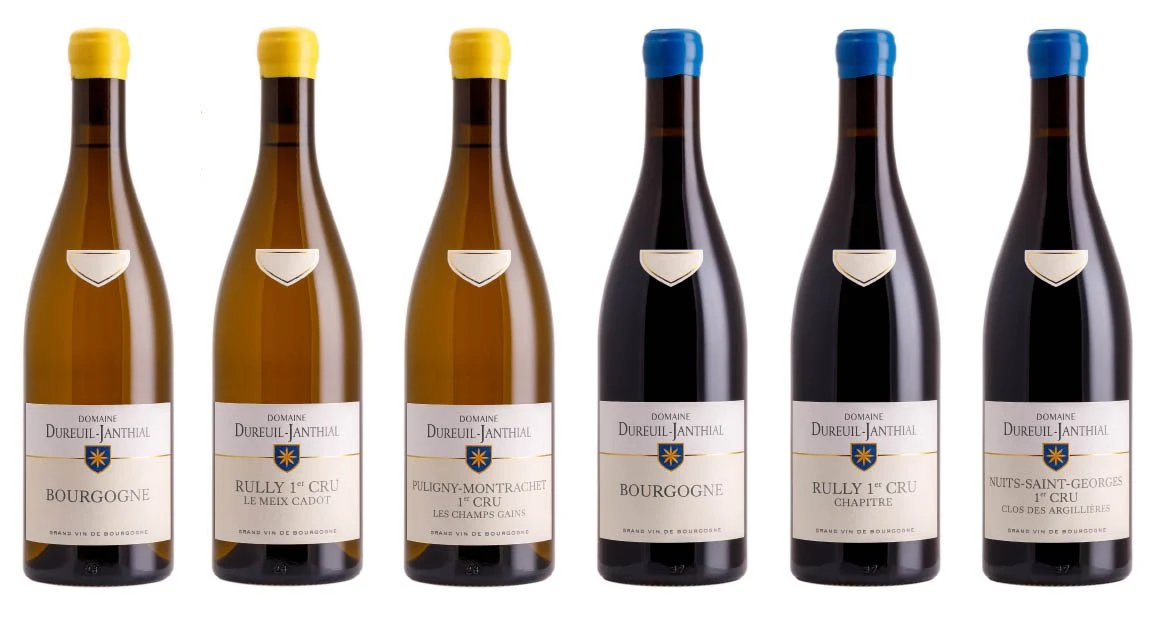
The domaine Vincent Dureuil-Janthial inherited in 1994 was a polyculture family farm running 5.5 hectares of vines alongside cereal and livestock operations, selling most of the fruit to négociants and bottling a small volume under the family name. Dureuil-Janthial converted the estate to vine-only production, expanded the holdings to roughly 19 hectares through purchase and long-term leases, and shifted the model to 100% domaine bottling. The current portfolio spans nine appellations, Rully Premier Cru, Rully village, Mercurey, Nuits-Saint-Georges Premier Cru (Clos des Argillières, acquired in 2006), Pernand-Vergelesses, Puligny-Montrachet, Chassagne-Montrachet, Auxey-Duresses, and Monthélie, with a production volume that sits at roughly 8,000 to 9,000 cases annually, placing the domaine inside the artisan-scale tier (over 4,000 cases, under 12,000) rather than the micro-négociant scale that dominates contemporary Burgundy. The first-vintage marker of 1994 anchors Dureuil-Janthial inside the generation of Burgundy winemakers who came to the cellar in the 1990s and early 2000s and rebuilt the Côte Chalonnaise's reputation inside the fine-wine market, a peer set that includes Aubert and Pamela de Villaine at Domaine A. et P. de Villaine in Bouzeron, François Lumpp in Givry, and Jérôme and Charles Guillard at Domaine Guillard-Clerc in Mâcon.
Dureuil-Janthial trained under his father Raymond Dureuil, who ran the family domaine from the 1960s through the early 1990s and bottled a small volume of wine under the Dureuil name while selling the majority of the estate's fruit to Antonin Rodet and other Côte Chalonnaise négociants. The elder Dureuil worked inside the cooperative-supply model that dominated Rully through the 1980s, short élevage, early bottling, stainless steel and large foudre rather than small oak, and the son's takeover in 1994 marked a technical break: Vincent Dureuil-Janthial introduced a small-barrel program (roughly 20% to 30% new oak across the white cuvées, higher for the Premier Cru bottlings), extended the élevage from six to eight months to twelve to fifteen months, and adopted a strict parcel-selection protocol that favors old-vine fruit (average vine age across the domaine is roughly forty years, with some Rully Premier Cru parcels over sixty years old) and low yields (typically 45 to 50 hectoliters per hectare for village-level Rully, 40 to 45 hl/ha for Premier Cru, against an AOC maximum of 58 hl/ha). The cellar work follows the Côte d'Or grand cru model, native-yeast fermentation, full malolactic conversion, bâtonnage for the first four to six months of élevage, bottling without fining or filtration on most cuvées, but the economic context is Côte Chalonnaise, with release prices that sit at roughly one-third to one-half the equivalent Puligny-Montrachet or Chassagne-Montrachet bottlings from similarly credentialed producers.
The domaine's white Burgundy program is anchored by three Rully Premier Cru cuvées, Grésigny, Rabourcé, and Meix Cadot, and the village-level Rully Blanc. Grésigny is the flagship: a 1.5-hectare parcel on the mid-slope of the Rully Premier Cru zone, planted in 1959, farmed organically since 2010 (though not certified), and vinified in roughly 30% new oak with a twelve-to-fifteen-month élevage. The wine typically shows the high-acid Chardonnay profile that defines Rully, green apple, white peach, chalky minerality, a citrus pith bitterness on the finish, but with a textural density and length that reads closer to a Meursault Premier Cru than to the thin, early-drinking Côte Chalonnaise whites that dominate the cooperative bottlings. Rabourcé, a 0.8-hectare parcel on deeper clay soils, runs cooler and tighter; Meix Cadot, a 1.2-hectare parcel on limestone, sits between the two. The village Rully Blanc is a multi-parcel blend, roughly 4 hectares of fruit, aged in older barrels (10% to 15% new oak), and released at a price point that competes with Mâcon-Villages rather than with Côte de Beaune village appellations. This tiered structure, a flagship Premier Cru at the top, a village bottling at the entry tier, and two additional Premier Cru cuvées in between, mirrors the portfolio architecture that defines the Côte d'Or's domaine-bottling tradition and signals Dureuil-Janthial's positioning inside the fine-wine peer set rather than inside the Côte Chalonnaise bulk-wine or négociant-supply tier.
The red program is smaller, roughly 40% of total production, and split between Rully Premier Cru Rouge, Mercurey, and a single Nuits-Saint-Georges Premier Cru cuvée from the Clos des Argillières monopole. The Clos des Argillières acquisition in 2006 marked the domaine's first holding outside the Côte Chalonnaise and sits as the most expensive bottling in the portfolio, with a release price that typically runs two to three times the Rully Premier Cru Rouge. The monopole is a 0.95-hectare parcel on the southern edge of the Nuits-Saint-Georges Premier Cru zone, planted in 1920, and farmed under the same organic protocol as the Rully holdings. Vinification follows the grand cru model, whole-cluster fermentation at roughly 30% to 40%, native yeast, extended maceration (typically 21 to 28 days), roughly 40% new oak, and an élevage of sixteen to eighteen months. The resulting wine reads as a mid-weight Nuits-Saint-Georges, darker fruit than the Vosne-Romanée profile, more structure than the Chambolle-Musigny profile, but with a minerality and acid line that sits closer to the Morey-Saint-Denis school than to the riper, fleshier Nuits-Saint-Georges bottlings from producers like Henri Gouges or Domaine de l'Arlot. The Rully and Mercurey reds are lighter, earlier-drinking wines, 15% to 20% new oak, twelve-month élevage, whole-cluster fermentation at 20% to 30%, and are positioned as the domaine's bistro-tier reds rather than as cellar candidates.
Access to Dureuil-Janthial is structured through a mailing list and allocation system for the Nuits-Saint-Georges Premier Cru and the Rully Premier Cru Grésigny, with broader retail and restaurant distribution for the village-level Rully Blanc and the Mercurey bottlings. The domaine does not operate a tasting room open to walk-in traffic, but trade visits and direct sales are available by appointment. Export allocations run roughly 40% to 50% of total production, with the largest markets in the United States, the United Kingdom, and Japan. The domestic French market takes the remaining volume, split between Paris wine shops, Burgundy-specialist cavistes, and a small restaurant list that includes several Michelin-starred operations in Lyon and Beaune. Release pricing for the Rully Premier Cru Grésigny typically sits at €35 to €45 per bottle ex-cellar (as of the 2020 vintage), with the Nuits-Saint-Georges Premier Cru Clos des Argillières at €70 to €85 ex-cellar, a pricing structure that places both cuvées inside the serious-collector tier for Côte Chalonnaise whites and the mid-tier for Côte d'Or Premier Cru reds. Secondary-market pricing on older vintages of the Grésigny (2010, 2014, 2017) runs at roughly 1.5 to 2 times the original release price, a modest appreciation curve relative to the 3x to 5x multiples that define the Côte d'Or's grand cru and top Premier Cru market, but a signal that the domaine's top cuvées are trading inside the fine-wine cellar rather than inside the drink-now Côte Chalonnaise bulk tier.
Dureuil-Janthial's technical signature, extended élevage, moderate new-oak use, native-yeast fermentation, no fining or filtration, sits inside the low-intervention school that shaped Burgundy winemaking in the 1990s and 2000s, a lineage that runs through Lalou Bize-Leroy at Domaine Leroy, Aubert de Villaine at Domaine de la Romanée-Conti, and the younger generation of biodynamic and organic producers who converted their estates in the same period. Dureuil-Janthial adopted organic farming in 2010 but did not pursue biodynamic certification, a decision that places the domaine inside the organic-but-not-biodynamic peer set alongside producers like Dominique Lafon at Domaine des Comtes Lafon in Meursault and Étienne de Montille at Domaine de Montille in Volnay. The refusal of fining and filtration on most cuvées, Dureuil-Janthial fines the village Rully Blanc and the Mercurey Rouge but leaves the Premier Cru bottlings unfined, is now the baseline protocol for fine Burgundy but was a contentious decision in the 1990s, when most Côte Chalonnaise producers still fined and filtered all cuvées to ensure clarity and stability for early-drinking retail sales. The extended élevage on the whites (twelve to fifteen months versus the six-to-eight-month baseline for Côte Chalonnaise village wines) and the reds (sixteen to eighteen months for the Nuits-Saint-Georges Premier Cru versus twelve months for most Côte Chalonnaise reds) pushes the wines closer to the grand cru timeline and delays the commercial release, a trade-off that reduces cash flow but increases the wine's aging potential and market positioning.
The domaine's recognition inside the trade has been steady rather than explosive: no *World's Best Vineyards* ranking, no *Wine Advocate* 100-point scores, but consistent 90-to-94-point reviews from Neal Martin, Allen Meadows at *Burghound*, and Jasper Morris MW, and a presence on the wine lists at Michelin-starred restaurants in Paris (L'Astrance, Le Cinq) and Lyon (Paul Bocuse, La Mère Brazier). The *Burghound* scores for the Rully Premier Cru Grésigny have ranged from 89 to 92 points across the 2010, 2014, 2017, and 2019 vintages, a consistent trajectory that places the wine inside the top tier of Côte Chalonnaise whites but below the 93-to-96-point range that defines the top Puligny-Montrachet and Chassagne-Montrachet Premier Cru bottlings. The Nuits-Saint-Georges Premier Cru Clos des Argillières has scored slightly higher, 91 to 93 points from *Burghound* and Neal Martin, but sits at a lower profile than the monopole and single-vineyard Nuits-Saint-Georges cuvées from producers like Domaine de l'Arlot, Henri Gouges, and Robert Chevillon, largely because the parcel is small and the production volume is low (roughly 300 to 400 cases per vintage). The absence of a breakthrough vintage or a viral wine-press moment has kept Dureuil-Janthial inside the specialist-collector tier rather than inside the hype-driven allocation market, a positioning that mirrors the broader Côte Chalonnaise trajectory: consistent quality, moderate pricing, and a reputation that rewards the buyer who knows the appellation rather than the buyer chasing scores.
Dureuil-Janthial's peer set inside Rully is narrow, most Rully producers still sell to négociants, and the number of domaine-bottling operations working at the Dureuil-Janthial quality tier is small. The closest comparisons are Domaine Jean-Baptiste Ponsot (also in Rully, organic-certified since 2009, similar extended-élevage protocol), Domaine Vincent Girardin's Rully holdings (though Girardin is now a négociant operation rather than a pure domaine), and Domaine Paul et Marie Jacqueson in Rully (a smaller operation, roughly 8 hectares, but with a similar focus on Premier Cru whites and a similar organic farming protocol). Outside Rully, the peer set expands to include the top Côte Chalonnaise domaines, Domaine A. et P. de Villaine in Bouzeron, François Lumpp in Givry, Domaine Faiveley's Mercurey holdings, and the lower tier of Côte de Beaune producers working village and Premier Cru appellations at similar price points (Domaine Marc Colin in Saint-Aubin, Domaine Henri et Gilles Buisson in Saint-Romain, Domaine Bzikot in Meursault). The positioning is clear: Dureuil-Janthial sits at the top of the Côte Chalonnaise quality ladder and at the entry tier of the Côte d'Or fine-wine market, a double placement that defines the domaine's commercial logic and its long-term trajectory.
Questions
Frequently asked
Who works at Domaine Dureuil-Janthial?
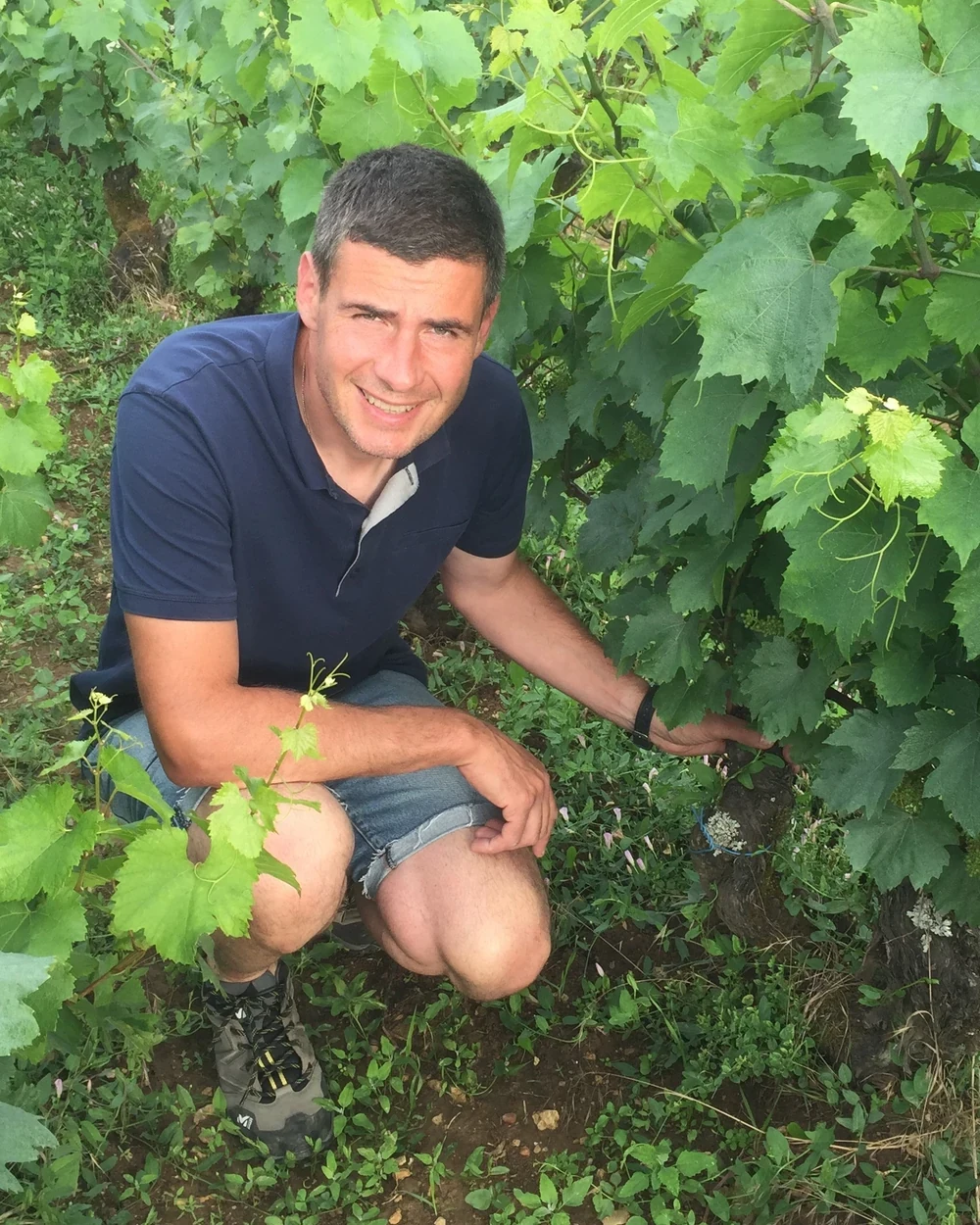
Made By profiles Vincent Dureuil (Winemaker) and Vincent Dureuil-Janthial (Winemaker) at Domaine Dureuil-Janthial.
How expensive is Domaine Dureuil-Janthial?
Domaine Dureuil-Janthial is listed at a price level of $$$$.
The field
How it compares
| Place | Notes |
|---|---|
| Domaine Dureuil-Janthial | Rully, $$$$ |
| André Delorme | Rully |
| Dom Pérignon | Hautvillers |
| Domaine Michel Briday | Rully |
| Domaine P. & M. Jacqueson | Rully |
| Domaine Vincent Dureuil-Janthial | Rully |
| Vitteaut-Alberti | Rully |
In residence
Similar places
The Sunday letter
Get the next Made By story in your inbox.
We send one email every Sunday morning with the places and people we covered that week.
See a sample of the Sunday emailOne email a week. Unsubscribe from any issue.