- Falstaff Winery - Listed · 2026
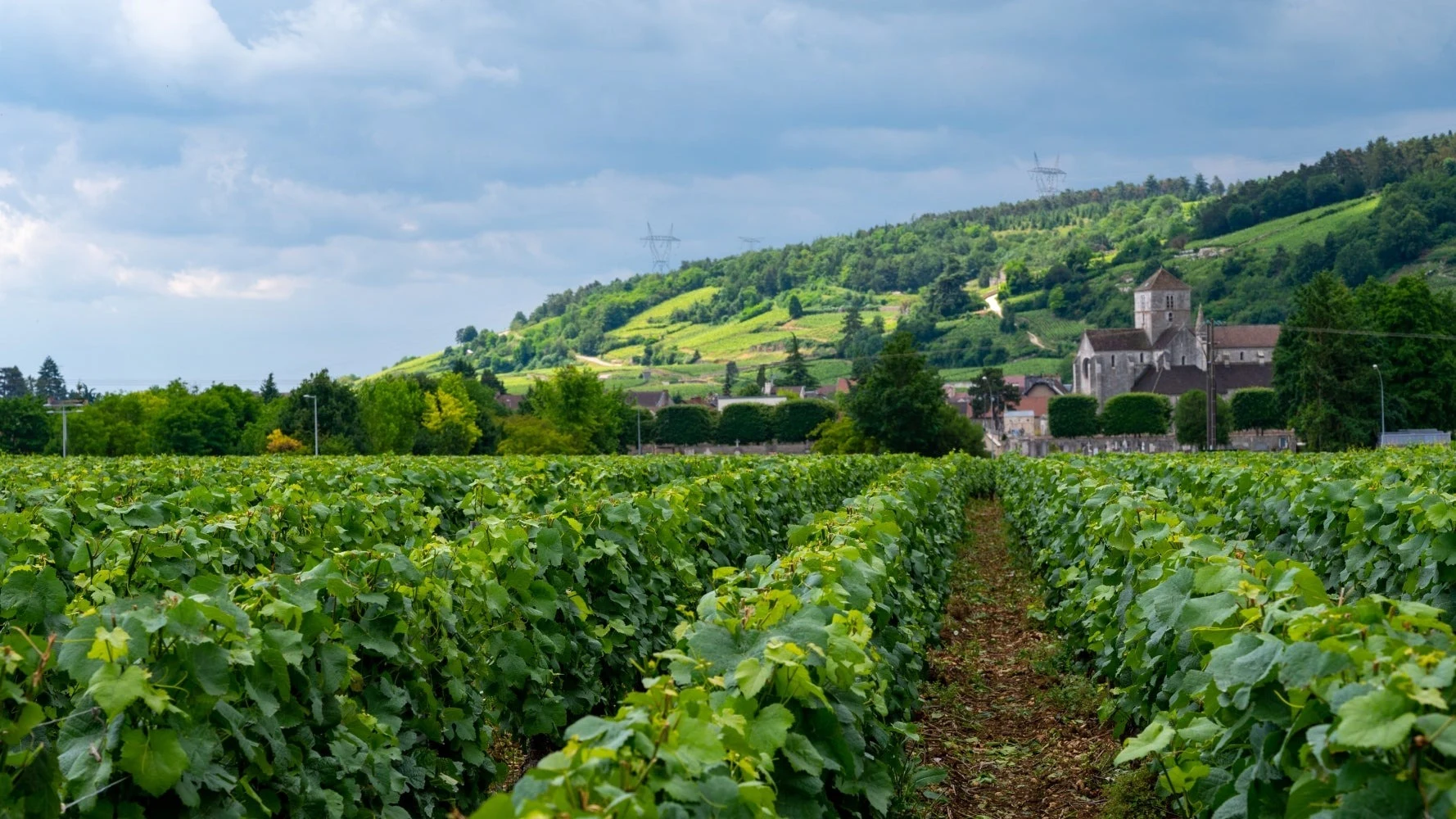
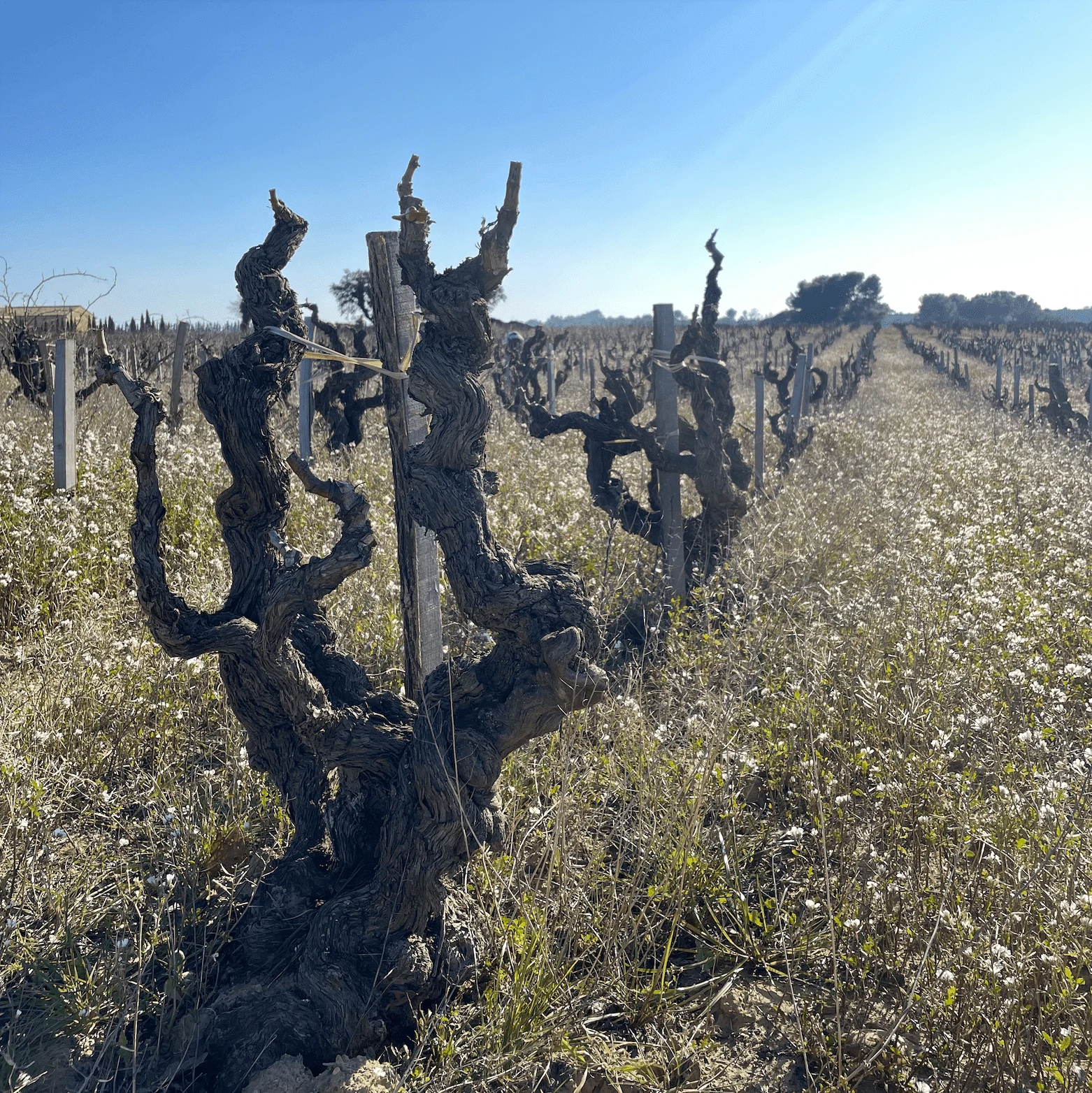
The approach to Domaine Léon Barral is framed by the Faugères hills rather than by architecture. Schist slopes, pasture, hedgerows and working farmland set the tone before the wine does. This is Cabrerolles at field level: quiet, rural, and visibly agricultural, with vines folded into a mixed landscape where cattle and horses are part of the viticultural method rather than decorative scenery.
That matters because Faugères is one of the Languedoc’s clearest arguments for geology. Its schist breaks into thin layers, drains quickly and asks vines to work hard for water. In a warmer southern climate, that kind of soil can be the difference between broad ripeness and wines with tension. Domaine Léon Barral sits squarely in that conversation, using the land’s austerity as a structural asset rather than smoothing it away.
Schist, livestock and the Faugères argument
The modern Languedoc has spent decades moving beyond bulk-wine shorthand, and estates like this explain why the shift has held. The point is not natural wine as fashion; it is farming as a system. The domaine works roughly 25–30 hectares and produces about 85,000 bottles annually, a scale that allows hands-on vineyard practice without turning the estate into a showroom.
Didier Barral took over the family estate in 1993 and named it for his grandfather, Léon Barral. The biographical detail is useful because it places the project inside a regional pattern: family land, old southern varieties and a deliberate return to soil health after an era when chemical farming shaped much of French viticulture. The estate is certified organic and works biodynamically, with dry-farmed sourcing noted among its practices.
The stronger signal is the mixed-farm model. Cattle graze the vines in winter, adding organic matter and reducing mechanical work. Horses and fallow land support the same cycle. Hedgerows encourage beneficial insects; bat boxes target grape berry moth pressure; compost includes recycled cardboard; tracked tractors reduce compaction on fragile schist. In wine terms, these are not lifestyle details. They affect permeability, root depth, microbial life and the resilience of vines in a hot Mediterranean zone.
The cellar follows the same refusal of cosmetic correction. The production philosophy is natural, with sulfur-free wines and a focus on still reds and whites rather than an expanded tourism-driven range. Varieties include Syrah, Grenache, Mourvèdre, Carignan, Cinsault, Terret, Viognier and Roussanne, a southern palette that makes sense on these slopes. The Faugères Tradition brings together Carignan, Grenache and Cinsault and is aged for 24 months in cement and stainless steel, a choice that keeps oak from becoming the main story.
The wines read the farm before they read the cellar
In a region where ripeness can easily dominate, the estate’s reputation rests on wines that communicate farming choices as much as grape variety. The portfolio includes Faugères Tradition, Jadis, Valinière and a Vin de France Blanc. Recent listed prices place Tradition at €22.90, Blanc at €28.50, Jadis at €37.90 and Valinière at €51.90, which positions the wines as serious Languedoc rather than trophy-label luxury.
The useful way to understand the range is by weight and intent. Tradition is the entry point into the estate’s red Faugères idiom, built from classic southern red varieties and neutral aging. Jadis moves into a more substantial middle register. Valinière sits at the fuller end of the range. The Blanc shows that the estate’s agricultural argument is not only about red wine, an important point in a zone still commonly read through dark Mediterranean blends.
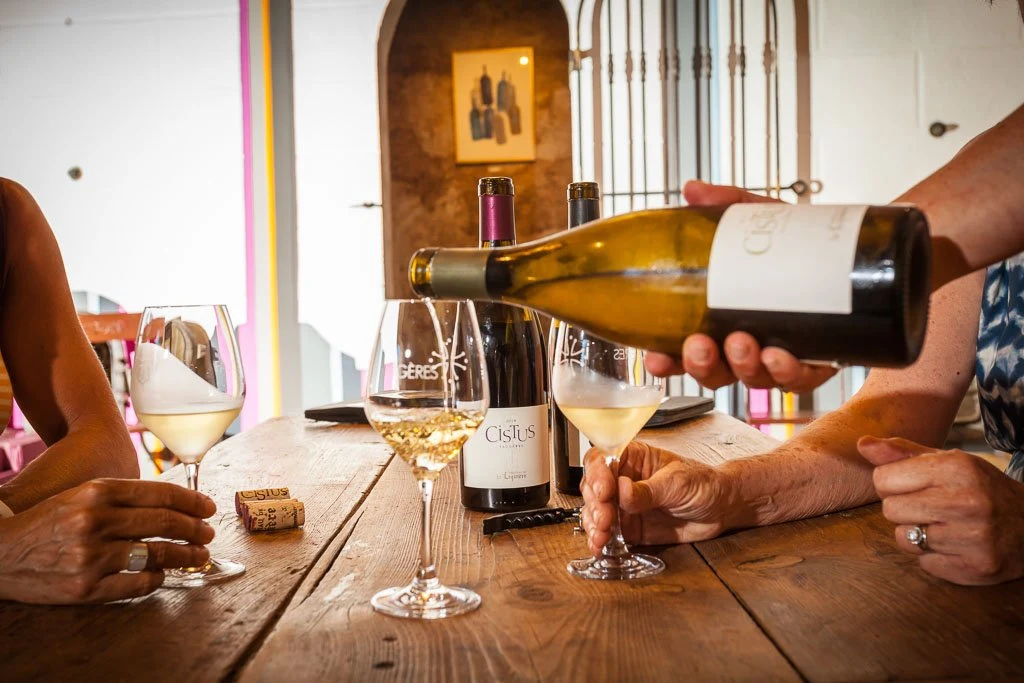
The atmosphere around the estate mirrors the wines: small-capacity, quiet, rustic and focused on vineyard education rather than hospitality theatre. Tastings and vineyard visits are by appointment, and the experience suits travelers who want to understand how a working natural-wine farm functions in practice. It is not aimed at children, food-pairing programs or glossy cellar-door production. On-site parking and outdoor space make the rural format workable, but the draw is the land system itself.
For travelers mapping wine time in and around Cabrerolles, the estate belongs in a wider local itinerary rather than a stand-alone resort-style visit. Nearby reading can start with Château de la Liquière and Our full Cabrerolles wineries guide. For the rest of a stay, see Our full Cabrerolles restaurants guide, Our full Cabrerolles hotels guide, Our full Cabrerolles bars guide and Our full Cabrerolles experiences guide.
Across France and neighboring wine regions, useful contrasts come from estates with different regional pressures and formats: A. Margaine in Villers-Marmery, Abbaye de Fontfroide in Narbonne, Abbotts & Delaunay in Marseillette, Advini in Saint Felix De Lodez, Agrapart & Fils in Avize, Alain Brumont in Castelnau Riviere Basse, Alain Gras in Saint-Romain, »der Steiner« Hans Steiner in Podersdorf am See and & Handwein in Mannheim.
Questions
Frequently asked
Who works at Domaine Léon Barral?
Made By profiles Didier Barral (Winemaker) at Domaine Léon Barral.
How expensive is Domaine Léon Barral?
Domaine Léon Barral is listed at a price level of $$$.
The field
How it compares
| Place | Notes | Awards |
|---|---|---|
| Domaine Léon Barral | Lenthéric (hamlet of Cabrerolles), $$$ | · |
| Abadía Retuerta | Sardón de Duero | World's 50 Best |
| Château d'Yquem | Sauternes | World's 50 Best |
| Château de la Liquière | Cabrerolles | · |
| Domaine Comte Georges de Vogüé | Chambolle-Musigny | · |
| Domaine La Barroche | Châteauneuf-du-Pape | · |
| Schloss Johannisberg | Geisenheim-Johannisberg | World's 50 Best |