- Falstaff Winery - Listed · 2026
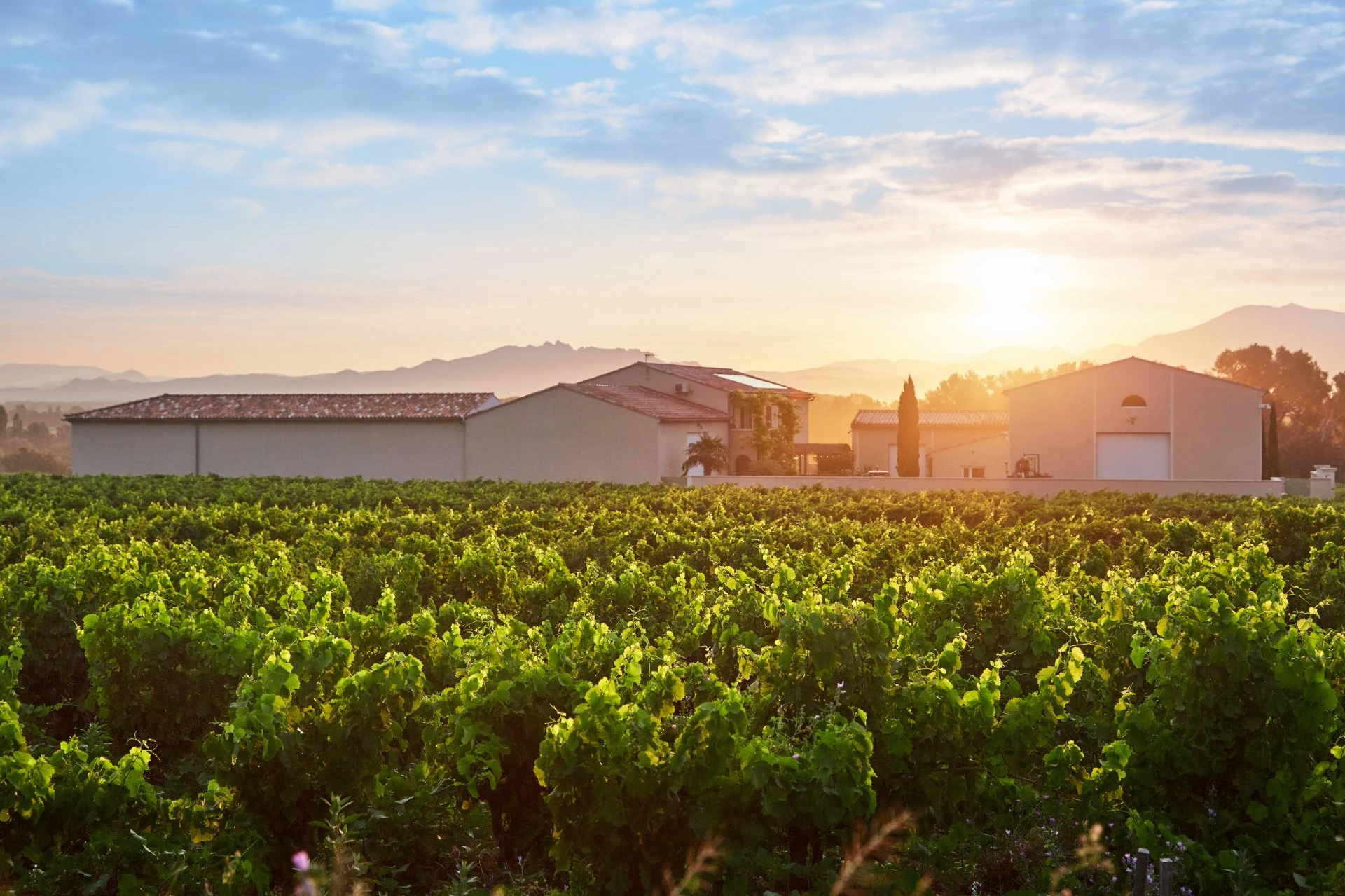
Domaine l'Abbe Dîne is a family-run Rhône estate in Courthézon with a welcoming, down-to-earth cellar atmosphere. The picture is rural rather than formal: fragmented vineyard parcels surround the domaine, giving the visit a countryside feel and keeping the focus on the diversity of its Châteauneuf-du-Pape and Côtes du Rhône wines. Its appeal rests less on spectacle than on the direct impression of a working local estate, where the setting and the family-run character do much of the explaining.
It is best described as a rustic Courthézon wine estate where the sense of place comes from family ownership, vineyard parcels, and a practical cellar environment. That combination gives the venue a clear identity without needing to overstate the experience: it is grounded, regional, and tied to the Rhône landscape around it.
A Courthézon estate shaped by fragmented vineyard parcels
The defining feature of Domaine l'Abbe Dîne is its connection to fragmented vineyard parcels. That detail matters because it frames the estate as part of a wider Rhône landscape rather than a single showpiece site. The countryside setting gives the domaine a grounded character and supports its identity as a place linked to Châteauneuf-du-Pape and Côtes du Rhône wines. Fragmentation also helps explain why the venue reads as local and agricultural: the estate is presented through parcels, surroundings, and cellar work rather than through a polished destination format.
What can be said with confidence is simpler: Domaine l'Abbe Dîne presents itself as a family-run Rhône estate in Courthézon with a rustic, approachable cellar feel. That simplicity is part of the point. For many visitors, the value of a place like this is not in a highly staged presentation, but in the feeling that the wines belong to a range of small pieces, nearby countryside, and practical decisions made close to the vineyard.
That makes the venue useful for travellers who prefer a down-to-earth wine setting over a highly polished hospitality narrative. It is the sort of estate to approach with attention to atmosphere as much as to formal structure: the rural context, the cellar environment, and the family-run positioning are the reliable anchors. Keeping expectations aligned with those strengths makes the visit easier to understand and more rewarding.
Châteauneuf-du-Pape and Côtes du Rhône context
Domaine l'Abbe Dîne is associated with the diversity of its Châteauneuf-du-Pape and Côtes du Rhône wines. Beyond that broad regional focus, specific cuvées, grape blends, tasting structures, and cellar services are not confirmed in the data and should be checked directly with the estate before planning around them. The safest way to read the domaine is therefore through its regional frame: it belongs to a Courthézon setting connected with these Rhône appellation contexts, but the finer practical details should not be assumed.
For visitors comparing wine experiences in Courthézon, the honest draw is the combination of family-run character, rustic countryside setting, and Rhône wine context. It is not necessary to add claims about tours, languages, reservation policies, or special programs to explain why the domaine may be of interest. The existing facts already give it a coherent place in a wine itinerary: approachable rather than grand, rooted rather than generic, and defined by the relationship between cellar, parcels, and regional wines.
The price level is listed as $$. That gives a basic planning cue, but it should not be expanded into specific bottle prices, tasting fees, or menu-style assumptions unless confirmed separately. In practical terms, it is best treated as a broad indication only, useful for comparing the tone of the venue but not enough to plan exact spending. Anyone building a visit around purchases, tastings, or a particular budget should confirm details directly rather than reading too much into the symbol.
How to place it in a Courthézon wine itinerary
Courthézon can be approached as a wine-focused stop, with Domaine l'Abbe Dîne representing a family-run, countryside Rhône estate. Other dining and wine options in Courthézon can be considered generically around it, but no specific peer venue is here beyond Domaine l'Abbe Dîne itself. That means the domaine works well as a reference point for the style of experience described in the available information: local, rural, and centred on wine rather than on a broader hospitality package.
Use the estate as a grounded Rhône reference point rather than a spectacle stop. It suits travellers looking for a rustic Courthézon setting, a down-to-earth cellar atmosphere, and a sense of the fragmented vineyard landscape behind Châteauneuf-du-Pape and Côtes du Rhône wines. In an itinerary, its role is clearest when expectations stay close to those confirmed qualities: a family-run estate, a countryside feel, and a practical connection to the wines of the area.
Questions
Frequently asked
Who works at Domaine l'Abbe Dîne?
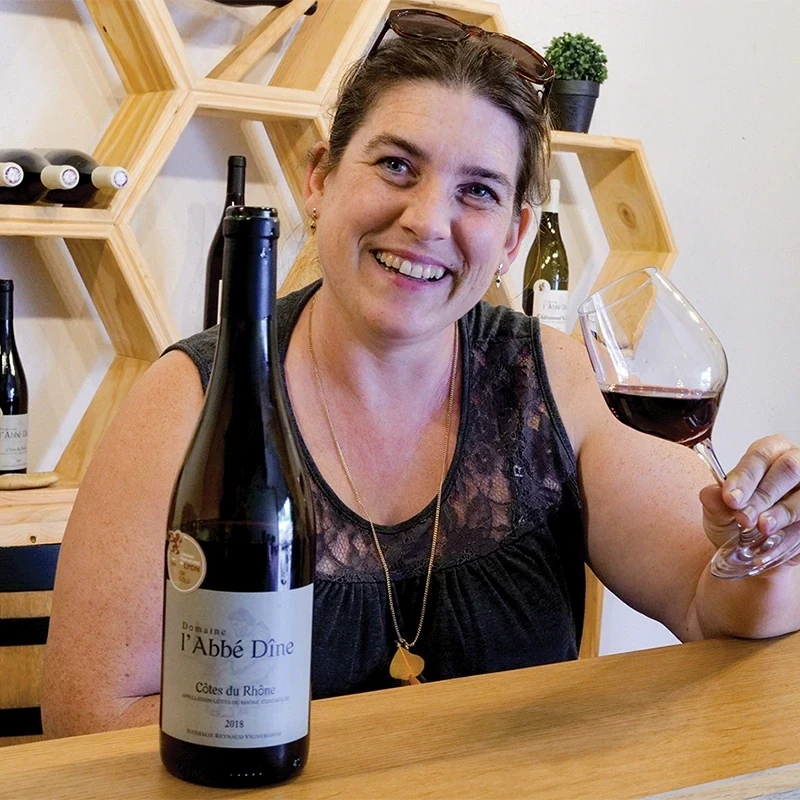
Made By profiles Nathalie Reynaud (Winemaker) at Domaine l'Abbe Dîne.
How expensive is Domaine l'Abbe Dîne?
Domaine l'Abbe Dîne is listed at a price level of $$.
The field
How it compares
| Place | Notes |
|---|---|
| Domaine l'Abbe Dîne | Courthézon, $$ |
| Caves Jamet | Courthézon |
| Cellier des Princes | Courthézon |
| Château d'Esclans | Courthézon |
| Domaine de la Janasse | Courthézon |
| Domaine des Saumades | Courthézon |
| Le Jas des Papes | Courthézon |