Made ByWinery
- Michelin Main Selection · 2026
- Falstaff Winery - Listed · 2026
- Pearl 2 Star Prestige · 2025
The Sunday letter
Find new places through the people who run them.
Our Sunday email brings you the chefs, winemakers and hoteliers behind our newest stories. See a sample before you subscribe.
See a sample of the Sunday emailOne email a week. Unsubscribe from any issue.
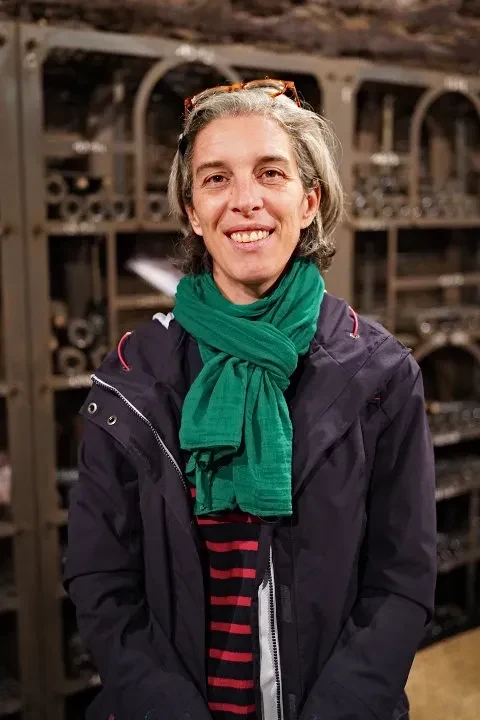
Meursault's domaine structure in the postwar period produced a bifurcation: the large négociant houses that bought and blended across the appellation, and the small family holdings that worked their own parcels and bottled under their own label. Domaine Pierre Morey sits in the latter tradition, a 10-hectare estate founded in 1971 by Pierre Morey. The domaine is now directed by Anne Morey, who took over from her father and has maintained the same low-intervention protocol Pierre established: biodynamic viticulture since 1997, indigenous-yeast fermentation, minimal SO₂, long lees aging, and a preference for older oak over new.
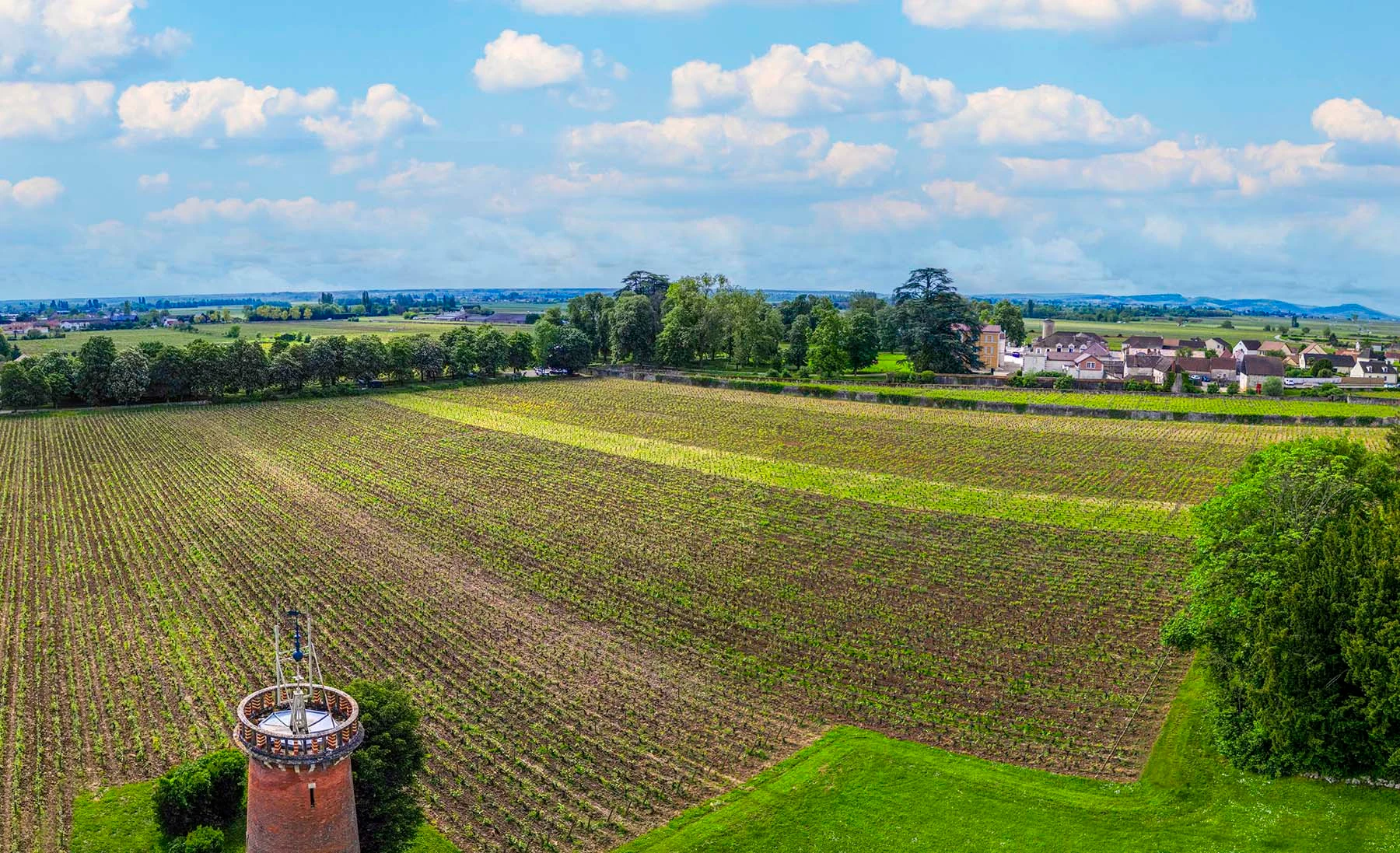
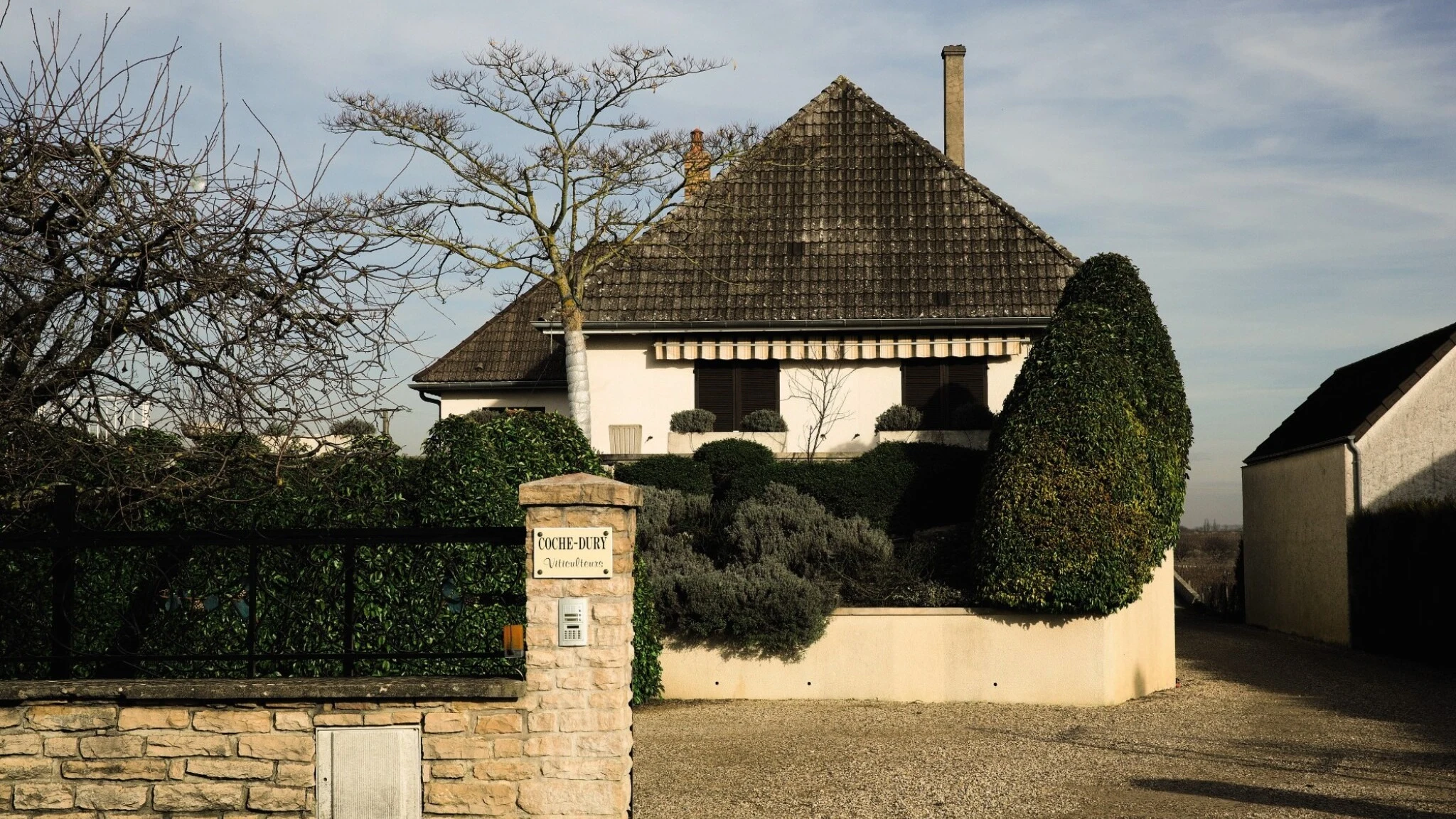
The estate holdings are split between white and red, with the core parcels in Meursault Tessons, Meursault Perrières Premier Cru, and smaller holdings in Puligny-Montrachet and Pommard. Total production runs approximately 40,000 to 50,000 bottles annually, well below the threshold at which the domaine would need to buy fruit or move into négociant activity. The Meursault holdings are the identity of the house: Tessons is a climat that sits mid-slope, slightly cooler than Perrières but warmer than Charmes, and the Morey bottlings from this site typically show more restraint than the richer, more oxidative Meursault style that dominated the appellation in the 1980s and early 1990s. The shift toward fresher, more reductive winemaking in Meursault, a shift visible across Domaine Ballot-Millot, Domaine Vincent Girardin, and younger producers like Camille & Guillaume Boillot, began in part with the Pierre Morey cellar work at Lafon and carried over to the domaine's own bottlings. The peer set is tight: Coche-Dury remains the technical ceiling for the appellation, but Domaine Pierre Morey, Domaine Anne Boisson, and Ballot-Millot sit in the next tier, all working with similar organic protocols and similar restraint in cellar intervention.
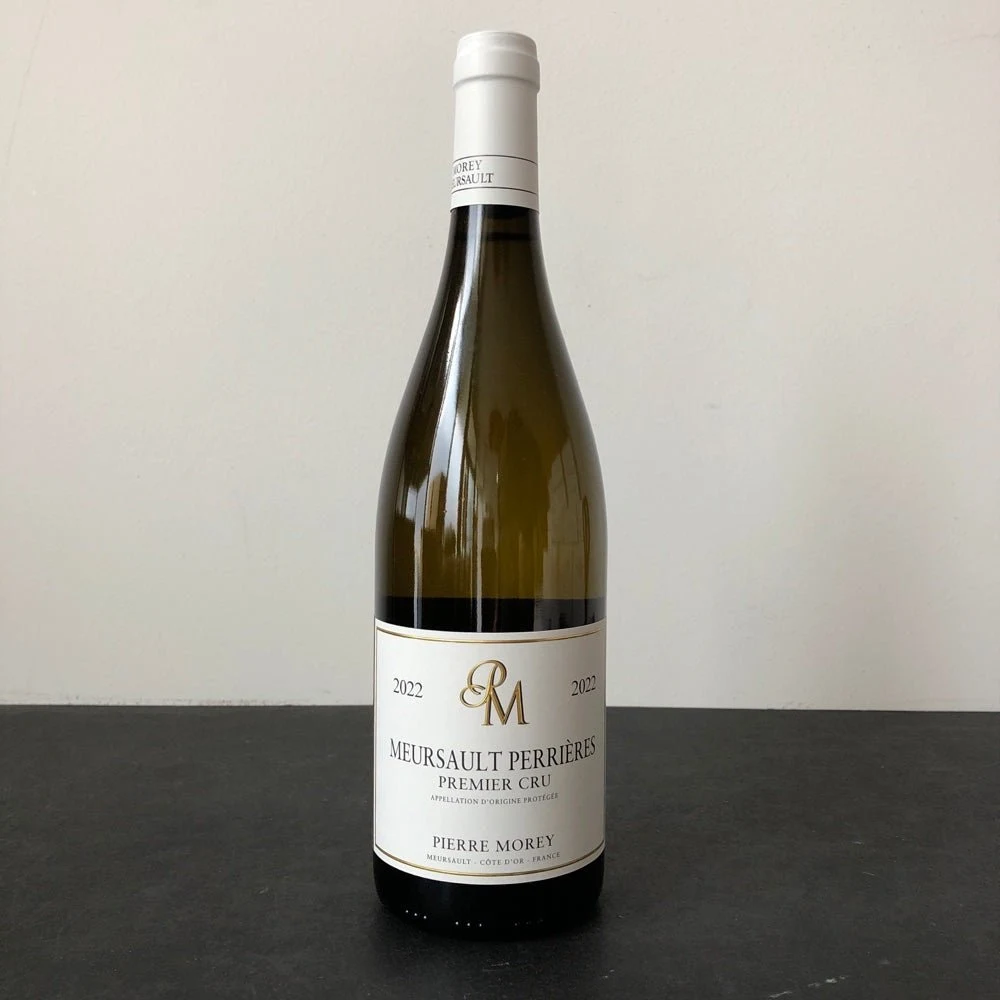
The winemaking is textbook low-intervention Burgundy: hand-harvested fruit, whole-cluster pressing, overnight settling, transfer to barrel (typically 10 to 20 percent new oak, the remainder in older barrels of two to five years), indigenous-yeast fermentation without temperature control, full malolactic fermentation in barrel, and extended lees aging of 12 to 18 months before bottling. No fining, no filtration. The protocol is essentially unchanged since Pierre Morey established it in the early 1990s. The result is a style that reads as more Puligny than classic Meursault, lean, mineral-driven, slow to open, with less of the butter and hazelnut richness that Meursault is known for and more of the citrus and white-flower tension that defines Puligny. The Perrières bottling is the estate's flagship: Perrières is widely considered Meursault's top Premier Cru, sitting just below Grand Cru status (Meursault has no Grand Cru vineyards), and the Morey parcel is well-positioned mid-slope with excellent drainage and a high proportion of limestone. Typical aging potential is 10 to 15 years; the wines do not show well young and require patience.
Anne Morey took over the domaine in the early 2010s and has run the cellar independently since Pierre stepped back. The transition was gradual. Pierre had been farming biodynamically since 1997, and Anne simply continued the same protocol. The handover is notable because few Burgundy domaines of this generation have passed from father to daughter rather than father to son. The peer examples are mostly in the Côte de Nuits: Domaine Cécile Tremblay in Morey-Saint-Denis, Domaine Gros Frère et Soeur under Marion Gros, and a few others. In Meursault the handover pattern has historically been male-line, with the notable exception of Domaine Anne Boisson (which split from Domaine Pierre Boisson in 2019). Anne Morey's work at the domaine has not deviated from her father's methodology, which is itself a statement of position: the Burgundy peer set divides between producers who have shifted toward even less intervention (lower sulfur, longer lees aging, more ambient cellar work) and producers who have moved slightly back toward more controlled fermentation and slightly higher new-oak percentages. Domaine Pierre Morey under Anne sits in the former camp, closer to the Boisson and Tremblay methodology than to the slightly more interventionist work visible at Vincent Girardin or at the larger négociant houses.
The estate's access model is allocation-only. Total production is low enough that the entire output is pre-sold to a small roster of importers and private clients, with no wine available at the cellar door and no public tastings. The allocation list structure is common at this production tier in Burgundy. Domaine Dugat-Py in Gevrey-Chambertin, Domaine Georges Roumier in Chambolle-Musigny, and Coche-Dury in Meursault all operate the same way. This reflects both the constrained supply and the stable demand from collectors and restaurants. Release prices at the domaine are moderate relative to the top Meursault producers (Coche-Dury releases at roughly double the per-bottle price of Domaine Pierre Morey; Domaine de la Romanée-Conti whites release at five to ten times), but secondary-market pricing has climbed steadily since Anne took over, and the Perrières bottlings now trade in the same price band as mid-tier Coche-Dury and top-tier Lafon. The practical implication for trade buyers: allocation access requires a multi-year relationship with one of the domaine's importers, and spot purchases on the secondary market will run at a significant premium to release price.
The estate's place inside the broader Burgundy wine region structure is instructive. Meursault sits at the center of the Côte de Beaune white-wine tradition, bordered by Puligny-Montrachet to the south and Volnay to the north. The appellation produces more white wine than any other commune in the Côte de Beaune, roughly 350 hectares under vine, 95 percent Chardonnay, and the village-level Meursault AOC is large enough that quality varies widely. The leading producers (Coche-Dury, Lafon, Pierre Morey, Ballot-Millot, Roulot) work specific Premier Cru parcels and bottle those separately; the mid-tier producers blend across multiple parcels into a village-level bottling; the lower tier sells fruit to négociants. Domaine Pierre Morey sits firmly in the top tier, with the Perrières Premier Cru as the anchor bottling and the Tessons as the second-tier white. The domaine also produces a small amount of red wine from parcels in Pommard and Monthelie, but the identity of the house is white Meursault, and the red bottlings are secondary.
Technical signature of the domaine is restraint. Where many Meursault producers push for richness, higher new-oak percentages, longer lees aging with more stirring (bâtonnage), slightly earlier harvest to retain more sugar, Domaine Pierre Morey holds back. The new-oak percentage is low (10 to 20 percent), the lees aging is long but unstirred, and the harvest timing is slightly later than the appellation average, which preserves acidity and delays phenolic ripeness. The result is a wine that reads as tighter, more mineral-driven, and slower to evolve than the Meursault baseline. Domaine Pierre Morey sits closer to the Raveneau methodology in Chablis than to the classic Meursault richness of Coche-Dury or Lafon. The wines are built for long aging, and they do not flatter in their youth. A typical drinking window for the Perrières bottling is 8 to 20 years from vintage; the Tessons is slightly shorter, 6 to 15 years. Collectors who prefer young Burgundy whites, the more immediate richness and fruit-forward profile that defines the first five years of a Meursault's life, will find Domaine Pierre Morey too tight; collectors who prefer older Burgundy, where the richness has faded and the mineral structure dominates, will find the domaine's style ideal.
Domaine's position inside Meursault's lineage structure is also worth noting. Pierre Morey worked as régisseur at Domaine des Comtes Lafon from 1988 to 2008, overseeing the cellar work at one of Meursault's most rigorously farmed properties while applying a parallel methodology to his own parcels. This period overlapped with Dominique Lafon's tenure as winemaker (Dominique took over from his father in 1987 and ran the domaine until 2008, when he stepped back to focus on his own négociant label). The Lafon cellar during this period was one of the most technically rigorous in Burgundy: organic farming from the mid-1990s, indigenous-yeast fermentation, minimal sulfur, no fining or filtration. The protocol that Dominique Lafon established at the family domaine became the template for a generation of Burgundy winemakers, and Pierre Morey was the cellar master who implemented it. The practical transmission runs in both directions: Dominique Lafon shaped the winemaking philosophy, Pierre Morey executed it in the cellar, and both men then applied the same methodology to their own separate domaines (Lafon for the family estate, Morey for Domaine Pierre Morey). The result is that Domaine Pierre Morey and Domaine des Comtes Lafon are stylistically close, closer than any other two producers in Meursault, and the wines are often compared in tastings as examples of the same school. The difference: Lafon has more Grand Cru-equivalent parcels (Montrachet, Perrières, Genevrières) and slightly higher new-oak usage; Morey has a smaller estate, lower production, and slightly less oak. The quality gap is narrow, and the price gap reflects it: Lafon releases at roughly 30 to 50 percent above Morey, and both sit well below Coche-Dury.
For trade buyers sourcing Meursault, the decision tree is direct. Coche-Dury is the ceiling but is effectively unavailable outside long-standing allocation relationships and secondary-market purchases at multiples of release price. Lafon is the next tier, widely available through importers but expensive. Domaine Pierre Morey sits just below Lafon in price and just above in scarcity. Total production is lower, allocation access is tighter, but release prices are more moderate. The wines require patience and will not show well in young tastings, but for restaurants building a Burgundy list with depth in aged whites, or for collectors willing to cellar for a decade, the domaine is one of the leading values in Meursault. The peer set for trade buyers also includes other Meursault producers working in a similar low-intervention style: Ballot-Millot, Anne Boisson, and Roulot. All four domaines produce wines that read as more restrained and mineral-driven than the classic Meursault richness, and all four require long aging to show their best.
Questions
Frequently asked
Who works at Domaine Pierre Morey?
Made By profiles Anne Morey (Winemaker) and Pierre Morey (Winemaker) at Domaine Pierre Morey.
How expensive is Domaine Pierre Morey?
Domaine Pierre Morey is listed at a price level of $$$.
The field
How it compares
| Place | Notes |
|---|---|
| Domaine Pierre Morey | Meursault, $$$ |
| Domaine Arnaud Ente | Meursault |
| Domaine Coche-Dury | Meursault |
| Domaine des Comtes Lafon | Meursault |
| Domaine Henri Boillot | Meursault |
| Domaine Jacques Prieur | Meursault |
| Domaine Roulot | Meursault |
In residence

Similar places
The Sunday letter
Get the next Made By story in your inbox.
We send one email every Sunday morning with the places and people we covered that week.
See a sample of the Sunday emailOne email a week. Unsubscribe from any issue.