El Pescador
- 01CuisineTraditional Spanish Seafood
- 02CityMadrid, Spain
From the people index
Recommended by
One trusted voice points here.

- Macarfi 7.8 Food Rating · 2026
- Opinionated About Dining Casual in Europe Recommended · 2026
Salamanca's Seafood Standard
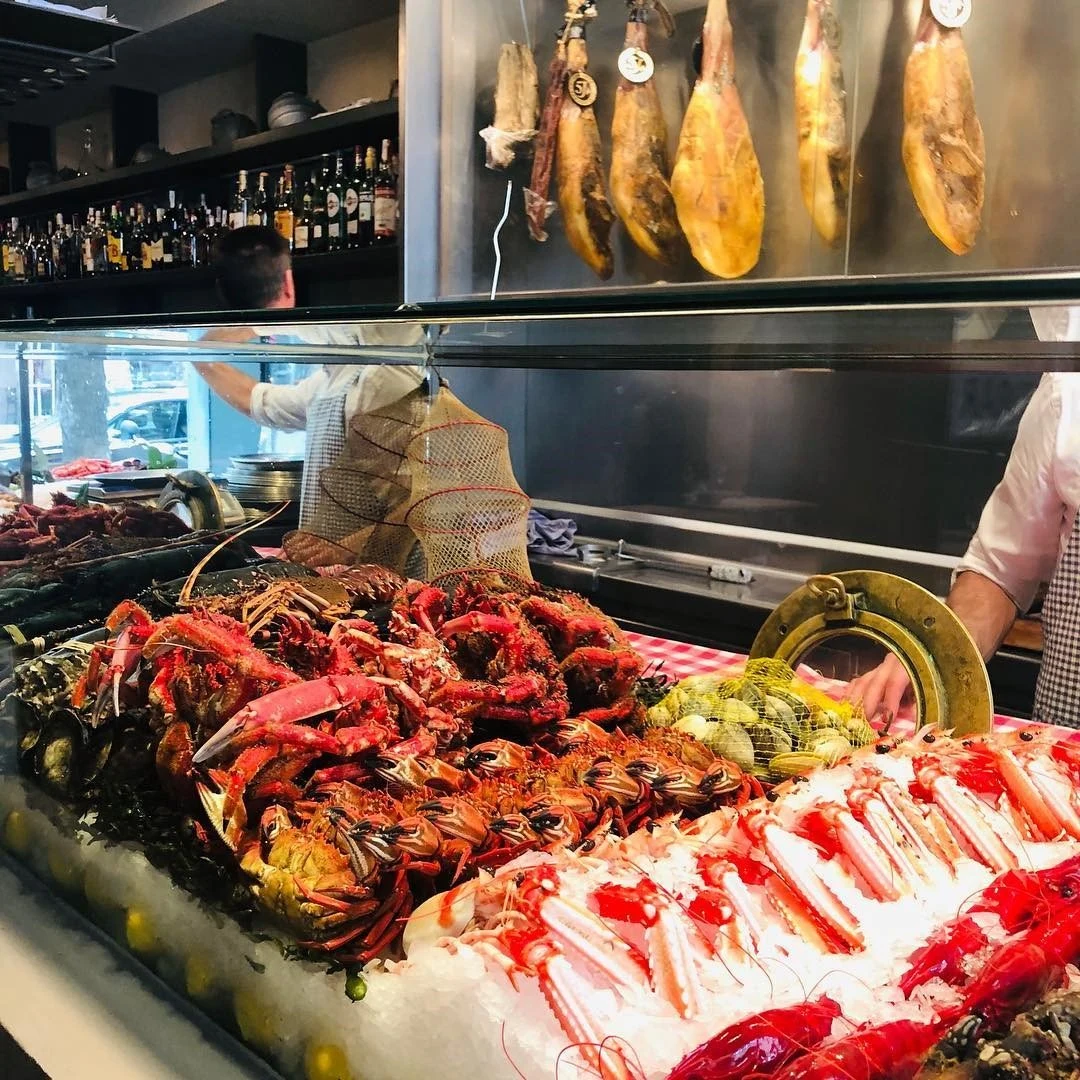
Madrid's Salamanca district runs on a particular kind of restaurant loyalty. The neighbourhood's wide, ordered streets and high-income residential character have always produced a dining crowd that values reliability over spectacle, people who return to the same table, order variations on the same dishes, and treat familiarity as a mark of quality rather than a failure of imagination. El Pescador, a traditional Spanish seafood restaurant in Madrid's Salamanca district at C. de José Ortega y Gasset, 75, is a reliable anchor. In a city where the conversation about restaurants tends to drift toward the multi-star avant-garde end of the spectrum, venues like this one represent a different, and arguably more durable, proposition.
Madrid has no coastline, which makes its relationship with seafood an interesting study in logistics and trust. The city's fish restaurants have historically operated on the premise that rapid overnight transport from the Cantabrian coast, Galicia, and the Mediterranean can deliver product comparable to what you'd find in a port town. The quality of that supply chain, and a kitchen's willingness to stay out of its way, is what separates the serious operations from the decorative ones. In Salamanca, where the clientele tends to know the difference, that standard is applied with some scrutiny.
What the Regulars Know
The editorial angle on any restaurant with a loyal, returning clientele is less about what appears on the printed menu and more about what the regulars have already settled on. At fish houses of this type in Madrid, the choices that endure are almost always the simplest: whole fish cooked over live fire or in the oven, shellfish served cold or barely warmed, and preparations that foreground the ingredient rather than the technique. This is not timidity, it is a kind of discipline that becomes harder to maintain the longer a restaurant is open, as chefs feel pressure to update and complicate.
The regulars at establishments like El Pescador tend to know their suppliers by name, or at least by reputation. They understand that a good lenguado (sole) or rodaballo (turbot) in October tastes different from one in February, and they order accordingly. This seasonal literacy is part of what sustains the relationship between a serious fish restaurant and its audience, the menu is, in a real sense, the market that week. Madrid's leading pescaderías and the restaurants that source from them share an ecosystem, and regulars learn to read it.
Salamanca crowd also brings a particular expectation around service. This is a neighbourhood of long lunches and extended dinners, where the table is held and the pace is unhurried. A restaurant that has operated in this district long enough to build a regular base has necessarily learned how to read that tempo, when to approach, when to leave alone, and how to manage a room where some guests have been coming for fifteen years.
Where El Pescador Sits in Madrid's Dining Hierarchy
Madrid's restaurant scene has bifurcated in ways that are worth mapping for anyone planning a serious eating trip. At one end, the progressive tasting menu format dominates the prestige conversation: DiverXO holds three Michelin stars and operates in a register that has more in common with performance than with traditional dining. Coque, Deessa, DSTAgE, and Paco Roncero all occupy the two-star tier, with creative menus and structured formats. These are destination restaurants in the fullest sense, you plan a trip around them.
El Pescador operates in a different register. It is not competing with the tasting menu circuit for novelty or critical attention. It is competing, and has been for a long time, on the basis of product quality, consistency, and the kind of institutional knowledge that accumulates only in restaurants that survive long enough to become neighbourhood institutions. In Spain's broader seafood restaurant tradition, this is a respected category. Aponiente in El Puerto de Santa María represents one extreme of what Spanish seafood cooking can become when it enters the fine dining orbit. El Pescador represents the other end: the classical, product-led house where cooking is in service of the fish rather than the other way around.
For context on how seriously Spain takes its fish restaurants outside Madrid, consider the reference points: Arzak in San Sebastián, Azurmendi in Larrabetzu, El Celler de Can Roca in Girona, Martin Berasategui in Lasarte-Oria, and Cocina Hermanos Torres in Barcelona all hold multiple Michelin stars. El Pescador instead positions itself as the place people choose when they want something direct and grounded in product quality. That is a specific and coherent identity.
Beyond Spain, the parallel with how serious fish restaurants operate internationally is instructive. Le Bernardin in New York built its reputation on the principle that technique exists to serve the seafood, not to overshadow it. Atomix in New York takes the opposite approach, with produce as the medium for a conceptual statement. El Pescador is closer in philosophy to the Le Bernardin model, even if the execution and price point are entirely different.
The Salamanca Context
The address on Calle José Ortega y Gasset places El Pescador in the heart of what Madrid's Golden Mile represents for dining: a street and surrounding blocks where high-end boutiques and upscale residential buildings create a particular commercial and social ecosystem. Restaurants in this zone are not operating on passing tourist traffic. Their survival depends on repeat custom from a neighbourhood with high expectations and the means to go elsewhere. Longevity here is evidence of something, it signals that the kitchen has been meeting a standard consistently enough to hold the room.
For a fuller picture of what the Madrid dining scene offers across registers and styles, the the guide Madrid restaurants guide maps the city in detail. The Madrid hotels guide, bars guide, wineries guide, and experiences guide cover the wider picture for visitors planning a substantive trip.
Know Before You Go
- Address: C. de José Ortega y Gasset, 75, Salamanca, 28006 Madrid, Spain
- District: Salamanca
- Booking: Reservations are recommended
- Format: Traditional fish restaurant; à la carte
- Phone / Website: not listed, check current listings for updated contact details
Questions
Frequently asked
How expensive is El Pescador?
El Pescador is listed at a price level of $$$.
Where is El Pescador and what does it serve?
El Pescador is in Lista, Madrid, serving Traditional Spanish Seafood.
The field
How it compares
| Place | Cuisine | Notes | Awards |
|---|---|---|---|
| El Pescador | Traditional Spanish Seafood | Lista, $$$ | · |
| Coque | Modern Spanish Fine Dining | Madrid | Michelin 2 Stars |
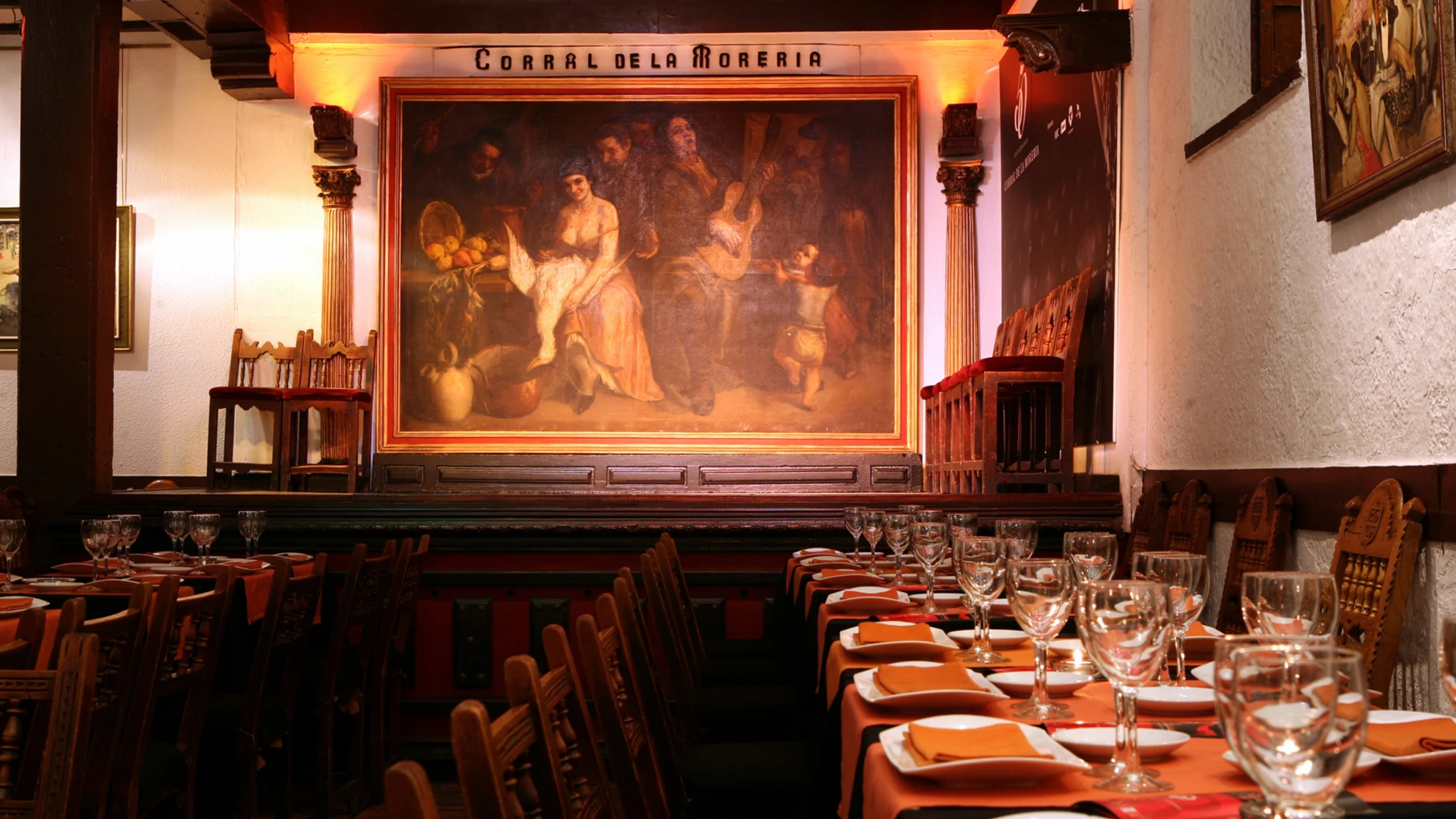
| Corral de la Morería | Modern Spanish Fine Dining with Flamenco | Madrid | Michelin 1 Star |
| Desde 1911 | Premium Seafood Fine Dining | Madrid | Michelin 1 Star |
| DiverXO | Avant-Garde Spanish Tasting Menu | Madrid | Michelin 3 Stars, World's 50 Best |
| DSTAgE | Avant-Garde Spanish Tasting Menus | Madrid | Michelin 2 Stars |
| Paco Roncero | Avant-Garde Spanish Fine Dining | Madrid | Michelin 2 Stars |
Similar places
Modern Spanish Fine Dining
Coque
Madrid, Spain
★★
Modern Spanish Fine Dining with Flamenco
Corral de la Morería
Madrid, Spain
★
Premium Seafood Fine Dining
Desde 1911
Madrid, Spain
★
Avant-Garde Spanish Tasting Menu
DiverXO
Madrid, Spain
★★★ · 50 Best
Avant-Garde Spanish Tasting Menus
DSTAgE
Madrid, Spain
★★
Avant-Garde Spanish Fine Dining
Paco Roncero
Madrid, Spain
★★