Fismuler
In Residence
Manuel Villalba Martínez
Chef
- 01CuisineModern Mediterranean Fusion
- 02CityMadrid, Spain
- Michelin Plate · 2026
- Guía Repsol 1 Sol · 2026
- Macarfi 7.8 Food Rating · 2026
- Opinionated About Dining Casual in Europe Highly Recommended · 2026
- Michelin Plate · 2025
- Michelin Plate · 2024
- Opinionated About Dining Casual in Europe Ranked #117 · 2024
- Opinionated About Dining Casual in Europe Ranked #48 · 2023
- Opinionated About Dining Casual in Europe Recommended · 2023
Chamberí and the Case for Neighbourhood Dining
Madrid's high-end restaurant circuit clusters around hotel dining rooms and curated tasting menus in the centre, but the city's most considered mid-tier eating happens in its residential barrios. Chamberí, a largely bourgeois district north of Gran Vía, has developed a particular concentration of wine-forward, ingredient-led restaurants that sit well beneath the price points of DiverXO or Coque while taking the food as seriously as anything in the city. Fismuler, on Calle de Sagasta, operates in exactly that register: a €€ price point and a cooking style that treats Spanish tradition as a starting point rather than a constraint.
The neighbourhood context matters here. Chamberí is not a tourist circuit stop. The lunch crowd at the tables around you tends to be local, the rhythms are those of a working neighbourhood, and the expectation is that a good meal should be available without a special occasion to justify it. Fismuler fits that logic. It is the kind of place a Madrileno returns to monthly rather than annually, which is a different ambition than the Michelin-starred tier and, argued honestly, a harder one to sustain.
The Room: Austere, Industrial, Deliberately Undecorated
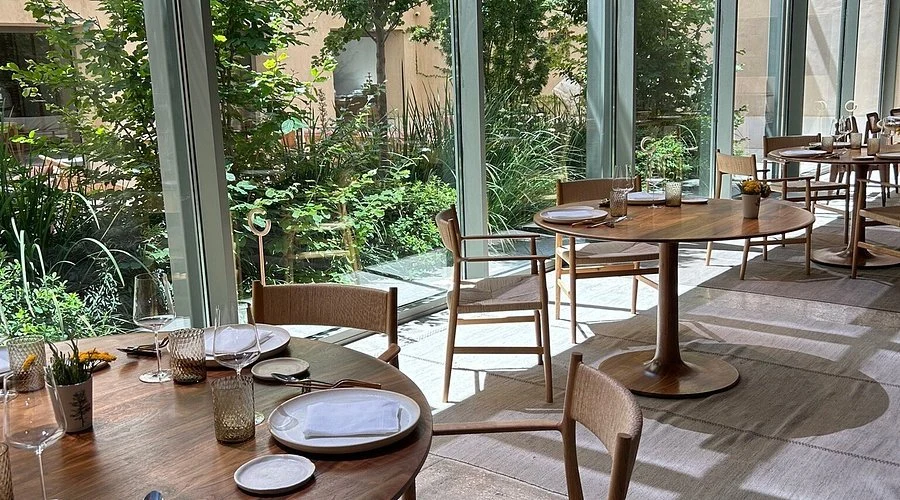
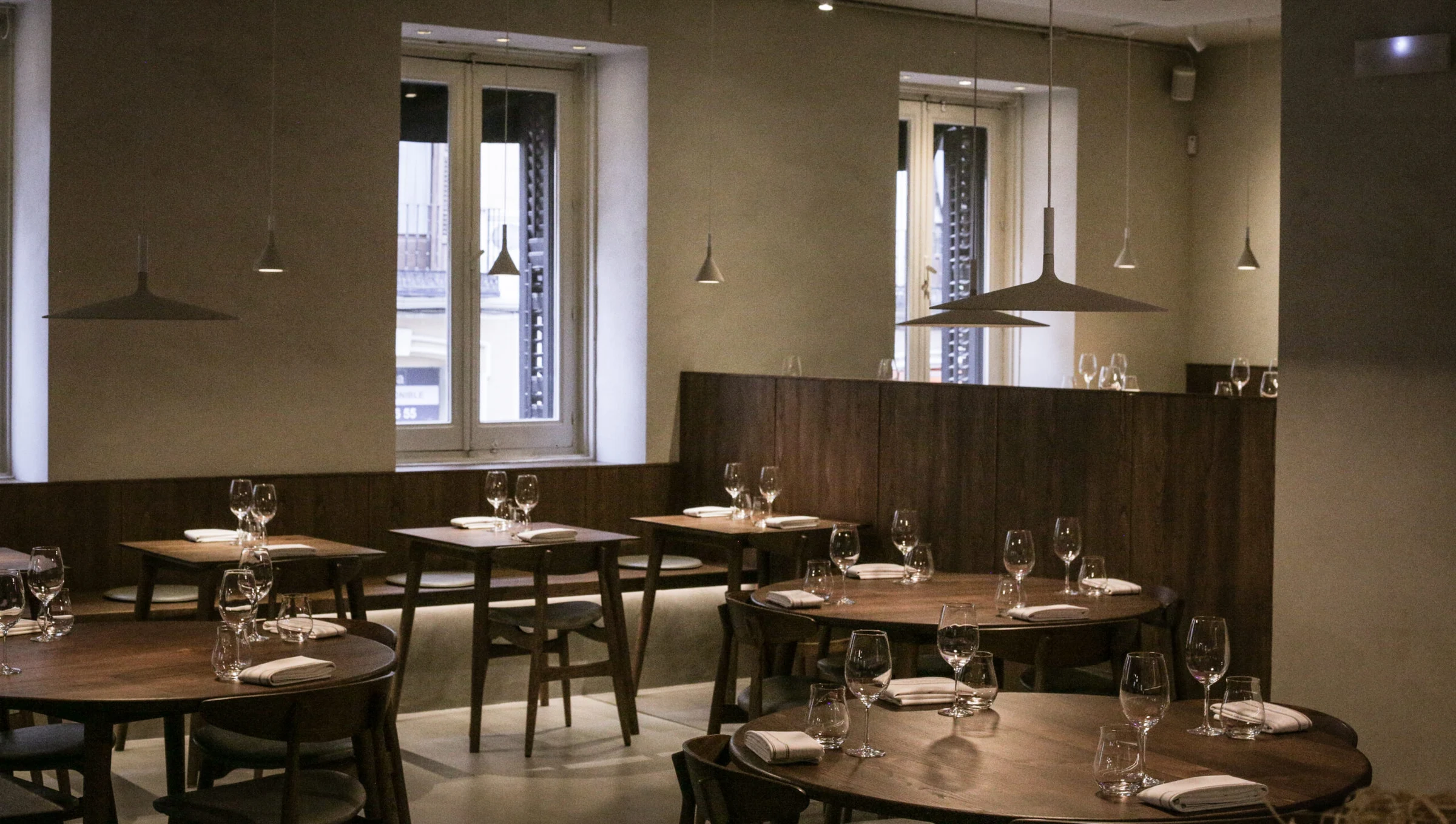
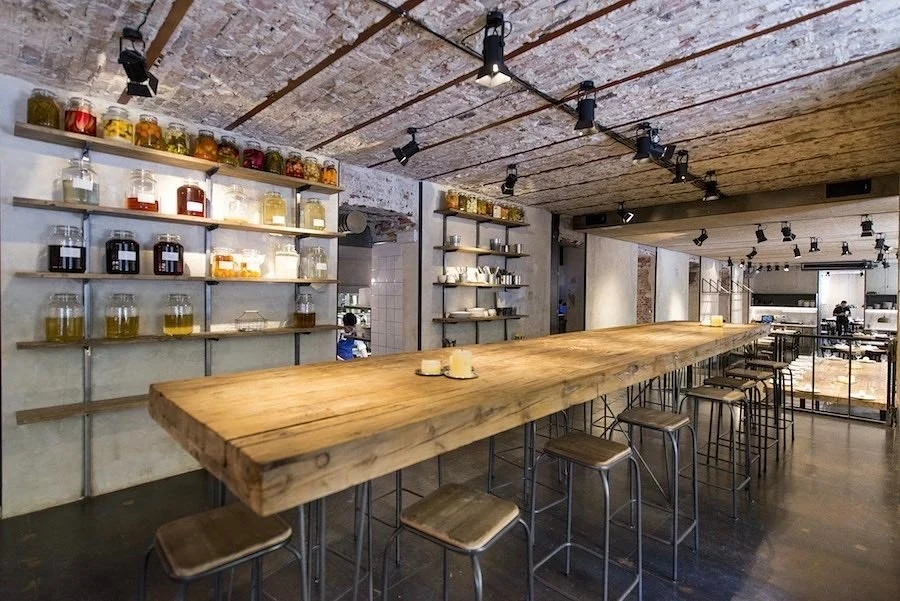
The interior at Fismuler reads retro-industrial in a way that feels considered rather than accidental. Bare materials, stripped surfaces, and a general refusal of decorative softness give the room an austere quality that a press release might call design-led but which functions more as a studied absence of effort. The effect is a dining environment where the food and the conversation carry the atmosphere rather than the décor doing the work for them.
This approach places Fismuler in a broader European shift in casual dining interiors: away from the warm-lit, velvet-upholstered comfort of traditional restaurants and toward spaces that signal seriousness without formality. The service tone matches the room. Relaxed without crossing into inattentive, it assumes the guest knows why they are there and does not need to be managed through the experience. For Chamberí's regular lunch clientele, that calibration is exactly right.
The Food: Traditional Cuisine, Updated Without Apology
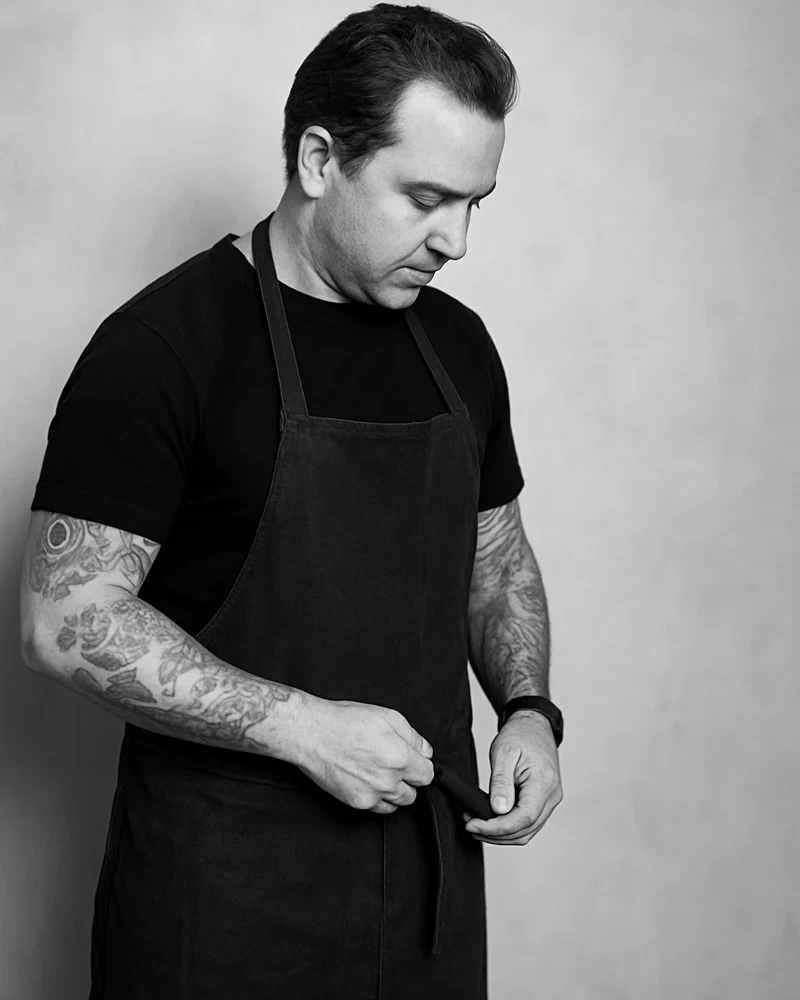
Fismuler's cuisine sits in a category that Spanish food culture has always handled well: traditional dishes reworked with enough precision to justify the attention without losing the familiarity that made them worth reworking in the first place. The kitchen, under Chef Manuel Villalba Martínez, draws on the canon of Spanish regional cooking and applies what the Michelin inspectors characterise as a pleasantly updated approach. That framing, coming from the 2025 Plate citation, is more useful than it sounds. It implies technique applied in the service of flavour and context rather than technique displayed for its own sake.
In the current Madrid mid-tier, this positions Fismuler differently from the progressive-creative restaurants like DSTAgE or Deessa, and also differently from the tasting-menu-only format that defines the city's top tier at venues like Paco Roncero. The cooking here is accessible in structure, a menu guests can order from rather than a sequence they are taken through, which reinforces the neighbourhood-restaurant character.
That accessibility is not a compromise. Across Spain, some of the most consistent cooking happens in precisely this format: restaurants with a clear culinary identity, a structured menu, and no particular interest in conceptual theatre. The comparison set for Fismuler is not the three-Michelin-star rooms; it is the small number of mid-tier Madrid restaurants that hold Opinionated About Dining recognition alongside a Michelin Plate and a Google rating of 4.4 from 3,726 reviews. That combination indicates consistent execution over time, which is a different credential than a single spectacular meal.
Natural Wine as the Organising Principle
Fismuler positions itself as a natural wine bar alongside its restaurant identity, and that dual classification is not merely a marketing distinction. Natural wine in Madrid has developed from a niche import interest into a coherent part of the city's drinking culture, with a cluster of bars and restaurants in Chamberí and Malasaña anchoring the scene. At Fismuler, the wine list provides a frame for how the food is approached: producers who work with minimal intervention, vintages that vary, and a preference for character over polish.
This alignment between natural wine and updated traditional cuisine is not coincidental. Both approaches share a preference for the flavour that emerges from restraint over the flavour that is engineered in. For guests arriving from elsewhere in Spain's wine culture, Fismuler's list provides a different lens on Spanish production than the prestige Rioja and Ribera del Duero bottles that dominate the fine-dining tier.
Where Fismuler Sits in the Madrid Picture
Madrid's restaurant tier runs from the neighbourhood taberna through the mid-level bistro format to the full tasting-menu rooms, and on to three-Michelin-star operations. Spain more broadly sustains some of Europe's most decorated cooking: El Celler de Can Roca in Girona, Arzak in San Sebastián, Azurmendi in Larrabetzu, Martin Berasategui in Lasarte-Oria, Aponiente in El Puerto de Santa María, and Cocina Hermanos Torres in Barcelona among them. Fismuler operates in a different register from all of those, and is not trying to compete with them. Its comparable set is the Opinionated About Dining Casual Europe list, where it ranked 48th in 2023 and 117th in 2024. That movement in rankings is worth noting: OAD's Casual Europe list is a crowd-sourced guide weighted toward frequent travellers and food professionals, and sustained presence on it, even with ranking fluctuation, indicates a following that extends beyond local regulars.
Know Before You Go
Address: C. de Sagasta, 29, Chamberí, 28004 Madrid, Spain
Price range: €€ (mid-range)
Google rating: 4.4 from 3,726 reviews
Cuisine: Modern Mediterranean Fusion / natural wine bar
Questions
Frequently asked
Who works at Fismuler?
Made By profiles Manuel Villalba Martínez (Executive Chef) at Fismuler.
How expensive is Fismuler?
Fismuler is listed at a price level of $$.
Where is Fismuler and what does it serve?
Fismuler is in Trafalgar, Madrid, serving Modern Mediterranean Fusion.
The field
How it compares
| Place | Cuisine | Notes | Awards |
|---|---|---|---|
| Fismuler | Modern Mediterranean Fusion | Trafalgar, $$ | · |
| Coque | Modern Spanish Fine Dining | Madrid | Michelin 2 Stars |
| Corral de la Morería | Modern Spanish Fine Dining with Flamenco | Madrid | Michelin 1 Star |
| Desde 1911 | Premium Seafood Fine Dining | Madrid | Michelin 1 Star |
| DiverXO | Avant-Garde Spanish Tasting Menu | Madrid | Michelin 3 Stars, World's 50 Best |
| DSTAgE | Avant-Garde Spanish Tasting Menus | Madrid | Michelin 2 Stars |
| Paco Roncero | Avant-Garde Spanish Fine Dining | Madrid | Michelin 2 Stars |
In residence
Similar places
Modern Spanish Fine Dining
Coque
Madrid, Spain
★★
Modern Spanish Fine Dining with Flamenco
Corral de la Morería
Madrid, Spain
★
Premium Seafood Fine Dining
Desde 1911
Madrid, Spain
★
Avant-Garde Spanish Tasting Menu
DiverXO
Madrid, Spain
★★★ · 50 Best
Avant-Garde Spanish Tasting Menus
DSTAgE
Madrid, Spain
★★
Avant-Garde Spanish Fine Dining
Paco Roncero
Madrid, Spain
★★