- La Liste Top Hotels: 90pts · 2026
- Forbes 4-Star · 2026
- Virtuoso Luxury Hotel Partner · 2026
- Forbes 4-Star · 2025
- Michelin Selected · 2025
Where Downtown Austin Meets the Lake Shore
Austin's premium hotel scene has sorted itself into two distinct camps over the past decade: design-led independents with strong neighbourhood identity, and full-service flagships that trade on location, breadth of amenity, and institutional reliability. Four Seasons Hotel Austin sits firmly in the second camp. Its address at 98 San Jacinto Boulevard places it at a geographic intersection that most downtown properties cannot replicate: Lady Bird Lake runs along its southern edge, while the city's commercial and cultural core begins immediately to the north. That dual orientation is not incidental to the hotel's appeal, it defines how guests actually use the place, moving between trail access and urban errands without a car.
For context, the properties that occupy a similar tier in Austin, Fairmont Austin Gold Experience and Commodore Perry Estate, Auberge Resorts Collection, each bring something different to that bracket. The Fairmont competes on scale and downtown connectivity; Commodore Perry trades on grounds and design narrative. Four Seasons competes on consistency and service infrastructure, backed by a brand with the kind of operational depth that smaller independents like Hotel Saint Cecilia or The Heywood Hotel cannot match at scale. The 2026 La Liste ranking of 90 points places it in measurable company, a credential that carries weight because La Liste aggregates critic and guest data across a standardised methodology.
The Physical Experience: What the Renovation Has Changed
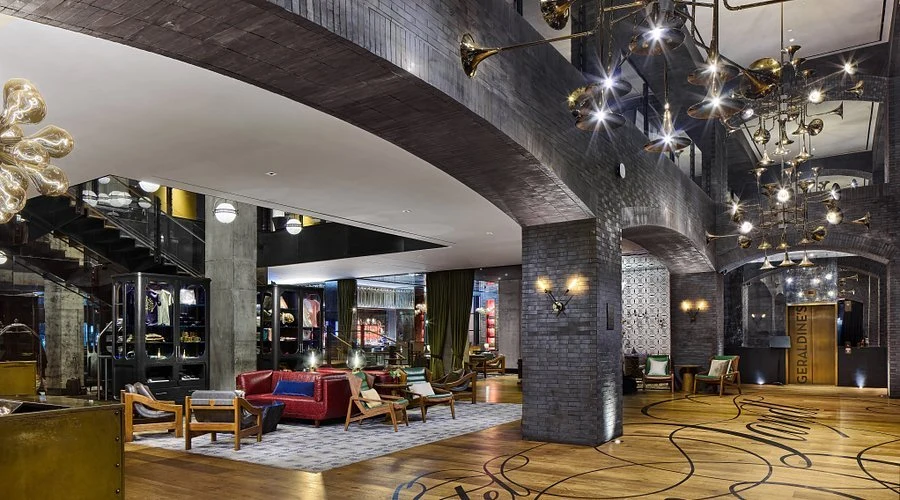
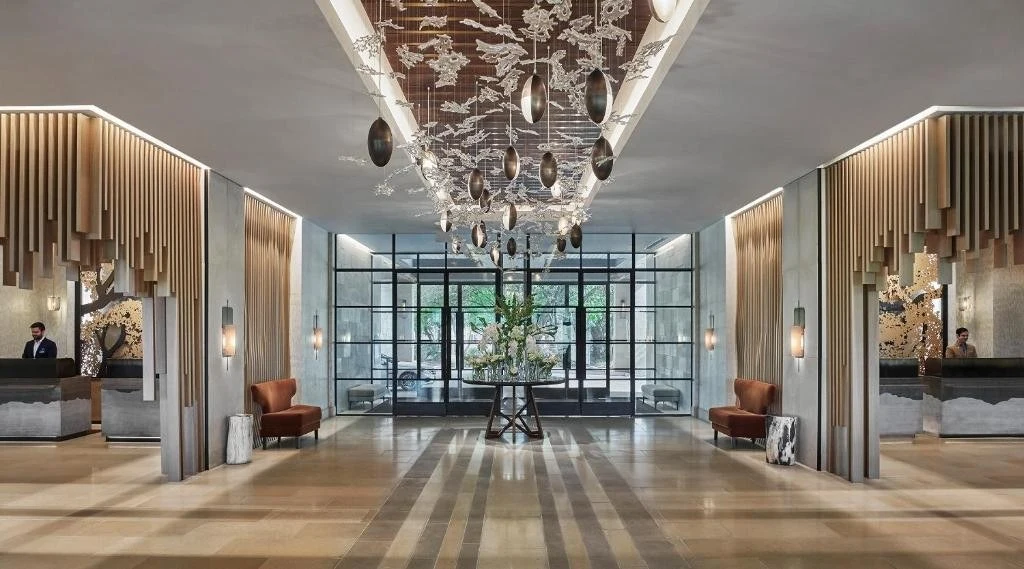
Arrival sets a particular tone here. The circular drive leads to an entrance that was refreshed with limestone columns, a modern chandelier, and steel-and-glass doorways, a revision that moves the aesthetic away from the heavier architectural language typical of 1980s luxury builds without erasing the property's sense of permanence. Inside, the lobby maintains the Texas referencing that has long defined the hotel's interior character: the rustic material palette sits alongside art programming that reflects Austin's creative community, producing a vernacular that reads as locally grounded rather than generically luxurious.
The guest rooms across the 294-key inventory, including 33 suites, have been redesigned around midcentury-modern proportions, with airy palettes of white, beige, and taupe offset by navy and gold accents. Practically, the renovation introduced a new facade that draws more natural light into rooms, which matters when the views are either Lady Bird Lake or the downtown skyline: both read substantially better in daylight. Beds are Stearns and Foster with a firmness customisation option (plush, medium, or firm); pillows carry a similar specification from Phoenix Down. The technology fit-out runs to Bose Bluetooth speakers, flat-screen Samsung televisions, white noise machines, and a USB port density that reflects the property's understanding of how business travellers actually operate.
The bathroom specification, gray marble-leading sinks, travertine shower tile, rain showerheads, and L'Occitane products, aligns with what the Four Seasons brand delivers at comparable properties like Four Seasons at The Surf Club in Surfside. That brand consistency is either a feature or a limitation depending on what a guest prioritises: for travellers who want predictability across markets, it is reassuring; for guests seeking locally-specific design experimentation, properties like Austin Proper Hotel or Soho House Austin occupy a different register entirely.
Amenity Architecture: How the Spa and Fitness Spaces Are Structured
Recently completed renovation of the 4,000-square-foot spa is the clearest signal of how the hotel is positioning itself against Austin's expanding luxury market. Water and nature-inspired art, warm lighting, a eucalyptus steam room, and a pink Himalayan salt wall represent a deliberate pivot toward wellness programming language, the same vocabulary that properties like Canyon Ranch Tucson have built entire identities around, and which destinations such as Amangiri in Canyon Point deploy at a different scale entirely. Within Austin, a 4,000-square-foot spa at this service level represents a meaningful amenity gap over many competitors in the city's mid-to-upper tier.
1,750-square-foot fitness centre has been redesigned with a wall-length wooden oak tree mural and floor-to-ceiling glass doors that open to the lake. The decision to frame the workout environment against the lake view rather than the skyline reflects the property's understanding of what its geography offers. The adjacent Lady Bird Lake Hike and Bike Trail, which runs directly alongside the hotel, functions as an amenity extension that no spa renovation budget could replicate: it provides immediate access to one of Austin's most-used recreational corridors, and the hotel's positioning makes that access frictionless.
Service Infrastructure and What It Signals
Twice-daily housekeeping, 24-hour concierge, in-room dining, and dry cleaning and laundry services are listed explicitly in the hotel's operational profile. In the current market, where many luxury properties have scaled back service frequency in the name of sustainability or cost efficiency, twice-daily housekeeping at a 294-key property remains a meaningful differentiator. It places Four Seasons Hotel Austin in a service tier that properties operating at smaller scale, ARRIVE Austin, Hotel ZaZa Austin, neither attempt nor price toward.
The 24-hour concierge function carries particular weight given the hotel's downtown position. South Congress dining, 2nd Street retail, and the live music infrastructure of Sixth Street all sit within accessible range, and a concierge operation at this level can meaningfully shape how a guest moves through a city with Austin's density of programming. The Google review aggregate of 4.7 across 2,473 reviews is a data point worth noting: at that volume, rating stability reflects operational consistency rather than a skewed sample.
Across the broader Four Seasons portfolio, the Austin property occupies a different market position than the brand's urban flagships in gateway cities. Comparable institutional properties, Raffles Boston, Aman New York, or The Fifth Avenue Hotel in New York City, operate in markets with deeper competitive density. Austin's premium tier is expanding, but the Four Seasons remains the reference point against which newer entrants are measured, a position it has held since opening in 1986.
For guests planning around Austin's music festival calendar or the South by Southwest period, the downtown location and concierge depth matter considerably. The hotel's proximity to event infrastructure, combined with the service capacity to absorb refined demand, places it in a different operational category than design-led boutiques during high-volume periods. Explore the full Austin restaurants guide for dining context beyond the hotel, and consider how properties like Post Ranch Inn in Big Sur, Sage Lodge in Pray, or Little Palm Island Resort and Spa in Little Torch Key serve as benchmarks for what resort-integrated luxury delivers in other American landscapes, context that clarifies what Four Seasons Austin is optimising for and where its trade-offs lie.
Questions
Frequently asked
Who works at Four Seasons Hotel Austin?
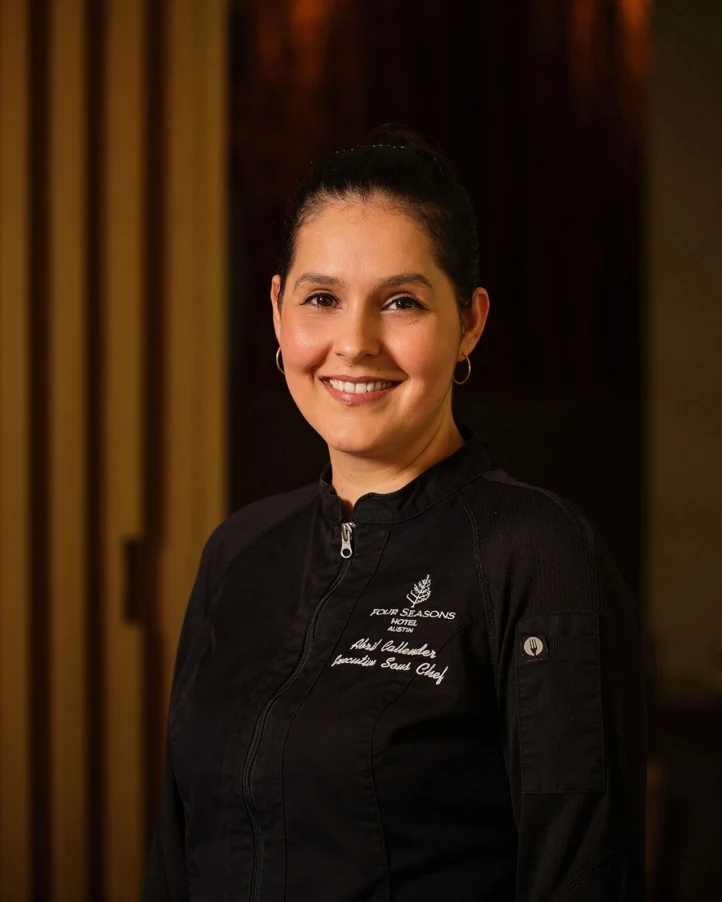
Made By profiles Abril Callender (Executive Chef) at Four Seasons Hotel Austin.
How expensive is Four Seasons Hotel Austin?
Four Seasons Hotel Austin is listed at a price level of $$$$.
The field
How it compares
| Place | Notes | Awards |
|---|---|---|
| Four Seasons Hotel Austin | South Congress, $$$$ | · |
| Commodore Perry Estate, Auberge Resorts Collection | Austin | Michelin 2 Keys |
| Hotel Saint Cecilia | Austin | Michelin 1 Key |
| Hotel Van Zandt | Austin | · |