- Forbes Recommended · 2026
- Michelin Selected · 2025
- Forbes Recommended · 2025
A Riverfront Position That Sets the Terms
St. Louis luxury hotels occupy a relatively small tier, and within that group, location relative to the Gateway Arch tends to function as the primary differentiator. The Four Seasons Hotel St. Louis, at 999 North Second Street, holds one of the stronger positions: a 19-story tower at 999 N 2nd St, St. Louis, MO 63102, with upper floors that convert the monument from a city landmark into a window fixture. The view from Premier Arch-View Rooms on floors 16 through 19 is not incidental to the hotel's identity; it is structurally embedded in how the property prices and positions itself within the St. Louis market.
That positioning matters more here than in most American cities. St. Louis does not have the density of luxury hotel competition found in Chicago or New York, which means properties like the Four Seasons, The Ritz-Carlton, St. Louis, and Hotel Saint Louis, Autograph Collection each carve out distinct rationales. The Four Seasons trades on scale, brand consistency, and an amenity stack that smaller design-led properties like Angad Arts Hotel or Moonrise Hotel cannot replicate. What that means in practice: a 200-room property with three specialty pools, a full-service spa, and a restaurant helmed by a named chef, all within walking proximity of Laclede's Landing and Busch Stadium.
How the Rooms Are Configured
The 200-room count places this property in a mid-scale tier for Four Seasons globally, closer to the focused urban format than the sprawling resort model. Room design follows a consistent logic across categories: soft wood finishes, a dedicated seating area, and flat-screen televisions as standard. Bathrooms include deep soaking tubs, mirrors with integrated televisions, and L'Occitane product lines throughout.
Suites extend that configuration with floor-to-ceiling windows, walk-in closets, and in-room sound systems. The Couple's Spa Suite in the hotel's spa facility is a separate category: a private steam room, shower, and relaxation space designed for shared use rather than standard back-to-back treatment bookings. In a market where spa programming often defaults to transactional treatment menus, a dedicated private suite format signals a different service approach.
For comparison, properties operating at a similar standard in other American markets include Raffles Boston, The Fifth Avenue Hotel in New York City, and Hotel Bel-Air in Los Angeles. Each operates with a defined sense of place embedded into its service model. The Four Seasons St. Louis grounds its identity in the Arch view and riverfront access rather than architectural heritage or garden setting, which is a different but coherent editorial position.
The Eighth Floor as a Distinct Amenity Layer
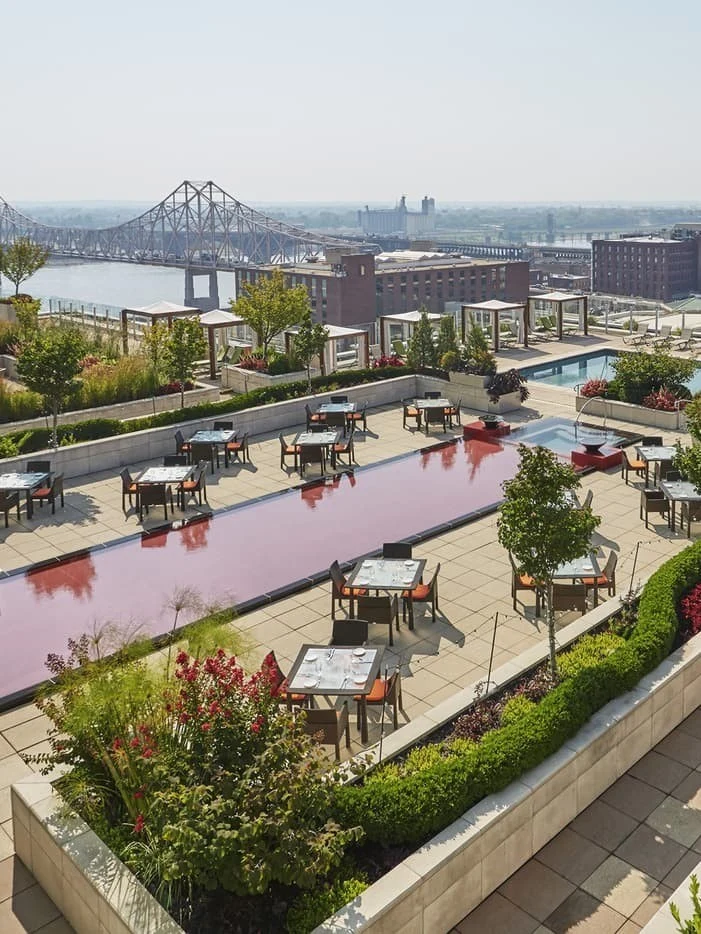
American urban luxury hotels increasingly treat a specific floor as a semi-public amenity zone, separating pool and wellness programming from the room floors above. The Four Seasons St. Louis executes this through its eighth floor, where the Sky Terrace and three specialty pools sit alongside seven cabanas. Poolside lunch service from a lounger is available, and morning yoga programming occupies the terrace. For guests whose primary use of a luxury hotel runs through its daytime outdoor spaces rather than its bar or restaurant, this configuration matters.
The cabana count of seven is specific enough to signal that weekend demand will outpace supply. Advance arrangement for cabana reservations is worth building into the planning process, particularly during the Missouri summer months when the outdoor terrace becomes the hotel's most contested resource.
Cinder House and the Role of the Hotel Restaurant
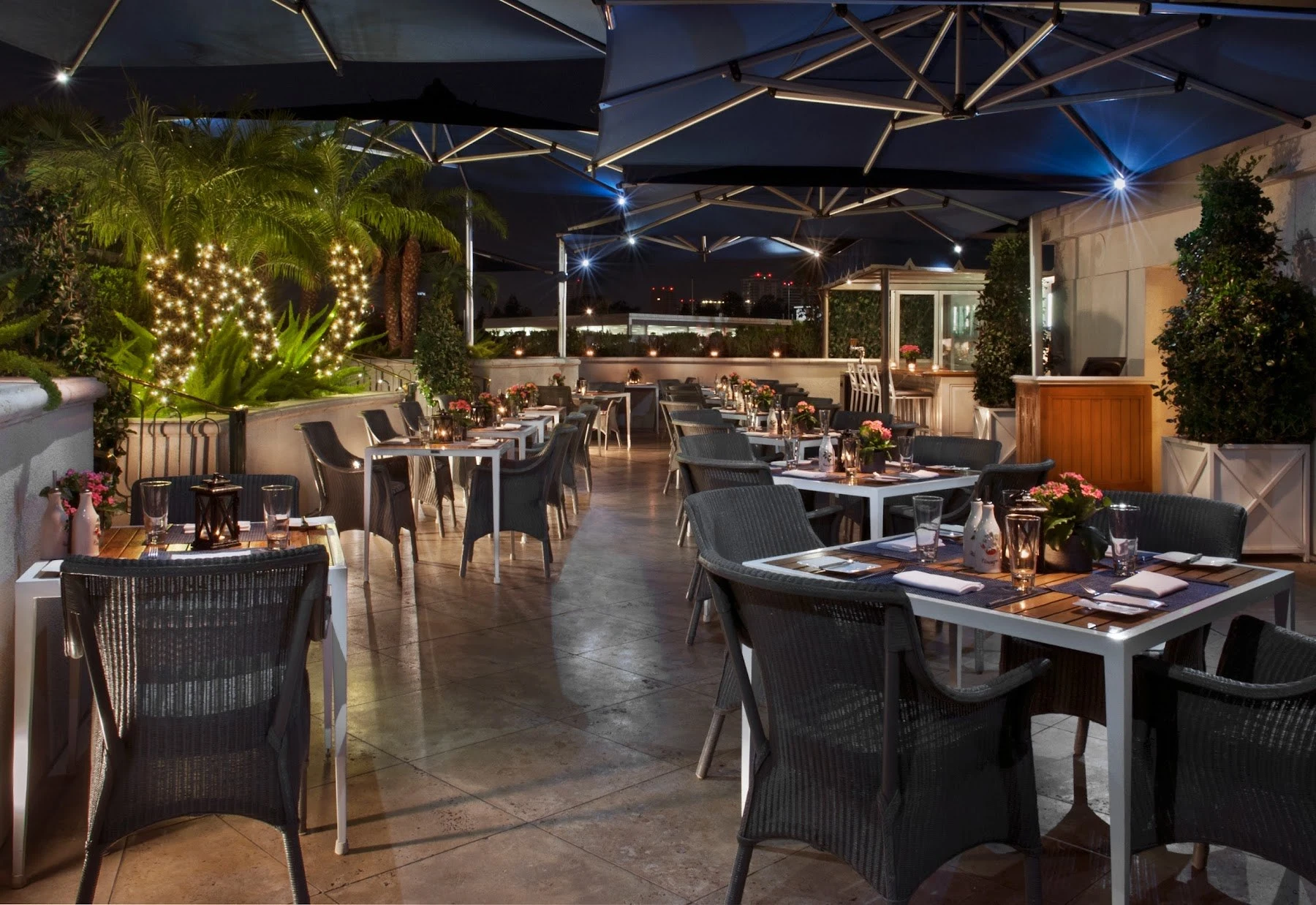
Hotel restaurants in the American luxury tier occupy an awkward position: they need to function as a genuine dining destination rather than a convenient fallback, but they are also structurally tied to the hotel's guest cycle. Cinder House, on the eighth floor, resolves that tension with a degree of credibility. Chef Gerard Craft, whose profile in St. Louis dining has been established across multiple projects, leads a menu built on South American-influenced contemporary fare. The restaurant's positioning against Arch views gives it a visual anchor that functions independently of the food, though the Craft association provides a culinary rationale for visits that are not hotel-guest-driven.
Service Model and Guest Experience
Four Seasons as a chain operates on a service philosophy that has been consistent across its global portfolio for decades: high staff-to-guest ratios, anticipatory rather than reactive guest management, and a preference for personalisation over standardised scripting. The St. Louis property reflects that model within a 200-room format, where the guest count is controlled enough to allow genuine attention. The pet policy is illustrative of how that anticipatory approach works in practice. That is not a marketing gesture; it is a logistical decision that requires pre-arrival coordination and reflects how the property handles guest data before check-in.
The casino connection through Lumiere Place, directly accessible without leaving the building, is an unusual amenity for a Four Seasons property and speaks to the specific context of the St. Louis riverfront. For guests who want that access, the adjacency removes any friction. For guests who do not, it is invisible to the hotel experience.
Placing This Property in a Wider Travel Frame
The Four Seasons St. Louis sits in a category of urban luxury hotels that combine a clear city-specific identity with the operational consistency of a major hotel group. That combination is harder to execute than either pure independent design hotels or large convention-focused properties. For context, other Four Seasons properties in the American market that operate with a similarly specific sense of place include Four Seasons at The Surf Club in Surfside, which anchors its identity in mid-century heritage, and properties in the design-led independent tier like Troutbeck in Amenia or SingleThread Farm Inn in Healdsburg, which operate at smaller scale with more concentrated editorial identities.
For travellers whose primary reference points are wilderness-anchored or resort-format properties, Amangiri in Canyon Point, Post Ranch Inn in Big Sur, Sage Lodge in Pray, or Amangani in Jackson Hole represent a different category altogether. The Four Seasons St. Louis is an urban property with urban rhythms: city proximity, a walkable cultural footprint, and hotel programming designed around the Gateway Arch, the Science Center, the Zoo, and Busch Stadium rather than landscape immersion.
Guests arriving via the city's main transport corridors will find the North Second Street address direct: the property sits on the northern edge of downtown, close enough to the Arch grounds to make an evening walk viable and close enough to Laclede's Landing for a short post-dinner route.
Planning Considerations
Booking through Four Seasons channels typically provides access to loyalty benefits and room preference documentation, which matters for a property where room category selection, particularly the Arch-view tier on floors 16 to 19, can significantly affect the stay. The spa Couple's Suite is a bookable feature that warrants early reservation, as private suite slots at hotel spas in this tier are generally limited to one or two time blocks per day. Summer months, when the eighth-floor terrace and pool programming are at full operation, represent the most demand-heavy period.
Questions
Frequently asked
Who works at Four Seasons Hotel St. Louis?
Made By profiles Gian Nicola Colucci (Chef) at Four Seasons Hotel St. Louis.
How expensive is Four Seasons Hotel St. Louis?
Four Seasons Hotel St. Louis is listed at a price level of $$$$.
The field
How it compares
| Place | Notes | Awards |
|---|---|---|
| Four Seasons Hotel St. Louis | Columbus Square, $$$$ | · |
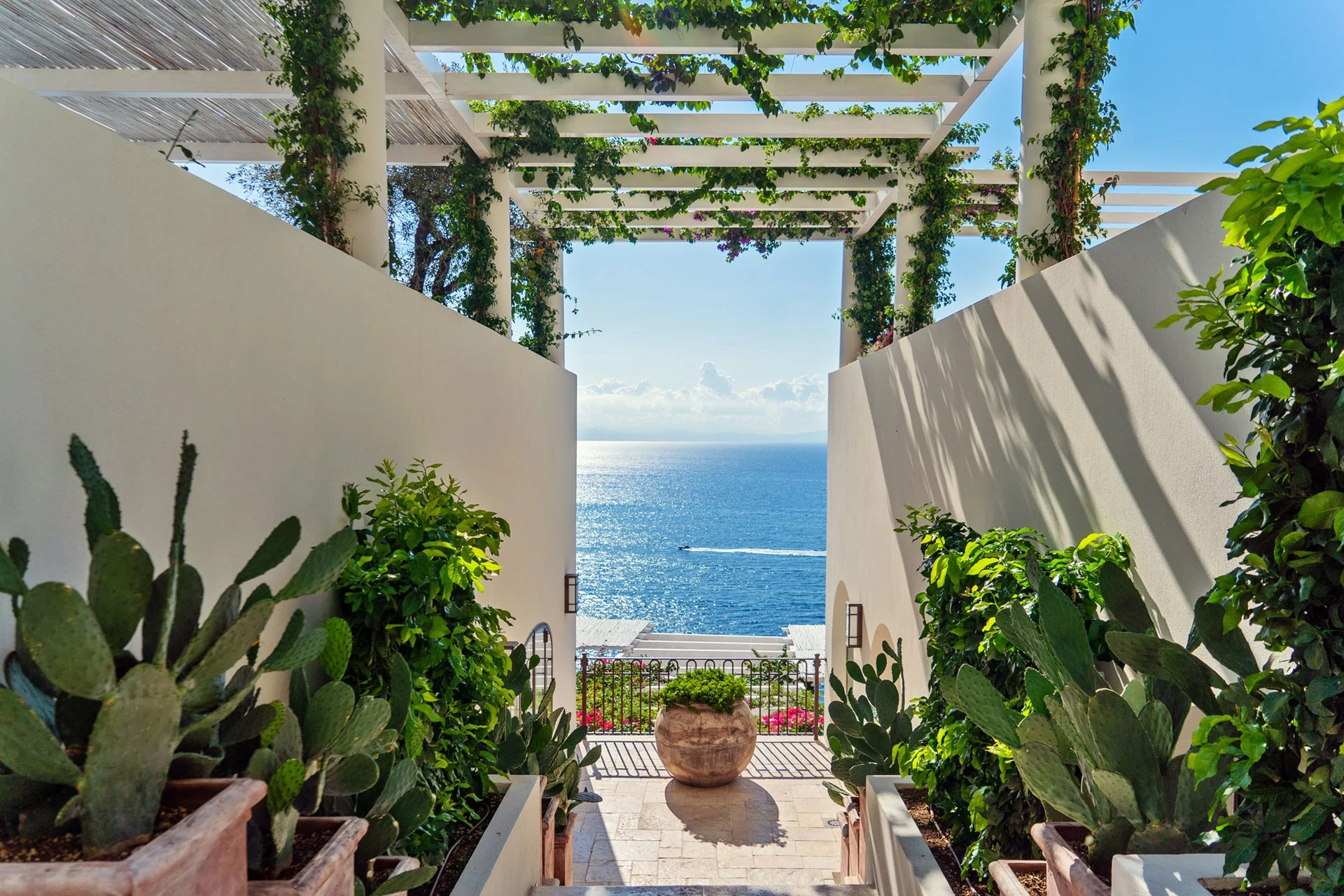
| Borgo Santandrea | Amalfi Coast | Michelin 2 Keys, World's 50 Best |
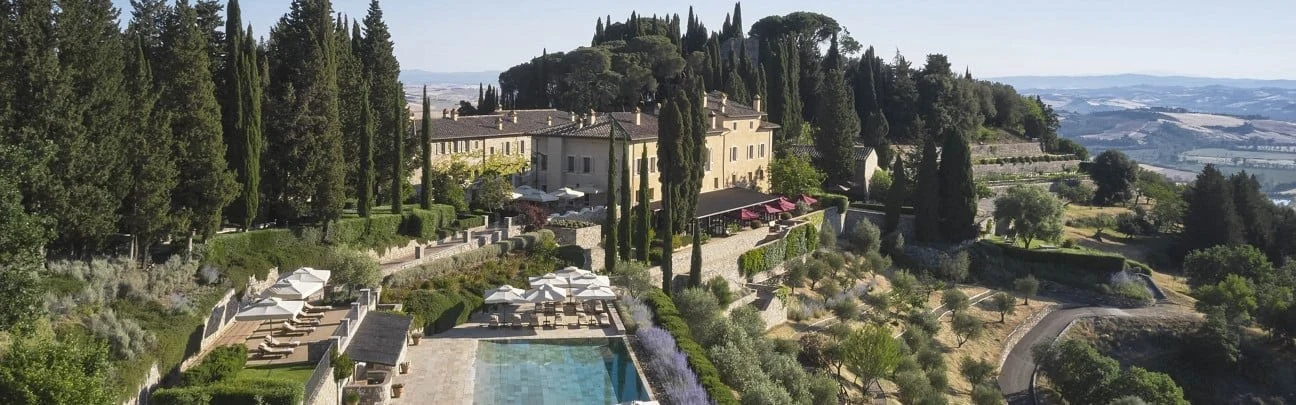
| Rosewood Castiglion Del Bosco | Montalcino | Michelin 3 Keys |
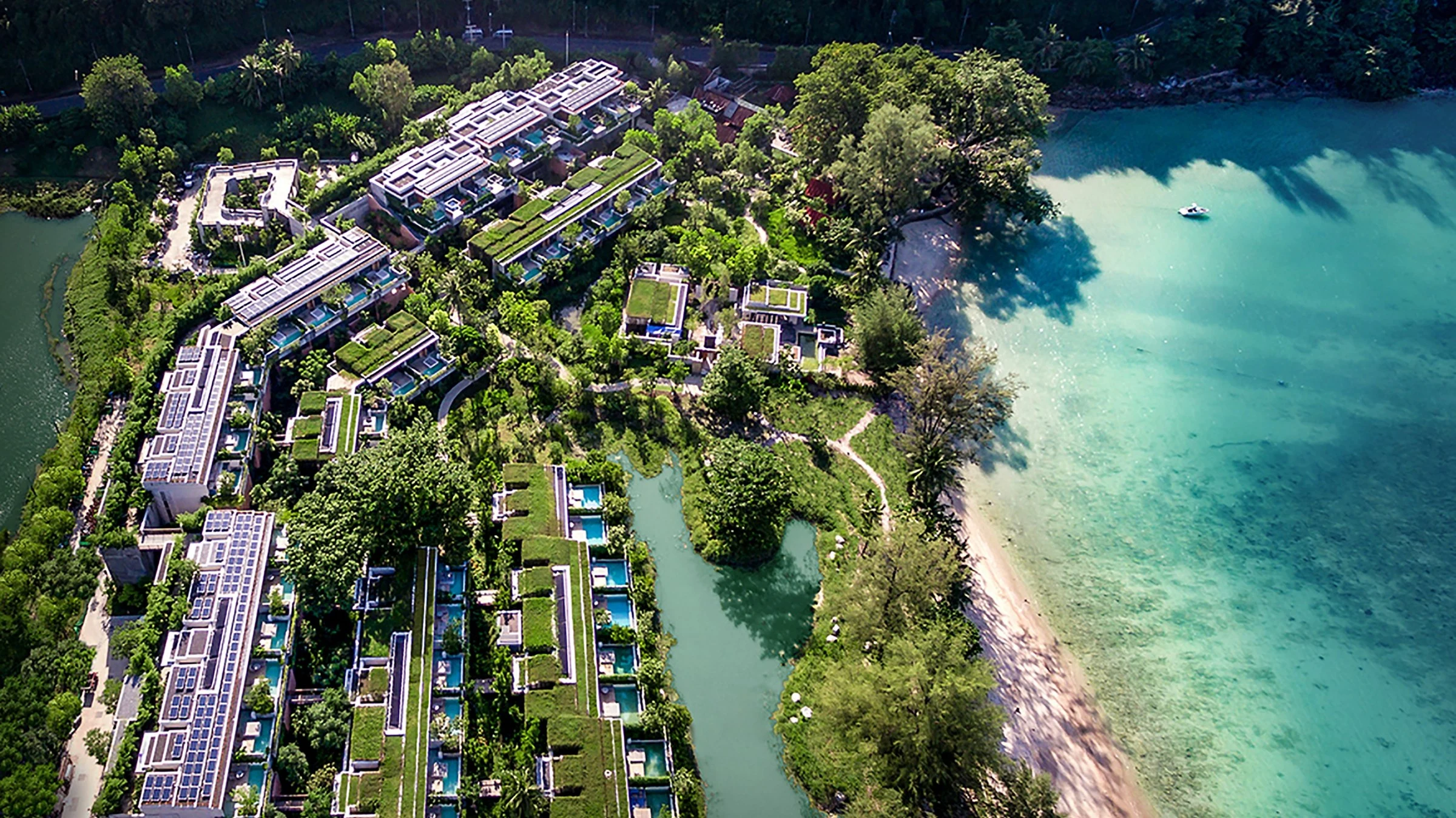
| Rosewood Phuket | Phuket | Michelin 2 Keys |
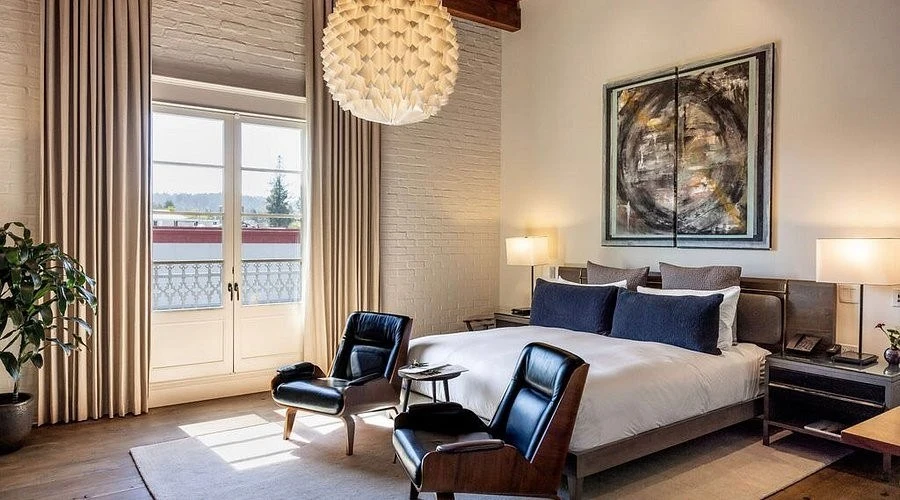
| SingleThread Farm Inn | Healdsburg | Michelin 3 Keys |
| Soneva Fushi | Eydhafushi | Michelin 3 Keys, World's 50 Best |
| The Peninsula Beverly Hills | Los Angeles | Michelin 2 Keys |