Furancho La Zapatería
- 01CuisineGalician-Canarian
- 02CityIcod de los Vinos, Spain
Where the Atlantic Northwest Meets the Canarian Table
Tenerife's dining identity is shaped primarily by its volcanic soil, its proximity to the African coast, and a tradition of mojo-dressed everything. Galician cuisine, with its cold-water shellfish, slow-cooked pulpo, and fat-marbled veal, operates on an entirely different register. The fact that these two traditions can coexist on a single menu in a small street-level dining room in Icod de los Vinos, and that Michelin's inspectors have taken notice, and the result is a restaurant that makes a clear case for how regional Spanish cooking can travel and still remain grounded in place.
Furancho La Zapatería occupies a distinctive position in this conversation. The restaurant's colourful façade, designed to evoke the glass-fronted display windows of an old shoe shop (zapatería means shoe shop in Spanish), announces a particular kind of self-awareness: this is a place comfortable with its own eccentricity. Step inside, and the décor stays simple. The room does not ask you to be impressed by it. The cooking does the work instead.
The Sunday email
Read about the people behind restaurants like Furancho La Zapatería in the Sunday email.
Every Sunday we send a lead story and up to four more about the chefs, winemakers, sommeliers and hoteliers behind the restaurants, bars, wineries and hotels we cover.
Recent stories

Free. One email a week, and you can unsubscribe from any issue.
The Supply Chain Is the Concept
What gives the menu its coherence is not a written philosophy or a tasting-menu format but a logistics arrangement that most restaurateurs would consider impractical. Galician products arrive from Fisterra, on the western tip of La Coruña province, every other day, brought in by the owner's brother. Fisterra, sitting at the end of the Camino de Santiago on Spain's Atlantic edge, is among the country's most reliably sourced points for cold-water shellfish and seafood. That supply link, maintained at the small scale of a single-family network, is what allows the kitchen to put Galician scallops and veal on the same plate as Canarian mojo without either element feeling imported or approximate.
This cross-regional model is rarer than it sounds. Most Galician restaurants operating outside Galicia compromise on sourcing, substituting local product or relying on frozen supply. The every-other-day rhythm here keeps the Galician half of the menu honest, and it positions La Zapatería in a very specific niche: not a Galician restaurant transplanted to the Canaries, and not a Canarian restaurant with Galician affectations, but something that requires both coastlines to function.
What Michelin's Bib Gourmand Recognition Actually Means Here
The Bib Gourmand is Michelin's designation for restaurants offering what its inspectors consider good cooking at prices below the starred tier. In 2025, La Zapatería holds that designation, which places it in a category defined by value-to-quality ratio rather than technical ambition or theatrical presentation. Spain's Bib Gourmand list is competitive: the country that produces Arzak in San Sebastián, El Celler de Can Roca in Girona, Azurmendi in Larrabetzu, DiverXO in Madrid, Cocina Hermanos Torres in Barcelona, Mugaritz in Errenteria, Martin Berasategui in Lasarte - Oria, Quique Dacosta in Dénia, Ricard Camarena in València, Aponiente in El Puerto de Santa María, Atrio in Cáceres, and Cocina Hermanos Torres in Barcelona at its upper end also produces a Bib tier that is not handed out for generic competence. A single-price-range restaurant in a small Tenerife town earning that recognition signals that the cooking is doing something the inspectors found worth returning to document.
The Google rating of 4.7 across more than 1,000 reviews supports the same conclusion from a different direction: this is not a discovery-phase restaurant dependent on a single wave of enthusiast attention, but one with sustained local and visitor approval over time.
On the Menu: Where the Two Coastlines Overlap
Dishes that define the kitchen's approach are the ones where Galician and Canarian elements meet directly rather than appear side by side. The mussels with mojo sauce place a quintessentially Galician bivalve inside a sauce tradition that is specifically Canarian, mojo being the archipelago's defining condiment, made with garlic, oil, and either red chilli or green herbs. Grilled scallops sourced from the Galician supply chain arrive in the context of a kitchen that understands both how to treat the shellfish and how to season for an island palate.
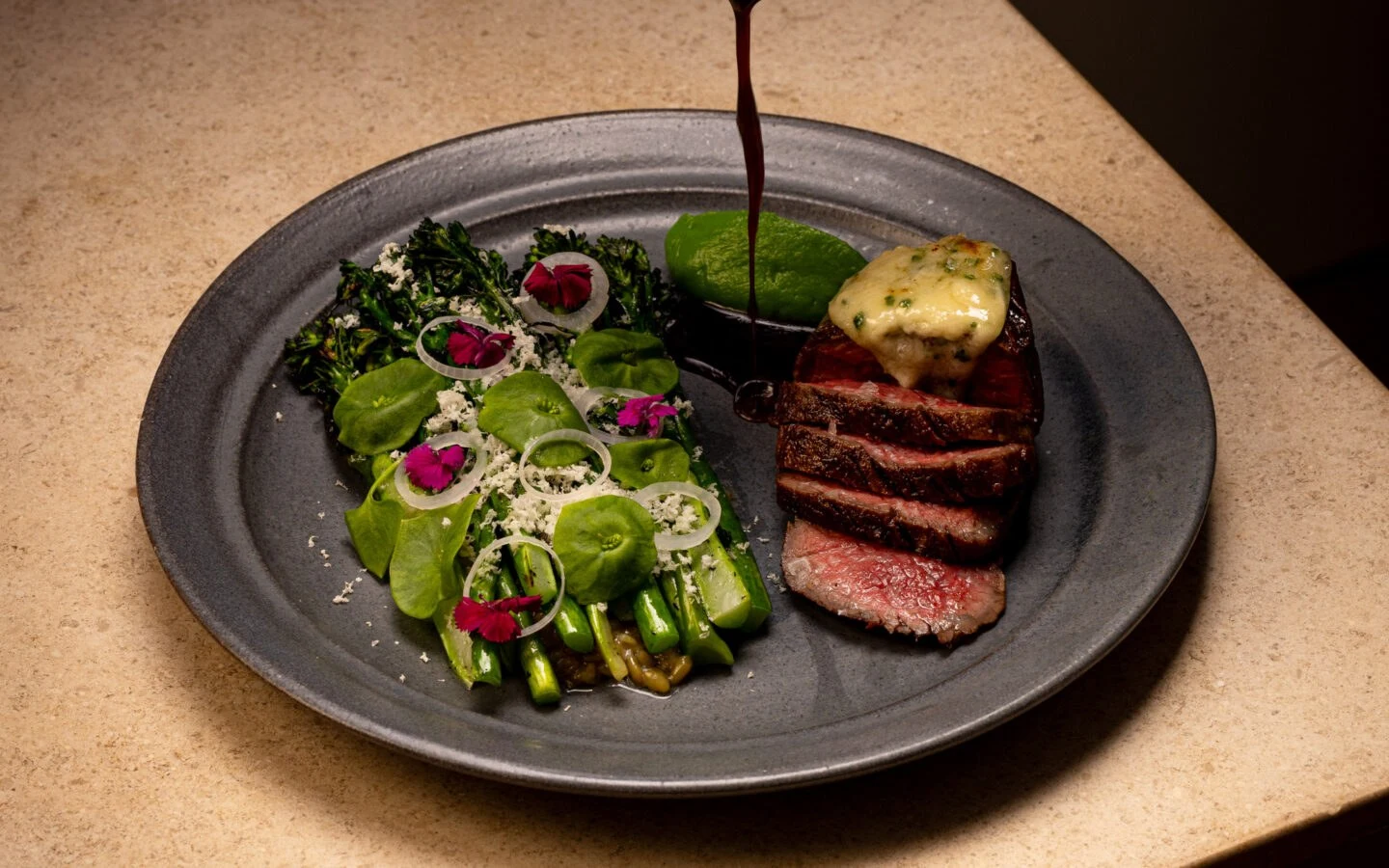
Octopus empanadas extend the combination further: empanadas are Galicia's most exported food format, and pulpo is the ingredient Galicia is most associated with internationally. Placing that combination inside a Canarian context, where frying culture and warm-climate produce dominate, produces something that reads as genuinely fused rather than merely coexistent. The entrecôte of Galician veal represents the other end of the supply chain: the land-based product that travels alongside the seafood and keeps the menu from being purely oceanic.
For broader context on how Galician cooking performs at its most ambitious, As Garzas in Barizo and Ceibe in Ourense both operate within the home region and offer points of comparison for how the same culinary tradition functions on its own ground.
The Room and the People Running It
The dining room is run as a family operation: Emma in the kitchen, Alberto in the front of house. This division is common in small Spanish restaurants and usually produces a particular kind of service rhythm, attentive because the people serving know exactly what is coming out of the kitchen, personalised because the stakes of the interaction are direct rather than mediated through a management layer. The room's simple décor places the emphasis squarely on the plate and the conversation, which suits a restaurant at the budget end of the price range without feeling like a compromise.
The cash-only policy is a practical detail worth noting before arrival. It is not unusual in smaller Spanish restaurants, particularly in towns outside the main tourist circuits, but it requires preparation.
Questions
Frequently asked
What recognition does Furancho La Zapatería hold?
Furancho La Zapatería holds a Michelin Bib Gourmand.
How expensive is Furancho La Zapatería?
Furancho La Zapatería is listed at a price level of $.
Where is Furancho La Zapatería and what does it serve?
Furancho La Zapatería is in Icod de los Vinos, Icod de los Vinos, serving Galician-Canarian.
The field
How it compares
| Place | Cuisine | Notes | Awards |
|---|---|---|---|
| Furancho La Zapatería | Galician-Canarian | Icod de los Vinos, $ | · |
| Alkimia | Modern Catalan Fine Dining | Barcelona | Michelin 1 Star |
| Botanist | Modern Canadian Fine Dining | Vancouver | · |
| Elkano | Basque Grilled Fish | Getaria | Michelin 1 Star, 50 Best |
| Sorn | Fine Southern Thai | Bangkok | Michelin 3 Stars, 50 Best |
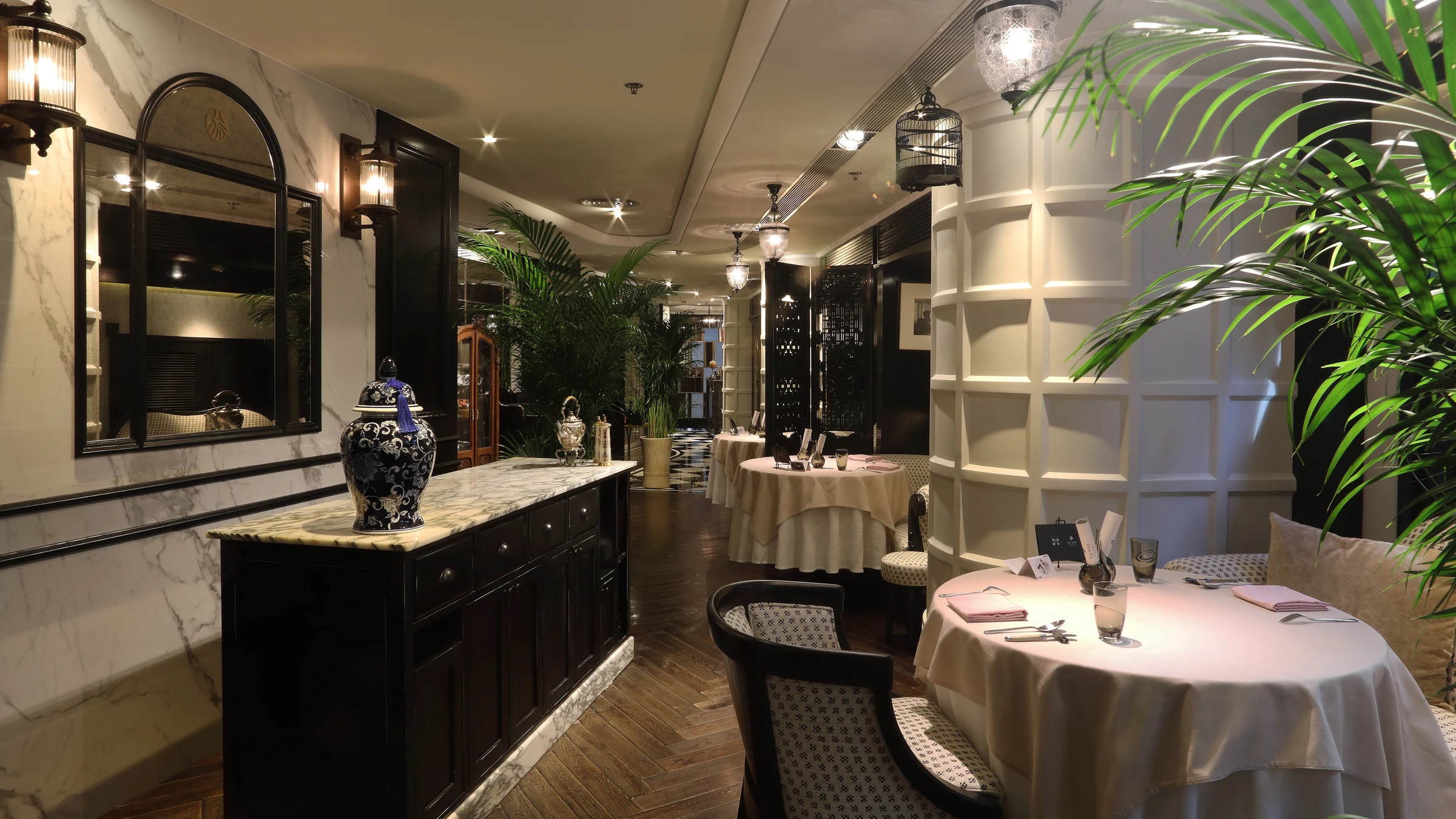
| Ta Vie | Modern French-Japanese Fine Dining | Hong Kong | Michelin 3 Stars, 50 Best |
| Ynyshir Hall | Modern Fusion Fine Dining | Machynlleth | Michelin 2 Stars |
Similar places
Modern Catalan Fine Dining
Alkimia
Barcelona, Spain
★
Modern Canadian Fine Dining
Botanist
Vancouver, Canada
Basque Grilled Fish
Elkano
Getaria, Spain
★ · 50 Best
Fine Southern Thai
Sorn
Bangkok, Thailand
★★★ · 50 Best
Modern French-Japanese Fine Dining
Ta Vie
Hong Kong, Hong Kong
★★★ · 50 Best
Modern Fusion Fine Dining
Ynyshir Hall
Machynlleth, United Kingdom
★★



The Sunday email
Read about the people behind restaurants like Furancho La Zapatería in the Sunday email.
Every Sunday we send a lead story and up to four more about the chefs, winemakers, sommeliers and hoteliers behind the restaurants, bars, wineries and hotels we cover.
Recent stories
Free. One email a week, and you can unsubscribe from any issue.