Galanga
- 01CuisineModern French Fusion with Asian Influences
- 02CityParis, France
- 03RecognitionOne Michelin Star
Vegetables, iodine, spice and restraint
- 1 Michelin Star · Michelin Guide
- Michelin 1 Star · 2026
- Michelin 1 Star · 2025
- We're Smart World 3 Radishes · 2025
- Michelin 1 Star · 2024
Vegetables brought to the pass
Vegetables arrive first in the composition at Galanga, and the accent comes afterwards. The restaurant, listed as Galanga par Monsieur George, sits at 17 rue Washington inside the Monsieur George Hotel and Spa in the 8th Arrondissement, a short walk from the Champs-Élysées, and it should not be confused with the Thai Galanga out in Pantin. Nothing here is built around spectacle. It is built around a tasting-menu rhythm, formal service, and a kitchen that keeps vegetables at the centre while drawing marine, Mediterranean and Asian-influenced notes in for lift.
The posture is steady: the plate pared back, the product carrying weight before the accent arrives. Vegetables are the protagonists rather than the accompaniment, and the marine and Mediterranean lines are there for relief and intensity. Acidity wakes sweetness, vegetal freshness answers iodine, and spice raises a dish without taking it over. The station rewards patience, and the plates come out épurées rather than loaded.
Three, five or seven temps
The menu moves in 3, 5 or 7 temps, a structure that lets the kitchen work by sequence rather than accumulation. The tasting menus are written as a narrative, weaving textures and flavours course into course rather than setting out separate plates. A plate of raie nacrée au beurre noisette with topinambour and pomme vinegar holds one register; bœuf Simmental grillé au barbecue with velours de maïs au wasabi and sakura jus holds another. Lozère lamb can take a couscous form with quinoa tabouleh, lamb stock and homemade harissa. Rouget meets pois chiche and olive; pigeonneau arrives with chou de Milan and coing. The method is not fusion as decoration. It is a set of decisions at the bench: when to let beurre noisette deepen a fish, when wasabi should sharpen corn, when juniper belongs beside broccoletti and kiwi. Cheese comes through crémier Emeric Delacour. Dessert keeps the same grammar, from pomme confite in caramel au beurre salé with sarrasin glace and Madagascar vanilla to figue with fig leaf, brebis milk and cardamome. The wine program stays curated and close to the food, with pairings chosen to meet the vegetal and marine tension rather than cover it.
A hushed green room
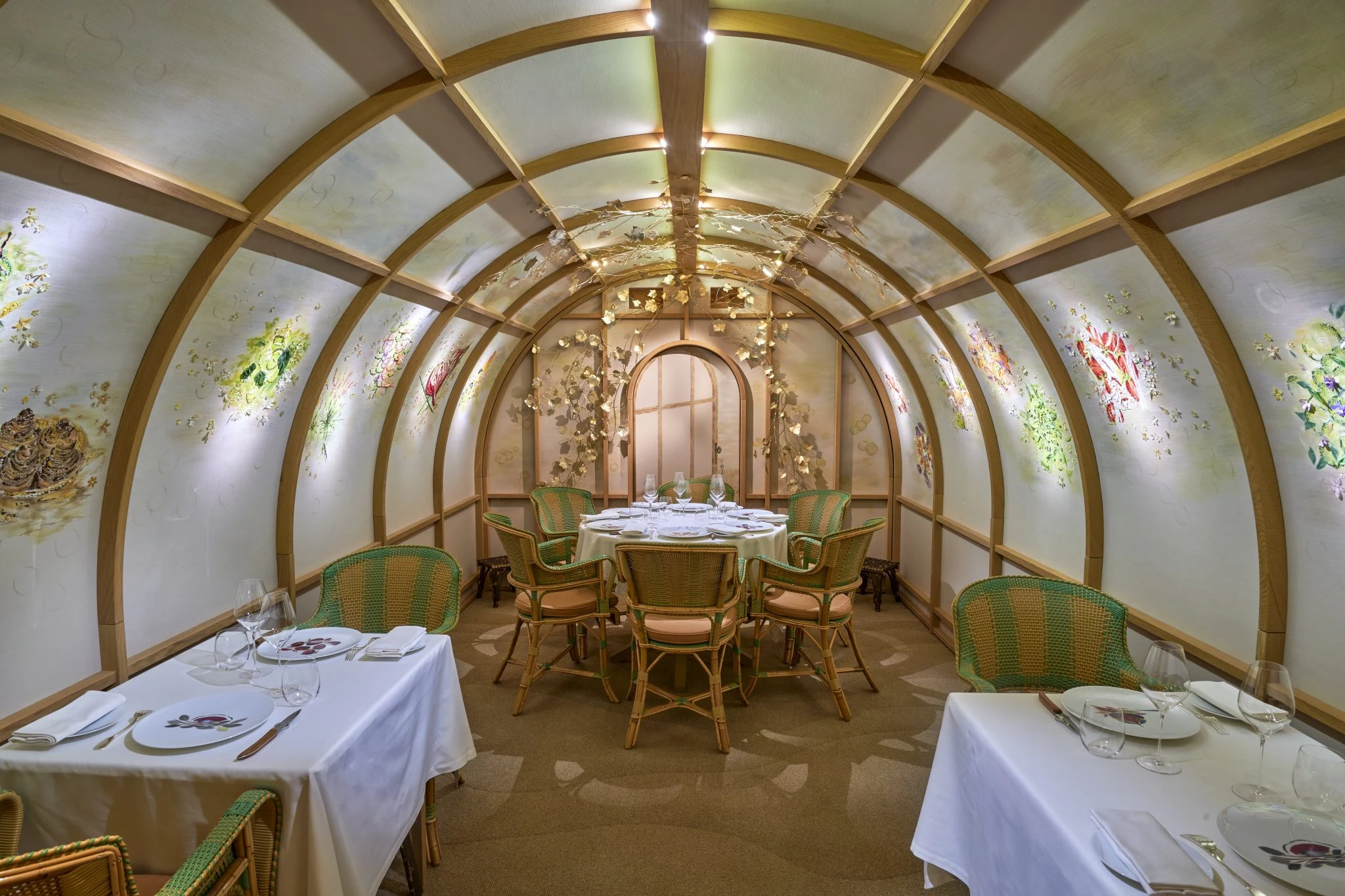
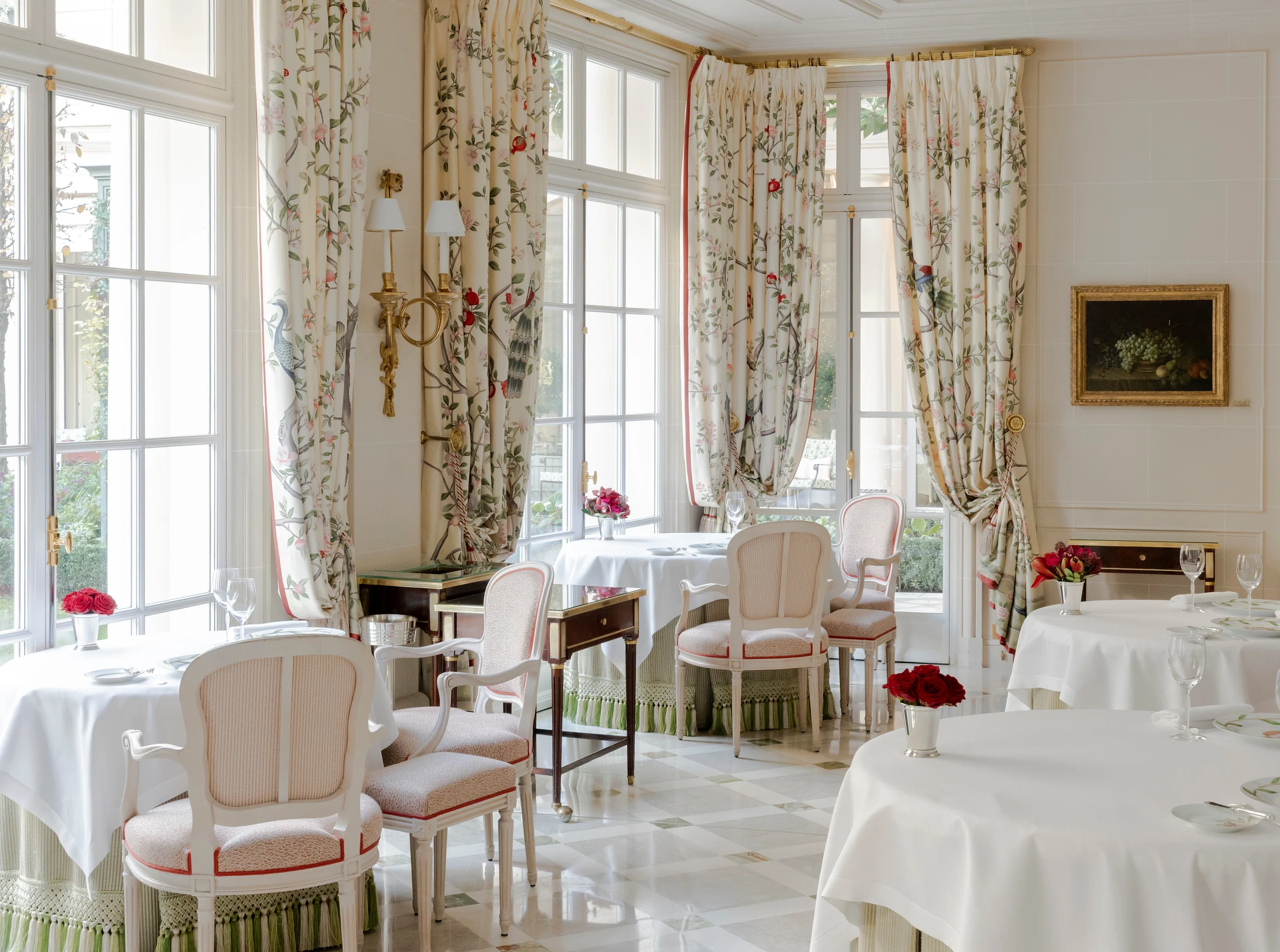
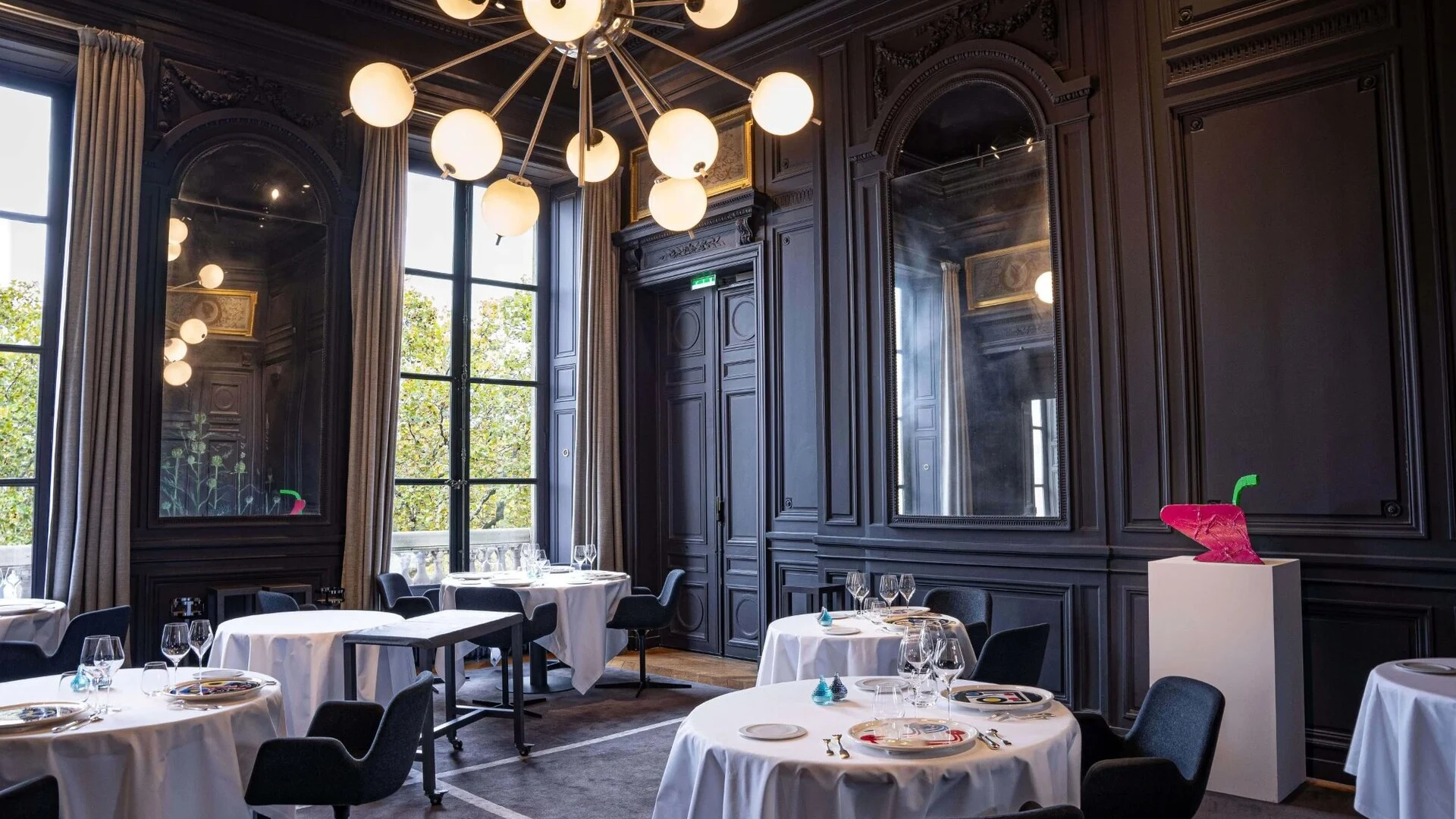
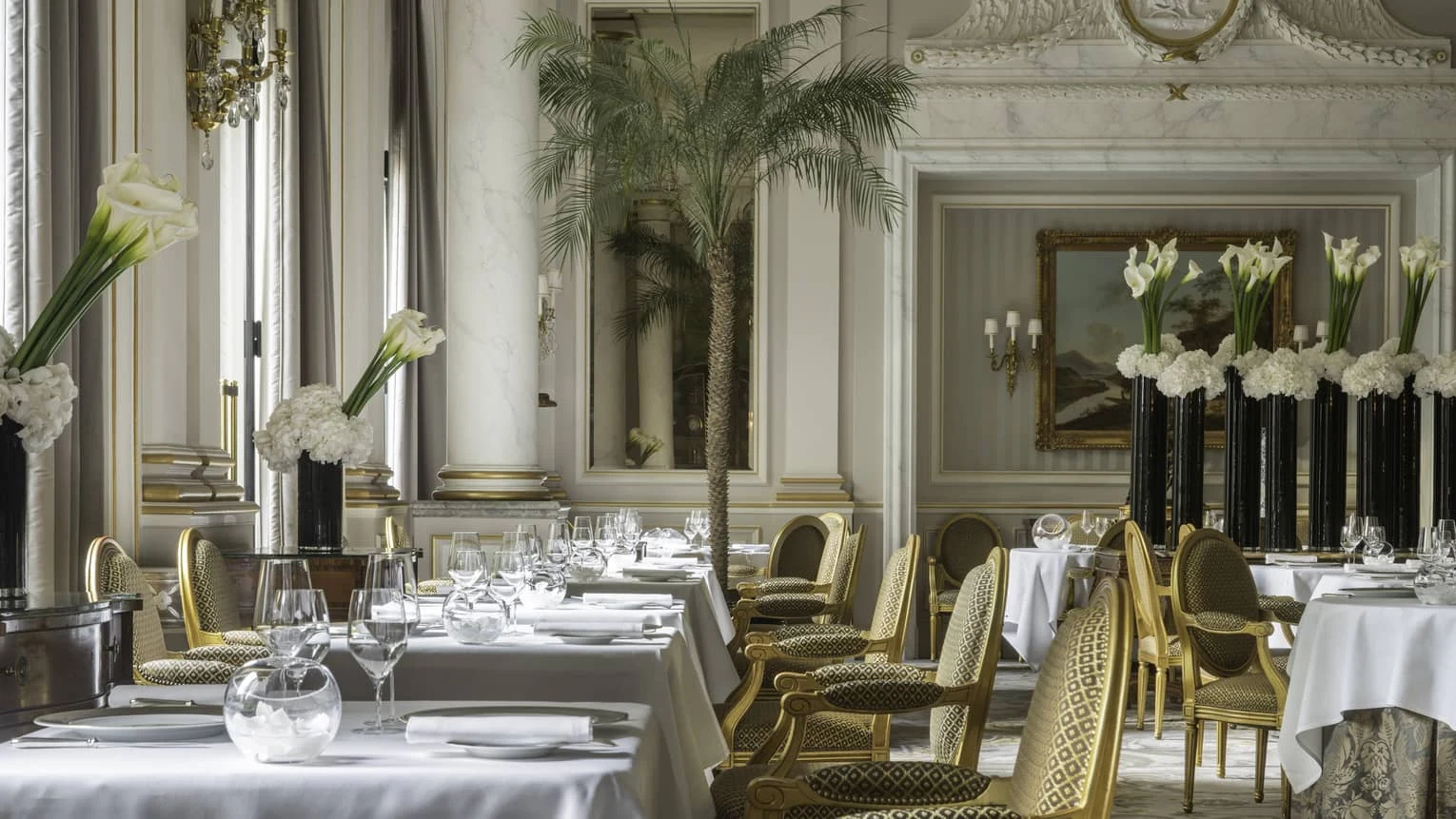
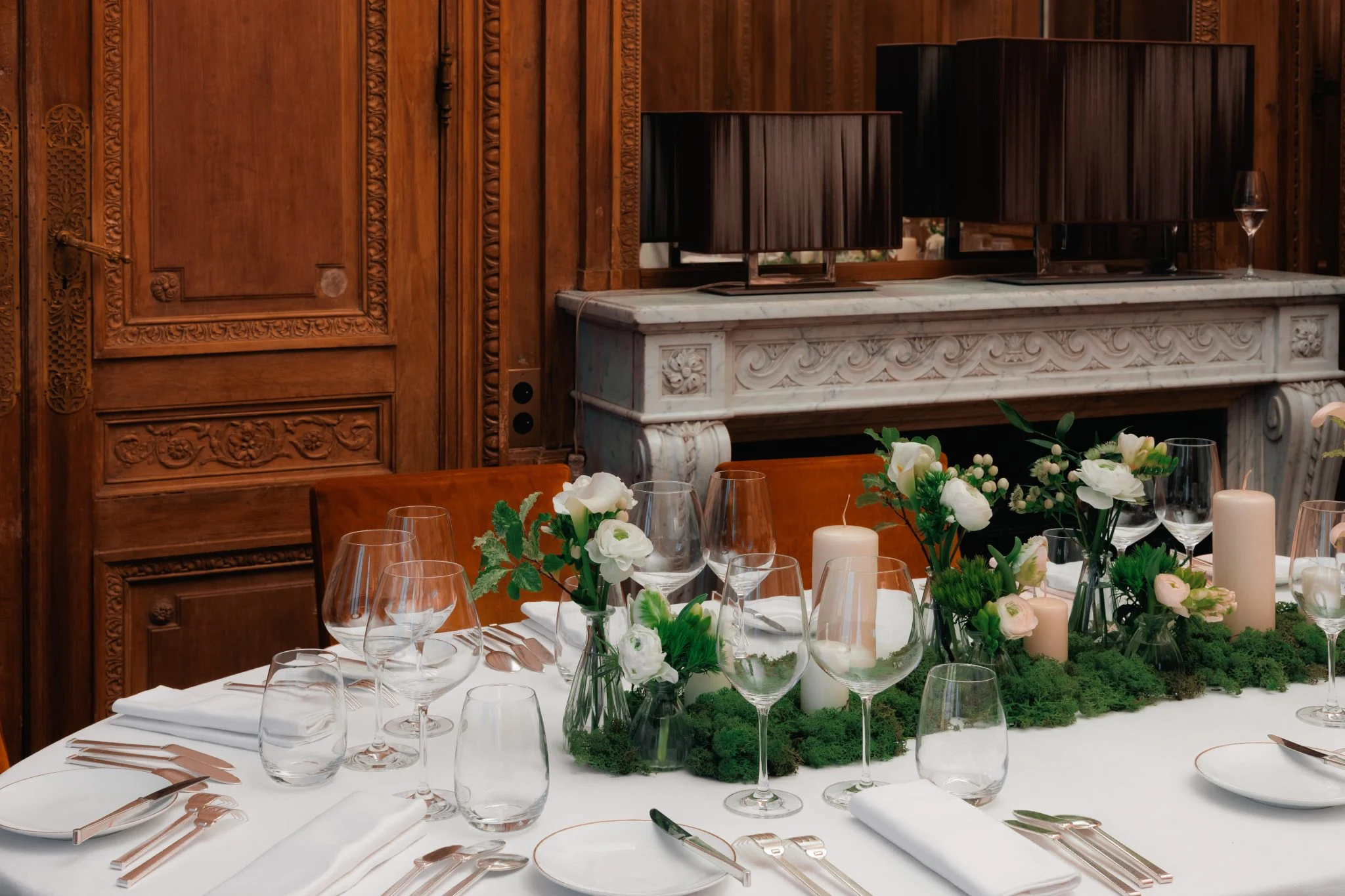
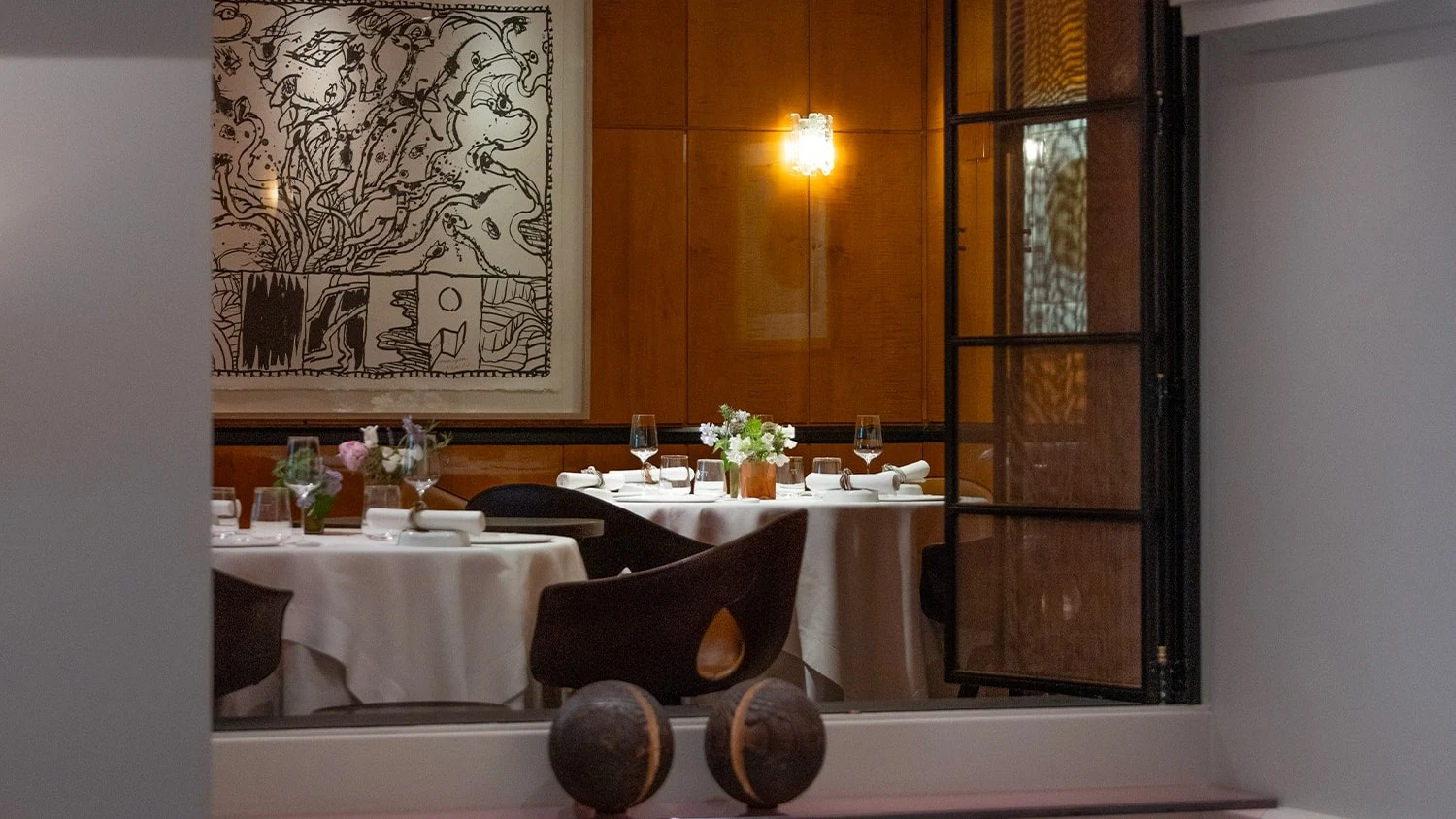
The room holds its voice low. Deep dark green decor gives the restaurant a cellar-like hush, though this is a Paris dining room rather than a cellar, with the pass working behind a polished, intimate service style. The format is fine dining, and the sensation it produces is compression: a small room, a quiet floor, a sequence of plates that arrive with enough space between them for acidity, smoke, salt and spice to settle. Galanga has one Michelin star in the Guide France, and the award belongs to this Paris house. Still, the star is not the governing texture of the meal. The governing texture is balance: vegetable, iodine, Mediterranean warmth, an Asian edge, then a return to the product. At Galanga, sakura jus keeps the kitchen’s argument in register.
Questions
Frequently asked
What kind of restaurant is Galanga?
Galanga is a fine dining restaurant in Paris serving a tasting menu shaped by modern French cooking with Asian influences, together with marine and Mediterranean notes. Vegetables are kept at the centre of the menu.
What is the menu format?
The menu moves in 3, 5 or 7 temps. The dishes are built in sequence rather than as a list of separate plates, and the kitchen uses that format to shape the meal as a narrative.
What is Galanga known for?
The restaurant is known for a vegetable-led tasting menu, with marine and Asian-influenced accents. Plates are described as pared back, with vegetables carrying the main weight before the other elements are added.
Does Galanga have Michelin recognition?
Galanga has one Michelin star in the Guide France.
Where is Galanga and how should bookings be handled?
Galanga is at 17 Rue Washington, 75008 Paris, inside the Monsieur George Hotel and Spa in the 8th Arrondissement. Reservations are essential and are taken through Zenchef.
The field
How it compares
| Place | Awards | Cuisine | Notes |
|---|---|---|---|
| Galanga | Michelin 1 Star | Modern French Fusion with Asian Influences | 8th Arr. - Élysée, $$$$ |
| Arpège | Michelin 3 Stars, World's 50 Best | Vegetable-Focused French Fine Dining | Paris |
| Epicure | Michelin 3 Stars | Contemporary French Fine Dining | Paris |
| Guy Savoy | Michelin 2 Stars, World's 50 Best | Classic French Fine Dining | Paris |
| Le Cinq | Michelin 3 Stars, World's 50 Best | Modern French Fine Dining | Paris |
| Le Taillevent | Michelin 2 Stars, World's 50 Best | Classic and Modern French Fine Dining | Paris |
| Pierre Gagnaire | Michelin 3 Stars, World's 50 Best | Avant-Garde French Fine Dining | Paris |
Similar places
Vegetable-Focused French Fine Dining
Arpège
Paris, France
★★★ · 50 Best
Contemporary French Fine Dining
Epicure
Paris, France
★★★
Classic French Fine Dining
Guy Savoy
Paris, France
★★ · 50 Best
Modern French Fine Dining
Le Cinq
Paris, France
★★★ · 50 Best
Classic and Modern French Fine Dining
Le Taillevent
Paris, France
★★ · 50 Best
Avant-Garde French Fine Dining
Pierre Gagnaire
Paris, France
★★★ · 50 Best