Gut Lärchenhof
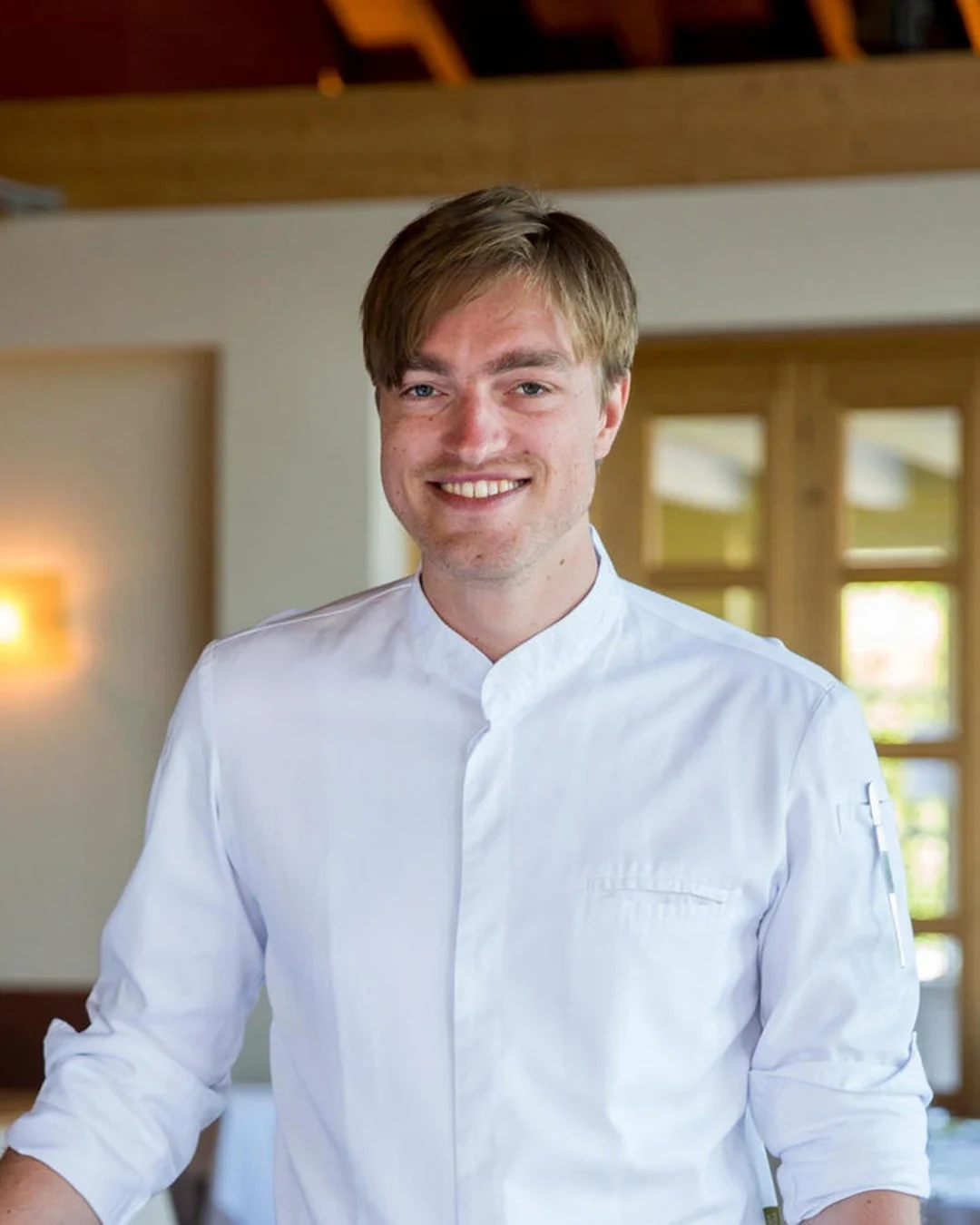
In Residence
Torben Schuster
Chef
- 01CuisineModern French Fine Dining
- 02CityPulheim, Germany
- 03RecognitionOne Michelin Star
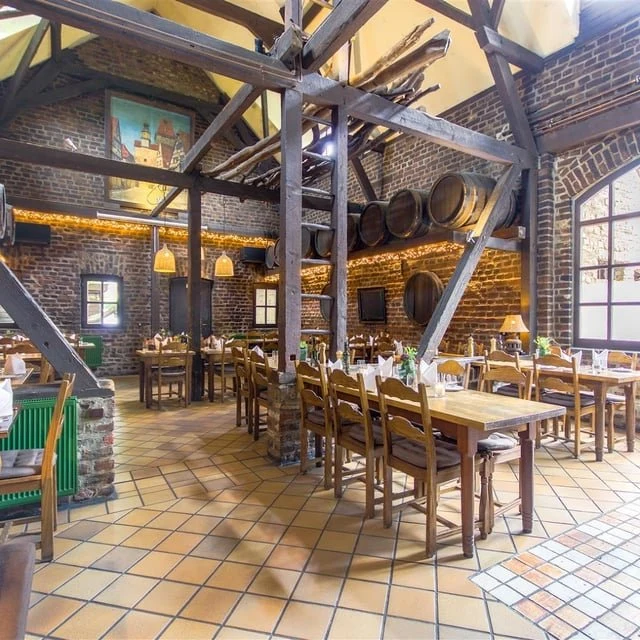
The French Table Beyond the City Line
Germany's most celebrated modern French kitchens have traditionally clustered in the southwest, the Black Forest, the Rhine valley, the Moselle. The tradition runs deep enough that restaurants like Schwarzwaldstube in Baiersbronn and Waldhotel Sonnora in Dreis have anchored their towns' reputations for decades. What makes the North Rhine-Westphalia version of that tradition interesting is how it functions without the same scenic draw, relying instead on the cooking itself to justify the drive. Gut Lärchenhof, on the outskirts of Pulheim roughly twenty kilometres north of Cologne, belongs to that quieter discipline, a Michelin-starred modern French address in a location that offers no postcard backdrop, only the meal.
The estate setting at Am Steinwerk 1 frames a particular kind of approach to formal French dining in Germany: grounded, slightly removed from the urban restaurant circuit, and positioned to attract guests for whom the table is the destination rather than part of a broader evening out in the city. That positioning has become more common across the country as starred kitchens have moved away from hotel dining rooms and into standalone properties, often outside major centres. Schanz in Piesport and ES:SENZ in Grassau follow comparable logic, where geography becomes part of the commitment the guest makes.
The Sunday email
Read about the people behind restaurants like Gut Lärchenhof in the Sunday email.
Every Sunday we send a lead story and up to four more about the chefs, winemakers, sommeliers and hoteliers behind the restaurants, bars, wineries and hotels we cover.
Recent stories
Free. One email a week, and you can unsubscribe from any issue.
What a Michelin Star in This Price Tier Actually Signals
Gut Lärchenhof has held its Michelin star in both 2024 and 2025, while its 81-point score in the 2026 La Liste ranking places it within a competitive tier of modern French addresses. The Star Wine List White Star designation adds a second credential that operates independently of the kitchen, suggesting a wine program with enough depth and curation to be assessed separately from the food. That combination of a Michelin star, La Liste points, and an independent wine accolade puts Gut Lärchenhof in a smaller comparable set than the number of Michelin-starred restaurants in Germany might suggest.
At the €€€€ price tier, the kitchen sits in the same bracket as Vendôme in Bergisch Gladbach and JAN in Munich, restaurants where the pricing signals tasting menu formats, premium ingredients, and service staff whose job is to carry the room as much as the kitchen does. That tier in Germany increasingly means a French-inflected structure even when the cuisine borrows from elsewhere. At Gut Lärchenhof, the cuisine type is listed as modern French without qualification, which is itself a positioning statement: there is no hedging toward German comfort food or Asian fusion, the cooking works in a classical European register updated by current technique.
The Bistro Tradition and What Formal French Cooking Owes It
The bistro, in its authentic French form, was never really about informality so much as directness. The cooking at a serious bistro was disciplined, often classical, and served without the theatrical trappings of grand cuisine. That stripped-back precision is what distinguished the leading Lyon bouchons or Paris neighbourhood tables from both casual eating and formal haute cuisine. Modern French restaurants that operate at the starred level in Germany often carry that bistro sensibility in a different key: the formality is present, but the goal is the same focused relationship between a well-sourced ingredient and a technically grounded preparation.
Under Chef Torben Schuster, Gut Lärchenhof operates within that tradition. The modern French designation points to cooking that works from classical French structure while incorporating the ingredient sourcing, seasonal precision, and lighter textures that have defined the past two decades of European fine dining. The estate context reinforces the connection to supply, a quality that serious bistro culture has always valued, even when the term "farm to table" had not yet been coined. For a comparable approach to produce-led sourcing in the region, Bistro (Farm to table) in Pulheim addresses the same philosophy at a different price point, which illustrates how the Pulheim food scene has developed range across formats.
Where Gut Lärchenhof Sits in the German Modern French Scene
Germany's modern French tier spreads across a wide geographic range. At the leading, three-Michelin-star houses like Aqua in Wolfsburg absorb French technique into multi-referential creative menus. Closer to the classical end, Schwarzwaldstube has represented France-in-Germany cooking at the highest formal level for decades. One-star addresses like Gut Lärchenhof occupy the tier where the ambition is fully serious but the format is less rigidly ceremonial than at the three-star level. That is a productive place to work: the cooking has to carry the room without the shield of maximum prestige, and the guest relationship is more direct.
For guests already familiar with the broader German starred circuit, comparisons suggest themselves. Restaurant Haerlin in Hamburg and Victor's Fine Dining by Christian Bau in Perl occupy the upper tier of French-influenced cooking in Germany, each with accumulated recognition that spans many years. Gut Lärchenhof's consistent starring across two consecutive years, combined with the La Liste and wine recognition, places it credibly alongside mid-tier peers rather than as an emerging candidate. For those comparing modern French across European capitals, the contrast with London's two-star modern French tables, Sketch, The Lecture Room and Library and Alex Dilling at Hotel Café Royal, illustrates how different the physical context can be at comparable quality levels, with the German estate format offering a quieter, more concentrated version of the same cuisine tradition.
Questions
Frequently asked
What recognition does Gut Lärchenhof hold?
Gut Lärchenhof holds 1 Michelin star.
Who works at Gut Lärchenhof?
Made By profiles Torben Schuster (Chef) at Gut Lärchenhof.
How expensive is Gut Lärchenhof?
Gut Lärchenhof is listed at a price level of $$$$.
Where is Gut Lärchenhof and what does it serve?
Gut Lärchenhof is in Pulheim, Pulheim, serving Modern French Fine Dining.
The field
How it compares
| Place | Awards | Cuisine | Notes |
|---|---|---|---|
| Gut Lärchenhof | Michelin 1 Star | Modern French Fine Dining | Pulheim, $$$$ |
| Daniel | Michelin 1 Star, 50 Best | Modern French Fine Dining | New York City |
| Mirazur | Michelin 3 Stars, 50 Best | Modern French Fine Dining | Menton |
| Odette | Michelin 3 Stars, 50 Best | Modern French Fine Dining | Singapore |
| Quintessence | Michelin 3 Stars | Modern French Fine Dining | Tokyo |
| Sézanne | Michelin 3 Stars, 50 Best | Modern French Fine Dining | Tokyo |
| Tantris | Michelin 2 Stars, 50 Best | Modern French Fine Dining | Munich |
Similar places
Modern French Fine Dining
Daniel
New York City, United States
★ · 50 Best
Modern French Fine Dining
Mirazur
Menton, France
★★★ · 50 Best
Modern French Fine Dining
Odette
Singapore, Singapore
★★★ · 50 Best
Modern French Fine Dining
Quintessence
Tokyo, Japan
★★★
Modern French Fine Dining
Sézanne
Tokyo, Japan
★★★ · 50 Best
Modern French Fine Dining
Tantris
Munich, Germany
★★ · 50 Best

The Sunday email
Read about the people behind restaurants like Gut Lärchenhof in the Sunday email.
Every Sunday we send a lead story and up to four more about the chefs, winemakers, sommeliers and hoteliers behind the restaurants, bars, wineries and hotels we cover.
Recent stories
Free. One email a week, and you can unsubscribe from any issue.