Gutsweinstuben E. von Nell
- 01CityTrier, Germany

- Falstaff Winery - Listed · 2026
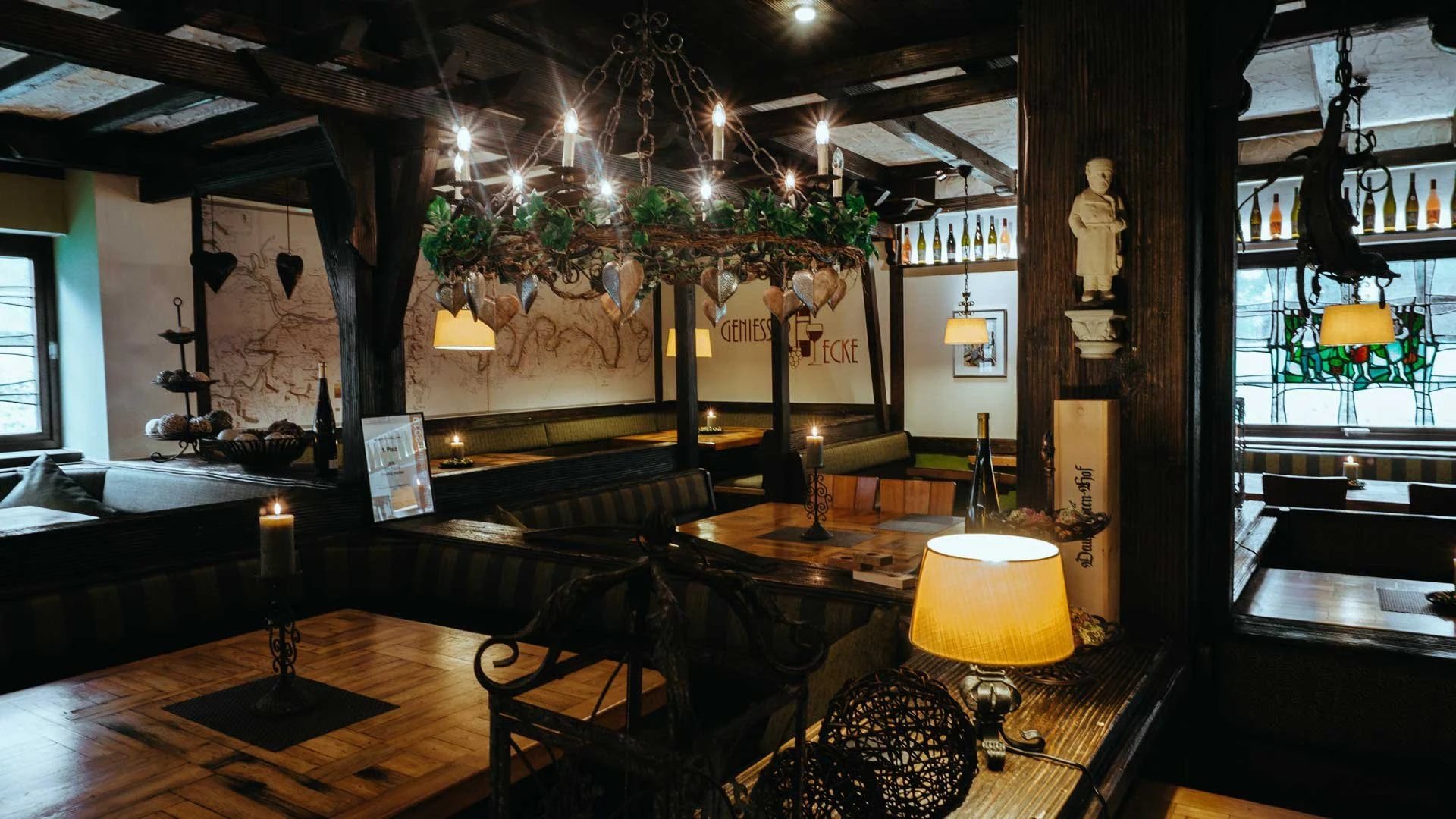
The appeal here begins with the old Mosel grammar of hospitality: timber, garden air, regional plates, and wine treated as part of the table rather than as a lecture. Trier’s wine culture has always sat between everyday tavern life and the more formal cellar door, and Gutsweinstuben E. von Nell belongs firmly to the former camp. The room reads rustic and social, with the terrace, beer garden, and wine arbor extending the experience beyond a standard dining room when the weather cooperates.
That matters in Trier, where wine is not an imported luxury signal but a local operating system. The Mosel is better known internationally for Riesling than for tavern dining, yet the regional restaurant format remains one of the clearest ways to understand how local wine functions in daily life: alongside food, groups, family tables, and visitors arriving by bike, coach, or car. For a broader map of the city’s food scene, start with Our full Trier restaurants guide, then cross-reference Our full Trier wineries guide for the production-led side of the same culture.
A Mosel tavern format built around regional dining, not cellar theatre
The venue’s strongest identity is its hospitality format. With 210 indoor seats and 30 outdoor seats, it operates at a scale far larger than the intimate tasting rooms many travelers associate with European wine estates. That changes the expectation: this is not a hushed counter built around rare bottles and technical explanation. It is a wine tavern and regional restaurant with the capacity and amenities to absorb celebrations, family meals, cyclists, and visiting groups.
The food identity is regional rather than chef-driven, which is exactly the point. In wine regions, the most revealing meals are often not the ones chasing novelty, but the ones that show how the local table is organized around appetite, season, and drinkability. Here, the pairing logic is direct in the cultural sense: regional cooking, Mosel wines, casual service, and a setting that lets the meal stretch across indoor rooms or outdoor seating without forcing a formal tasting ritual.
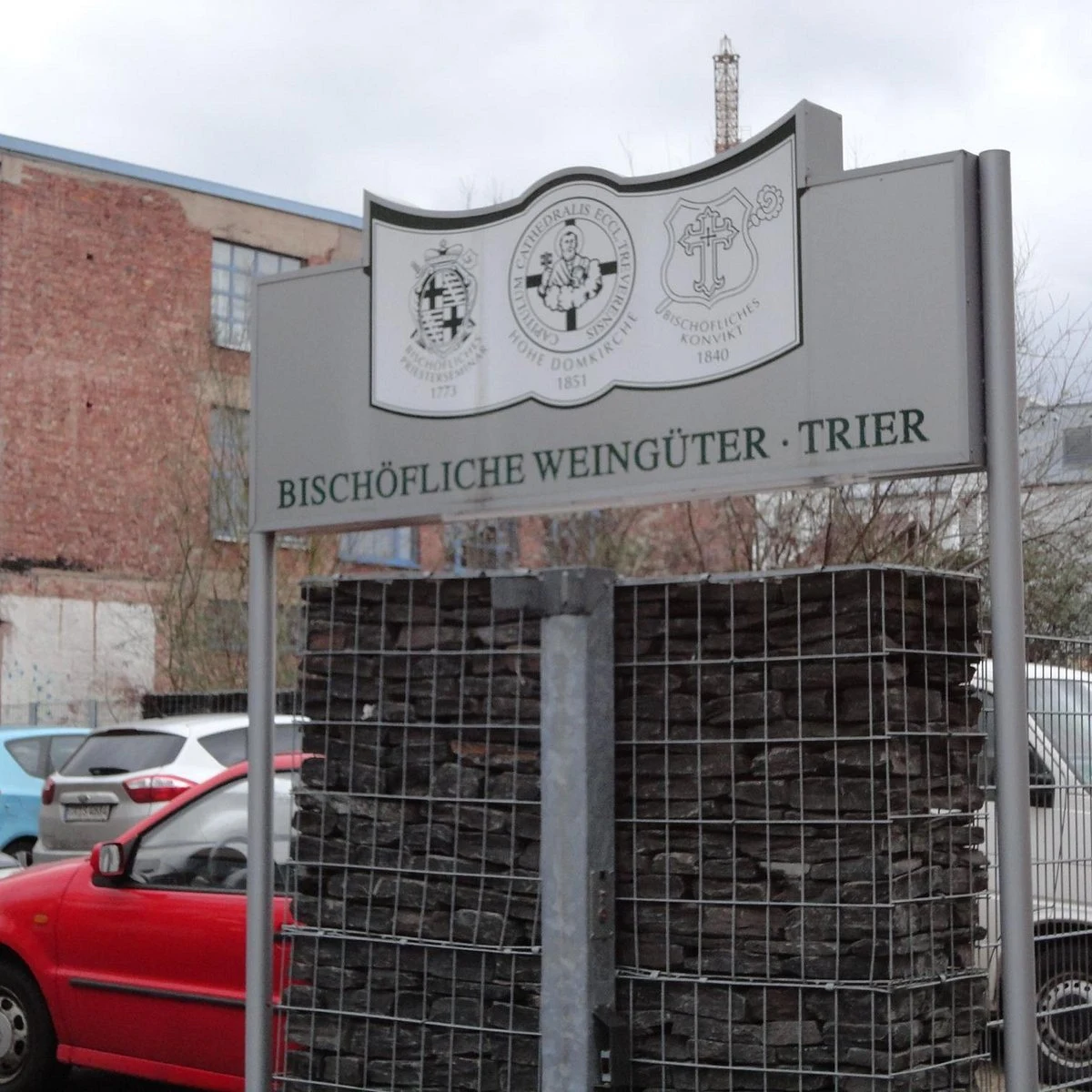
Estate wine taverns also occupy a useful middle ground for travelers who want context without committing to a production tour. Trier has more cellar-focused addresses, including Bischöfliche Weingüter Trier, Gut Avelsbach, Peter Greif, SMW Saar Mosel Winzersekt GmbH, and Weingut Deutschherrenhof. Gutsweinstuben E. von Nell answers a different need: wine with a meal, in a room designed for sociability rather than technical tasting alone.
Terroir appears through hospitality, sustainability, and the rhythms of Trier
A conventional terroir discussion would talk about slopes, soils, parcels, and cellar work. The stronger reading here is more practical: the venue expresses place through the Mosel’s tavern tradition, its regional-cuisine brief, and a visitor model shaped by Trier’s position as both an old wine city and a tourism hub. The presence of still white, sparkling, and still red wine styles gives the table a broad regional frame, while the estate-tavern setting keeps the wine connected to food rather than isolated as a collector object.
Sustainability is part of the positioning rather than a decorative claim. The venue is associated with fair-trade products and a green restaurant and catering category, which points to procurement choices as a visible part of the hospitality model. Bicycle storage, children’s facilities, outdoor seating, and group capacity reinforce the sense of a practical, open-format restaurant rather than a narrow wine specialist. For travelers comparing German and Austrian wine-country formats, it is useful to set this against producers and hospitality-led wineries elsewhere, from & Handwein in Mannheim and 2 Naturkinder in Kitzingen to 3 Winner in Bechtheim, »der Steiner« Hans Steiner in Podersdorf am See, and ®walzer in Gneixendorf Bei Krems.
The editorial takeaway is clear: this is a better fit for travelers who want Mosel wine culture embedded in a meal than for those seeking a production-led appointment with granular vineyard detail. The scene is relaxed, classic, and conversational, with enough scale to handle groups and enough regional grounding to make sense within Trier’s wider wine-and-food ecosystem. For trip planning around the city, pair it with Our full Trier hotels guide, Our full Trier bars guide, and Our full Trier experiences guide.
Questions
Frequently asked
How expensive is Gutsweinstuben E. von Nell?
Gutsweinstuben E. von Nell is listed at a price level of $$.
The field
How it compares
| Place | Notes |
|---|---|
| Gutsweinstuben E. von Nell | Olewig / Im Tiergarten, $$ |
| Bischöfliche Weingüter Trier | Trier |
| Peter Greif | Trier |
| SMW Saar Mosel Winzersekt GmbH | Trier |
| Weingut Deutschherrenhof | Trier |
| Weingut Karthäuserhof | Trier |
| Weingut Reichsgraf von Kesselstatt | Trier |