Hattie B’s Hot Chicken

In Residence
Nick Bishop Jr.
Chef
- 01CuisineNashville Hot Chicken
- 02CityNashville, United States
- Michelin Plate · 2025
Where the Smoke Hits Before the Seat
There is a particular kind of sensory orientation that happens at a great hot chicken counter. The smell arrives first, a layered combination of frying oil, cayenne bloom, and something deeper, more ferrous, that comes from a spice paste pressed hard into skin before it ever touches heat. At Hattie B's Hot Chicken, positioned inside Nashville International Airport at 1 Terminal Dr, that arrival signal is compressed into a transit environment, which makes it, paradoxically, more direct. You are not building up to the meal through a neighbourhood walk or a bar drink. The food is the event.
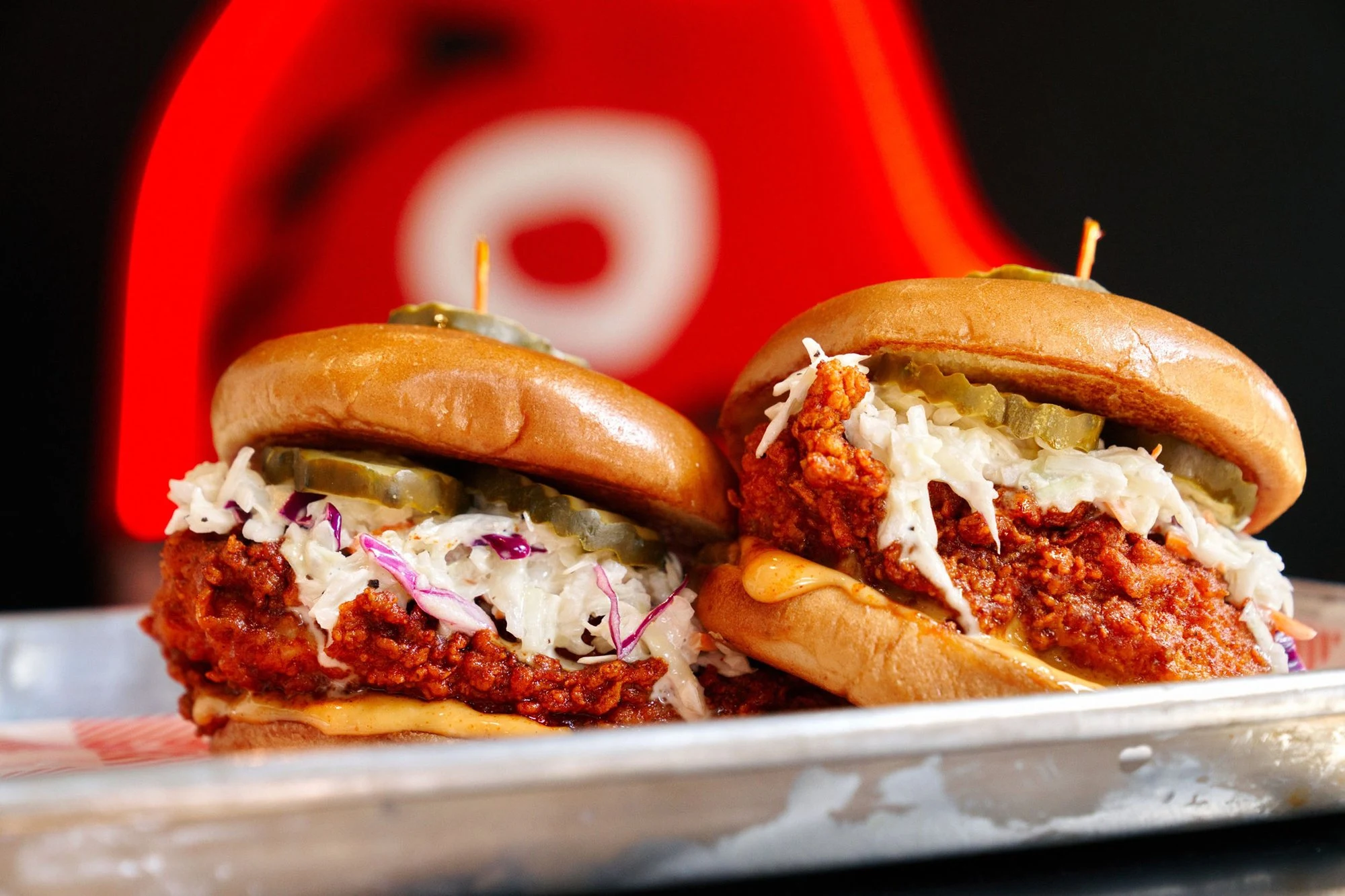
Nashville hot chicken is a regional format with a history stretching back decades, and it has spent the last ten years moving from local institution to national reference point. The dish is structurally simple: fried chicken coated in a fat-based spice paste, served over white bread that absorbs the runoff, with pickles cutting the fat. The complexity lies entirely in the calibration of heat, a spectrum that separates the format from ordinary fried chicken and gives each restaurant its own identity. Hattie B's operates across that spectrum, and the 2025 Michelin Plate recognition it received places it in a peer group that Nashville's broader dining scene is building with increasing speed.
The Heat Architecture
The central decision at a hot chicken counter is always the heat level, and this is where the sensory experience of the format concentrates. Each tier delivers a physically distinct result: the spice paste changes colour, viscosity, and aromatic profile as the cayenne load increases. Lower tiers read as paprika-forward and mildly smoky. The upper registers shift the experience into something that produces visible heat flush and a sustained burn that outlasts the meal. The white bread underneath is not decorative, it is structural, meant to absorb the excess paste and provide a starchy buffer between bites.
This heat architecture is what gives the format its staying power as a dining event. Unlike tasting menus at restaurants such as The Catbird Seat or the technically ambitious plating at Locust, the hot chicken counter builds its tension through a single, repeatable variable. The diner controls the outcome. That element of personal stakes is part of why the format travels well and why it has entered the Michelin recognition framework at the Plate level, which signals consistent quality rather than technical complexity.
Nashville's Southern Table, in Context
To place Hattie B's correctly, it helps to understand where hot chicken sits within Nashville's broader Southern food conversation. The city's dining identity has diversified sharply over the past decade. Bastion operates at the fine-dining end of the contemporary spectrum, and places like Peninsula and Alebrije extend the city's range into Southern American and Mexican-inflected territory. Arnold's Country Kitchen holds the meat-and-three tradition at street level, while Biscuit Love Gulch anchors the brunch tier. Hot chicken exists in a separate register from all of these, functioning as both a cultural marker and a format built for high-volume, counter-service delivery.
The airport location is a deliberate operational choice, and a commercially effective one. For a format that depends on volume and immediate consumption, the terminal placement captures both departing locals and arriving visitors at the precise moment they are either saying goodbye to the city or beginning their orientation to it. It is also a recognition that the dish has achieved enough cultural legibility to function as a first or last meal without explanation. You do not need context to order it.
Nashville's position in the national Southern food conversation has grown considerably, and the city's Michelin recognition pool now spans price tiers from the $ counter to the $$$$ contemporary. Hattie B's Michelin Plate sits alongside recognised operators in other categories, a signal that the city's inspectors are reading Southern counter-service with the same rigour they apply to tasting menus.
Michelin's Plate category appears against restaurants as technically demanding as Le Bernardin in New York City and as regionally specific as Emeril's in New Orleans. The Plate does not rank by price tier, it marks consistent cooking quality within the format the kitchen has chosen. At Hattie B's, that format is Southern counter-service, and the recognition reflects the execution of that format rather than its ambition.
What the Airport Setting Tells You
Terminal dining in the United States has improved considerably since the mid-2010s, but the gap between airport food and city-restaurant food remains wide in most markets. A Michelin Plate at an airport counter is, in that context, a more meaningful signal than it might appear. It suggests that the cooking at this location holds to the same standard as the brand's street-facing operations, that the airport placement is not a franchise concession but a functional extension of the same kitchen discipline.
The sensory environment of an airport counter is stripped of the atmospheric cues that most dining relies on: no neighbourhood approach, no particular lighting, no room acoustics built around conversation. What remains is the food itself, which means the food has to carry the full experience. At a hot chicken counter, this is achievable in a way it would not be for formats that depend on room energy or table pacing. The format is immediate, the flavours are high-contrast, and the transaction is complete within minutes of ordering.
Hot chicken at the airport is one data point in a dining ecosystem that now reaches from Arnold's meat-and-three to the tasting-menu tier represented by Alinea-level ambition in comparable American cities.
Planning Your Visit
Hattie B's at Nashville International Airport is a counter-service operation accessible to ticketed passengers in the terminal. No reservation is required, the format is walk-up, order at the counter, and seat when available. The pricing sits in the $ tier, making it among the most accessible Michelin-recognised options in Nashville. The practical consideration for most visitors is timing: airport counters at high-traffic periods move quickly but can queue, so allow buffer time if you are working against a departure window. The experience itself is short by design. This is a format built for decisiveness, not deliberation.
Questions
Frequently asked
Who works at Hattie B’s Hot Chicken?
Made By profiles Nick Bishop Jr. (Co-Founder) at Hattie B’s Hot Chicken.
How expensive is Hattie B’s Hot Chicken?
Hattie B’s Hot Chicken is listed at a price level of $$.
Where is Hattie B’s Hot Chicken and what does it serve?
Hattie B’s Hot Chicken is in Una, Nashville, serving Nashville Hot Chicken.
The field
How it compares
| Place | Cuisine | Notes | Awards |
|---|---|---|---|
| Hattie B’s Hot Chicken | Nashville Hot Chicken | Una, $$ | · |
| Audrey | Modern Appalachian Fine Dining | Nashville | · |
| Bastion | Modern American Tasting Menu | Nashville | Michelin 1 Star |
| Locust | Modern Fusion with Japanese and Irish Influences | Nashville | Michelin 1 Star, World's 50 Best |
| Peninsula | Modern Iberian Small Plates | Nashville | · |
| Rolf & Daughters | New American | Nashville | · |
| The Catbird Seat | Contemporary American Tasting Menu | Nashville | Michelin 1 Star |
In residence
Similar places
Modern Appalachian Fine Dining
Audrey
Nashville, United States
Modern American Tasting Menu
Bastion
Nashville, United States
★
Modern Fusion with Japanese and Irish Influences
Locust
Nashville, United States
★ · 50 Best
Modern Iberian Small Plates
Peninsula
Nashville, United States
New American
Rolf & Daughters
Nashville, United States
Contemporary American Tasting Menu
The Catbird Seat
Nashville, United States
★