- Michelin Bib Gourmand · Michelin Guide
- Michelin Bib Gourmand · 2026
- Opinionated About Dining Casual in Japan Ranked #15 · 2026
- Tabelog 100 #100: 4.1pts · 2025
- Opinionated About Dining Casual in Japan Ranked #50 · 2025
- Opinionated About Dining Casual in Japan Ranked #38 · 2024
- Michelin Bib Gourmand · 2024
- Opinionated About Dining Casual in Japan Ranked #27 · 2023
Early Morning, Minamioi
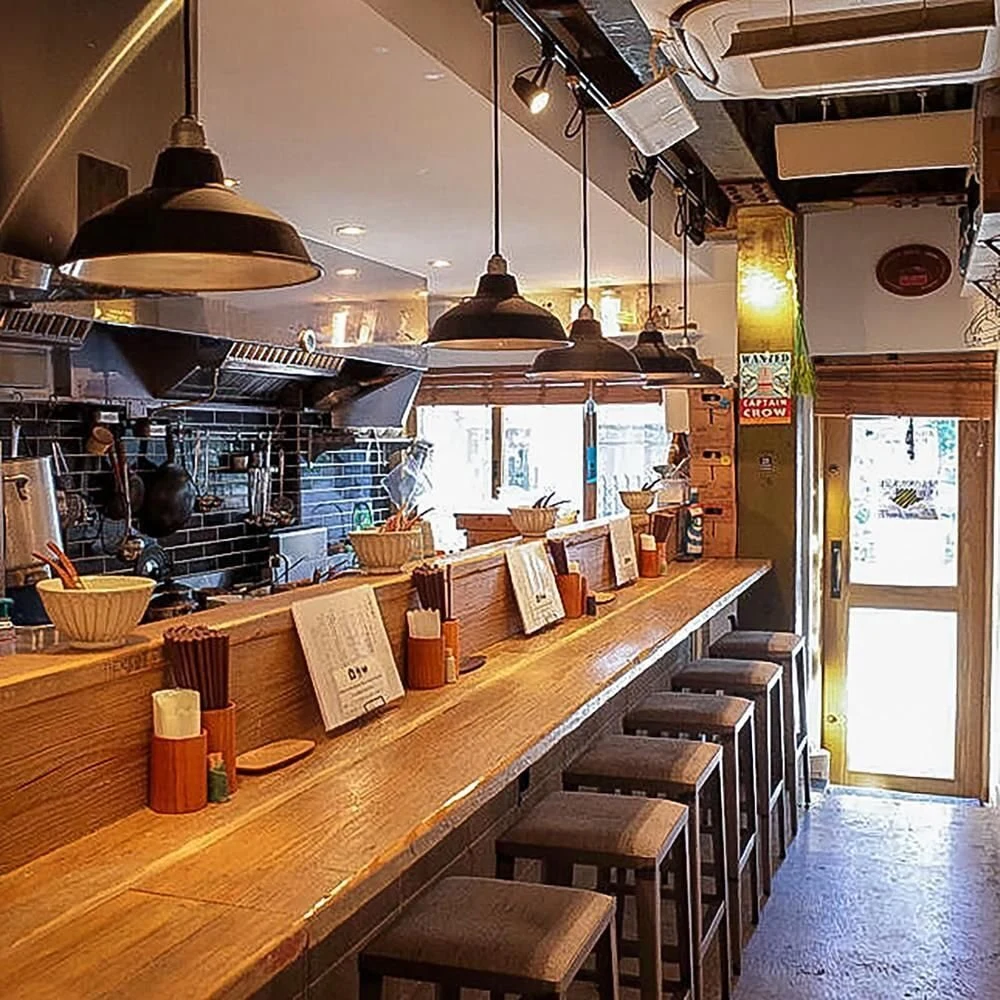
Shinagawa's southern residential fringe doesn't draw tourists in the way that Shinjuku or Ginza does, and that is precisely why a queue outside a small ramen shop on a side street of Minamioi carries weight. The neighbourhood exists at the outer edge of central Tokyo's rail geography, where the streets thin to convenience stores and low-rise apartments. Against that backdrop, a line forming before a bowl of ramen is a reliable signal: word has spread on merit alone, not on foot traffic. Homemade Ramen Muginae, at 6 Chome-11-10 Minamioi, is that shop.
The Name and What It Carries
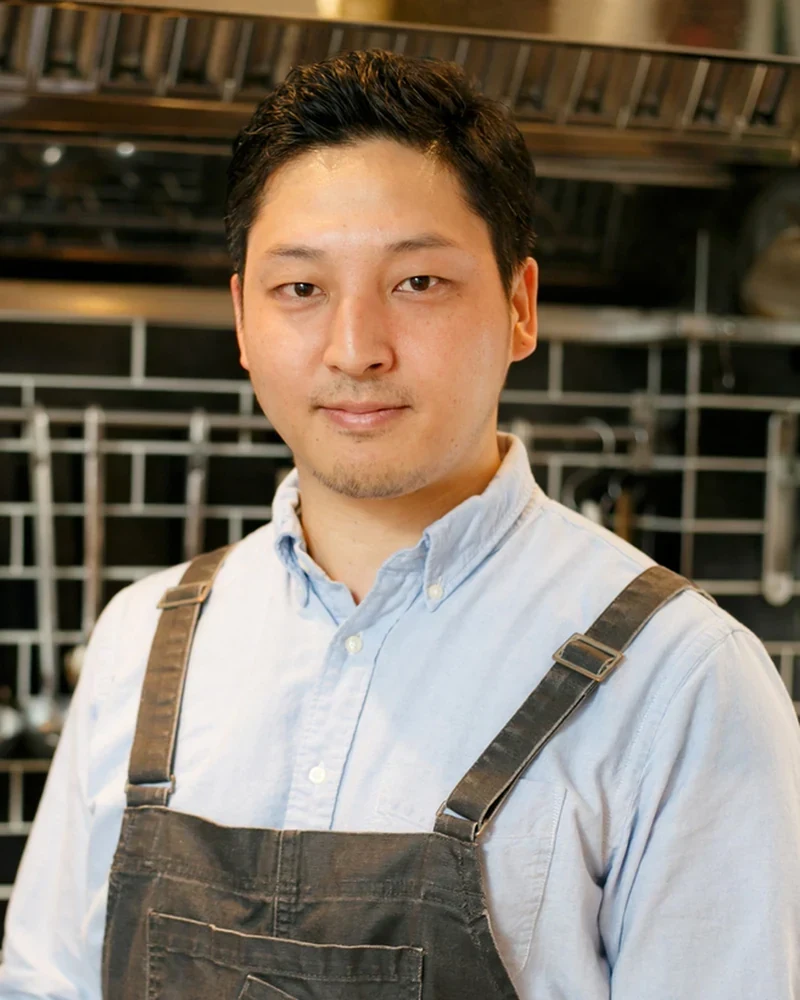
Owner-chef Akihiro Fukaya named the restaurant Muginae, meaning 'wheat seedling,' after a specific agricultural practice. When wheat plants bud, farmers tread them down to force stronger growth. That act of deliberate pressure producing resilience is built into the shop's identity, and it shapes how the ramen itself is understood. The noodles are made in-house. The soup is a considered construction of soy sauce, salt, and dried sardines, producing a broth that finishes clean rather than heavy. The homemade framing here is not a marketing note, it signals a particular kind of craft discipline that runs through the counter.
This positioning matters in context. Tokyo's ramen field has expanded dramatically over the past two decades, splitting into highly technical, single-style specialists on one end and approachable neighbourhood shops on the other. Muginae occupies a clear position in the latter tier but carries the credentialing of the former. That combination, a neighbourhood-priced bowl with award-level execution, is what the Michelin Bib Gourmand category was designed to recognise: value at a level that competes with more expensive options on pure quality grounds.
Awards and Where They Place This Bowl
Muginae's record across Opinionated About Dining's Casual Japan ranking tells a specific story. It ranked 27th in 2023, 38th in 2024, and 50th in 2025. OAD's Casual Japan list draws from a surveyed base of informed diners rather than anonymous inspection, which means the ranking reflects sustained preference among people eating seriously across the country. A bowl appearing across three consecutive annual lists in that pool is not a fluke, it reflects consistent performance over time.
For comparison, Tokyo's most celebrated ramen counters in Ginza or central Shinjuku charge multiples of what Muginae asks. At the price point, Muginae prices against neighbourhood ramen shops, not against Chukasoba Ginza Hachigou or Chukasoba KOTETSU. That gap between price and recognition is what draws people across the city.
The Broth as a Technical Position
Soy sauce, salt, and dried sardines as the structural basis of a soup is a deliberate editorial statement in a bowl. Tokyo ramen broadly divides between tonkotsu-heavy richness and cleaner, more aromatic broths built on chicken, dashi, or niboshi (dried sardines). Niboshi-forward ramen sits in a distinct subcategory, with a characteristic intensity that reads as mineral and saline before giving way to a longer, more delicate finish. The style rewards restraint in seasoning. Too much soy sauce overwhelms the sardine. Too little and the broth loses its backbone. Getting the calibration right consistently, across hundreds of bowls per service, is where execution separates from concept.
Fukaya's choice to build around this style, and to make the noodles in-house, means the ramen at Muginae is a tightly integrated system rather than a collection of components. The smooth finish noted by visitors aligns with what niboshi-shoyu broth achieves when the sardine extraction is well-controlled, aromatic depth without bitterness, and a clean close that invites the next sip. At the Bib Gourmand level, Tokyo's inspectors are looking for exactly that kind of technical competence at an accessible price point, which is why this style and this price tier are well-matched for that award.
For ramen rooted in a similarly focused, shop-first philosophy elsewhere in the city, Fuunji in Shinjuku operates on comparable terms, earning consistent recognition through a single-minded style. Afuri represents a more modern, yuzu-forward approach to the clean-broth category. Each sits in a different part of the same broad movement toward aromatic, non-heavy ramen in the city.
Getting Here and What to Expect
Minamioi sits in Shinagawa City, reachable via the Keikyu Honsen line at Aomono-Yokocho Station or via Oimachi on the JR Keihin-Tohoku line. The address, 6 Chome-11-10 Minamioi, places the shop in a residential pocket a short walk from either station. This is not a district with secondary attractions to fill the time if there is a wait. Plan the visit around the shop itself.
Queues form early. The broth draws customers from opening, and the daily supply is finite. Arriving early improves both the chances of being seated and the likelihood that the soup remains at full intensity, niboshi broths can shift subtly in character as they reduce through a service. Walk-in is the method.3 across 1,020 ratings.
Reservations: Recommended. Dress: Casual appropriate. Budget: ¥¥, about $15 per person. Getting there: A short walk to 6 Chome-11-10 Minamioi, Shinagawa City, Tokyo.
Tokyo Beyond Ramen
Muginae sits at the everyday end of Tokyo's dining range. For those building a wider itinerary across the city's full price spectrum, the contrast with the kaiseki and high-end Japanese counter scene is sharp. Chuogo Hanten Mita in nearby Mita offers a different register of Japanese cooking. Further afield across Japan, HAJIME in Osaka, Gion Sasaki in Kyoto, and akordu in Nara represent the structured, multi-course end of the regional dining field. Goh in Fukuoka and 1000 in Yokohama fill out a circuit that covers much of Japan's serious cooking at range. For island dining in a completely different register, 6 in Okinawa occupies its own category entirely.
The ramen format has also spread internationally, with Afuri Ramen in Portland and Akahoshi Ramen in Chicago both earning serious attention for bringing Japanese bowl craft into Western markets. Neither replaces the experience of eating a niboshi-shoyu broth in the neighbourhood that produced it, but they provide useful reference points for readers building fluency with the category before or after a Tokyo trip.
The Sunday letter
Get new places like Homemade Ramen Muginae every Sunday.
One email a week with the restaurants, bars and hotels we have just written up, and the people who run them.
One email a week. Unsubscribe from any issue.
Questions
Frequently asked
What recognition does Homemade Ramen Muginae hold?
Homemade Ramen Muginae holds a Michelin Bib Gourmand.
Who works at Homemade Ramen Muginae?
Made By profiles Akihiro Fukaya (Chef) at Homemade Ramen Muginae.
How expensive is Homemade Ramen Muginae?
Homemade Ramen Muginae is listed at a price level of $$.
Where is Homemade Ramen Muginae and what does it serve?
Homemade Ramen Muginae is in Shinagawa, Tokyo, serving Homemade Shoyu Ramen.
The field
How it compares
| Place | Cuisine | Notes | Awards |
|---|---|---|---|
| Homemade Ramen Muginae | Homemade Shoyu Ramen | Shinagawa, $$ | · |
| Den | Modern Japanese Kaiseki | Tokyo | Michelin 2 Stars, World's 50 Best |
| Florilège | Modern French-Japanese Plant-Based Fine Dining | Tokyo | Michelin 2 Stars, World's 50 Best |
| Narisawa | Modern Japanese Satoyama Fine Dining | Tokyo | Michelin 2 Stars, World's 50 Best |
| Quintessence | Modern French Fine Dining | Tokyo | Michelin 3 Stars |
| Sazenka | Modern Chinese Fine Dining | Tokyo | Michelin 3 Stars, World's 50 Best |
| Sézanne | Modern French Fine Dining | Tokyo | Michelin 3 Stars, World's 50 Best |
In residence
Similar places
Modern Japanese Kaiseki
Den
Tokyo, Japan
★★ · 50 Best
Modern French-Japanese Plant-Based Fine Dining
Florilège
Tokyo, Japan
★★ · 50 Best
Modern Japanese Satoyama Fine Dining
Narisawa
Tokyo, Japan
★★ · 50 Best
Modern French Fine Dining
Quintessence
Tokyo, Japan
★★★
Modern Chinese Fine Dining
Sazenka
Tokyo, Japan
★★★ · 50 Best
Modern French Fine Dining
Sézanne
Tokyo, Japan
★★★ · 50 Best
The Sunday letter
Get the next Made By story in your inbox.
We send one email every Sunday morning with the places and people we covered that week.
One email a week. Unsubscribe from any issue.