Honeybird

In Residence
Nick Rabar
Chef
- 01CuisineModern Southern Fried Chicken
- 02CityEast Providence, United States
- 03RecognitionJames Beard Award
- James Beard Winner · James Beard Foundation
- James Beard Award Semi Finalist · 2025
East Providence's Quieter Dining Register
The dining corridor that runs through greater Providence operates on two frequencies. There is the well-documented creative energy of Federal Hill and downtown Providence, which draws the press and the reservations lists. And then there is the quieter register of East Providence, where Massasoit Avenue supports a different kind of restaurant: neighbourhood-anchored, less dependent on culinary tourism, and often more focused on sourcing precision than showmanship. Honeybird is a restaurant in East Providence, Rhode Island, with a casual dress code and a recommended reservation policy. Honeybird at 230 Massasoit Ave sits in that second register. Approaching along a stretch that mixes residential blocks with local commercial fronts, the address reads as intentional rather than accidental, a place that chose its community over a higher-visibility postcode.
That choice matters in how you read the room. East Providence restaurants that survive without the foot traffic advantages of downtown Providence tend to cultivate a loyal local audience, which means the menu has to earn return visits rather than rely on first-impression novelty. Madeira and MidiCi operate in the same neighbourhood ecosystem, each anchoring its own corner of the local dining conversation. Our full East Providence restaurants guide maps the broader picture.
Where the Food Comes From
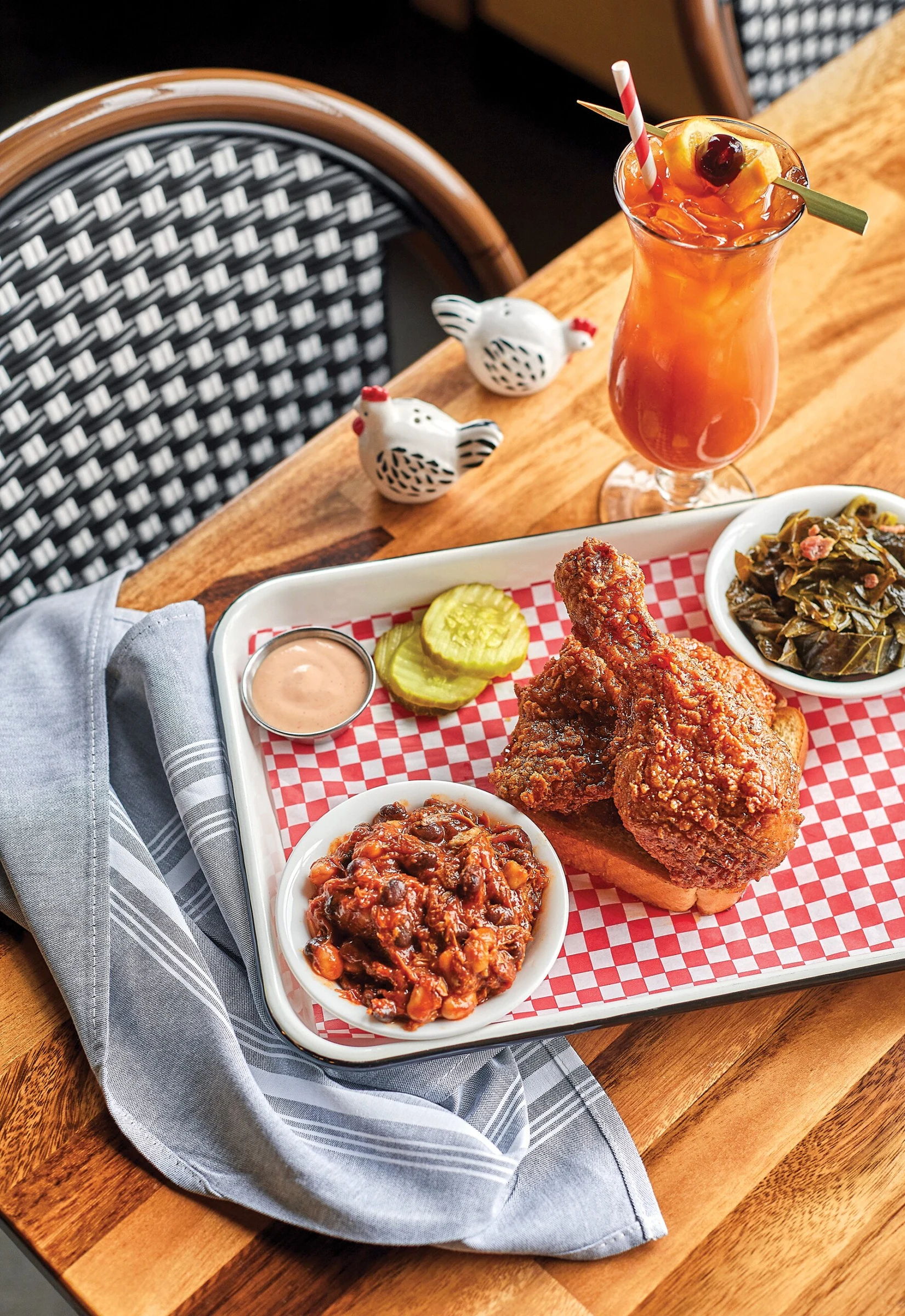
Honeybird serves Modern Southern Fried Chicken at a price point around $25 per person. In American dining, names that reference natural sweetness or foraging culture tend to signal a kitchen with opinions about provenance: where the protein was raised, whether the produce travels thirty miles or three hundred, how the sourcing relationships shape what lands on the plate. Rhode Island is well-positioned for that kind of program. The state sits within reach of some of the Northeast's most productive coastal fisheries, and its agricultural hinterland in the Blackstone Valley corridor supports small-scale vegetable and dairy operations that feed into Providence-area kitchens with increasing regularity.
This regional sourcing infrastructure is what separates a certain tier of New England casual dining from its coastal peers in other cities. A kitchen in East Providence that commits to local supply chains is working within a genuine ecosystem, not performing a farm-to-table aesthetic borrowed from elsewhere. The Rhode Island shellfish harvest alone, particularly oysters from Narragansett Bay and quahogs from coastal beds that have supplied local kitchens for generations, gives any serious kitchen here a distinct identity that cannot be replicated by moving the same concept to a different city. That geographical specificity is the kind of ingredient story that menus in more prominent dining cities often have to work harder to construct.
For context on what sourcing-led American restaurants look like at the top of the market, Single Thread Farm in Healdsburg and Blue Hill at Stone Barns in Tarrytown have built national reputations almost entirely on the integrity of their ingredient supply lines. The argument those restaurants make, that sourcing precision is itself a form of culinary craft, is one that neighbourhood-scale operations in places like East Providence can make with equal conviction, at a fraction of the price point and without the reservation lead time.
The Northeast Sourcing Tradition and Where Honeybird Fits
New England has a particular claim on ingredient-led cooking that predates the modern farm-to-table movement by several decades. The region's fishing communities, dairy farms, and orchard culture were already defining local tables long before sourcing became a marketing category. That tradition gives restaurants along the Providence corridor a foundation to work from that is historically grounded rather than trend-driven.
In that context, a restaurant like Honeybird operates within a lineage, whether explicitly or not. The question worth asking about any East Providence kitchen working in this mode is how it positions itself relative to the supply chains available to it: Is it sourcing from the same distributors as every other casual restaurant in the state, or has it built direct relationships with specific producers? The answer to that question determines whether sourcing language on a menu is a claim or a commitment. The name Honeybird suggests that orientation.
American restaurants operating at the far end of this commitment include The French Laundry in Napa, which maintains its own garden, and Lazy Bear in San Francisco, which has built a format around communal dining and local seasonal produce. At a different scale and price tier, Brutø in Denver has made ingredient transparency a structural part of its identity. These are not direct comparisons to Honeybird, the contexts differ too much, but they map the spectrum along which ingredient-led restaurants in American cities are now positioning themselves.
Planning a Visit
Honeybird is located at 230 Massasoit Ave, East Providence, RI 02914, on a street that is navigable by car without difficulty and sits within reasonable distance of the Providence city centre for visitors based there. Honeybird is open Mon to Thu 4 to 9 PM, Fri and Sat 12 to 10 PM, and Sun 12 to 8 PM. East Providence's neighbourhood restaurants tend to operate on schedules that reward calling ahead, particularly for weekend evenings when local demand concentrates.
For visitors building a longer itinerary through New England's dining scene, the Providence corridor offers meaningful range. At the fine dining end, the seafood precision of Le Bernardin in New York City represents one model for what coastal ingredient sourcing looks like at its most technically demanding. Closer to home, Providence in Los Angeles demonstrates how a regional identity can travel. The East Providence neighbourhood itself, as detailed in our city guide, offers a more grounded experience, less about tasting menus and more about what a city's residential dining culture actually looks like when it is working well.
Other reference points in the broader American ingredient-led dining conversation include Bacchanalia in Atlanta, Addison in San Diego, The Inn at Little Washington, Emeril's in New Orleans, Causa in Washington, D.C., Atomix in New York City, Alinea in Chicago, and 8 1/2 Otto e Mezzo Bombana in Hong Kong, each a data point in how sourcing philosophy and culinary ambition intersect across different market contexts.
Questions
Frequently asked
What recognition does Honeybird hold?
Honeybird holds a James Beard award.
Who works at Honeybird?
Made By profiles Nick Rabar (Chef) at Honeybird.
How expensive is Honeybird?
Honeybird is listed at a price level of $$.
Where is Honeybird and what does it serve?
Honeybird is in Rumford Center, East Providence, serving Modern Southern Fried Chicken.
The field
How it compares
| Place | Awards | Cuisine | Notes |
|---|---|---|---|
| Honeybird | James Beard | Modern Southern Fried Chicken | Rumford Center, $$ |
| Casa Marcial | Michelin 3 Stars | Modern Asturian Fine Dining | Arriondas |
| Emeril’s | Michelin 2 Stars, World's 50 Best | Modern Creole-Cajun Fine Dining | New Orleans |
| Geranium | Michelin 3 Stars, World's 50 Best | Modern New Nordic Pescatarian | Copenhagen |
| Kato | Michelin 2 Stars, World's 50 Best | Modern Taiwanese Fine Dining | Los Angeles |
| Sazenka | Michelin 3 Stars, World's 50 Best | Modern Chinese Fine Dining | Tokyo |
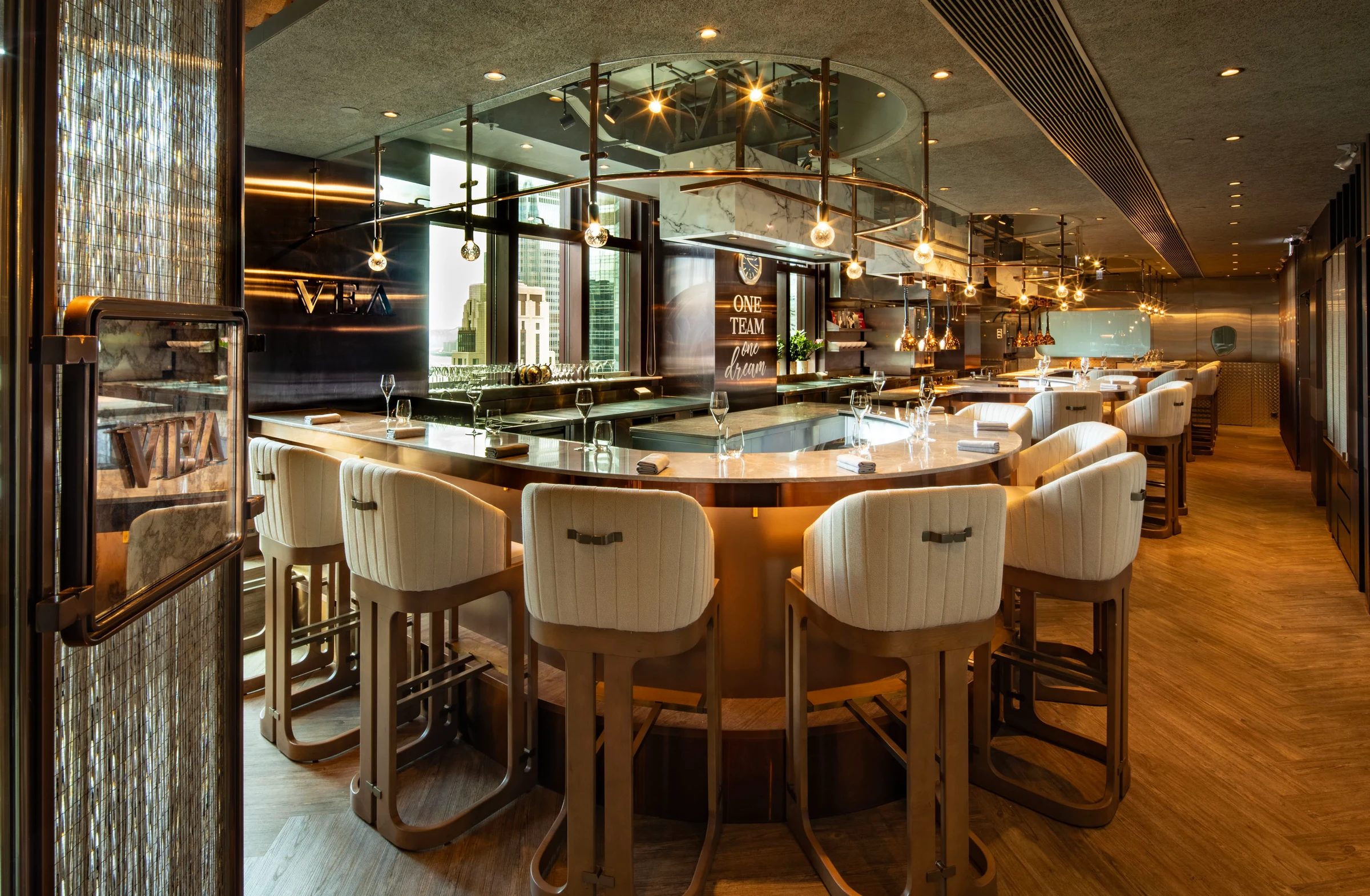
| Vea | Michelin 1 Star, World's 50 Best | Modern Chinese-French Fusion | Hong Kong |
In residence
Similar places
Modern Asturian Fine Dining
Casa Marcial
Arriondas, Spain
★★★
Modern Creole-Cajun Fine Dining
Emeril’s
New Orleans, United States
★★ · 50 Best
Modern New Nordic Pescatarian
Geranium
Copenhagen, Denmark
★★★ · 50 Best
Modern Taiwanese Fine Dining
Kato
Los Angeles, United States
★★ · 50 Best
Modern Chinese Fine Dining
Sazenka
Tokyo, Japan
★★★ · 50 Best
Modern Chinese-French Fusion
Vea
Hong Kong, Hong Kong
★ · 50 Best