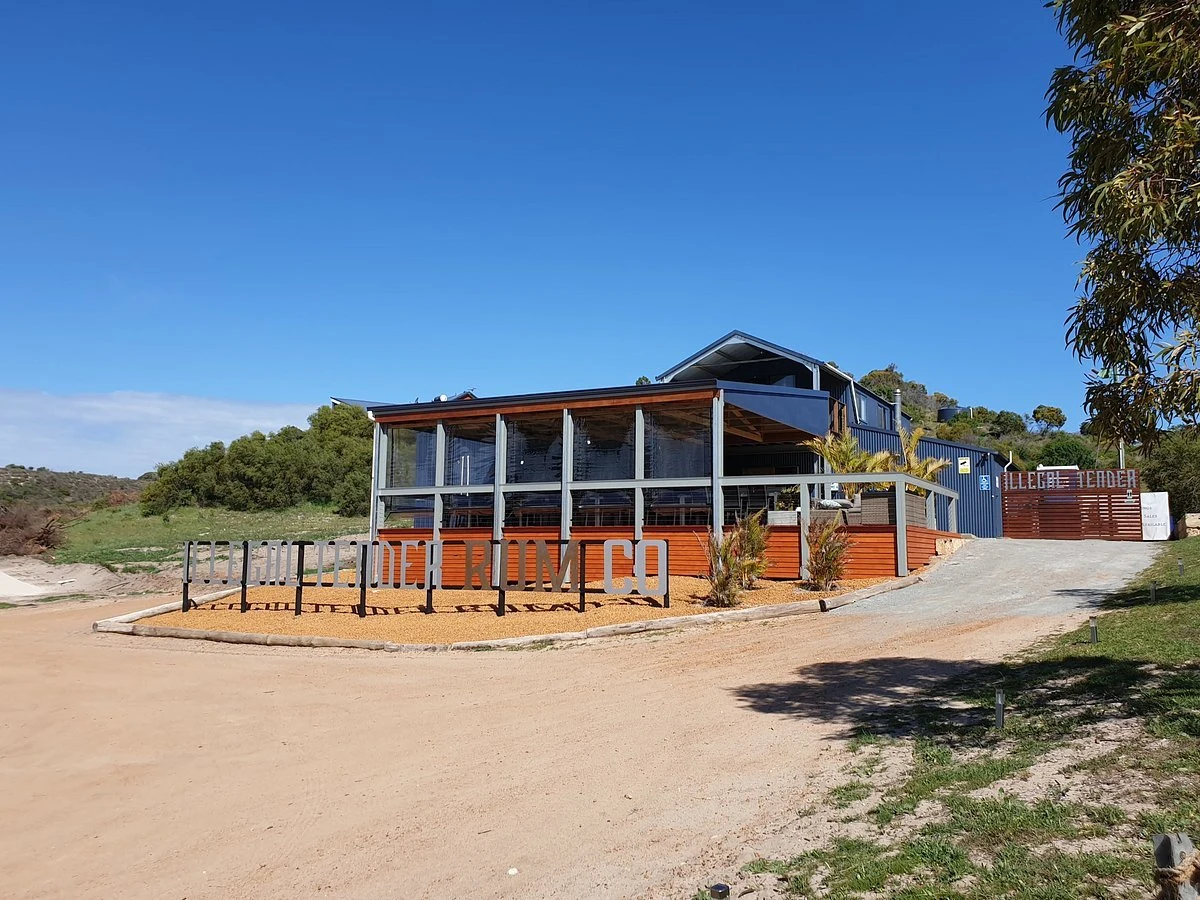
Illegal Tender Rum Co sits on Illyarrie Road in Dongara, Western Australia, earning a Pearl 2 Star Prestige rating in 2025, a signal that serious craft spirits production has taken root well outside the country's established distillery corridors. The operation represents a broader shift in Australian artisan distilling toward regional terroir expression, where the raw materials and climate of a place shape what ends up in the glass.
<h2>Rum at the Edge of the Mid West</h2><p>The road to Springfield outside Dongara tells you something before you arrive. Western Australia's Mid West coast runs dry and salt-bleached for long stretches, the scrub low and stubborn, the light arriving at angles that flatten distances and make everything feel provisional. It is not obvious rum country in any conventional sense. The Caribbean model demands heat, humidity, and surplus cane, conditions that most of coastal WA refuses to supply. That tension between raw-material logic and actual place is what makes operations like those now appearing in Dongara worth paying attention to.</p><p>Illegal Tender Rum Co operates at 35 Illyarrie Rd, Springfield, a semi-rural address that places it firmly outside the capital-city distillery scene clustering around Perth and Fremantle. The 2025 Pearl 2 Star Prestige award positions the producer inside a meaningful peer tier, one where craft intent, production discipline, and site specificity are weighed against the broader national field. Two stars at the Pearl level signals that this is not a novelty regional producer, but one operating with a degree of seriousness that invites comparison beyond WA's borders.</p><h2>The Terroir Question in Australian Rum</h2><p>Australian rum has spent decades in the shadow of its own sugar industry. <a href="https://www.enprimeurclub.com/wineries/bundaberg-rum-distillery-bundaberg-winery">Bundaberg Rum Distillery in Bundaberg</a> established a dominant domestic model, large-scale, molasses-based, deeply embedded in Queensland agricultural identity, that left little room for producers working at smaller scales or in different agricultural contexts. The category stayed relatively static while gin and whisky distilling in Australia underwent a serious reinvention over the past fifteen years.</p><p>What has shifted the conversation is the growing interest in terroir-driven spirits production. The question being asked by a new generation of Australian distillers is not simply how to replicate established rum styles, but how the specific conditions of a place, soil type, water source, ambient yeast, climate patterns, influence the character of the final spirit. This is the same logic that refined <a href="https://www.enprimeurclub.com/wineries/archie-rose-distilling-co-sydney-winery">Archie Rose Distilling Co in Sydney</a> into a nationally recognised operation, and it is the framework within which producers in non-traditional regions are now making a case for their own legitimacy.</p><p>Dongara sits at roughly 29 degrees south latitude, a location that generates strong diurnal temperature variation and prolonged dry seasons. These conditions do not replicate tropical sugar-growing climates, but they create distinct maturation characteristics when spirit interacts with barrel in a warm, low-humidity environment. Australian craft distillers across categories, including winemakers who have crossed into fortified and spirit production, have found that the country's interior and coastal fringe climates accelerate some maturation compounds while suppressing others, producing profiles that diverge substantially from European or Caribbean benchmarks. Whether Illegal Tender pursues traditional molasses fermentation or works with locally sourced cane products, the regional environment functions as an active ingredient rather than a passive backdrop.</p><h2>Situating the Producer in Its comparable set</h2><p>The national craft spirits field has stratified fairly clearly. At one end sit producers with wide distribution, established retail presence, and category recognition across multiple markets. At the other end, small regional operations remain essentially local, with production volumes that preclude meaningful export and audiences limited to cellar-door visitors and nearby hospitality accounts. The Pearl 2 Star tier implies Illegal Tender Rum Co occupies a middle ground: credentialed enough to be taken seriously, but rooted in a specific regional identity that distinguishes it from the capital-city distillery cluster.</p><p>For comparison, operations with similar award weight in adjacent categories include <a href="https://www.enprimeurclub.com/wineries/all-saints-estate-rutherglen-winery">All Saints Estate in Rutherglen</a>, a producer whose fortified wine tradition draws direct parallels to the careful maturation logic that serious spirits production demands, and <a href="https://www.enprimeurclub.com/wineries/angove-family-winemakers-renmark-winery">Angove Family Winemakers in Renmark</a>, another regional South Australian producer whose sustained critical recognition across decades reflects what consistent production discipline in a non-metropolitan setting can achieve. The comparison across categories is instructive: regional provenance becomes an asset when the producer is rigorous enough to make place into an argument, not just a postcode.</p><p>Outside Australia, the model of small-batch spirits production in wine-growing or agricultural regions has generated some of the most interesting new producer stories. The craft distillery movement in the United States, particularly in the South and Pacific Northwest, showed that proximity to raw materials and a coherent regional identity could outperform metropolitan scale when quality was consistent. <a href="https://www.enprimeurclub.com/wineries/accendo-cellars">Accendo Cellars in St. Helena</a>, as a Napa Valley wine producer, operates on a similar premise: the origin story matters only insofar as the product sustains it.</p><h2>What the Award Signals About the Category</h2><p>The Pearl 2 Star Prestige rating in 2025 represents more than a single producer's recognition. It reflects that formal evaluation frameworks are now being applied to Australian craft spirits producers in regional locations, treating them by the same criteria as established wine, dining, and hospitality operations. This matters for the category's development: award recognition creates a reference point that hospitality buyers, collectors, and serious drinkers can use to anchor purchasing decisions.</p><p> Producers operating at this stage of development often prioritise the liquid and the production process over visitor infrastructure. Several Australian producers who have gone on to sustained critical recognition, including <a href="https://www.enprimeurclub.com/wineries/bass-phillip-gippsland-winery">Bass Phillip in Gippsland</a> and <a href="https://www.enprimeurclub.com/wineries/brokenwood-hunter-valley-winery">Brokenwood in Hunter Valley</a>, operated for significant periods without elaborate visitor programming before the weight of the product built enough demand to warrant it. The logic applies to spirits producers too: the award comes before the infrastructure in many cases, not after.</p><h2>Planning a Visit</h2><p>Dongara is located on Western Australia's mid-coast, approximately 350 kilometres north of Perth along the Brand Highway, a drive of roughly three and a half hours that passes through the Wheatbelt transition zone before arriving at the coast. The town itself is a fishing and tourism centre with enough accommodation and dining infrastructure to support a short stay, and the broader Mid West region rewards the kind of unhurried circuit that allows multiple producer visits.</p><p> The Springfield address places the operation on the rural fringe, which typically means cellar-door access is managed rather than open-walk-in.</p><p>For context on the wider Australian spirits and wine landscape relevant to a trip of this kind, producers from <a href="https://www.enprimeurclub.com/wineries/bird-in-hand-adelaide-hills-winery">Bird in Hand in Adelaide Hills</a> to <a href="https://www.enprimeurclub.com/wineries/bests-wines-great-western-winery">Leading's Wines in Great Western</a>, <a href="https://www.enprimeurclub.com/wineries/blue-pyrenees-estate-pyrenees-winery">Blue Pyrenees Estate in Pyrenees</a>, and <a href="https://www.enprimeurclub.com/wineries/brown-brothers-king-valley-winery">Brown Brothers in King Valley</a> collectively illustrate how Australia's production map rewards those willing to move beyond the most-visited corridors. Illegal Tender Rum Co fits that pattern precisely.</p>
Located on Illyarrie Road in Springfield outside Dongara, this is a working distillery in a regional Western Australian setting — expect a producer-site atmosphere rather than a polished tasting room. The Pearl 2 Star Prestige rating (2025) signals serious craft credentials, but the Mid West coastal context keeps the experience grounded and practical. Confirm current visitor arrangements directly before making the trip.
Illegal Tender Rum Co is located at 35 Illyarrie Rd, Springfield WA 6525, Australia, Dongara.
Illegal Tender Rum Co has received recognition including: Pearl 2 Star Prestige (2025).
Illegal Tender Rum Co earned a Pearl 2 Star Prestige rating from EP Club in 2025, which places it among the more formally recognised craft rum producers operating in Australia. That recognition points toward the core rum range as the primary reason to visit. Specific current expressions and tasting availability are best confirmed with the distillery directly before arrival.
35 Illyarrie Rd, Springfield WA 6525, Australia