Ishtia

In Residence
David Skinner
Chef
- 01CuisineModern Indigenous American Fine Dining
- 02CityKemah, United States
- 03RecognitionJames Beard Award
Three Sisters by the fire
- James Beard Winner · James Beard Foundation
- James Beard Award Semi Finalist · 2025
Smoke at the center of the pass
The fire does some of the seasoning before David Skinner, chef-owner at Ishtia in Kemah, sends the course into the room. He works from the Gulf-side edge of the city with Choctaw heritage held close to the plate, not as decoration, but as structure. Squash, corn, beans, spice, and smoke give the kitchen its grammar. Skinner’s formal base came through Oklahoma State University, and the discipline of that training shows in the way the menu keeps older foodways legible inside a modern tasting-menu frame. At Ishtia, his station is not built around nostalgia. It is built around control: what gets roasted, what gets smoked, what stays cool, what carries texture, what has to be read before it is tasted. His own description gives the work its range: “We’re using components and spices from North and South America to tell the story of how Indigenous people and their cooking techniques influenced every cuisine around the world.” The sentence matters because the kitchen follows it course by course. The plate carries information as well as flavor, and Skinner keeps the origin present even when the finish is fine dining.
Three Sisters in a modern register
The clearest statement is Three Sisters with diver scallop, Skinner’s reading of the agricultural triad of corn, beans, and squash. The dish brings a fresh Maine diver scallop together with shredded acorn, spaghetti, and zucchini squashes, black tepary bean gel, and corn butter. Nothing in that construction treats the old form as a museum object. The triad stays intact, but the handling belongs to the pass: cut squash, controlled temperature, a gel for depth and line, butter for gloss and carry. The restaurant’s format gives Skinner time to let that language accumulate over a 3-hour journey. Courses can speak to cultivation, movement, influence, and the long reach of Indigenous technique without turning into explanation. The beverage program is curated rather than incidental, serving the tasting menu as another part of the structure. The house does not turn its theme into a motif; ingredients drawn from Indigenous cooking do the work through placement, restraint, and sequence.
An 18-seat room around the fire
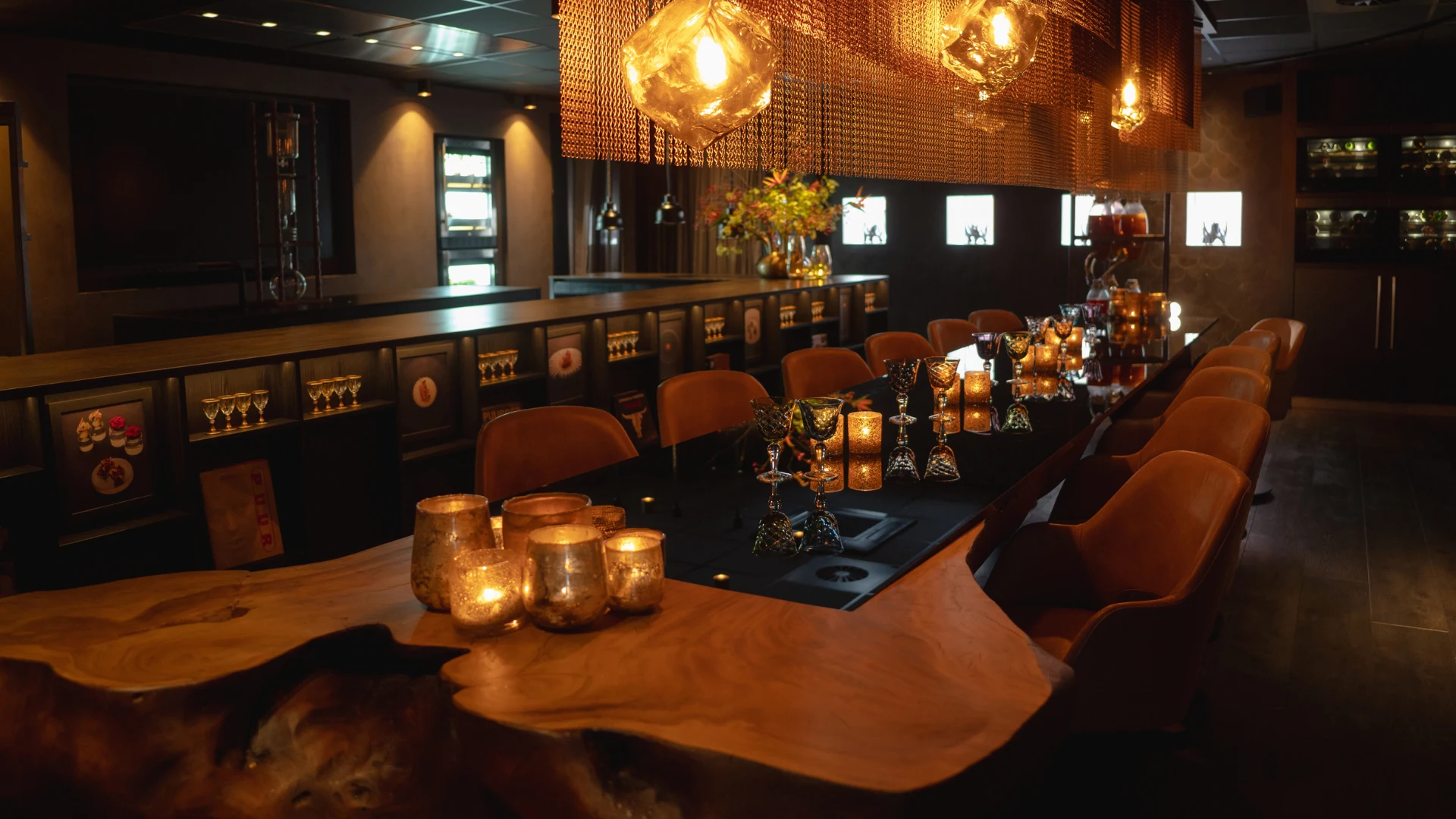
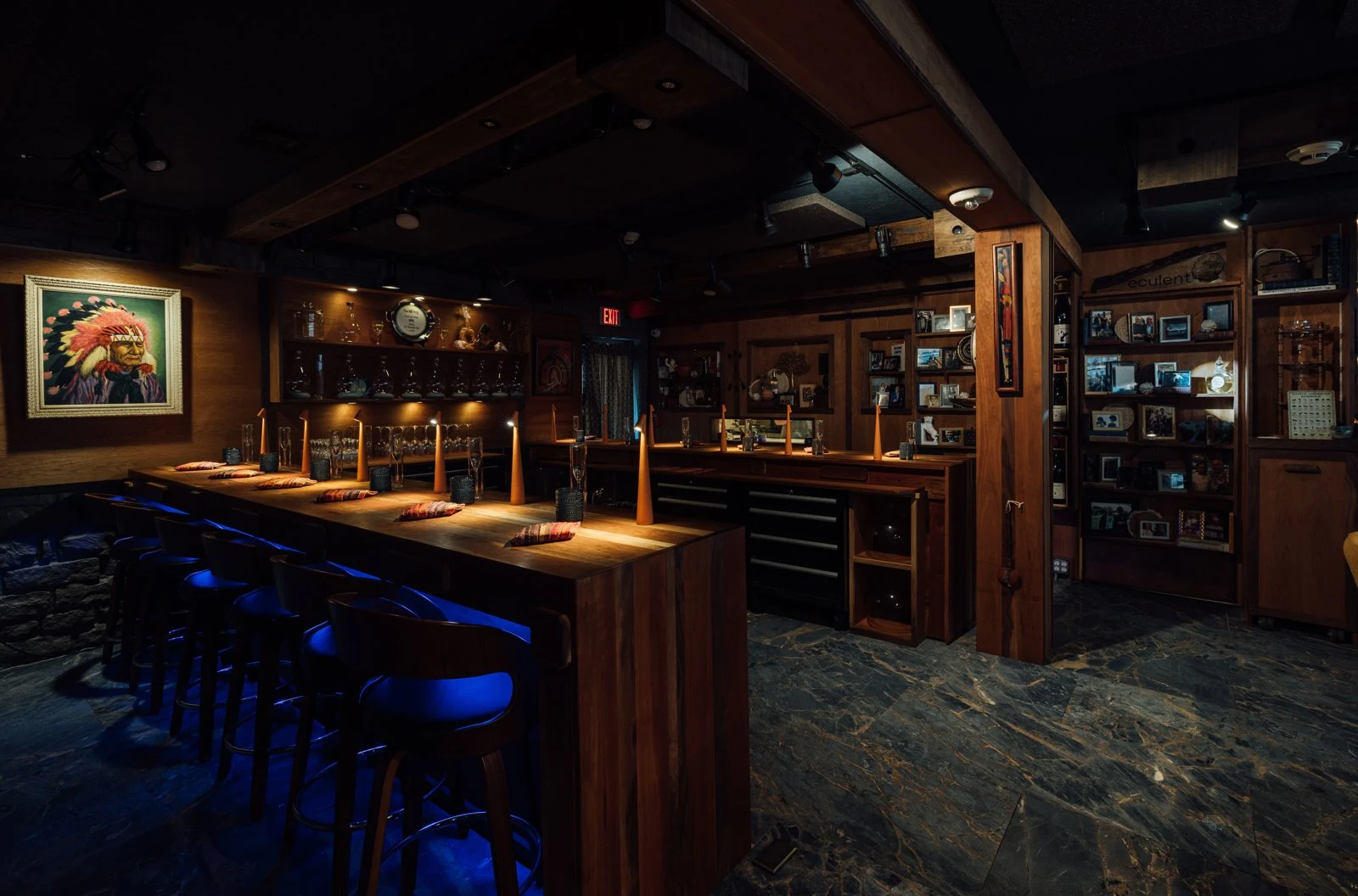
The room is small enough for the bench to stay visible. Ishtia is an 18-seat restaurant, and that intimacy changes the register of service: chefs cook and serve, the fire crackles in the center of the experience, roasting and smoking move from back-of-house process to part of the room’s rhythm. The atmosphere stays quiet, formal, and close. A counter or pass in a room this size does not let the kitchen disappear; the hands have to answer for each plate as it lands. Smoke becomes more than flavor here. It is a material in the air, a timing device, a reminder that technique can be ancient without being static. The close scale also suits Skinner’s larger project. A dish like Three Sisters can arrive with its references intact because the room gives it enough stillness to be read.
Questions
Frequently asked
Who is behind Ishtia?
Ishtia is led by chef-owner David Skinner, who brings Choctaw foodways to a modern Indigenous tasting menu. His formal training came through Oklahoma State University.
What kind of restaurant is Ishtia?
It is a modern Indigenous American fine-dining restaurant in Kemah. The menu is built as a tasting-menu experience and the room has 18 seats.
What is the restaurant known for?
The kitchen works with squash, corn, beans, spice, and smoke as its core language. One signature dish is Three Sisters with diver scallop, which pairs a Maine diver scallop with acorn, spaghetti, and zucchini squashes, black tepary bean gel, and corn butter.
How does booking work at Ishtia?
Reservations are essential, and bookings are made directly. The restaurant is open Thursday, Friday, and Saturday from 7 to 10 PM.
What should visitors know about the setting and practical details?
The restaurant is in Kemah at 709 Harris Ave, with on-site parking and a smart casual dress code. It sits in the $$$$ price tier, with an approximate spend of $100 per person, and it is a James Beard winner.
The field
How it compares
| Place | Awards | Cuisine | Notes |
|---|---|---|---|
| Ishtia | James Beard | Modern Indigenous American Fine Dining | Kemah, $$$$ |
| De Librije | Michelin 3 Stars, World's 50 Best | Modern Dutch Fine Dining | Zwolle |
| Geranium | Michelin 3 Stars, World's 50 Best | Modern New Nordic Pescatarian | Copenhagen |
| Jade Dragon | Michelin 3 Stars, World's 50 Best | Three Michelin-Star Cantonese Fine Dining | Macau |
| Moor Hall | Michelin 3 Stars | Modern British Fine Dining | Aughton |
| Potong | Michelin 1 Star, World's 50 Best | Progressive Thai-Chinese Fine Dining | Bangkok |
| Sorn | Michelin 3 Stars, World's 50 Best | Fine Southern Thai | Bangkok |
In residence
Similar places
Modern Dutch Fine Dining
De Librije
Zwolle, Netherlands
★★★ · 50 Best
Modern New Nordic Pescatarian
Geranium
Copenhagen, Denmark
★★★ · 50 Best
Three Michelin-Star Cantonese Fine Dining
Jade Dragon
Macau, Macau
★★★ · 50 Best
Modern British Fine Dining
Moor Hall
Aughton, United Kingdom
★★★
Progressive Thai-Chinese Fine Dining
Potong
Bangkok, Thailand
★ · 50 Best
Fine Southern Thai
Sorn
Bangkok, Thailand
★★★ · 50 Best