Itasca Wines
- 01CityEngland, United Kingdom

- Falstaff Winery - Listed · 2026
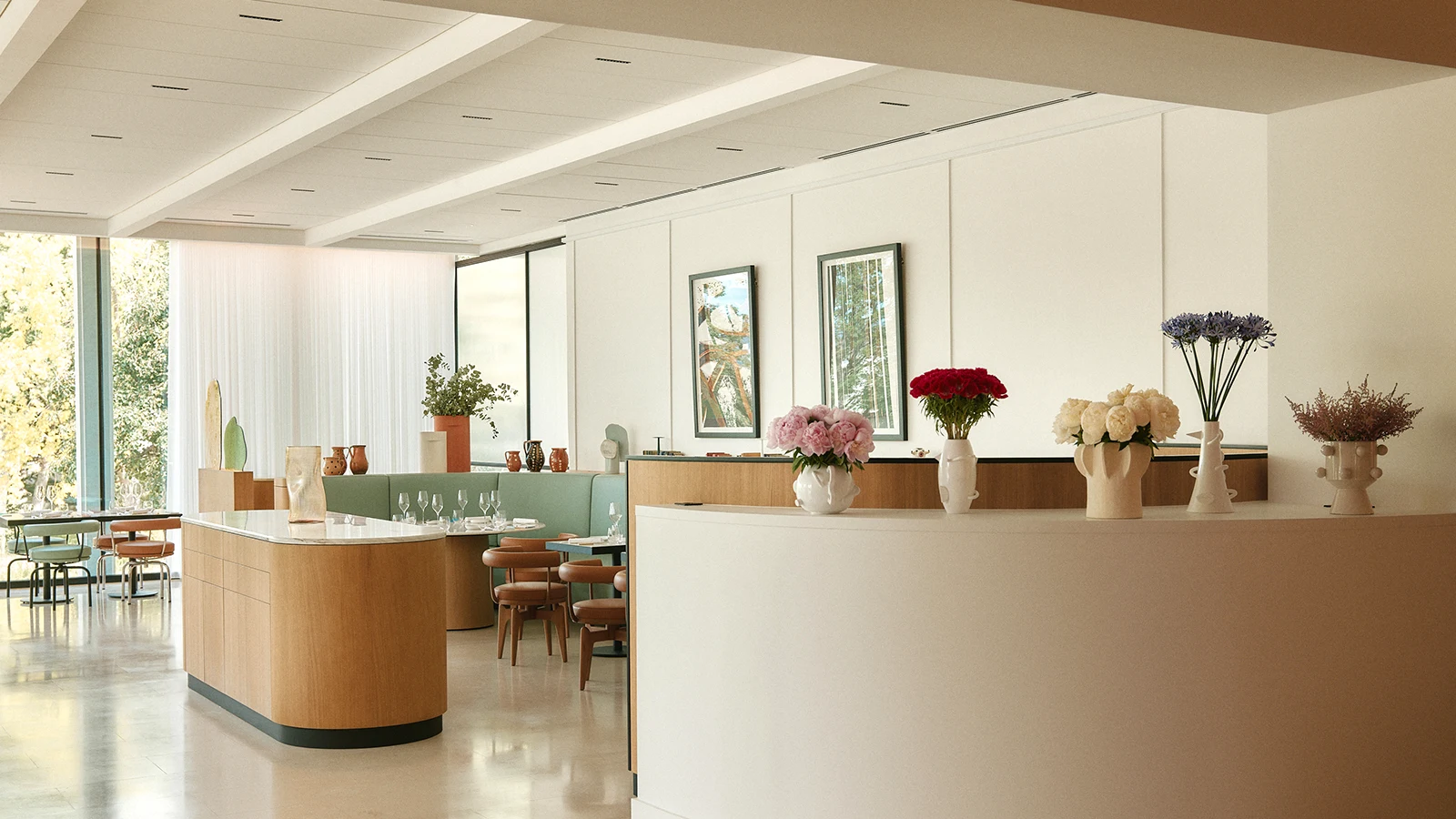
The room sets the tone before the wine: a cellar door with 30 indoor seats, a wood stove for cold evenings, and heated outdoor seating with blankets when the weather turns. That matters in English wine country, where hospitality must handle damp shoulders, early dusk, and a growing season without Mediterranean ease. Itasca Wines belongs to the newer, more technical chapter of English wine, where the visitor experience sits beside tanks, laboratory work, contract clients, and a fast-expanding production map.
English wine has changed quickly. Sparkling wine gave the category its first serious international footing, but the next phase is more operational: still wines, multi-site sourcing, production facilities for outside growers, and cellar doors that explain process as much as pour finished bottles. Opened in 2020, Itasca combines its own Penn Croft label with large-scale contract winemaking, making the property closer to an infrastructure house than a single-estate tasting room.
A cellar door attached to a working English wine machine
The tasting format works because it keeps wine tied to production. Cellar door visits and vineyard tours connect the glass to the people and processes behind Penn Croft, a label drawn from Malcolm Walker’s 2018 plantings and Jenkyn’s Place, a vineyard planted in 2006 and leased by the business since 2021. That mixed-vineyard base is a useful lens on southern England: ripeness, acidity, and style depend on site choice as much as cellar decisions, and few serious producers now treat one field as the whole English wine story.
Hospitality is casual, compact, and weather-aware rather than grand. Indoor seating, a wood burner, outdoor heat, and blankets give the cellar door practical Englishness: comfort without pretending the climate is softer than it is. The value is seeing how a branded wine label sits inside a broader production business. This is not restaurant theatre or elaborate pairing; it is tasting, touring, and understanding how a modern winery turns vineyard work into commercial bottles.
Penn Croft anchors the visit. Production has been around 10,000 bottles a year, with planned growth after three consecutive years of sell-out success. That is small beside the company’s contract ambitions, but it gives the cellar door a clear house identity. Because the wider operation also works for other vineyards and retail channels, tasting here shows both own-label English wine and the invisible production network behind many bottles on the market.
Terroir here is read through logistics, not scenery alone
English wine is often sold through landscape, but Itasca’s stronger argument is logistical. The Hampshire base at Crondall is paired with expansion into Essex’s Crouch Valley, where a second winery is planned with a focus on still wines. That two-region model shows the trade’s direction: producers are matching facility, grape source, and style more precisely instead of forcing every wine through a single estate narrative.
The numbers explain the ambition. The Hampshire winery crushed 50 tonnes in its first harvest and is expected to handle more than 1,000 tonnes from 38 vineyards in 2025. Across two facilities, the stated aim is 2,000 tonnes of grapes each autumn. Those figures place Itasca Wines in the industrial backbone of English wine, a category that needs technical capacity as much as vineyard acreage if it is to compete beyond cellar-door enthusiasm.
That scale changes how terroir is read. Instead of one slope, soil type, or family plot, the model treats southern England as growing zones with different commercial uses. Hampshire supplies the established base; Essex adds a still-wine proposition. Around 46 acres under vine across company-controlled sites gives the own-label program substance, while contract work broadens the view to dozens of growers. It is a less sentimental, often more honest, way to discuss place.
Sustainability is part of the public positioning: the winery is described as bespoke and sustainable, with a wider philosophy framed around natural processes and technical methods. More concretely, the operation is process-led. An onsite laboratory, full contract winemaking, standalone services, and Itasca Technical Services for supply and installation put technical competence at the centre. In a cool-climate region, that matters. English fruit can be expressive, but it is rarely forgiving; timing, analysis, equipment, and cellar decisions carry real weight.
Why this belongs on an England wine itinerary
The draw is not a heritage manor fantasy. It is the machinery behind contemporary English wine: a cellar door attached to a production business working for itself and others, with a label visitors can taste. Ben Smith’s role as winemaker and general manager at Crondall adds a named technical lead, while recruitment of assistant winemakers for Hampshire and Essex points to a business preparing for a multi-site future.
Recognition is better read as industry traction than trophy culture. Vineyard Magazine has framed the company around national-scale ambition, rapid expansion, and contract-winemaking relevance. The business has also been associated with gold, silver, and bronze medal-winning wines across its own and client work, but the stronger signal is structural: growth from a 2020 opening to a facility expected to process fruit from 38 vineyards in 2025 is not a lifestyle project. It is a bet on the next phase of the English wine economy.
For travellers building a wider route, Itasca Wines fits a broader look at English wine rather than a standalone postcard stop. Use Our full England wineries guide as the planning spine, then widen the trip through Our full England restaurants guide, Our full England hotels guide, Our full England bars guide, and Our full England experiences guide. For broader cellar-door context across Britain and beyond, the archive also includes Balfour - Hush Heath Estate in Staplehurst, Black Chalk in Andover, Bluebell Vineyard in Uckfield, Bibendum Wine in London, Aberlour in Aberlour, Arbikie Highland Estate in Arbroath, Ardbeg in Port Ellen, Ardnahoe in Port Askaig, »der Steiner« Hans Steiner in Podersdorf am See, and & Handwein in Mannheim.
Questions
Frequently asked
How expensive is Itasca Wines?
Itasca Wines is listed at a price level of $$.
The field
How it compares
| Place | Notes | Awards |
|---|---|---|
| Itasca Wines | Crondall, $$ | · |
| Billecart-Salmon | Aÿ | World's 50 Best |
| Château Margaux | Margaux | World's 50 Best |
| Domaine Armand Rousseau | Gevrey-Chambertin | · |
| Domaine Bruno Clair | Marsannay-la-Côte | · |
| Quinta do Crasto | Sabrosa | World's 50 Best |
| Taittinger | Reims | World's 50 Best |