Köhlerstube
- 01CuisineModern Swabian Fine Dining
- 02CityBaiersbronn, Germany
Swabian plates held in contrast
- Opinionated About Dining Classical in Europe Ranked #430 · 2025
Contrast held at the pass
Florian Stolte sets contrast at the pass as chef of Köhlerstube in Baiersbronn, where salmon trout meets Tarbourich oyster and preserved cucumber. The gesture is clean rather than crowded: temperature, salinity, acidity, then restraint. Stolte’s long relationship with Hotel Traube Tonbach began in the kitchen there in 2006, after a first post at Harald Wohlfahrt Palazzo in Hamburg in 2005. He moved through Restaurant KochArt in Zürs am Arlberg, Restaurant Vila Joya in Albufeira, and Restaurant Attisholz in Riedholz before returning to the Tonbach address as souschef in 2011. Since 2012 he has carried the head chef role for Hotel Traube Tonbach, with Köhlerstube as one of the rooms where that continuity is most legible. The lineage here is not a single borrowed mannerism from another house. It is time inside the same hotel organism, learning how its Swabian base, its formal service, and its international guests can sit at one table without the plate losing its accent.
Swabian weight, lifted cleanly
The menu gives Stolte room to work in two registers: à la carte and tasting menu, with vegetarian versions also part of the kitchen’s structure. The house describes the format around about 15 dishes, and that breadth matters because Köhlerstube is not built on a single set piece. It lets a guest move from gently cooked fish to dry aged grilled Entrecôte with onion variation, marrow dumpling, and truffle sauce, or toward fried lobster treated as surf and turf with pork belly, green asparagus, and Thai Tom Kha Gai notes. Those combinations could become heavy in less disciplined hands. Stolte keeps them arranged by pressure and counterpressure: fat against pickle, shellfish against pork, beef against allium and marrow. The international accents do not erase the Black Forest footing. They sharpen it. Local sourcing gives the kitchen its ground, while the wine program of Hotel Traube Tonbach gives the room a cellar culture suited to these contrasts, especially when the chef’s menu asks for pacing rather than volume.
The room above the valley
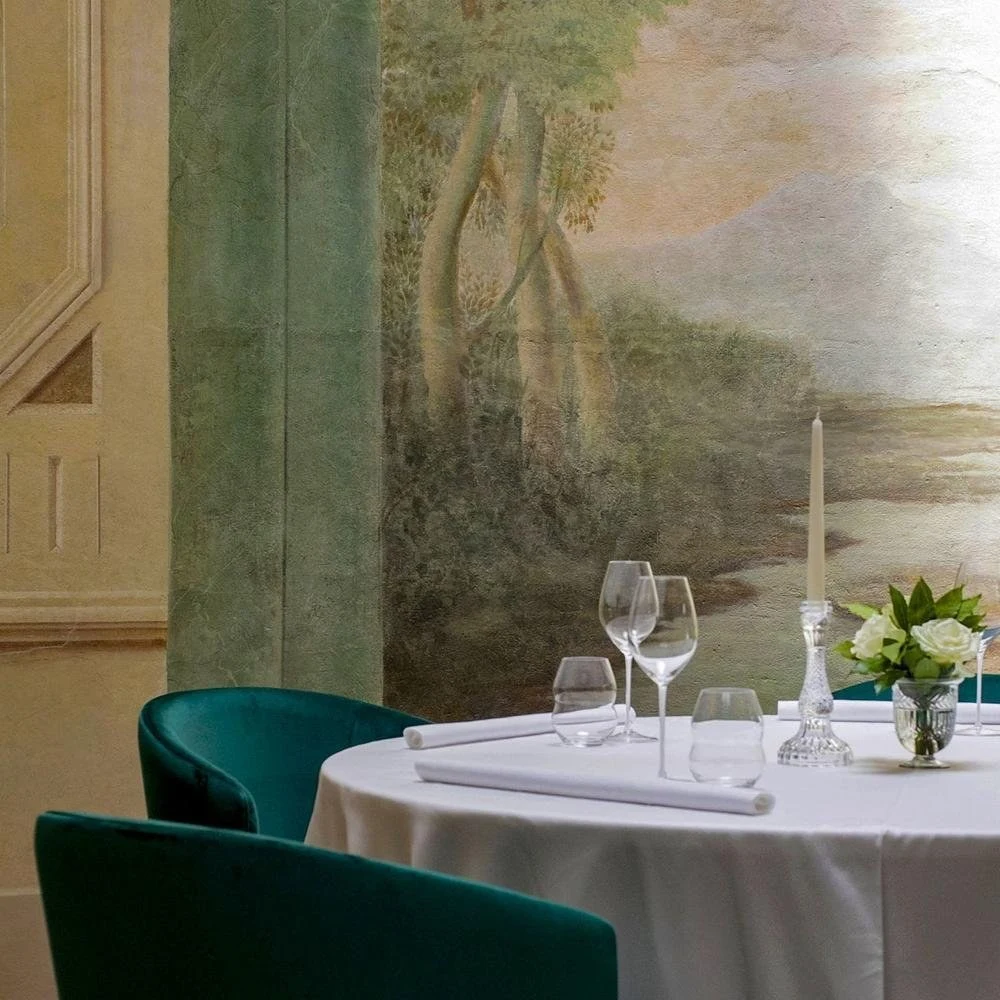
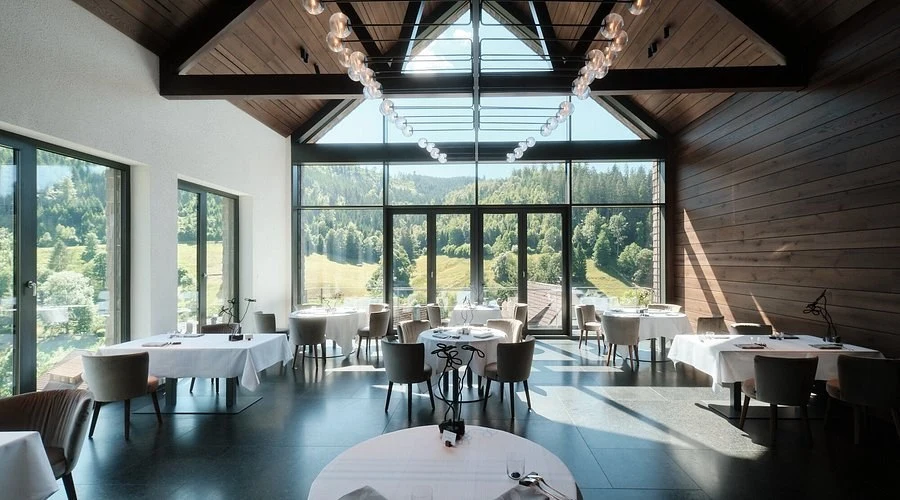
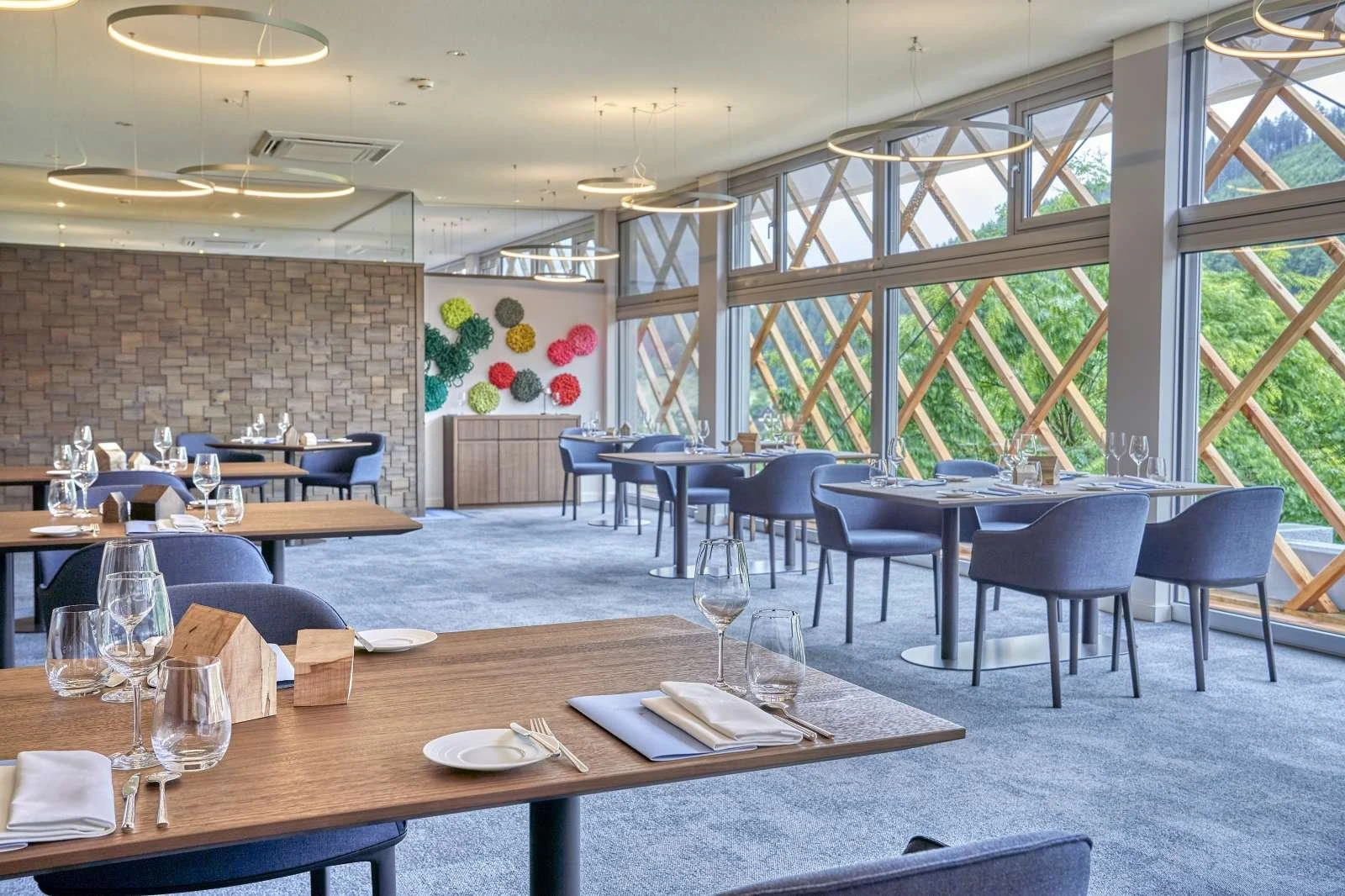
Köhlerstube belongs to Hotel Traube Tonbach, in the Tonbach Valley of the Black Forest, and the room keeps that mountain-hotel grammar close: wood elements, white linen, blue and white tones, red carpet, quiet service. Valley views are part of the experience, but the room does not lean on scenery in place of craft. It gives the pass a softened frame. Plates arrive into a dining room that feels polished without becoming brittle, formal without losing warmth. The one Michelin star attached to Köhlerstube belongs to this address, and Stolte’s cooking carries it through a style more open than the hotel’s highest ceremony yet still exacting in its own discipline. The close of the meal can be as simple as the memory of salmon trout, Tarbourich oyster, and preserved cucumber held in the same line.
Questions
Frequently asked
Who is the chef at Köhlerstube?
Florian Stolte is the chef at Köhlerstube and has been head chef of Hotel Traube Tonbach since 2012. His path to the role included time at Harald Wohlfahrt Palazzo in Hamburg, Restaurant KochArt in Zürs am Arlberg, Restaurant Vila Joya in Albufeira, and Restaurant Attisholz in Riedholz.
What kind of cooking does Köhlerstube serve?
Köhlerstube serves modern Swabian fine dining with a Black Forest footing. The kitchen works with both à la carte and tasting menu formats, and vegetarian versions are part of the structure.
What are some dishes associated with the restaurant?
The menu includes gently cooked salmon trout with Tarbourich oyster and preserved cucumber, dry aged grilled Entrecôte with onion variation, marrow dumpling, and truffle sauce, and fried lobster treated as surf and turf with pork belly, green asparagus, and Thai Tom Kha Gai notes.
What should a visit to Köhlerstube be like?
Köhlerstube is part of Hotel Traube Tonbach in the Tonbach Valley of the Black Forest. The room has wood elements, white linen, blue and white tones, red carpet, quiet service, and valley views, and the hotel’s wine program and cellar culture are part of the experience. Reservations are recommended, the dress code is smart casual, and on-site parking is available.
The field
How it compares
| Place | Cuisine | Notes | Awards |
|---|---|---|---|
| Köhlerstube | Modern Swabian Fine Dining | Tonbach, $$$$ | · |
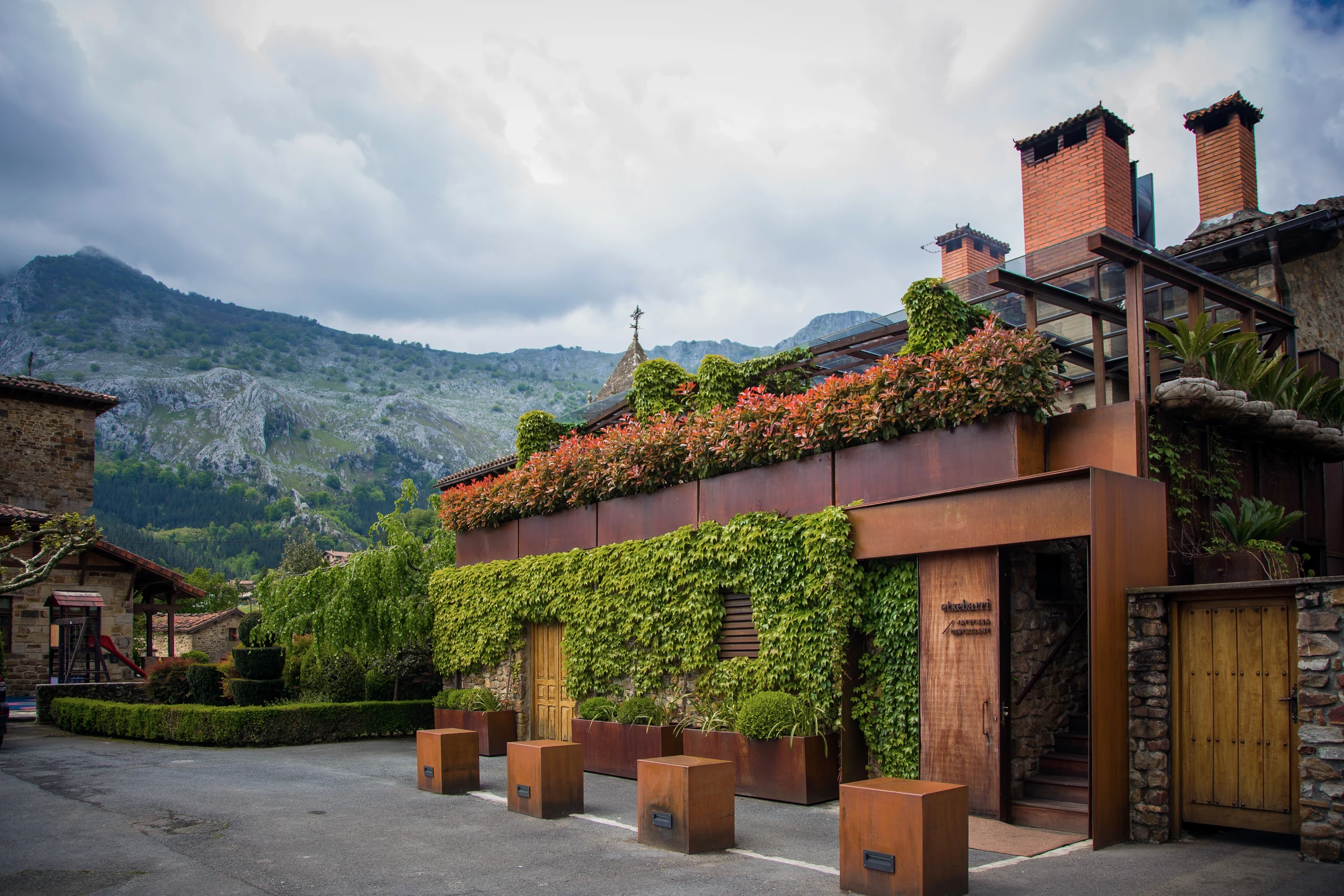
| Asador Etxebarri | Basque Wood-Fired Grill | Atxondo | Michelin 1 Star, World's 50 Best |
| Benu | Modern Asian Fusion Fine Dining | San Francisco | Michelin 3 Stars, World's 50 Best |
| Emeril’s | Modern Creole-Cajun Fine Dining | New Orleans | Michelin 2 Stars, World's 50 Best |
| Restaurant Bareiss | Neo-Classical French with Black Forest Influences | Baiersbronn | Michelin 3 Stars |
| Sazenka | Modern Chinese Fine Dining | Tokyo | Michelin 3 Stars, World's 50 Best |
| Schwarzwaldstube | Modern French Fine Dining | Baiersbronn | Michelin 3 Stars, World's 50 Best |
Similar places
Basque Wood-Fired Grill
Asador Etxebarri
Atxondo, Spain
★ · 50 Best
Modern Asian Fusion Fine Dining
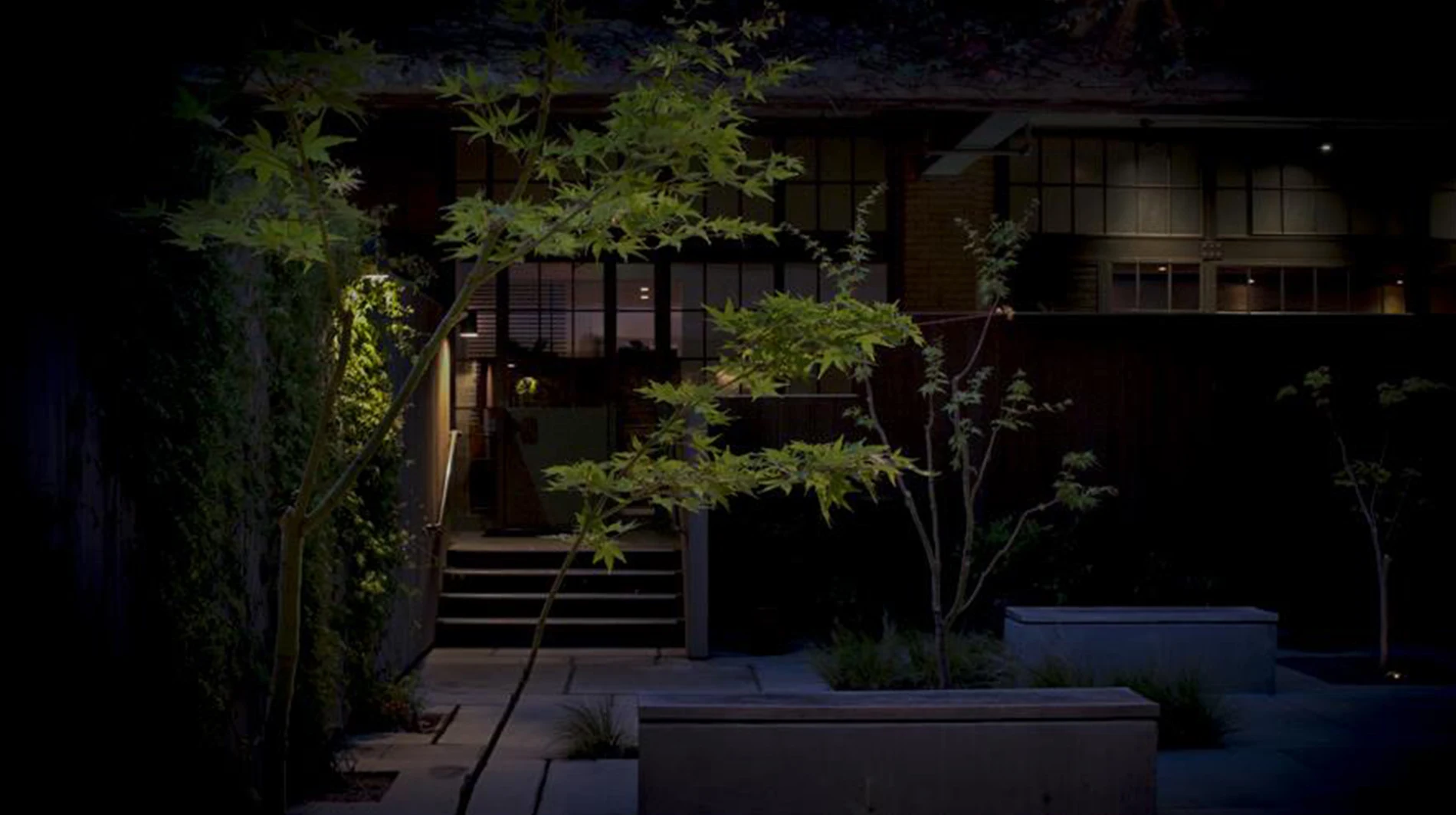
Benu
San Francisco, United States
★★★ · 50 Best
Modern Creole-Cajun Fine Dining
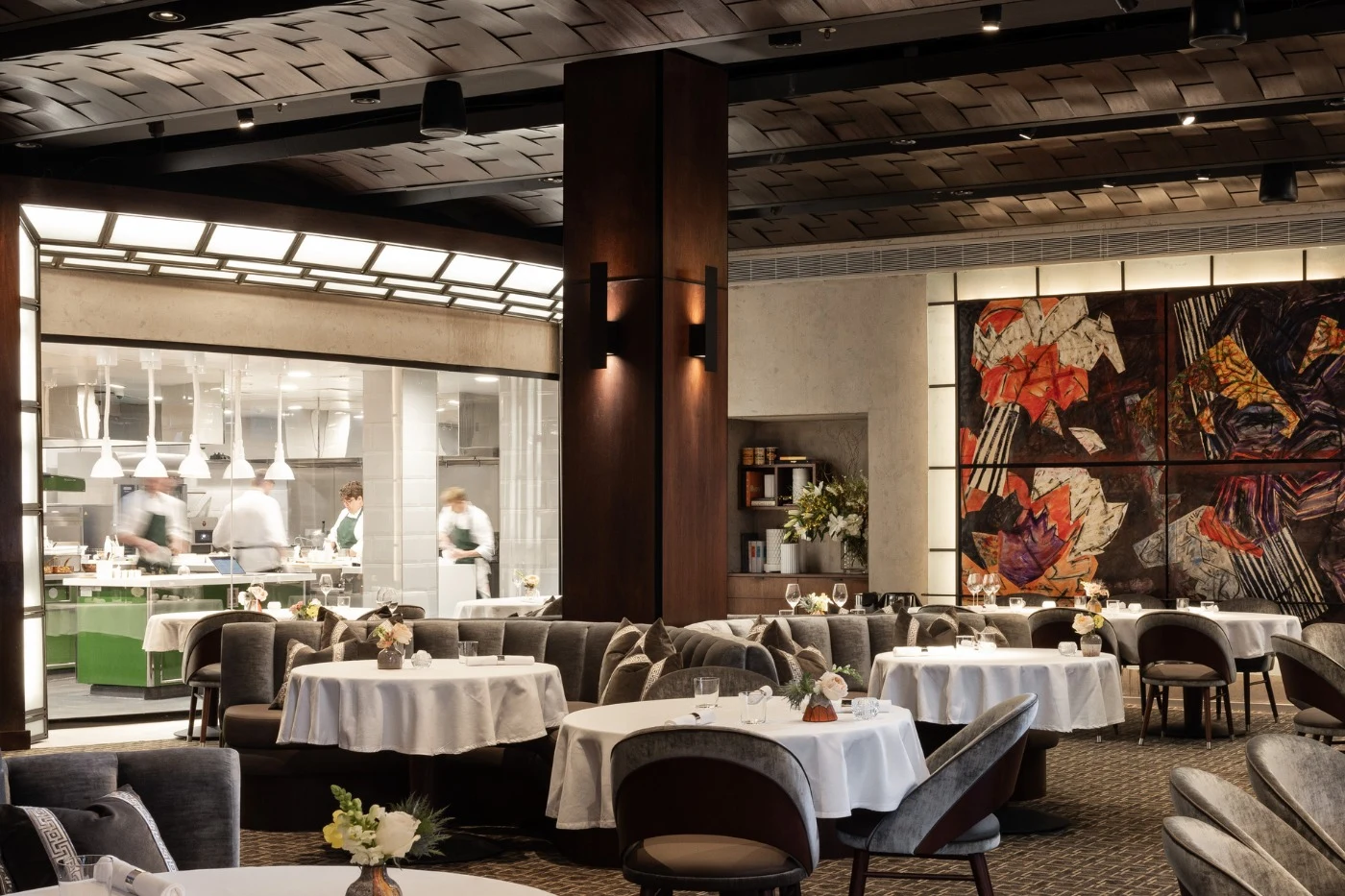
Emeril’s
New Orleans, United States
★★ · 50 Best
Neo-Classical French with Black Forest Influences
Restaurant Bareiss
Baiersbronn, Germany
★★★
Modern Chinese Fine Dining
Sazenka
Tokyo, Japan
★★★ · 50 Best
Modern French Fine Dining
Schwarzwaldstube
Baiersbronn, Germany
★★★ · 50 Best