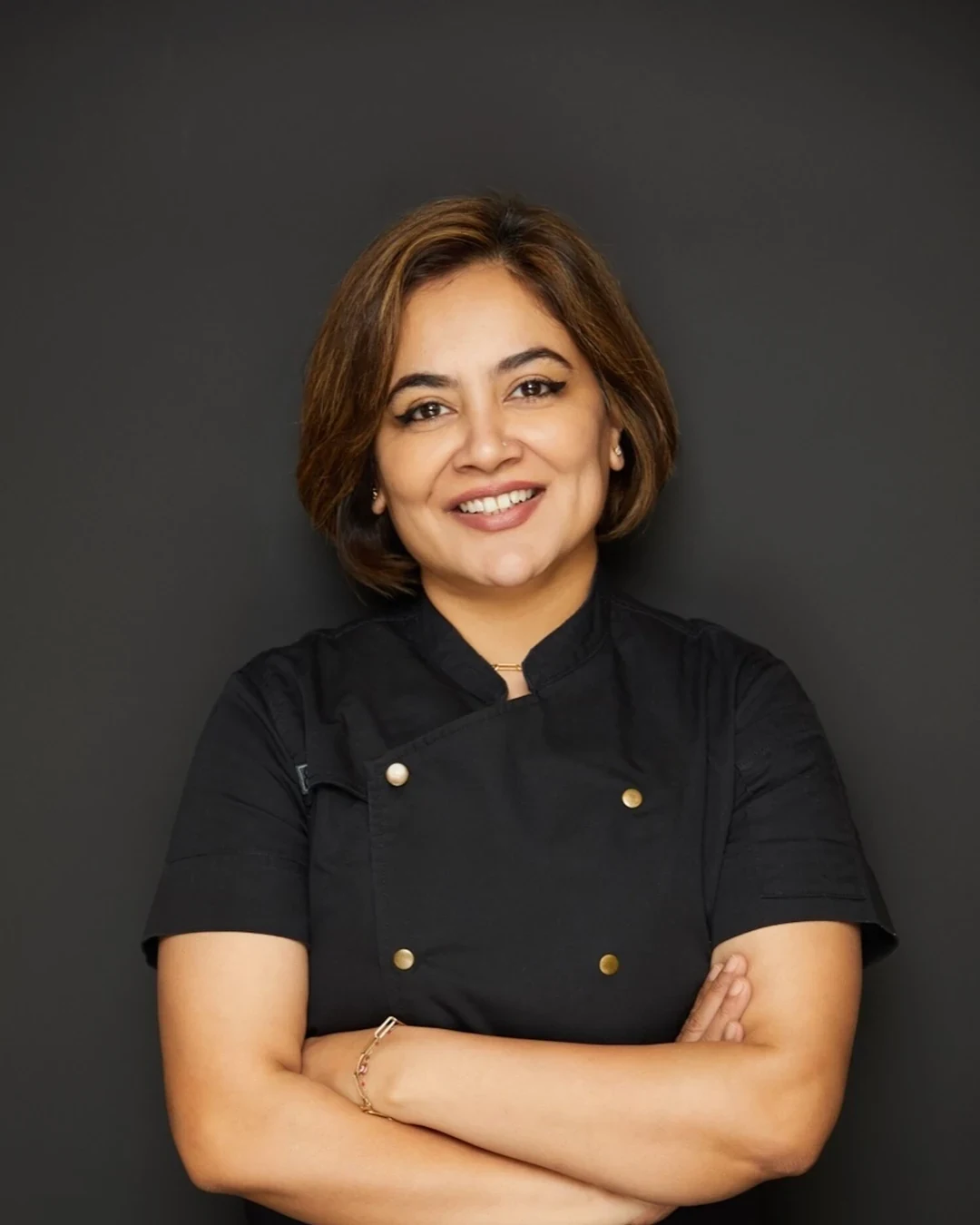
Amninder Sandhu, founder chef of Kikli in Delhi, cooks Punjabi food through heirloom tools, a courtyard hara, and village-sourced cookware.
The courtyard hara sets the pace for Amninder Sandhu, founder chef of Kikli in Delhi, where dal, chana, and saag take the long way through heat. She has built the Connaught Place restaurant around Punjabi cooking that keeps its older tools visible rather than treating them as decoration. The hara, the kunda, the village-sourced cookware, the rotis, the chutneys, the mutton chaap, and the chappali kabab all belong to the same argument: technique can carry memory without becoming museum work.
Sandhu came to this founding role after hotel kitchens and restaurant kitchens that taught different pressures. Taj Lands End gave the early discipline of pace and repetition. Arth and Ammu added responsibility at the pass. Since 2023, she has also led Palaash at Tipai, a forest degustation project that asks for structure inside a remote setting. At Kikli, the brief is different. The room sits in Connaught Place, but the method looks back to Punjabi households, village hearths, and inherited gestures that survive because someone keeps cooking with them.
Kikli opened in 2025 with a Punjabi program that refuses the generic shorthand often attached to the cuisine. The kitchen does not lean on butter chicken as its calling card. Instead, Sandhu gives space to Kukkaddoo, toonhi roti, dal, chutneys, chappali kabab, and mutton chaap, letting each dish carry a different piece of the repertoire. The craft is not only in the recipe. It is in the vessel, the fire, the resting, the grind, the souring, the fold of bread against the hand.
The courtyard hara matters because it changes the rhythm of production. Dals, chana, and saag cook slowly there, held by heat rather than pushed by speed. The kunda brings another bench-side gesture into view, the kind of pounding and working that makes texture before seasoning finishes the dish. Kikli’s sourcing language points to organic produce, local buying, and farm-to-table intent, and the pass shows food built from clean produce and old cookware, not from nostalgia alone. Sandhu’s method here is controlled, direct, and materially Punjabi.
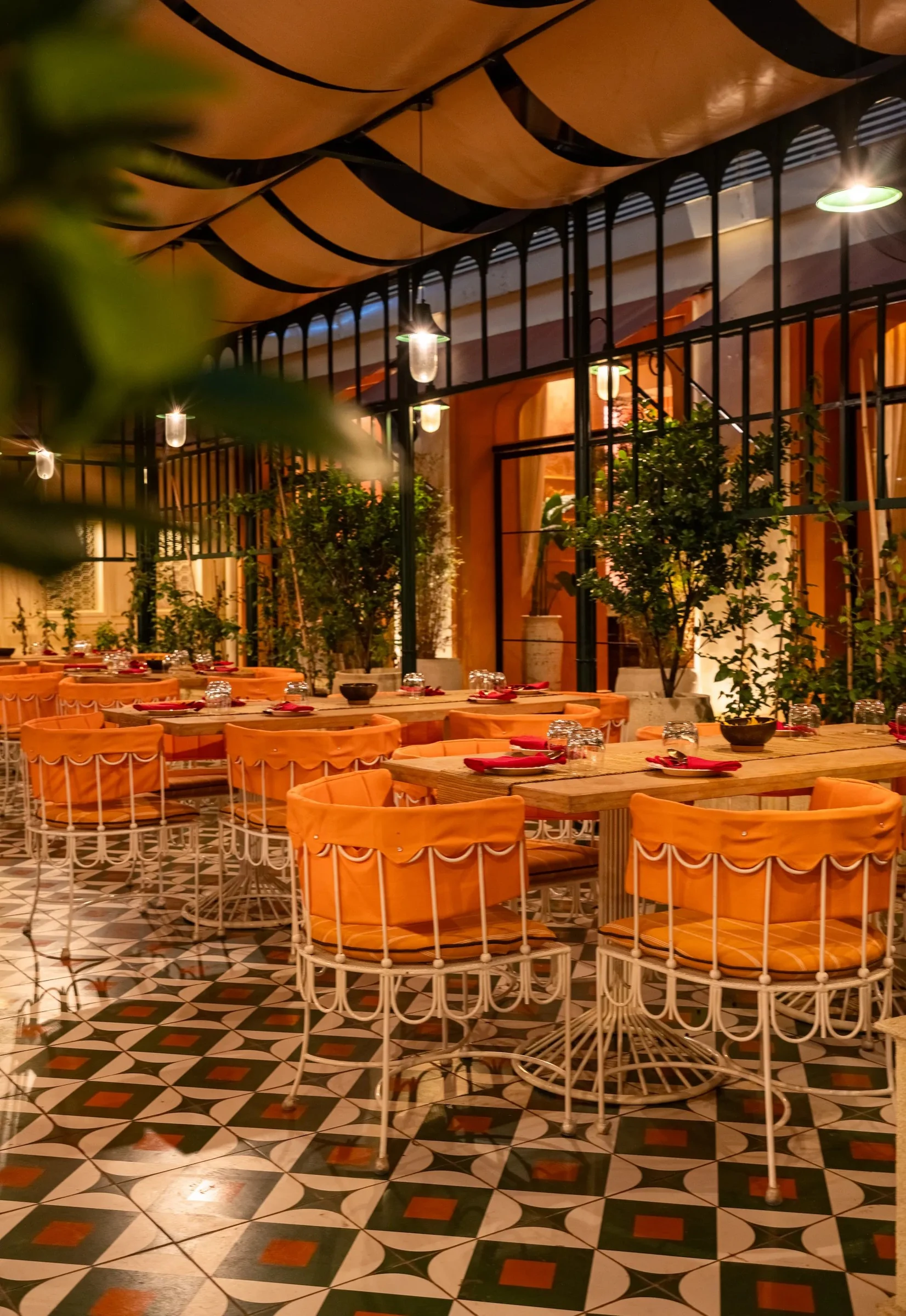
The room keeps the craft close. Kikli is courtyard-centered and heritage-minded, with a calm dining room rather than a loud one; the visible hara gives the place a working center, not just a visual motif. In an area that can reward volume and gloss, Sandhu’s restaurant chooses a lower register. The counter, the pass, and the courtyard all pull attention back to the cooking.
That restraint suits the food. Toonhi roti needs the hand to remain legible. Dal needs time enough to become itself. Chutneys need sharpness, not ornament. The atmosphere is considered, intimate, and tactile, shaped by cookware, flame, and the discipline of a chef who has moved between scale, degustation, and founding work without treating those as separate lives. If Kikli’s next measure is simply the daily keeping of these techniques, it will be counted in the hara, the kunda, and Sandhu’s Kukkaddoo.
Block K, Connaught Outer Circle, Connaught Place, New Delhi
Connaught Place

Japanese-influenced Californian Kaiseki
Single Thread Farm
Healdsburg, United States
★★★ · 50 Best

French Seafood Fine Dining
Le Bernardin
New York City, United States
★★★ · 50 Best

Modern Korean Tasting Menu
Atomix
New York City, United States
★★ · 50 Best

French
Sézanne
Tokyo, Japan
★★★ · 50 Best

Modern Seafood Fine Dining
Providence
Los Angeles, United States
★★★ · 50 Best

Contemporary Plant-Based Fine Dining
Eleven Madison Park
New York City, United States
★★★ · 50 Best