Chef in Residence
Hiroshi Ukai
Chef

In Osaka's Kitashinchi district, Fukutatei takes a deliberately spare approach to Japanese Black wagyu: heifer-only beef, binchotan charcoal grilling, and seasoning limited to salt and pepper. The result is a Michelin Plate-recognised counter where the sourcing does the talking. Ranked #510 in Opinionated About Dining's 2025 Japan list, it occupies a considered niche between the city's teppanyaki mainstream and its starred kaiseki tier.
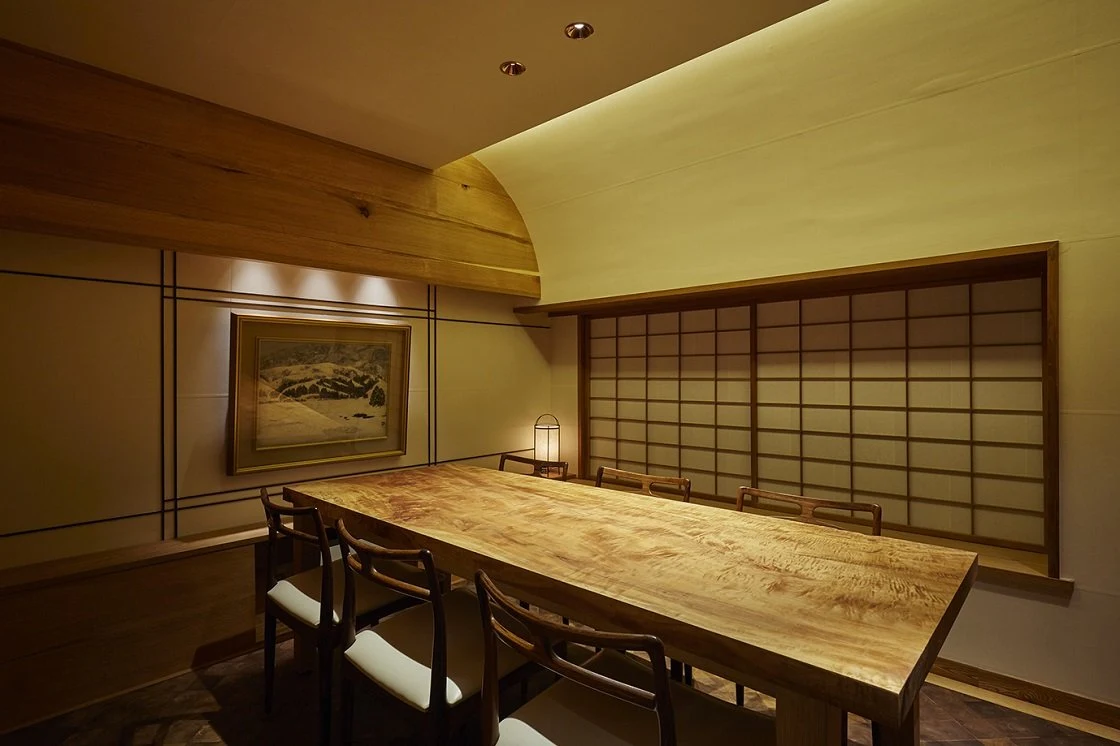
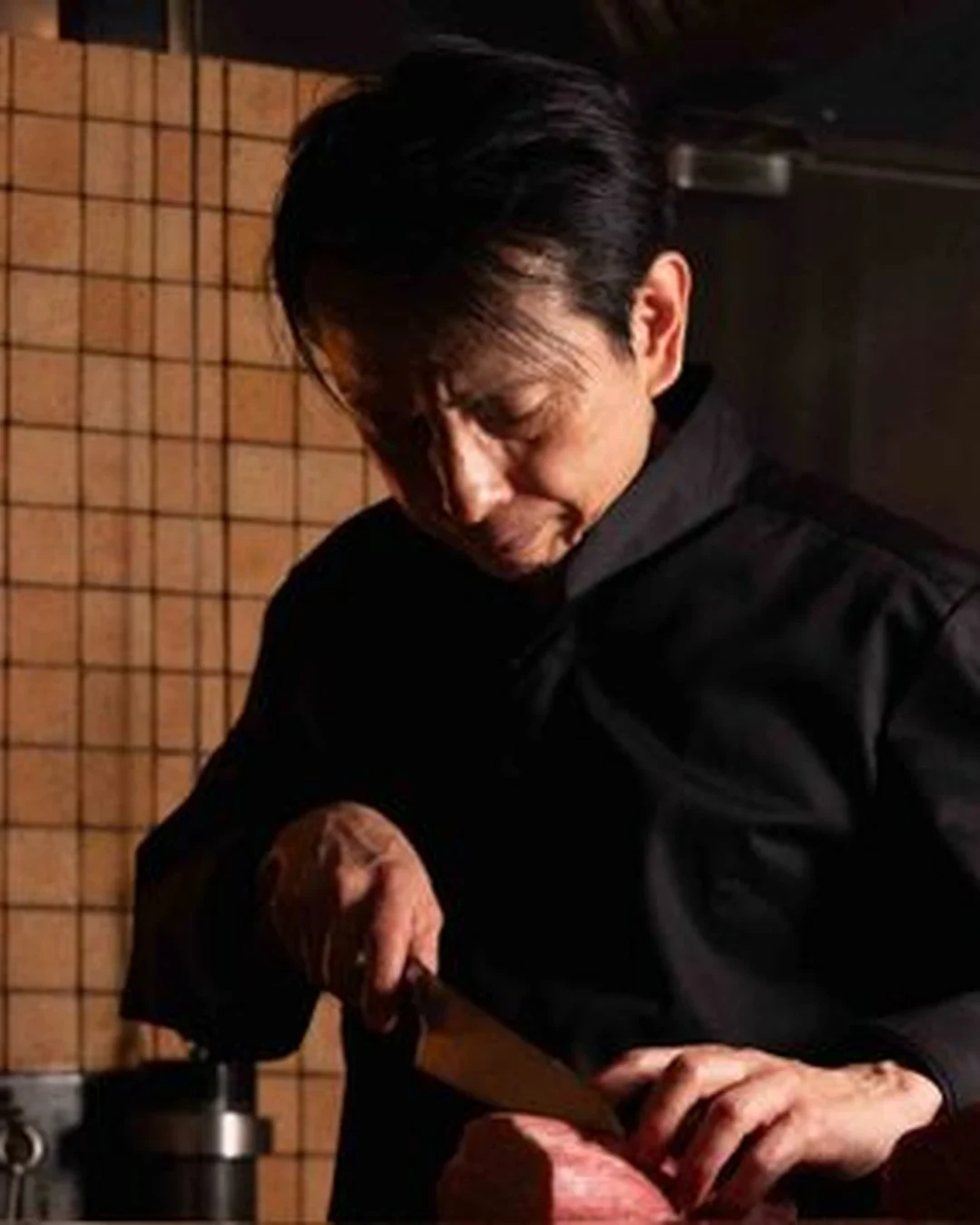
<h2>Where Kitashinchi's Quiet Streets Meet One of Osaka's Most Considered Beef Counters</h2><p>Kitashinchi sits in Osaka's Kita Ward, a district known less for spectacle and more for the kind of restaurants that assume you already know they exist. The streets here run narrower, the signage quieter. Descending to the basement level of a low-profile address at 曽根崎新地 1-11-19, you arrive at Fukutatei before the meal begins to understand what kind of place it is: not a room that announces itself, but one that rewards the decision to find it.</p><p>Kitashinchi has long operated as Osaka's specialist dining quarter, sitting at a different register from the boisterous izakaya lanes of Dotonbori or the densely starred kaiseki strip further south. Restaurants in this neighbourhood tend to run small, price seriously, and rely on repeat clientele rather than passing foot traffic. Fukutatei fits that pattern precisely.</p><h2>The Sourcing Logic Behind the Menu</h2><p>Japan's wagyu market has stratified considerably over the past two decades. At the leading sits Japanese Black, the breed that encompasses Tajima lineage cattle and the Kobe designation, valued for intramuscular fat distribution and a flavour profile that distinguishes it sharply from crossbred or feedlot alternatives. Within Japanese Black, the heifer distinction matters: cows that have not calved tend to produce finer-grained meat with more delicate fat expression, which is why procurement from this sub-category commands a premium across Japan's serious beef restaurants.</p><p>Fukutatei's menu is built entirely on this logic. The beef is Japanese Black, heifer only, and the format is structured around comparison rather than a single showpiece cut, with tenderloin, rump, and aitchbone appearing in the same tasting progression. Tenderloin, rump, and aitchbone appear as part of the same tasting progression, which means the meal functions as a study in how the same animal's muscle groups yield different textures, fat levels, and chew. That comparative structure is uncommon even within Osaka's premium beef sector, where most counters lead with a single signature cut and treat variety as an upsell rather than a pedagogical point.</p><p>The grilling method doubles down on that sourcing commitment. Binchotan charcoal, the dense white charcoal from Wakayama's ubame oak, burns at high, consistent temperatures with minimal smoke and low moisture output. Fukutatei adds far-infrared photothermal heat to the process, which penetrates the meat rather than simply applying surface temperature. The combination produces a crust and an internal result that suits the meat. Seasoning is limited to salt and pepper, which is less a minimalist affectation and more a declaration: if the sourcing is correct, the meat requires nothing else to be interesting.</p><h2>The Format at the Table</h2><p>Between the grilling stages, wagyu consommé soup and supporting appetisers structure the pacing of the meal. Consommé made from wagyu trim is a common bridge course in Japan's premium beef restaurants: it primes the palate for fat and concentrates the savoury depth of the animal without competing with the cuts to follow. The format as a whole sits closer to a tasting counter than a conventional steakhouse, though it draws from both traditions.</p><p>Chef Hiroshi Ukai leads the kitchen. Within the context of Osaka's beef scene, the relevant credential is the double-action grilling technique and the heifer-only sourcing discipline that defines the menu architecture. The kitchen works with the focused rhythm that small counters make possible.</p><h2>Where Fukutatei Sits in Osaka's Broader Dining Map</h2><p>Osaka's Michelin-recognised restaurant tier covers a wide range of formats and price points. At the ¥¥¥¥ level, venues like <a href="https://www.enprimeurclub.com/restaurants/hajime-osaka-restaurant">HAJIME</a> (three stars, French-Innovative) and <a href="https://www.enprimeurclub.com/restaurants/la-cime-osaka-restaurant">La Cime</a> (two stars, French) compete on entirely different terms: long tasting menus, European technique, and high conceptual ambition. The kaiseki tier, represented by <a href="https://www.enprimeurclub.com/restaurants/kashiwaya-osaka-senriyama-osaka-restaurant">Kashiwaya Osaka Senriyama</a> and <a href="https://www.enprimeurclub.com/restaurants/taian-osaka-restaurant">Taian</a>, both three-star operations at ¥¥¥, operates through Japanese seasonal progression and lacquerware presentation. <a href="https://www.enprimeurclub.com/restaurants/fujiya-1935-osaka-restaurant">Fujiya 1935</a> (two stars, Innovative) sits at ¥¥¥¥ with a creative format that draws from multiple traditions.</p><p>Fukutatei at ¥¥¥ occupies a distinct position within this map: it is not competing on conceptual range or multicourse theatrical ambition. Its claim is narrower and more specific, a single ingredient, sourced with precision, cooked with a technique that justifies the format. Within the Opinionated About Dining 2025 ranking, it sits at #510 among Japan's leading restaurants, a list that spans the full spectrum of Japanese dining styles. A Michelin Plate in 2025 confirms recognition without placing it in the starred tier. That positioning is honest: this is specialist execution within a defined lane, not a comprehensive dining statement.</p><p>For a wider view of where Fukutatei sits relative to Osaka's full restaurant offering, the <a href="https://www.enprimeurclub.com/restaurants/osaka-milan-restaurant">EP Club Osaka restaurants guide</a> maps the city's dining scene by format, price, and cuisine. Those planning a longer Kansai trip can cross-reference with <a href="https://www.enprimeurclub.com/restaurants/gion-sasaki-kyoto-restaurant">Gion Sasaki in Kyoto</a> or <a href="https://www.enprimeurclub.com/restaurants/akordu-nara-restaurant">akordu in Nara</a> for contrasting approaches to high-end Japanese dining in the region.</p><p>Beyond Kansai, Japan's serious beef and omakase counters share a common structural logic: small capacity and focused menus. <a href="https://www.enprimeurclub.com/restaurants/harutaka-tokyo-restaurant">Harutaka in Tokyo</a> operates by similar principles in a different cuisine category. Further afield, <a href="https://www.enprimeurclub.com/restaurants/goh-fukuoka-restaurant">Goh in Fukuoka</a>, <a href="https://www.enprimeurclub.com/restaurants/1000-yokohama-restaurant">1000 in Yokohama</a>, and <a href="https://www.enprimeurclub.com/restaurants/6-okinawa-restaurant">6 in Okinawa</a> each represent the specialist counter format in different Japanese cities. For those curious how premium wagyu-focused steakhouses perform in other Asian markets, <a href="https://www.enprimeurclub.com/restaurants/a-cut-taipei-restaurant">A Cut in Taipei</a> offers a useful comparison point. A different format entirely: <a href="https://www.enprimeurclub.com/restaurants/capa-orlando-restaurant">Capa in Orlando</a> shows how the premium steakhouse category operates in a North American resort context.</p><h2>Planning Your Visit</h2><div style="border:1px solid #ddd;padding:16px;margin:24px 0;"><h3>Know Before You Go</h3><ul><li>Address: 曽根崎新地 1-11-19 B1, Kita Ward, Osaka 530-0002</li><li>Neighbourhood: Kitashinchi, Osaka, basement level</li><li>Price range: ¥¥¥</li><li>Cuisine: Japanese Black wagyu steakhouse, heifer-only sourcing</li><li>Grill method: Binchotan charcoal with far-infrared photothermal heat</li><li>Awards: Michelin Plate 2024 and 2025; Opinionated About Dining Japan #510 (2025)</li><li>Google rating: 4.3 from 124 reviews</li><li>Booking: Reservation essential</li><li>Further Osaka planning: <a href="https://www.enprimeurclub.com/restaurants/osaka-milan-restaurant">Hotels</a> · <a href="https://www.enprimeurclub.com/restaurants/osaka-milan-restaurant">Bars</a> · <a href="https://www.enprimeurclub.com/restaurants/osaka-milan-restaurant">Wineries</a> · Experiences</li></ul></div>
Kitashinchi Fukutatei is located at Japan, 〒530-0002 Osaka, Kita Ward, 曽根崎新地1 Chome−11−19 B1, Osaka.
Kitashinchi Fukutatei has received recognition including: The steaks at Kitashinchi Fukutatei are grilled by the double action of Bincho charcoal flame stoked in a furnace and far-infrared photothermal heat. Beef is Japanese Black wagyu, heifer only. Tasting and comparing different cuts, such as t….
The menu centres on heifer-only Japanese Black wagyu grilled using a dual heating method: binchotan charcoal flame combined with far-infrared photothermal heat. Cuts such as tenderloin, rump, and aitchbone are served side by side for comparison, seasoned only with salt and pepper to keep the focus on the meat's natural character. Wagyu consommé soup and appetisers accompany the grilling stages.
Pricing at Kitashinchi Fukutatei is listed as ¥¥¥.
The chef associated with Kitashinchi Fukutatei is Hiroshi Ukai.
At ¥¥¥ pricing with a specialist beef counter format in Kitashinchi, arriving without a booking is a serious risk. Small counters of this type in Osaka's Kita Ward typically operate on reserved seatings, and the venue's Michelin Plate recognition since 2024 means demand consistently outpaces walk-in availability. Booking ahead is the only reliable approach.
Japan, 〒530-0002 Osaka, Kita Ward, 曽根崎新地1 Chome−11−19 B1
Kitashinchi

Modern French with Japanese Ingredients
La Cime
Osaka, Japan
★★ · 50 Best

Avant-Garde Japanese Fine Dining
HAJIME
Osaka, Japan
★★★ · 50 Best

Michelin-Starred Modern Cantonese
Sawada
Osaka, Japan
★

Traditional Kaiseki
Honkogetsu
Osaka, Japan

Seasonal Kaiseki Omakase
Kashiwaya Osaka Senriyama
Osaka, Japan
★★★

Traditional Japanese Kaiseki Omakase
Taian
Osaka, Japan
★★★