- Tabelog 100 #87: 4.1pts · 2026
- Opinionated About Dining Top Restaurants in Japan Recommended · 2026
- Tabelog Bronze #194: 4.2pts · 2026
- Opinionated About Dining Top Restaurants in Japan Ranked #545 · 2025
- Tabelog Bronze · 2025
- Opinionated About Dining Top Restaurants in Japan Ranked #446 · 2024
- Opinionated About Dining Top Restaurants in Japan Recommended · 2023
A Counter Format in Roppongi's Upper Dining Tier
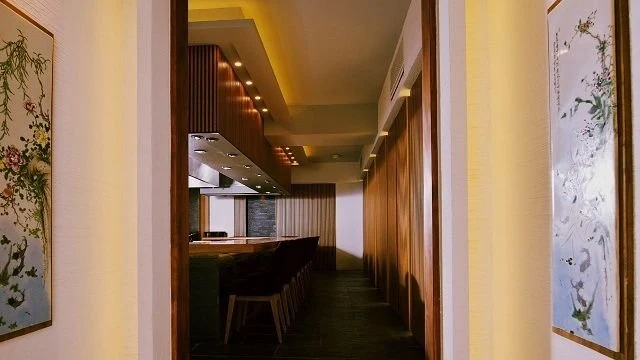
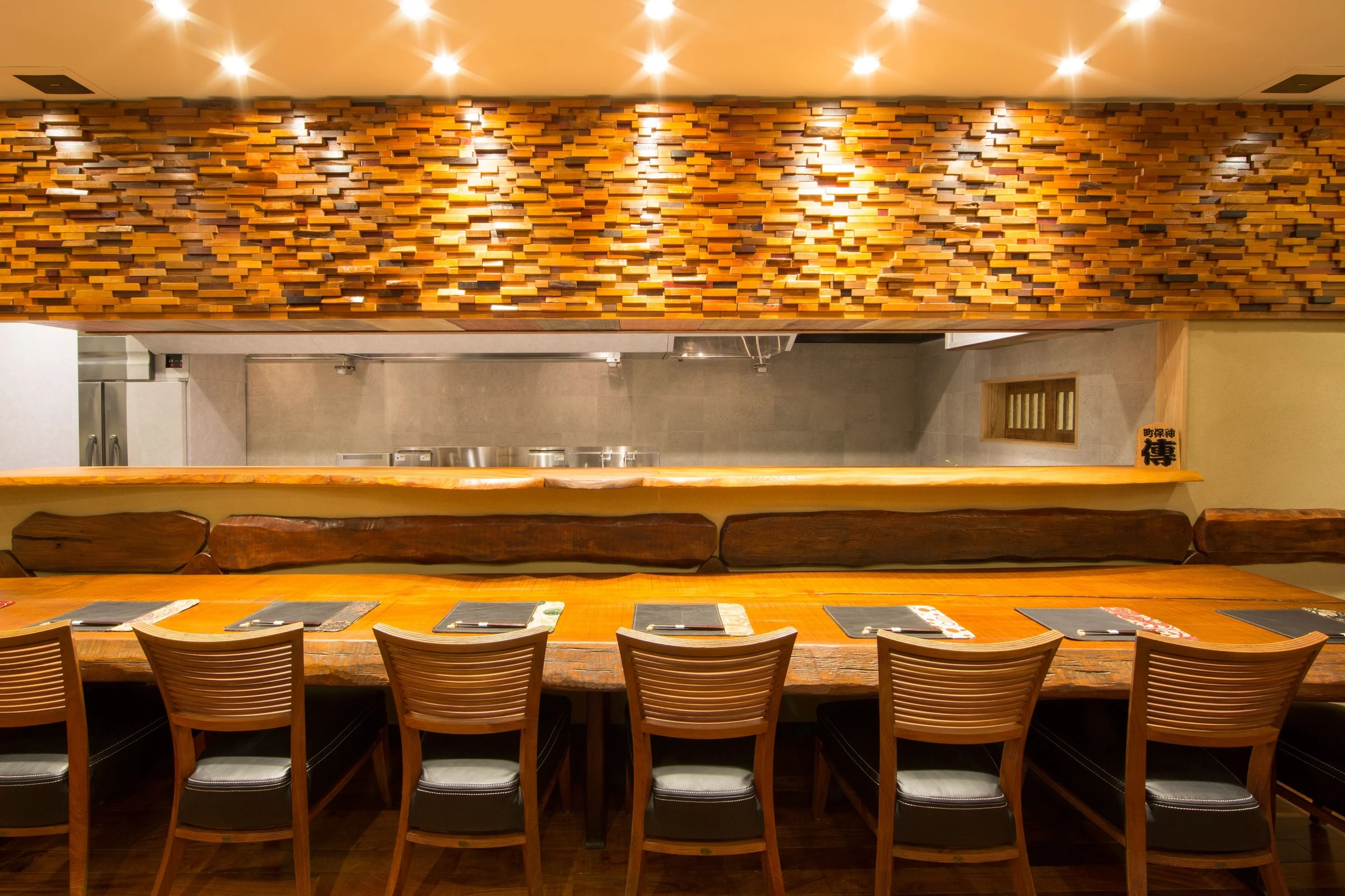
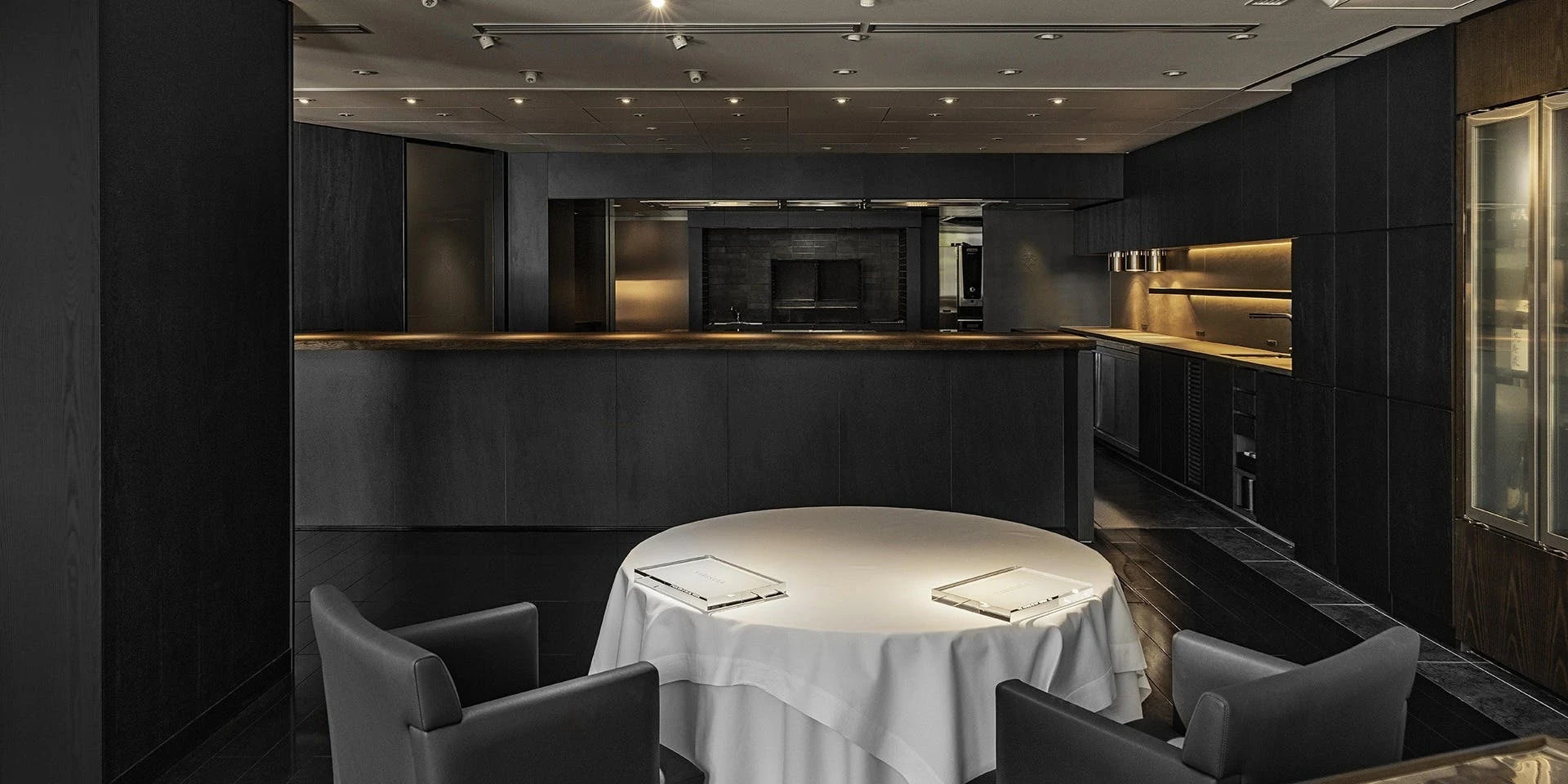
The ground floor of PAL Building on Roppongi's main artery seats twelve people, all at a single counter. There are no private rooms and no overflow tables. The format is closer to what you would expect from a high-end sushi or kappo counter than from a Chinese restaurant, and that deliberate structural choice tells you most of what you need to know about Koho's position in Tokyo's dining hierarchy.
Roppongi has long occupied a specific role in Tokyo's restaurant geography: a district that accommodates both high-volume international dining and genuinely serious counter operations, often within a short walk of each other. Koho sits firmly in the latter category. A Tabelog score of 4.23, sustained Tabelog Bronze Awards from 2021 through 2026 (with Silver recognition stretching back to 2017), and repeated inclusion in the Tabelog Chinese TOKYO Top 100 in 2021, 2023, and 2024 place it consistently within the city's most peer-reviewed Chinese restaurants.
Chinese Cuisine, Japanese Counter Logic
Tokyo's premium Chinese restaurant scene has developed a format that has no direct equivalent in Hong Kong, Shanghai, or Taipei. Across the city's most recognised Chinese counters, the structure borrows heavily from Japanese counter traditions: a fixed course, a small room, an emphasis on the chef's direct relationship with each guest, and a pricing architecture that sits well above the mid-market. Koho operates squarely within this format. The 12-seat, counter-only layout, reservation-only policy, and dinner pricing in the JPY 30,000 to 39,999 range (plus a 10% service charge) all signal a comparable set that includes the city's other top-tier Chinese tables, not its hotel Chinese rooms or larger banquet-style operations.
The dinner service runs from 18:00 to 20:30 on Monday through Thursday. On Fridays and Saturdays, two seatings operate: 17:30 to 19:45 and 20:30 to 22:30. The restaurant is closed Sundays. This tightly controlled calendar is characteristic of Tokyo's serious counter restaurants.
For peers within Tokyo's Chinese category, Chugoku Hanten Fureika and Chugoku Hanten Kohakukyu (Amber Palace) represent the high end of traditional Chinese hospitality in a larger-format context. Ippei Hanten and Koshikiryori Koki occupy neighbouring positions in the city's broader Chinese and classical Chinese repertoire. Koho's counter model and price point, however, position it as its own distinct format, one where intimacy and technique converge more visibly than in room-service-style Chinese dining.
Imported Technique, Japanese Product Sensibility
The editorial angle that most accurately frames Koho is the intersection of Chinese culinary technique with Japanese product rigour. Tokyo's counter-format Chinese restaurants have developed a house style that is neither classically Cantonese nor conventionally Tokyo-Chinese. They draw on the structural language of Chinese cooking while sourcing from the same supply networks that feed the city's kaiseki and premium sushi counters. The result is a cuisine category that has no clean Western analogue.
Koho's database record notes a specific emphasis on fish and a health-and-wellness menu orientation, both signals consistent with a kitchen that applies Chinese techniques to Japanese ingredient hierarchies. The drink programme is curated with unusual specificity for a Chinese restaurant: sake, shochu, and wine are all listed, with the record noting particular care given to each category, and a sommelier is on staff. Outside beverages are not permitted.
This approach mirrors a broader pattern visible in Tokyo's most recognised non-Japanese fine dining. Across the city's leading French counters, kaiseki rooms, and now Chinese tables, the common thread is Japanese ingredient sourcing applied to a non-Japanese culinary framework. The technique arrives from abroad; the product arrives from the closest possible domestic source. At Koho, chef Masashi Yamamoto operates within that framework, the structural evidence points clearly to that tradition.
For international comparison, Restaurant Tim Raue in Berlin and Mister Jiu's in San Francisco both demonstrate the same principle applied in different cultural contexts: Chinese technique reinterpreted through a local ingredient lens. What makes Tokyo's version distinct is the density of competition and the Japanese counter format that shapes the entire service architecture.
Roppongi's Counter Circuit
Within the broader Tokyo dining context, Roppongi is not typically the first neighbourhood cited for intimate counter dining, that reputation belongs more readily to Ginza, Minami-Aoyama, or Shimbashi. But the district's concentration of high-spend diners and international visitors has produced a tier of serious counters that operate alongside its larger, more visible restaurant properties. Koho has held its position in that sub-tier since opening in April 2016, with a Tabelog award record that dates to the restaurant's first full year of operation in 2017.
The address places it a three-minute walk from Exit 5 of Roppongi Station on the Toei Oedo Line, and four minutes from Exit 3 on the Tokyo Metro Hibiya Line. For visitors staying in Minato City hotels or moving between Roppongi and Azabu-Juban, this is a direct transit connection. Tokyo restaurants guide maps the broader dining circuit across the city's neighbourhoods, including Roppongi's place within it.
Those building a broader Japan itinerary around counter dining of this calibre can look to HAJIME in Osaka, Gion Sasaki in Kyoto, akordu in Nara, Goh in Fukuoka, 1000 in Yokohama, and 6 in Okinawa as reference points across different cities and cuisine categories. Within Tokyo itself, itsuka represents a useful neighbouring data point in the city's evolving fine dining picture.
See our full Tokyo hotels guide, Tokyo bars guide, Tokyo wineries guide, and Tokyo experiences guide.
Planning Your Visit
Koho accepts reservations only, walk-ins are not a viable option for a 12-seat counter. Phone enquiries are handled between 11:00 and 15:00; outside those hours, the restaurant cannot take calls. For parties of three or more, reservations must be made through TableCheck rather than by phone. International visitors can also book via the OMAKASE platform (omakaseje.com), which supports English, Chinese, and Korean. The cancellation policy carries a 100% fee on the day of the reservation, and 50% from two days prior, which may vary depending on the specific course booked.
Payment is accepted by major credit cards (Visa, Mastercard, JCB, Amex, Diners, UnionPay), IC transit cards, and QR payment systems including PayPay, Alipay, and WeChat Pay. Children of high school age and above are welcome, with prior notice required at booking. Strong perfumes are asked to be avoided, a standard practice at counter restaurants where proximity to other diners and the kitchen make scent management a practical concern. Outside beverages are not permitted, and large luggage cannot be accommodated in the restaurant.
Quick reference: 12-seat counter, Roppongi, dinner only (from 18:00 Mon–Thu; two seatings Fri–Sat from 17:30), reservation required, JPY 30,000 to 39,999 plus 10% service charge, Tabelog 4.23, Bronze Award 2021 to 2026.
The Sunday letter
Get new places like Koho every Sunday.
One email a week with the restaurants, bars and hotels we have just written up, and the people who run them.
One email a week. Unsubscribe from any issue.
Questions
Frequently asked
Who works at Koho?
Made By profiles Masashi Yamamoto (Chef) at Koho.
How expensive is Koho?
Koho is listed at a price level of $$$$.
Where is Koho and what does it serve?
Koho is in Minato, Tokyo, serving Modern Cantonese Omakase.
The field
How it compares
| Place | Cuisine | Notes | Awards |
|---|---|---|---|
| Koho | Modern Cantonese Omakase | Minato, $$$$ | · |
| Den | Modern Japanese Kaiseki | Tokyo | Michelin 2 Stars, World's 50 Best |
| Florilège | Modern French-Japanese Plant-Based Fine Dining | Tokyo | Michelin 2 Stars, World's 50 Best |
| Narisawa | Modern Japanese Satoyama Fine Dining | Tokyo | Michelin 2 Stars, World's 50 Best |
| Quintessence | Modern French Fine Dining | Tokyo | Michelin 3 Stars |
| Sazenka | Modern Chinese Fine Dining | Tokyo | Michelin 3 Stars, World's 50 Best |
| Sézanne | Modern French Fine Dining | Tokyo | Michelin 3 Stars, World's 50 Best |
In residence
Similar places
Modern Japanese Kaiseki
Den
Tokyo, Japan
★★ · 50 Best
Modern French-Japanese Plant-Based Fine Dining
Florilège
Tokyo, Japan
★★ · 50 Best
Modern Japanese Satoyama Fine Dining
Narisawa
Tokyo, Japan
★★ · 50 Best
Modern French Fine Dining
Quintessence
Tokyo, Japan
★★★
Modern Chinese Fine Dining
Sazenka
Tokyo, Japan
★★★ · 50 Best
Modern French Fine Dining
Sézanne
Tokyo, Japan
★★★ · 50 Best
The Sunday letter
Get the next Made By story in your inbox.
We send one email every Sunday morning with the places and people we covered that week.
One email a week. Unsubscribe from any issue.