Komatsu Yasuke
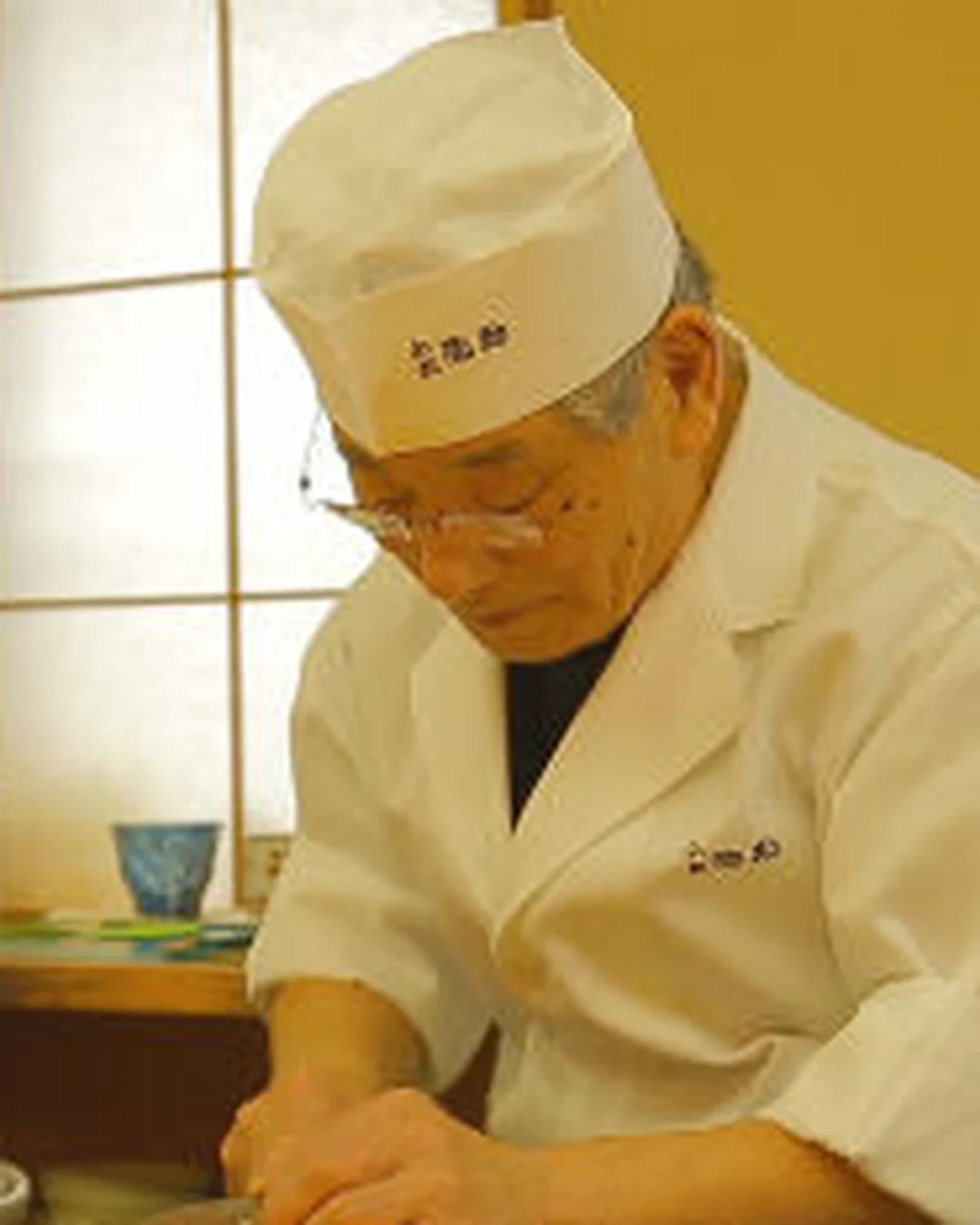
In Residence
Kazuo Morita
Chef
- 01CuisineLegendary Kanazawa Sushi Omakase
- 02CityIshikawa, Japan
- Opinionated About Dining Top Restaurants in Japan Ranked #144 · 2026
- Tabelog Bronze #200: 4.3pts · 2026
- Opinionated About Dining Top Restaurants in Japan Ranked #122 · 2025
- Tabelog 100 #42: 4.3pts · 2025
- Tabelog Bronze · 2025
- Opinionated About Dining Top Restaurants in Japan Ranked #75 · 2024
- Opinionated About Dining Top Restaurants in Japan Ranked #74 · 2023
Kanazawa's Sushi Tradition and Where It Stands Today
Japan's premium sushi conversation concentrates around Tokyo's Ginza counters, but the Hokuriku coast, Ishikawa Prefecture's stretch of the Sea of Japan, supplies a seafood argument that increasingly draws serious eaters away from the capital. Kanazawa has built a dining reputation on proximity to that source: the Noto Peninsula's fishing grounds, Kanazawa's own Omicho Market, and a regional ingredient culture that prizes crab, yellowtail, and bivalves calibrated to the cold-current seasons. Within that context, the city's leading sushi counters operate less as Tokyo satellites and more as expressions of a distinct regional tradition.
Komatsu Yasuke sits at the recognised end of that Kanazawa sushi spectrum. Tabelog, Japan's largest and most data-dense restaurant review platform, has ranked it among its Sushi WEST Top 100 selections in 2021, 2022, and 2025, and awarded it Silver status from 2018 through 2020 before transitioning to Bronze, where it has remained through 2026. On Opinionated About Dining's independent ranking of Japan's restaurants, it placed 74th in 2023, 75th in 2024, and 122nd in 2025, a three-year presence in the top tier of a country with more serious sushi counters per capita than anywhere else. Its current Tabelog score sits at 4.29, which, in a system where scores above 4.0 are genuinely difficult to sustain, positions it clearly above the mid-tier. For comparison, counters like Harutaka in Tokyo or Sushi Shikon in Hong Kong occupy the same bracket of sustained, peer-reviewed recognition, Komatsu Yasuke carries equivalent weight within its western Japan context.
The Shape of the Counter
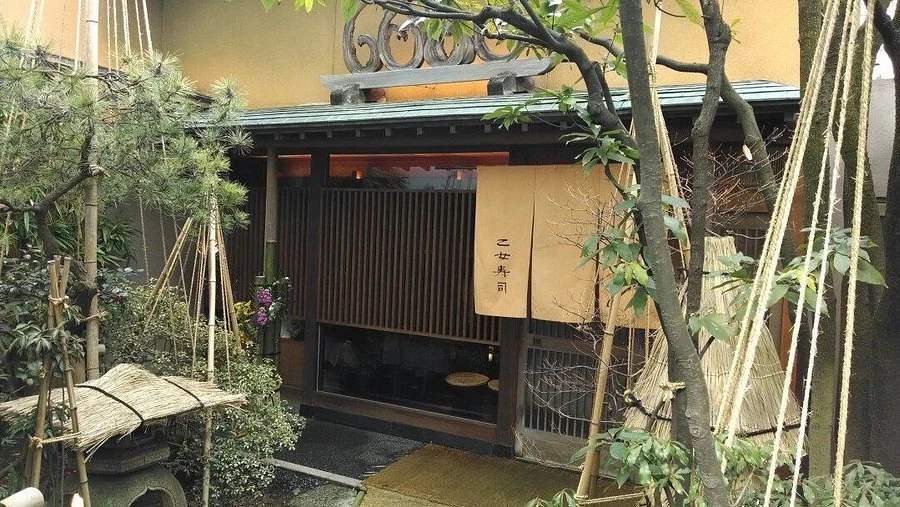
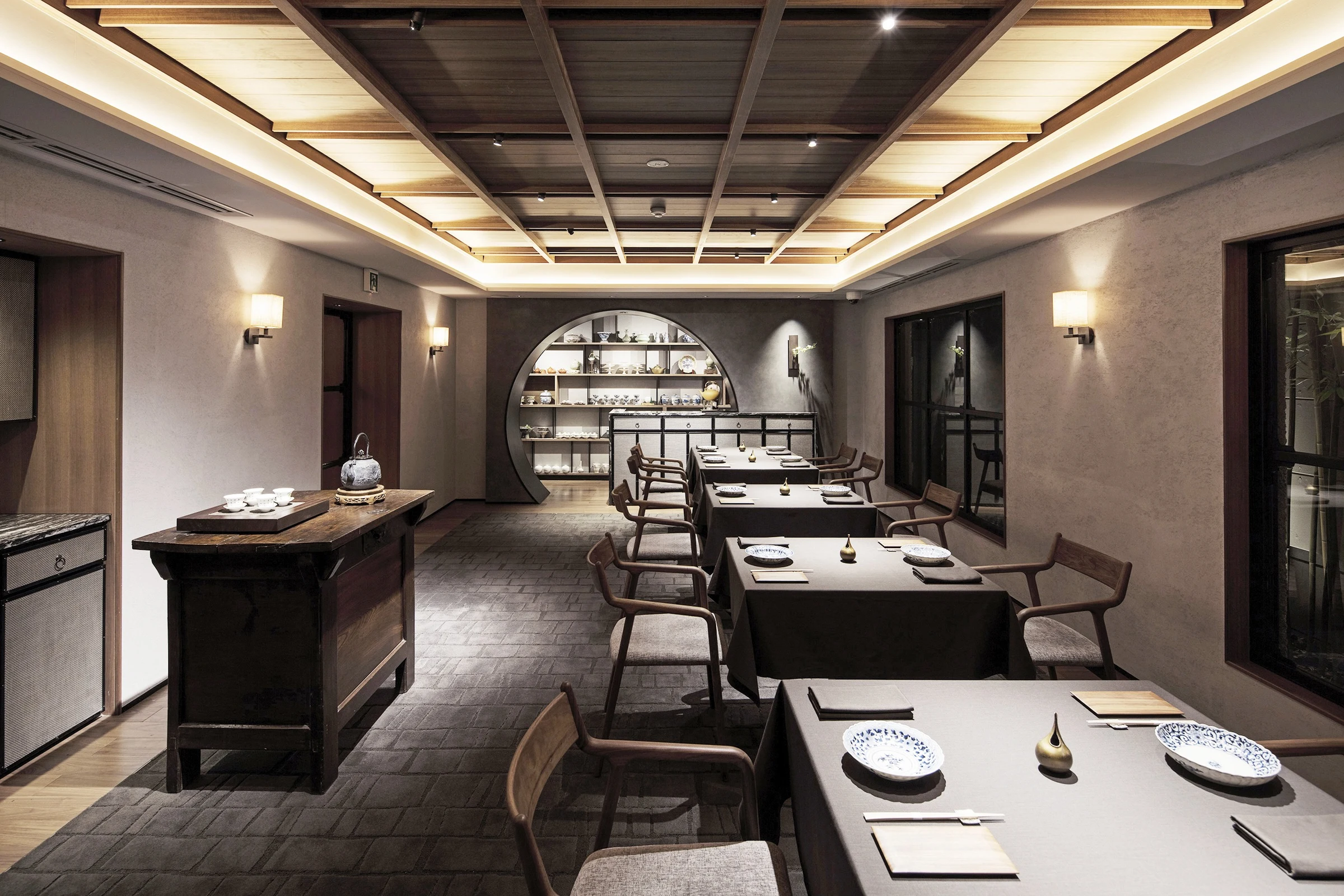
The physical format tells you something about intent. Eighteen seats total, ten at the counter, one four-leading table, two tables for two, keeps the room at a scale where the kitchen can maintain control without rotating through volume. The counter seats are where most serious diners will want to be: in sushi at this level, watching the preparation is part of the information exchange. Reservations are structured around three starting times (11:00, 13:00, and 15:00), which means each seating is clearly delineated and the kitchen resets between groups rather than running a continuous service. This format, common among Kyoto and Osaka kaiseki counters, is less standard for sushi but aligns Komatsu Yasuke with a deliberate-pace dining mode rather than the quick turnover model of many lunch sushi formats.
The space itself is described on its own records as stylish and relaxed, with counter seating as the architectural centre. No private rooms are available, and the venue does not accommodate private hire, a signal that the experience is calibrated to the communal counter dynamic rather than corporate or event use. Free Wi-Fi is available, which is a minor but telling practical detail for international visitors who may be coordinating local transport. Payment by major credit cards (Visa, Mastercard, JCB, Amex, Diners) is accepted; electronic money and QR-code payment systems are not.
Seasonality as the Core Logic
In Hokuriku sushi, the calendar is not a marketing frame, it is the actual structure of the menu. The Sea of Japan's seasonal cycle produces some of Japan's most sharply defined ingredient transitions. Autumn brings buri (yellowtail) as the fish begins its southward migration, fattening in the cold currents off Noto. By deep winter, the same yellowtail becomes kan-buri, the cold-season version regarded as the region's signature ingredient, fat content and texture at a peak that has no equivalent in summer. Kani (crab) season in Ishikawa runs from November through March, when Zuwaigani snow crab from the Noto fishing ports arrives at Kanazawa's Omicho Market and moves almost immediately into the highest-end counters in the city.
Spring shifts the register: white fish, shellfish opening up, the first signs of lighter preparations. Summer in the Sea of Japan delivers squid, sea urchin (uni) from the northern waters, and the kind of bivalve variety that the Pacific coast cannot match for mineral intensity. This seasonal calibration means that timing a visit to Komatsu Yasuke is less about choosing between a lunch or dinner slot (the venue is lunch-only, so that decision is made for you) and more about aligning the month of travel with what the kitchen can source at its seasonal peak. A January visit structured around kan-buri and crab delivers a materially different meal from a July visit built on squid and summer shellfish, and both are legitimate reasons to make the trip.
The lunch-only format, operating Tuesday through Sunday (closed Wednesday and Thursday), shapes the logistics of any Kanazawa dining itinerary. Kanazawa is an easy day trip from Kyoto via the Hokuriku Shinkansen, under two and a half hours, but it rewards longer stays that allow for evening exploration of venues like Installation Table ENSO L'asymétrie du calme or L'Atelier de NOTO, alongside the daytime sushi and seafood counters. For dedicated sushi itineraries across western Japan, Gion Sasaki in Kyoto and HAJIME in Osaka sit within reasonable reach of Kanazawa by rail.
Regional comparable set and How to Read the Awards
Kanazawa's sushi scene is smaller than Osaka's or Tokyo's but tighter in its sourcing geography. Counters like Otomezushi, Sushi Shinosuke, and Taheizushi operate in the same city and draw from the same markets. What distinguishes the upper-tier counters here is not access to better ingredients, proximity to Omicho is shared, but rather the precision of preparation, the depth of the vinegar-and-rice calibration, and whether the counter is serious about the full seasonal arc rather than offering the same menu year-round.
Komatsu Yasuke's Tabelog award history is worth reading carefully. Silver status from 2018 through 2020 placed it in a narrower cohort, the Tabelog Silver tier is harder to hold than Bronze, and the transition to Bronze from 2022 onward reflects a competitive field that has grown rather than a decline in the restaurant's own quality. The Sushi WEST Top 100 selections in 2021, 2022, and 2025 are a separate and sustained signal: this is a peer-reviewed ranking from within the restaurant community, not a general consumer vote. For western Japan's sushi specifically, that cohort is a meaningful reference, Shoukouwa in Singapore and other omakase counters in the international circuit frequently name western Japan sourcing as a benchmark. Within that frame, a Kanazawa counter holding consistent recognition over eight consecutive award cycles is carrying a real credential.
Planning a Visit
Komatsu Yasuke is reservation-only, reachable by phone at +81-76-231-1001 on days when the restaurant is open (the venue notes that calls on Wednesday and Thursday will not be answered). The address is 2 Chome-17-21 Honmachi, Kanazawa, inside the Kanazawa Chaya annex building, approximately four minutes on foot from JR Kanazawa Station. Lunch is priced in the JPY 10,000 to 14,999 range per the venue's listed rate, though reviewer-reported spending averages in the JPY 30,000 to 39,999 bracket, suggesting that the actual outlay including drinks (the venue serves nihonshu) sits materially higher than the base listing. Budget accordingly. No parking is available on-site; nearby paid lots are the practical option. The venue is non-smoking throughout.
For a broader view of what Kanazawa and Ishikawa offer at the table and beyond, see our full Ishikawa restaurants guide, our Ishikawa hotels guide, our Ishikawa bars guide, our Ishikawa wineries guide, and our Ishikawa experiences guide. For comparable sushi counters in other Japanese cities, Goh in Fukuoka, akordu in Nara, and 1000 in Yokohama offer useful points of comparison across Japan's regional dining circuit.
Questions
Frequently asked
Who works at Komatsu Yasuke?
Made By profiles Kazuo Morita (Chef) at Komatsu Yasuke.
How expensive is Komatsu Yasuke?
Komatsu Yasuke is listed at a price level of $$$$.
Where is Komatsu Yasuke and what does it serve?
Komatsu Yasuke is in Hommachi, Ishikawa, serving Legendary Kanazawa Sushi Omakase.
The field
How it compares
| Place | Cuisine | Notes | Awards |
|---|---|---|---|
| Komatsu Yasuke | Legendary Kanazawa Sushi Omakase | Hommachi, $$$$ | · |
| Cocina Hermanos Torres | Modern Spanish Fine Dining | Barcelona | Michelin 3 Stars, World's 50 Best |
| ESqUISSE | Modern French with Japanese Influences | Tokyo | Michelin 2 Stars, World's 50 Best |
| KOL | Modern Mexican Fine Dining | London | Michelin 1 Star, World's 50 Best |
| Moor Hall | Modern British Fine Dining | Aughton | Michelin 3 Stars |
| Otomezushi | Traditional Japanese Omakase | Ishikawa | · |
| Sazenka | Modern Chinese Fine Dining | Tokyo | Michelin 3 Stars, World's 50 Best |
In residence
Similar places
Modern Spanish Fine Dining
Cocina Hermanos Torres
Barcelona, Spain
★★★ · 50 Best
Modern French with Japanese Influences
ESqUISSE
Tokyo, Japan
★★ · 50 Best
Modern Mexican Fine Dining
KOL
London, United Kingdom
★ · 50 Best
Modern British Fine Dining
Moor Hall
Aughton, United Kingdom
★★★
Traditional Japanese Omakase
Otomezushi
Ishikawa, Japan
Modern Chinese Fine Dining
Sazenka
Tokyo, Japan
★★★ · 50 Best