Kraft aus Rust
- 01CityRust, Austria
- Falstaff Winery - 3 Stars · 2026
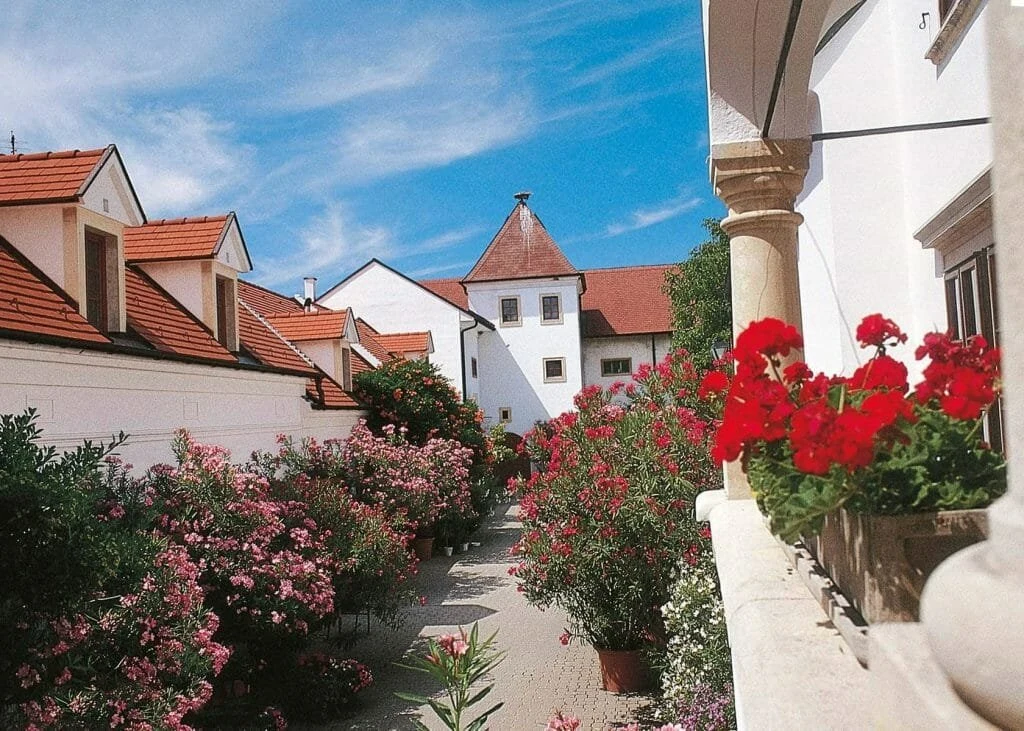
Rust has a particular kind of quiet: low buildings, cellar doors, shopfronts that make wine feel less like an attraction than a local grammar. In that setting, Kraft aus Rust belongs to the older Burgenland rhythm, where the tasting room and shop are extensions of family production rather than a staged visitor circuit. The house tone is rustic, classic, and restrained, which suits a town whose wine identity is tied as much to lake influence and noble-sweet tradition as to dry whites and reds.
The important context is Leithaberg. Around Rust and the Neusiedler See, wine tourism often turns on a split personality: dry, regionally legible bottlings for everyday drinking, and the deeper historical pull of Ruster Ausbruch, the local sweet-wine specialty. Kraft aus Rust sits inside that conversation with 10 hectares of vineyard holdings and a portfolio that includes white and red wines alongside dessert styles. That scale matters. It is large enough to support breadth, but small enough for the producer identity to remain coherent.
Leithaberg, Ruster Ausbruch, and the Austrian grammar of place
Austria’s stronger wine regions tend to reward precision over spectacle. Leithaberg carries that expectation: wines are read through origin, grape, and structure rather than through cellar theatrics. Kraft aus Rust uses that framework with a lineup that includes dry whites such as Furmint, Sauvignon Blanc, and Grauburgunder, plus rosé, reds, proprietary cuvées, and Ruster Ausbruch. The result is not a single-variety showcase. It is a Burgenland table in miniature, with Central European grapes, international varieties, and sweet-wine heritage sharing the same family address.
Furmint is a useful signal here. In Burgenland, it can feel sharper and more culturally specific than another generic white grape, particularly when placed next to Sauvignon Blanc or Grauburgunder. A site-referenced Leithaberg Ried Geyer Sauvignon Blanc points in a different direction, using appellation and vineyard language to anchor a familiar grape in local ground. That mix tells the reader more than a long cellar manifesto would: this is a producer working between regional inheritance and accessible varietal clarity.
The estate’s foundation year, 1749, gives the story historical depth, but age alone is not the argument. Rust has many old wine associations; the question for visitors is whether a producer’s current range still speaks in a Burgenland accent. Here, the combination of Ruster Ausbruch, dry whites, reds, and named cuvées suggests a cellar that treats place as a working vocabulary rather than a museum label.
A compact family cellar with competition-tested bottles
Family ownership remains a meaningful format in Austrian wine country because it often keeps production, retail, and hospitality close together. Christoph Kraft is listed as winemaker, owner, and managing director, which places the cellar under direct family leadership rather than a separated corporate structure. For a visitor, that matters less as biography than as format: the wines come from a small estate model where decisions are concentrated and the tasting-room experience is built around the producer’s own range.
The recognition is concrete. Kraft-Werk No. 18 received gold at Berliner Wein Trophy in 2022, Sauvignon Blanc Mana also received gold in 2022, and Plateau Gertberg received gold in 2023. Those medals place the winery beyond local sentiment and into a broader European competition setting. They also help explain the shape of the portfolio: not just entry-level dry wines, but named bottlings intended to carry more identity than a standard varietal label.
Prices attached to listed bottles have sat in an accessible band, with examples such as 2020 Rosé “Aus gutem Grund” at €8, 2020 Furmint “Hechtenstutzer” at €9, 2020 Grauburgunder at €9, 2020 “Kreuz & Quer” at €9, and 2017 “X Bec” at €17. Those figures are not tasting fees; they are useful because they show where the estate positions its wines. This is not a luxury-only cellar. It reads as a working Rust producer with enough range for casual buyers and enough named cuvées for drinkers paying closer attention.
How to read a tasting here
The right way to approach this kind of Rust cellar is by sequence rather than by trophy hunting. Start with the dry whites to understand the house line: Furmint for regional character, Sauvignon Blanc for aromatic range, Grauburgunder for a rounder Austrian white idiom. Then move toward reds or proprietary cuvées if available, before treating Ruster Ausbruch as the historical anchor rather than a dessert afterthought. In Rust, that sweet-wine tradition is part of the city’s identity, not a novelty tacked onto the end of a tasting.
The visitor format is direct and low-key: a tasting room and shop within a family-owned winery, with a quiet atmosphere and a casual dress code. German and English are listed for tours, and the occasion fit is broad enough for wine education, a small group outing, or solo exploration. The absence of restaurant-style production is part of the appeal. This is a cellar-door stop for understanding Burgenland through bottles, not a lifestyle complex with wine as decoration.
Rust rewards clustering. Before or after a tasting, use our full Rust wineries guide to build a wider day around the city’s producers, or branch into our full Rust restaurants guide, our full Rust hotels guide, our full Rust bars guide, and our full Rust experiences guide for the rest of the itinerary. Nearby Rust winery pages include Bioweinbau Schreiner, Eduard und Hildegard Lackner, Günter + Regina Triebaumer, Hammer Wein Rust, and Karnerhof Manfred Karner. Further afield, the Austrian and international wine index also includes »der Steiner« Hans Steiner in Podersdorf am See, ®walzer in Gneixendorf Bei Krems, 1516 Brewing Company Distillery in Vienna, & Handwein in Mannheim, and 00 Wines in Carlton.
The editorial case for Kraft aus Rust is clear: visit for a compact Burgenland producer whose strengths are place, continuity, and range. The 10-hectare scale, 1749 foundation year, Leithaberg connection, Ruster Ausbruch, and Berliner Wein Trophy gold medals give it enough substance for serious wine travelers without turning the stop into a formal ceremony.
Questions
Frequently asked
How expensive is Kraft aus Rust?
Kraft aus Rust is listed at a price level of $.
The field
How it compares
| Place | Notes |
|---|---|
| Kraft aus Rust | Rust, $ |
| Leitgeb Weingut | Rust |
| Weingut Ernst Triebaumer | Rust |
| Weingut Feiler-Artinger | Rust |
| Weingut Landauer | Rust |
| Weingut Norbert Haberhauer | Rust |
| Weingut Wenzel | Rust |