La Castela
- 01CuisineTraditional Spanish Tapas & Seafood
- 02CityMadrid, Spain
Manzanilla clams at the counter
- Macarfi 7.2 Food Rating · 2026
- Opinionated About Dining Casual in Europe · 2025
Rice, shellfish and the same front counter
At the pass, Paco Roncero directs La Castela in Retiro, Madrid, Spain, through tapas, seafood and rice that ask for a steady hand. The house has worked from Calle del Doctor Castelo 22 since 1989, close to El Retiro park, with a front bar for quick plates and a rear sala for the longer meal. Roncero was born in Madrid in 1969 and entered the Casino de Madrid in 1991, becoming head chef of banquets in 1996 and executive chef in 2000. His wider work at La Terraza del Casino brought Michelin stars in 2002 and 2010, and in 2019 that address evolved into Paco Roncero Restaurante at the NH Collection Casino de Madrid. La Castela belongs to another register: the old tasca made more exact, the plate moving from counter to table without losing its bar intelligence.
Manzanilla in the pan, socarrat at the edge
The method here is not spectacle. Clams meet Manzanilla sherry with ham and baby asparagus; rice arrives creamy with octopus and squid, or with turbot, carrying the Spanish preference for depth over ornament. Croquetas de Carabinero sit beside cecina croquettes and truffle versions, small plates that depend on the frying bench being awake to heat, filling and crust. Green asparagus takes garlic and honey balsamic vinegar. Tuna and red pepper are layered rather than hidden. Grilled turbot and hake tacos keep the fish at the center of the plate, while razor clams, cockles and wild red prawns give the counter its salt. The architecture is à la carte, with media raciones allowing the table to move by appetite: anchovies, Jamón Ibérico, chipirones in squid ink, then rice or beef if the meal lengthens. The wine program stays Spanish, with Rioja gran reservas, Ribera del Duero, Godello, Verdejo, Cava and Corpinnat holding their place by the glass and by the bottle.
The room splits the work in two
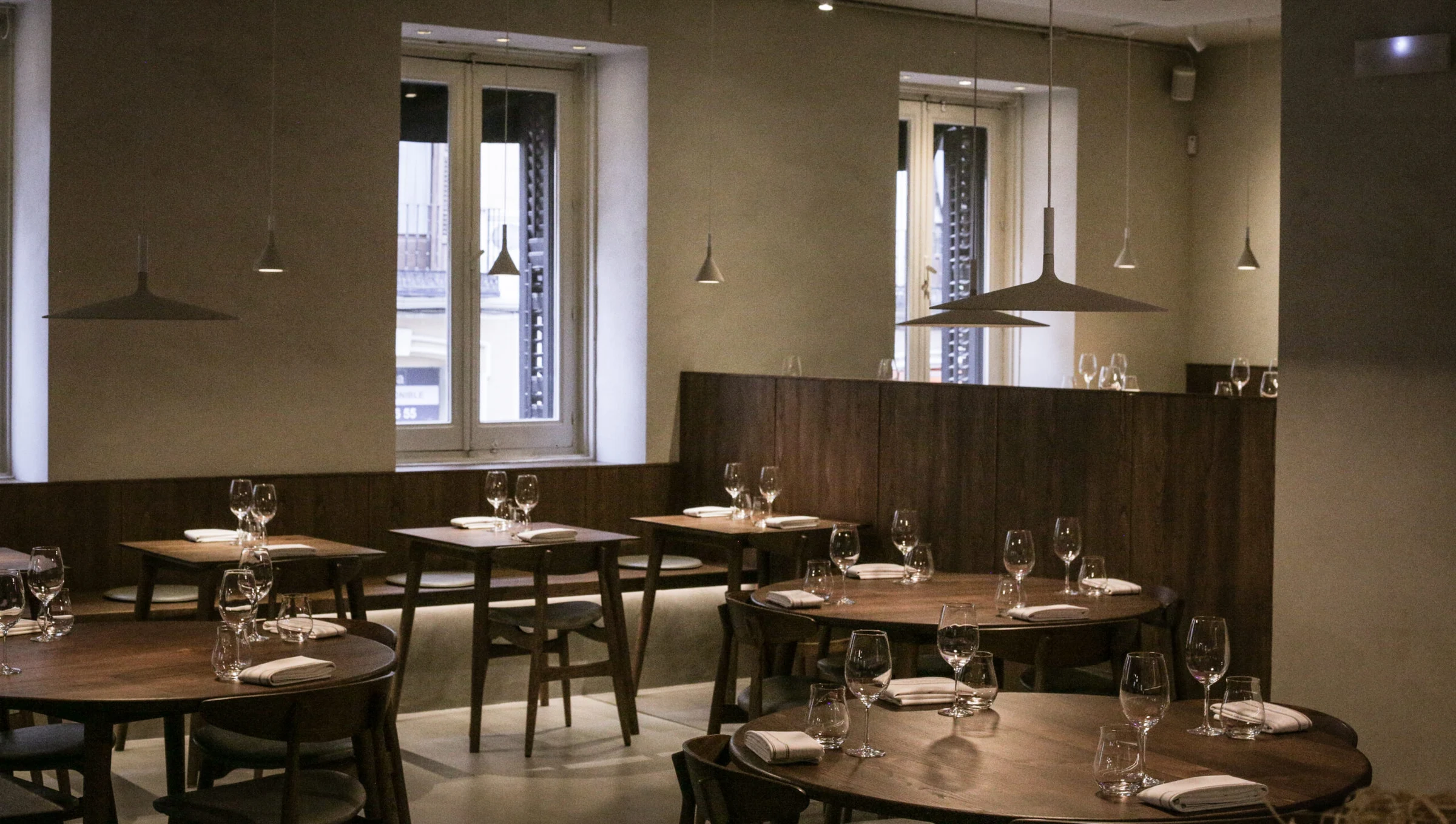
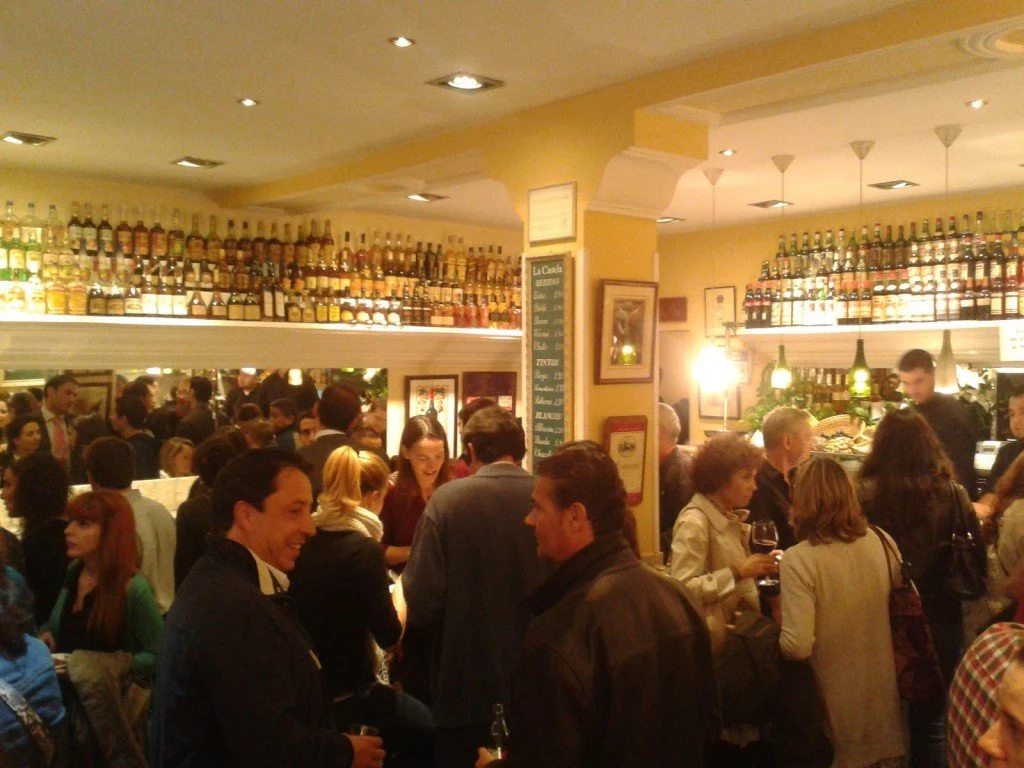
The front room carries the first rhythm: a marble counter, bottles along the wall, high-top seating and the kind of commotion that suits tapas because the pass can keep moving. Plates land close to the hand that ordered them. In the back sala, white tablecloths change the tempo without changing the kitchen’s grammar; the same seafood and rice take on a quieter pace. Staff move through a lively room with the confidence of repetition, balancing bar pressure with the more formal cadence of the restaurant. The setting is rustic rather than staged, warm rather than hushed, a neighborhood Madrid house that has learned how to hold both lunch crowd and celebration.
A Madrid tasca kept in service
La Castela’s distinction is its refusal to choose between the bar and the dining room. The old-school tasca remains visible at the counter, while the sala gives the same ingredients more space and linen. That is where the craft settles: in Manzanilla clams, croquetas de Carabinero, creamy rice with octopus and squid, and the marble counter at Calle del Doctor Castelo 22.
Questions
Frequently asked
Who is behind La Castela?
Paco Roncero directs La Castela in Retiro, Madrid. He was born in Madrid in 1969 and entered the Casino de Madrid in 1991, later becoming head chef of banquets in 1996 and executive chef in 2000.
What kind of food does La Castela serve?
The restaurant serves traditional Spanish tapas and seafood, with a strong focus on rice dishes. Signature plates include clams in Manzanilla sherry, creamy rice with octopus and squid, croquetas de carabinero, grilled turbot and layered tuna and red pepper salad.
What is the dining room like?
La Castela has a marble front bar for quick plates and a rear sala for longer meals. The room is described as rustic and warm, with the front counter keeping a lively pace and the back room using white tablecloths for a quieter service.
Do reservations need to be made in advance?
Reservations are recommended at La Castela.
What are the practical details for visiting?
La Castela is at Calle del Dr. Castelo, 22, in Retiro, Madrid. It is open Monday to Thursday from 12:30 pm to 5 pm and 8 pm to 12 am, Friday and Saturday from 12:30 pm to 5:30 pm and 8 pm to 12:30 am, and closed on Sunday. The dress code is casual, parking is street parking, and the price tier is $$, with an approximate spend of $35 per person.
The field
How it compares
| Place | Cuisine | Notes | Awards |
|---|---|---|---|
| La Castela | Traditional Spanish Tapas & Seafood | Ibiza, $$ | · |
| Coque | Modern Spanish Fine Dining | Madrid | Michelin 2 Stars |
| Corral de la Morería | Modern Spanish Fine Dining with Flamenco | Madrid | Michelin 1 Star |
| Desde 1911 | Premium Seafood Fine Dining | Madrid | Michelin 1 Star |
| DiverXO | Avant-Garde Spanish Tasting Menu | Madrid | Michelin 3 Stars, World's 50 Best |
| DSTAgE | Avant-Garde Spanish Tasting Menus | Madrid | Michelin 2 Stars |
| Paco Roncero | Avant-Garde Spanish Fine Dining | Madrid | Michelin 2 Stars |
Similar places
Modern Spanish Fine Dining
Coque
Madrid, Spain
★★
Modern Spanish Fine Dining with Flamenco
Corral de la Morería
Madrid, Spain
★
Premium Seafood Fine Dining
Desde 1911
Madrid, Spain
★
Avant-Garde Spanish Tasting Menu
DiverXO
Madrid, Spain
★★★ · 50 Best
Avant-Garde Spanish Tasting Menus
DSTAgE
Madrid, Spain
★★
Avant-Garde Spanish Fine Dining
Paco Roncero
Madrid, Spain
★★