Landgasthaus Gidibauer-Hof
In Residence
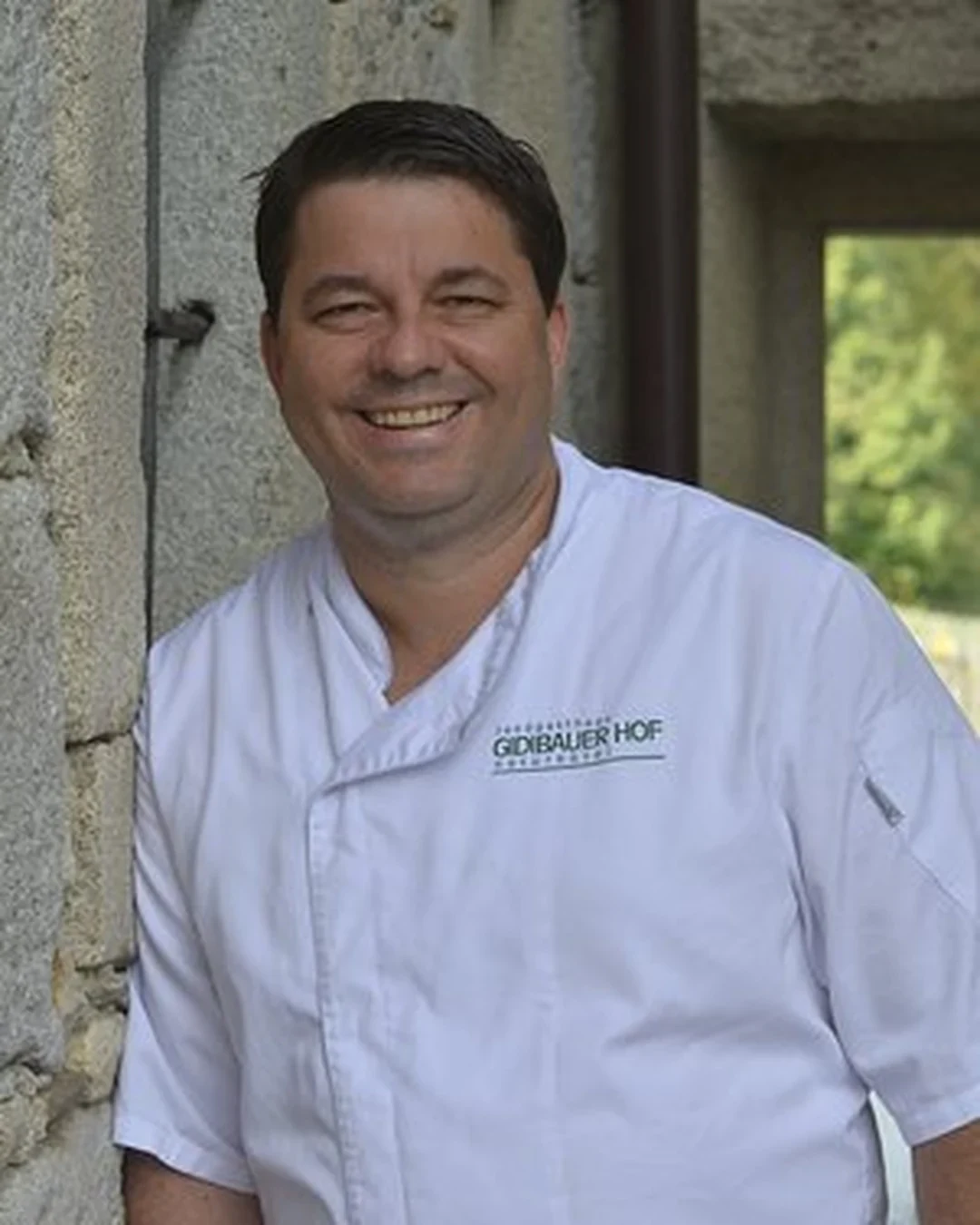
Alois Ertl
Chef
- 01CuisineBavarian Farm-to-Table
- 02CityHauzenberg, Germany
Home-reared beef, Bavarian farmstead cooking
- Michelin Bib Gourmand · Michelin Guide
- Michelin Bib Gourmand · 2026
- Michelin Bib Gourmand · 2025
- Michelin Bib Gourmand · 2024
Home-reared beef at the farmhouse pass
Home-reared beef sets the discipline at Landgasthaus Gidibauer-Hof in Hauzenberg. The kitchen works inside a protected granite four-sided farmstead on the edge of the Bavarian Forest, where regional cooking stays close to the farm and garden rather than to a fixed idea of polish. The pass is tied to Bavarian country cooking, seasonal produce, and the house's own cattle, with Tafelspitz, Bärlauch knödel, Germknödel, salmon with bulgur salad, and beef handled as the central material.
The Ertl family leads the house, keeping the restaurant inside a family-run nature hotel of nineteen rooms rather than treating it as a separate stage set for dining. Their own description of themselves is natural, authentic, grounded, and their stated idea of luxury is reduction to essentials rather than expansion. That matters in the work. The food has to hold its place among thick walls, old granite, wood, courtyard light, and guests who may have come from the forest as much as from the road.
A Bavarian program built from the yard
The method is direct and deliberately plain-spoken: regional cooking, farm-to-table sourcing, and a menu that can move between à la carte and set forms without losing its country grammar. Michelin has recognized the restaurant with a Bib Gourmand, specifically noting regional cooking and home-reared beef at fair prices; the house also carries recognition from Falstaff 2023 and Gault Millau 2023. Those marks belong to Landgasthaus Gidibauer-Hof, not to a transferred reputation, and they read as confirmation of the work already on the table.
The plate language is legible, confident, and close to its ingredients. Tafelspitz comes with Peperonata and Bärlauch knödel. Germknödel arrives warm with vanilla ice cream. Salmon sits beside bulgur salad rather than a heavier garnish. Beef can take roasted paprika purée, vegetables, and a spicy sauce, staying close to the animal and the farm, and goulash and beef fillet hold the plainer end of the carte. Vegetarian guests get a short set of dishes built with the same intent rather than an afterthought.
Five Stuben, one courtyard, thick walls
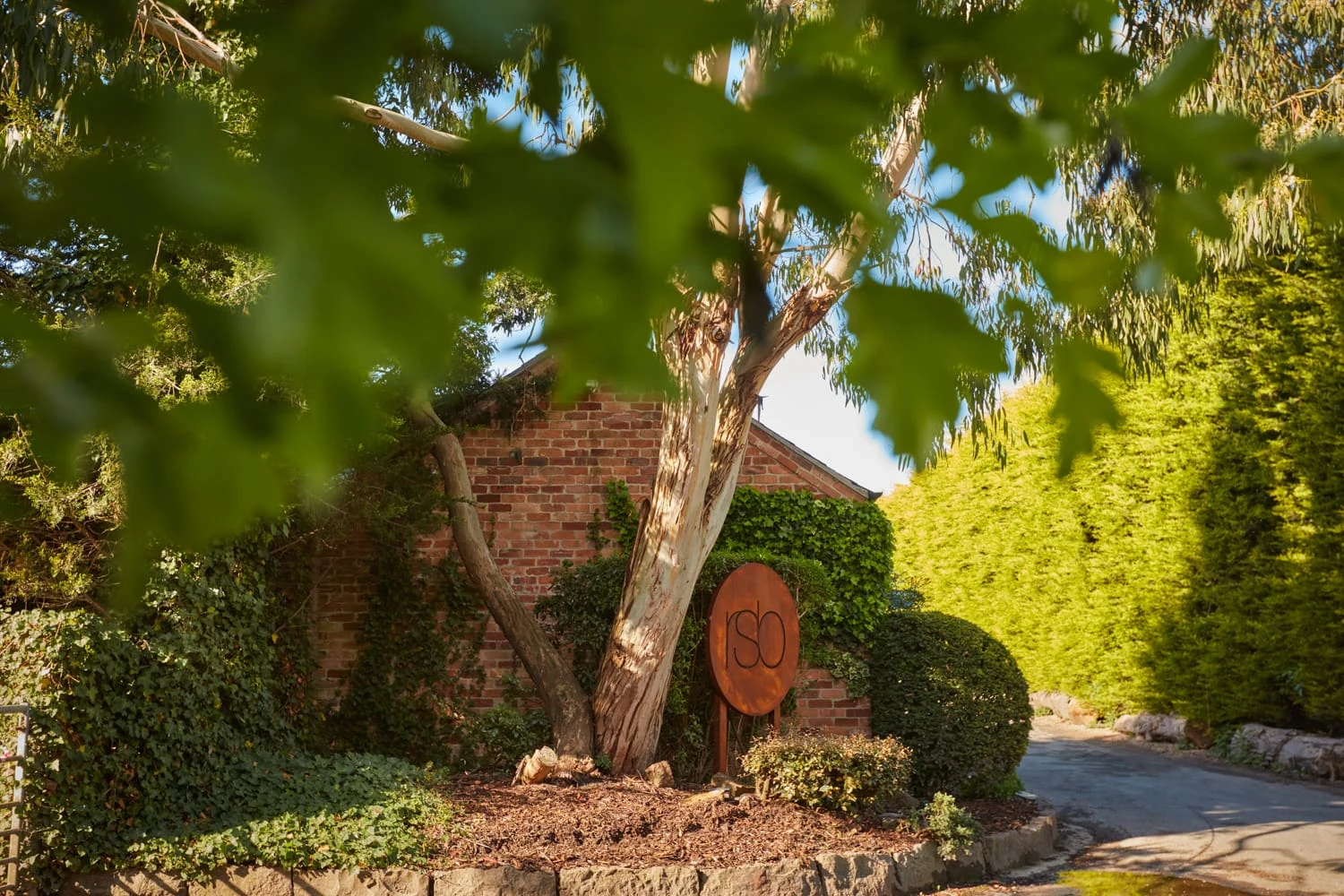
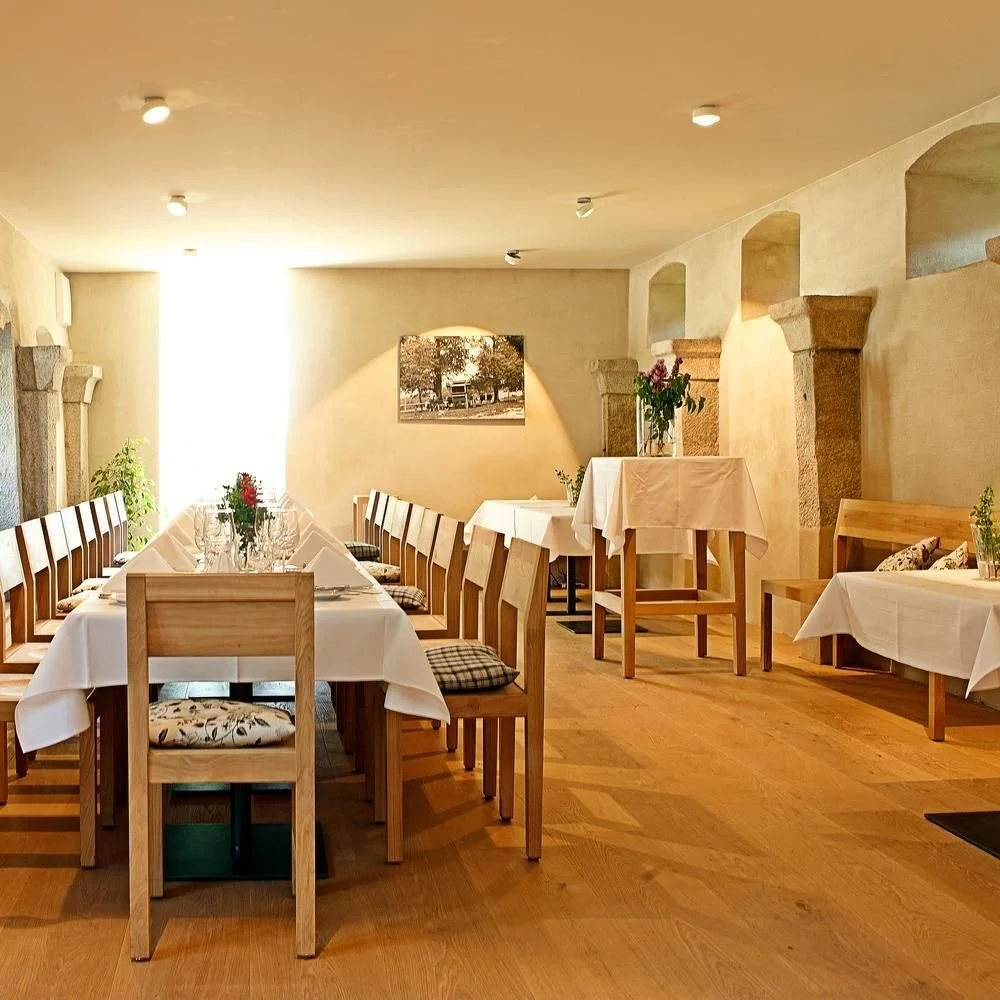
The room carries the same temperament as the cooking. Landgasthaus Gidibauer-Hof occupies a listed granite Vierseithof, with dining spread across five Stuben and a green inner courtyard used when the weather allows. One part of the house began as a cowshed; now it holds tables, timber, friendly light, and the close acoustics of a small rural restaurant. Nothing about the setting asks to be separated from the food. The thick walls keep the room sheltered, the natural wood steadies it, and the courtyard gives the service a second rhythm in warmer months.
The house can receive gatherings from 2-90, but its best register remains bench-side and human-scaled: a plate of home-reared beef leaving the pass, a bowl of Germknödel warming the table, the Ertl family's farmstead doing the quiet work around them.
Questions
Frequently asked
What kind of place is Landgasthaus Gidibauer-Hof?
Landgasthaus Gidibauer-Hof is a Bavarian farm-to-table restaurant in Hauzenberg, Lower Bavaria, set inside a listed granite farmstead on the edge of the Bavarian Forest.
What is the cooking known for?
The kitchen works with regional Bavarian cooking, seasonal produce, and the house's own home-reared beef. Dishes named in the house copy include Tafelspitz with Peperonata and Bärlauch knödel, Germknödel with vanilla ice cream, and salmon with bulgur salad.
What recognition does the restaurant hold?
Michelin has given Landgasthaus Gidibauer-Hof a Bib Gourmand, noting regional cooking and home-reared beef at fair prices. The house also carries recognition from Falstaff 2023 and Gault Millau 2023.
What is the dining room like?
The restaurant is spread across five Stuben and a green inner courtyard used when the weather allows. The house also sits within a family-run nature hotel of nineteen rooms.
What should visitors know before booking?
Reservations are recommended. The dress code is casual, and there is on-site parking.
The field
How it compares
| Place | Cuisine | Notes | Awards |
|---|---|---|---|
| Landgasthaus Gidibauer-Hof | Bavarian Farm-to-Table | Hauzenberg, Lower Bavaria, $$ | · |
| Addison | Modern California Fusion Fine Dining | San Diego | Michelin 3 Stars, World's 50 Best |
| Daniel | Modern French Fine Dining | New York City | Michelin 1 Star, World's 50 Best |
| Gaggan Anand | Progressive Indian | Bangkok | Michelin 1 Star, World's 50 Best |
| Restaurant Sat Bains | Modern British Fine Dining | Nottingham | Michelin 2 Stars |
| Restaurant Tim Raue | Asian-German Fine Dining | Berlin | Michelin 2 Stars, World's 50 Best |
| Tantris | Modern French Fine Dining | Munich | Michelin 2 Stars, World's 50 Best |
In residence
Similar places
Modern California Fusion Fine Dining
Addison
San Diego, United States
★★★ · 50 Best
Modern French Fine Dining
Daniel
New York City, United States
★ · 50 Best
Progressive Indian
Gaggan Anand
Bangkok, Thailand
★ · 50 Best
Modern British Fine Dining
Restaurant Sat Bains
Nottingham, United Kingdom
★★
Asian-German Fine Dining
Restaurant Tim Raue
Berlin, Germany
★★ · 50 Best
Modern French Fine Dining
Tantris
Munich, Germany
★★ · 50 Best