Landgasthof Zur Post
- 01CuisineTraditional German
- 02CityFreiensteinau, Germany
- Michelin Bib Gourmand · Michelin Guide
- Michelin Bib Gourmand · 2026
- Michelin Bib Gourmand · 2025
- Michelin Bib Gourmand · 2024
Where Rural Hesse Takes the Table Seriously
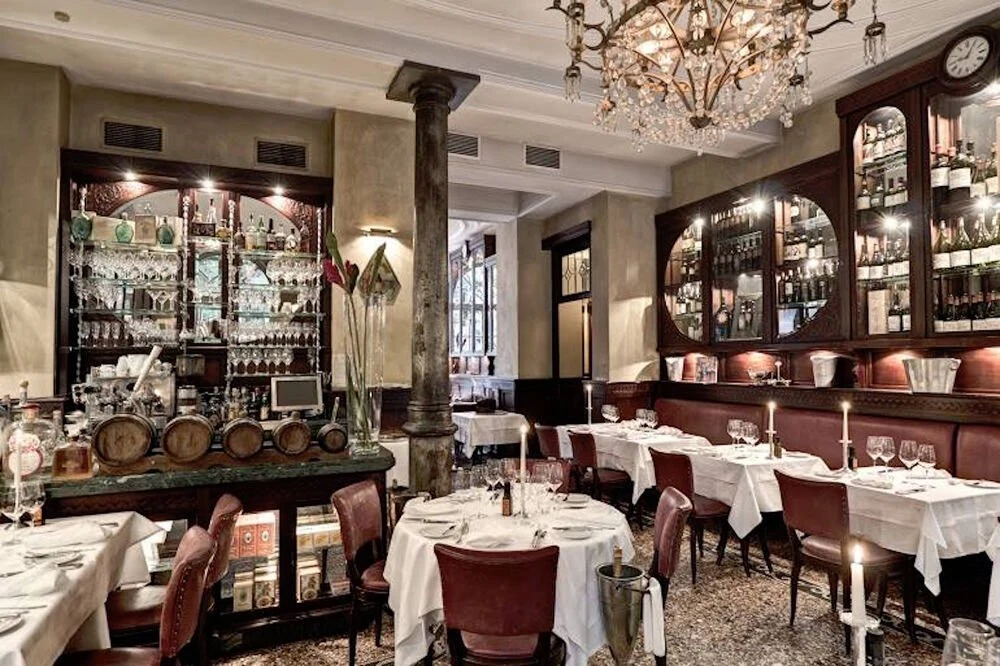
The road into Freiensteinau offers little warning that a Michelin-recognised kitchen waits at the other end. This is the Vogelsberg region of central Hesse, a plateau of extinct volcanic cones, beech forests, and scattered villages where the default dining register is functional rather than ambitious. Landgasthof Zur Post, sitting at Zum See 10, follows the physical logic of its surroundings: a country inn format, a lakeside address, the kind of setting where the building itself signals continuity with a rural hospitality tradition that goes back generations in Germany's heartland. The Landgasthof model, a roadside inn serving the local community as much as passing travellers, has been the backbone of German regional dining for centuries. What makes the format interesting is when it refuses to coast on nostalgia.
The Bib Gourmand Signal and What It Actually Means
Michelin's Bib Gourmand category was created for a specific purpose: to flag restaurants where the kitchen is operating at a meaningfully higher level than the price suggests. The award does not indicate fine dining. It indicates disproportionate quality-to-cost, and it is awarded selectively enough that two consecutive years, 2024 and 2025, is a meaningful data point rather than a lucky streak. In a country where restaurants like Schwarzwaldstube in Baiersbronn and Aqua in Wolfsburg occupy the €€€€ tier with three Michelin stars apiece, the Bib Gourmand represents a deliberately different conversation. Landgasthof Zur Post's single-euro price designation places it at the accessible end of the German dining spectrum, which makes the back-to-back recognition more pointed: Michelin is saying, in plain terms, that the cooking here punches above its weight class.
For context, Germany's Bib Gourmand cohort spans urban bistros and rural Gasthäuser, but the rural entries carry a different kind of credential. They tend to reflect kitchens rooted in place rather than trend, cooks working with local supply chains, seasonal rhythms, and the specific flavour logic of a region rather than the genericised European bistro playbook. Landgasthof Zur Post's country cooking designation confirms that orientation. This is not a kitchen trying to be something other than what the region demands. The Google rating of 4.6 across 338 reviews reinforces that the local and travelling public is arriving at the same conclusion Michelin reached: the cooking delivers.
Thomas Ricci and the Country Cooking Framework
Thomas Ricci leads the kitchen, and his role is best understood through the restaurant's positioning within the broader German dining scene. Chef Thomas Ricci's name sits at the head of a format that, in its structure, places craft above concept. Country cooking in the German Landgasthof tradition is not a simplified category. It requires a working knowledge of regional produce, an understanding of preserving and curing techniques that predate refrigeration, and the discipline to execute familiar dishes to a standard that justifies a Michelin inspector's recommendation two years running.
The Vogelsberg supplies ingredients that city restaurants pay premiums to source: game from managed forests, dairy from small farms operating at altitude, freshwater fish from the region's lakes and streams. A kitchen positioned in this landscape and awarded for value-led excellence has every incentive to build its menu around what the surrounding countryside produces rather than what the import market offers. That supply logic is one reason country inn kitchens in regions like this can achieve Bib Gourmand recognition without the overhead structure that defines urban fine dining. The comparison matters: a Bib Gourmand in Frankfurt requires different economics than one in Freiensteinau, where the relationship between producer and kitchen can be tighter and less mediated. For other German kitchens operating in the creative and contemporary register, see CODA Dessert Dining in Berlin or Vendôme in Bergisch Gladbach, the contrast in approach clarifies what makes the country cooking category distinct.
Freiensteinau in the Wider German Dining Map
Freiensteinau does not appear on the standard itinerary for German gastronomy tourism. That itinerary runs through Hamburg (Restaurant Haerlin), the Moselle valley (Schanz in Piesport, Waldhotel Sonnora in Dreis, Victor's Fine Dining in Perl), and south towards Bavaria (JAN in Munich, ES:SENZ in Grassau). Central Hesse, and the Vogelsberg in particular, represents a quieter chapter of that story, one defined less by chef-driven ambition and more by the resilience of a regional cooking tradition. Landgasthof Zur Post is evidence that Michelin's inspectors do travel that far from the obvious centres, and that the recognition, when it comes in a location like this, carries a different texture than the same award issued on a Munich street or a Hamburg waterfront.
The comparison to country cooking venues elsewhere in central Europe is also useful. 21.9 in Piobesi d'Alba and Andrea Monesi's Locanda di Orta in Orta San Giulio represent the Italian equivalent of the same category logic: rural settings, regional produce focus, and Michelin recognition that rewards cooking over atmosphere. Across these examples, the pattern is consistent, sustained recognition in the country cooking tier tends to come from kitchens that have stayed narrow and disciplined rather than expanded their ambitions horizontally.
Planning Your Visit
Freiensteinau sits in the Vogelsberg Nature Park, roughly equidistant from Frankfurt and Fulda, and the address at Zum See 10 places the restaurant near the lake that gives the road its name. Arriving by car is the practical approach from either city; public transport connections to a village of this size are limited, and the surrounding landscape rewards a slower road trip through the Vogelsberg rather than a rushed approach. The single-euro price designation means a full meal here sits well within a moderate dining budget, a meaningful factor when the alternative in a city context at equivalent Michelin quality would cost three to four times as much.
For those building a broader itinerary around the area, see our full Freiensteinau restaurants guide, alongside guides to hotels, bars, wineries, and experiences in the region. Also worth noting: Bagatelle in Trier represents a similarly value-conscious approach to Michelin-level dining in a different part of western Germany, for those mapping a longer route.
Questions
Frequently asked
What recognition does Landgasthof Zur Post hold?
Landgasthof Zur Post holds a Michelin Bib Gourmand.
How expensive is Landgasthof Zur Post?
Landgasthof Zur Post is listed at a price level of $$.
Where is Landgasthof Zur Post and what does it serve?
Landgasthof Zur Post is in Freiensteinau, Freiensteinau, serving Traditional German.
The field
How it compares
| Place | Cuisine | Notes | Awards |
|---|---|---|---|
| Landgasthof Zur Post | Traditional German | Freiensteinau, $$ | · |
| Alkimia | Modern Catalan Fine Dining | Barcelona | Michelin 1 Star |
| Chef Tam's Seasons | Modern Cantonese Fine Dining | Macau | Michelin 2 Stars, World's 50 Best |
| Jaan by Kirk Westaway | Modern British Fine Dining | Singapore | Michelin 2 Stars, World's 50 Best |
| La Cime | Modern French with Japanese Ingredients | Osaka | Michelin 2 Stars, World's 50 Best |
| Paco Roncero | Avant-Garde Spanish Fine Dining | Madrid | Michelin 2 Stars |
| Sorn | Fine Southern Thai | Bangkok | Michelin 3 Stars, World's 50 Best |
Similar places
Modern Catalan Fine Dining
Alkimia
Barcelona, Spain
★
Modern Cantonese Fine Dining
Chef Tam's Seasons
Macau, Macau
★★ · 50 Best
Modern British Fine Dining
Jaan by Kirk Westaway
Singapore, Singapore
★★ · 50 Best
Modern French with Japanese Ingredients
La Cime
Osaka, Japan
★★ · 50 Best
Avant-Garde Spanish Fine Dining
Paco Roncero
Madrid, Spain
★★
Fine Southern Thai
Sorn
Bangkok, Thailand
★★★ · 50 Best