Afghan dumplings from family practice
- Michelin Bib Gourmand · Michelin Guide
- Washingtonian 100 Very Best Restaurants #38 · 2026
- Opinionated About Dining Casual in North America Recommended · 2026
- Michelin Bib Gourmand · 2025
- Michelin Bib Gourmand · 2024
Home practice at the pass
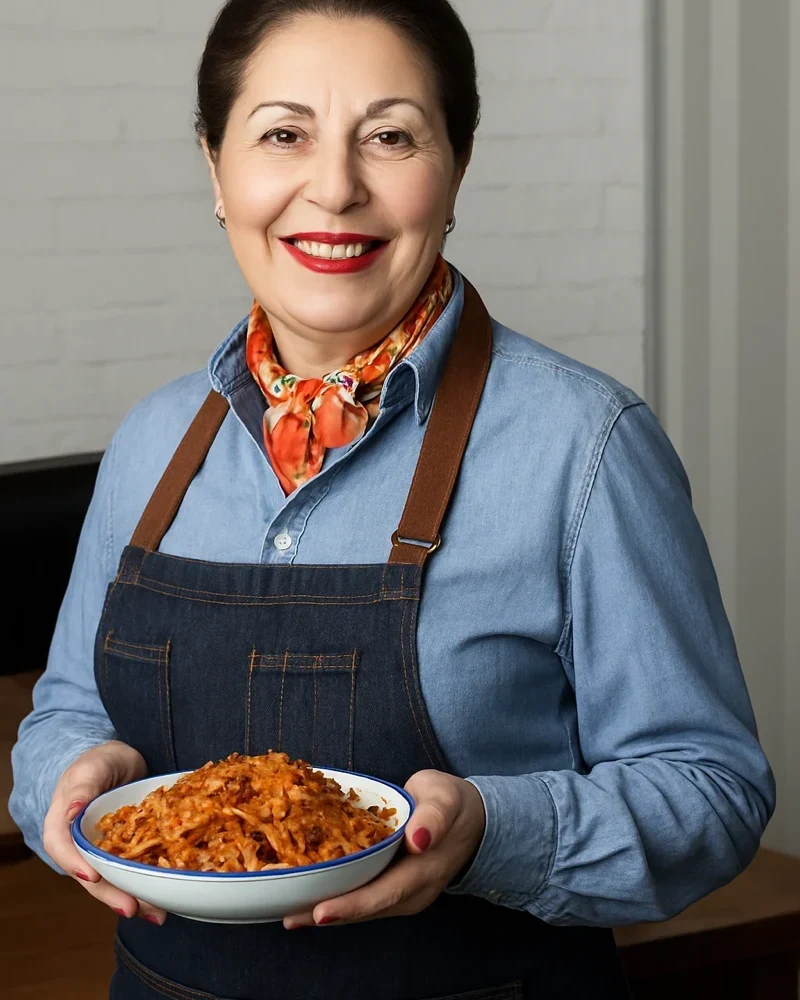
Shamim Popal folds home practice into the pass as chef/owner at Lapis in Adams Morgan, Washington DC, where Afghan family recipes became the working language of a restaurant. Her cooking formed first at home, with Afghan heritage repeated, adjusted, and carried to the table as a discipline rather than a display. At Lapis, that private method moved into public service in 2015, after the Popal family turned from a French creperie in Georgetown toward the food Shamim had long cooked for her own family.
The lineage here is domestic and named. Shamim drew on traditional Afghan cooking learned through family, including the methods of her mother-in-law, then began making the recipes her own through repetition. Zubair Popal's background in hotels shaped the service frame around the food, while the Popal children helped press the Afghan idea into being. The change happened in ten days. That speed matters less as spectacle than as evidence of readiness: the recipes were already held in the hands before the room was ready to receive them.
The Sunday letter
Find new places through the people who run them.
Our Sunday email brings you the chefs, winemakers and hoteliers behind our newest stories. See a sample before you subscribe.
See a sample of the Sunday emailOne email a week. Unsubscribe from any issue.
Dumplings, rice, and the light hand
The Lapis menu works through small plates and à la carte signatures rather than a tasting sequence. Bolani, kofta, lamb chops, and aushak dumplings carry the center of the table, with rice, herbs, garlic sour cream, split peas, carrots, raisins, tomato, cardamom, and braised lamb doing much of the structural work. The cooking stays close to Afghan form while keeping the seasoning light and fresh, a point the house has long used to distinguish its food from heavier readings of the region.
Technique shows most clearly in the braises, grilled meats, dumplings, and pilafs. Qabuli Palow sets long-grained rice with chef's spices, boneless lamb, carrots, and raisins. Aushak brings leeks, split peas, beef, and garlic sour cream into a dumpling that needs softness without slackness. Kofta moves beef meatballs through herbed tomato sauce with carrots, potatoes, and basmati rice. Shrimp Mantoo, one of Shamim's signatures, sits at the edge between inherited shape and personal handling, still legible as Afghan cooking, not loosened into fusion.
Portraits, rugs, and a lived-in room
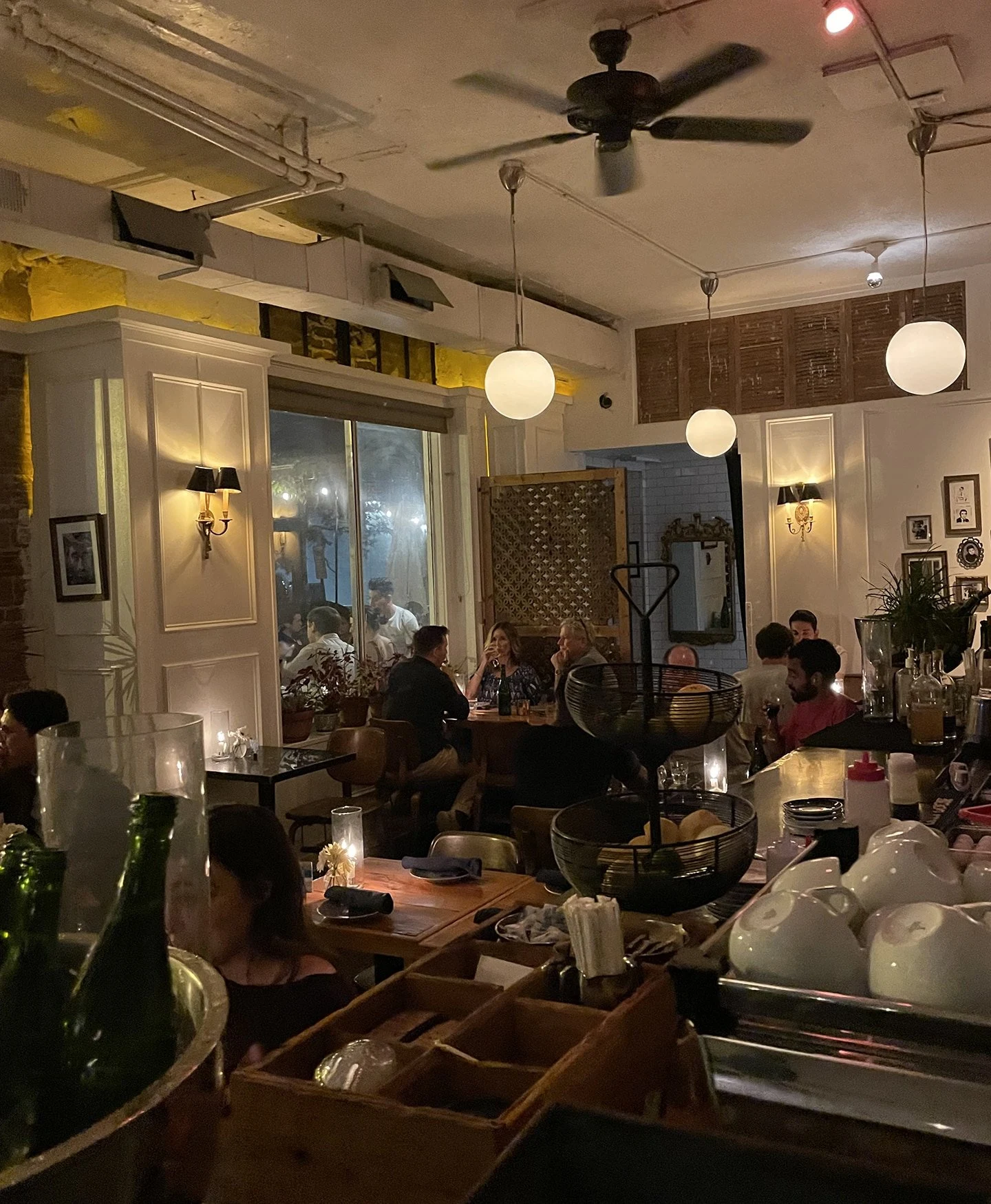
The room keeps the family's history in view without turning it into set dressing. Afghan rugs stay on the floor, not on the walls. Whitewashed surfaces, sepia-toned heirloom photographs, and a dim, warm room give the service a house-like rhythm, even when the counter and the pass are moving quickly. The photographs matter because they place Afghanistan before conflict in the same field of vision as dinner: Shamim in youth, Zubair in a Boy Scout uniform, family memory held at eye level.
Lapis is lively, but the craft remains intimate. Servers guide tables through dumplings, lamb, rice, pickles, and sauces; the kitchen keeps the dishes close enough to their home form that repetition becomes the control. In 2025, the family marked the restaurant's 10th anniversary with an Afghan Cultural Bazaar on May 17-18, bringing the public room back to the culture that built Lapis.
Questions
Frequently asked
Who cooks at Lapis?
Shamim Popal is the chef and owner at Lapis, where Afghan family recipes form the basis of the menu.
What is Lapis known for?
The menu focuses on Afghan cooking through small plates and à la carte dishes, including bolani, kofta, lamb chops, and aushak dumplings. It also holds a Michelin Bib Gourmand.
What kind of room does Lapis have?
The restaurant keeps a lived-in, house-like feel, with Afghan rugs on the floor, whitewashed surfaces, sepia-toned family photographs, and a dim, warm room.
What should diners know about bookings and service?
Reservations are recommended, and the booking platform is Resy. The dress code is smart casual.
When is Lapis open?
Lapis is open Monday through Thursday from 11 AM to 3 PM and 5 PM to 9 PM, Friday from 11 AM to 3 PM and 5 PM to 10 PM, Saturday from 10 AM to 3 PM and 5 PM to 10 PM, and Sunday from 10 AM to 3 PM and 5 PM to 9 PM.
The field
How it compares
| Place | Cuisine | Notes | Awards |
|---|---|---|---|
| Lapis | Afghan | Kalorama Triangle, $$$ | · |
| Albi | Modern Levantine Fine Dining | Washington DC | Michelin 1 Star, World's 50 Best |
| Dōgon | Modern Afro-Caribbean | Washington DC | World's 50 Best |
| Jônt | Modern Japanese Fine Dining | Washington DC | Michelin 2 Stars |
| minibar | Avant-Garde Molecular Gastronomy | Washington DC | Michelin 2 Stars |
| Moon Rabbit | Creative Vietnamese-Cajun Fusion | Washington DC | World's 50 Best |
| Oyster Oyster | Modern Vegetable-Focused Tasting Menu | Washington DC | Michelin 1 Star |
In residence
Similar places
Modern Levantine Fine Dining
Albi
Washington DC, United States
★ · 50 Best
Modern Afro-Caribbean
Dōgon
Washington DC, United States
50 Best
Modern Japanese Fine Dining
Jônt
Washington DC, United States
★★
Avant-Garde Molecular Gastronomy
minibar
Washington DC, United States
★★
Creative Vietnamese-Cajun Fusion
Moon Rabbit
Washington DC, United States
50 Best
Modern Vegetable-Focused Tasting Menu
Oyster Oyster
Washington DC, United States
★
The Sunday letter
Get the next Made By story in your inbox.
We send one email every Sunday morning with the places and people we covered that week.
See a sample of the Sunday emailOne email a week. Unsubscribe from any issue.