- Michelin Plate · 2026
- Michelin Plate · 2025
- Michelin Plate · 2024
Where Provençal Sourcing Meets a Japanese Kitchen
The village of Goult sits on a ridge in the Luberon, the kind of place where the weekly market at Coustellet, a few kilometres west, still sets the tempo for what appears on local plates. The stone facades along Avenue du Luberon say little about what happens inside Le Carillon, which is part of the point. In a region where restaurant identity is often announced loudly through rustic signage and lavender-sprig branding, the restraint here signals something different: a kitchen more interested in what grows around it than in performing Provence for tourists.
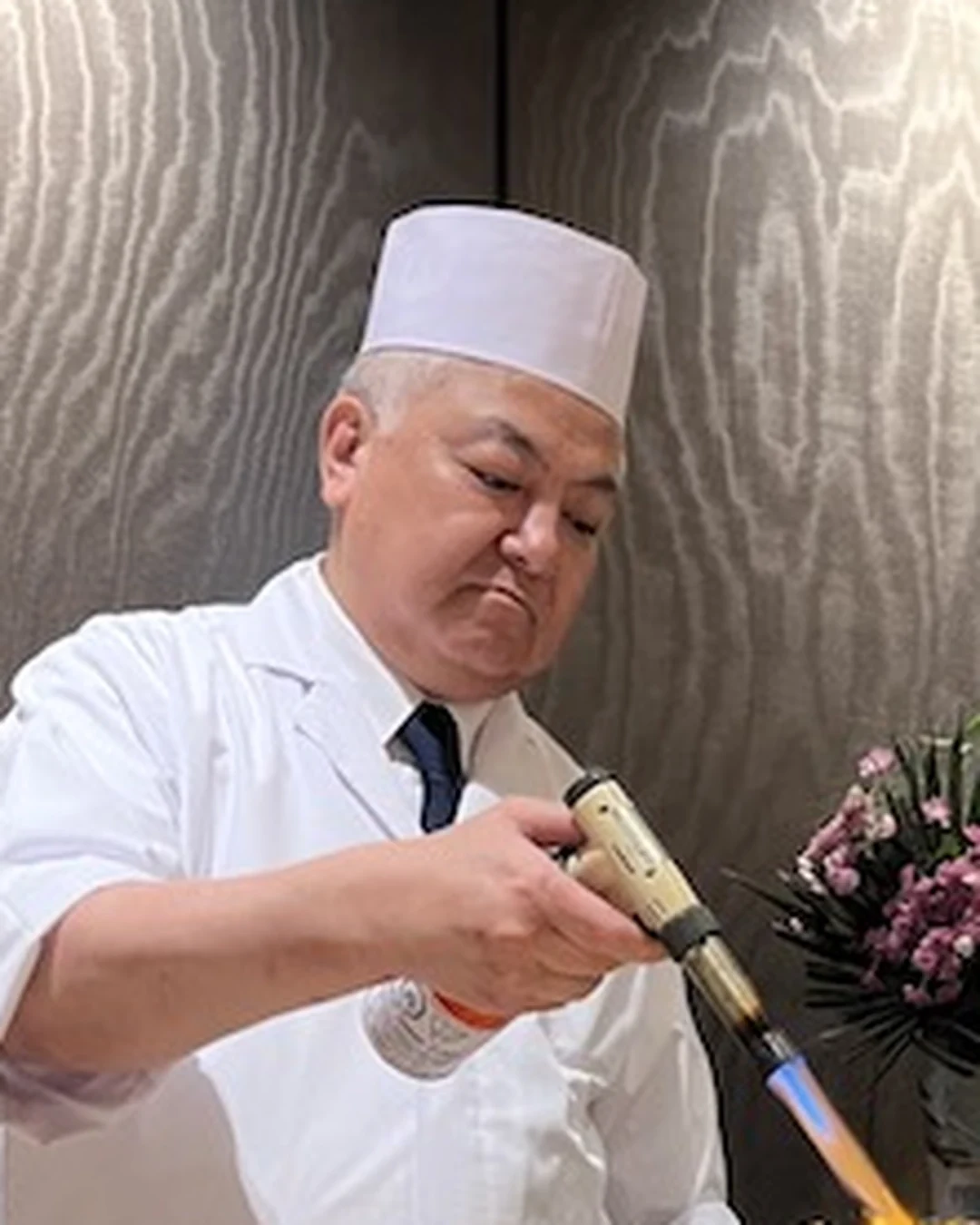
The rural South of France has developed a small but coherent tier of restaurants where non-French chefs work within the ingredient logic of their adopted region rather than importing a foreign cuisine wholesale. Le Carillon fits that pattern precisely. Chefs Koji Takahashi and Norio Izawa operate within a modern cuisine framework, not Japanese food transplanted to France, but French-rooted cooking shaped by the kind of attentiveness to material that Japanese culinary training tends to produce. The result is a kitchen that reads the Luberon's seasonal produce with a granularity that many longer-established Provençal addresses don't always match.
The Ingredient Logic Behind the Plate
Provençal cooking draws its credibility from sourcing more than technique, the tomato grown in Maillane soil, the herb cut from a hillside garrigue, the olive oil pressed just down the road. That principle, when applied rigorously, puts enormous pressure on the kitchen's supply relationships. It also creates a natural alignment with the kind of Japanese culinary philosophy that treats the ingredient as the end point rather than the starting material.
At Le Carillon's price tier (around €50 per person), this approach represents a genuine value proposition. The Michelin Plate recognition in 2024 and 2025 indicates consistent technical execution rather than the occasional inspired night. A Michelin Plate is not a star, but it is Michelin's signal that food quality warrants attention: it sits above a mere listing and below a star, making it a useful marker for travellers calibrating expectations at mid-range addresses. At this price level in the Luberon, that sustained recognition across two consecutive years points to a kitchen running with discipline rather than coasting.
The 308 Google reviews at an average of 4.7 reinforce this reading. Volume matters here: 294 reviews in a village of Goult's scale represents a meaningful cross-section of visitors rather than a curated sample. A 4.7 average at that volume indicates a floor of quality, not just a ceiling of occasional excellence. Compared with higher-tier addresses in the south of France, Mirazur in Menton operates at a fundamentally different price and ambition register, as does AM par Alexandre Mazzia in Marseille, and Le Carillon's positioning becomes clear: it is not competing in that arena, but within its own tier it performs with uncommon consistency.
The Luberon as a Sourcing Context
The Vaucluse department, which encompasses Goult, is among the more productive agricultural zones in France. Cherry orchards around Apt, market gardens in the valley floor, sheep cheese from the high Luberon plateau, wild herbs from the hillsides above the village: the raw material within reach of a kitchen at this address is serious. The weekly markets at Apt and Coustellet draw producers from across the region and serve as the informal procurement infrastructure for kitchens that prioritise direct sourcing over wholesale supply chains.
This is the environment in which Japanese culinary rigour, applied to French produce, tends to produce results that neither tradition could achieve alone. The Japanese discipline of reading a single vegetable through multiple preparations, cooked, raw, fermented, dried, meets the Provençal instinct for oil, acid, and herb. The combination is not new in high-end French cooking (the influence runs from Bocuse to Robuchon and beyond), but it is rarer at the €€ price point where Le Carillon operates.
Context Within French Modern Cuisine
France's modern cuisine category spans an enormous range, from the hyper-technical creative work at Alléno Paris au Pavillon Ledoyen to the mountain-rooted precision of Flocons de Sel in Megève. Further afield in the same French tradition, addresses like Bras in Laguiole and Auberge de l'Ill in Illhaeusern demonstrate how deeply French modern cuisine is rooted in specific terroir and place. Le Carillon operates many rungs below that level in price and scale, but it participates in the same broader argument: that French cooking, when driven by ingredient sourcing rather than borrowed technique, retains a clarity that more elaborate approaches can obscure.
The village context matters too. Goult has no hotel infrastructure that would generate captive covers, which means Le Carillon's clientele is predominantly destination-driven: people who have chosen to eat here rather than defaulting to it. That dynamic tends to raise the standard of expectation on both sides of the pass. A neighbouring address worth pairing in the village is La Bartavelle, which takes a more traditionally Provençal approach and offers a useful point of comparison for the same local ingredient base treated through a different register.
For those tracking Japan-influenced modern cuisine across Europe, it is worth noting how the format has developed differently at different scales. Frantzén in Stockholm and FZN by Björn Frantzén in Dubai represent the high-end expression of cross-cultural precision cooking. Le Carillon works in a smaller register, but the underlying logic, respect for material, economy of intervention, seasonal rhythm, runs in the same direction.
Planning Your Visit
Le Carillon sits on Avenue du Luberon in Goult, a village most easily reached by car from Apt (roughly 10 kilometres east) or from Gordes to the north. The Luberon's summer season runs hard from July through August, and restaurants at this recognition level in the region fill quickly during that window. Booking ahead is advisable, particularly for evening service during peak season. The €€ price point makes this accessible relative to the wider Michelin-recognised tier in Provence, and the 4.7 rating across nearly 300 reviews suggests the kitchen delivers reliably rather than sporadically. Those combining a meal here with broader Luberon exploration will find the area's market calendar, Apt on Saturdays, Coustellet on Sundays, a useful frame for planning around the freshest produce cycles.
Questions
Frequently asked
Who works at Le Carillon?
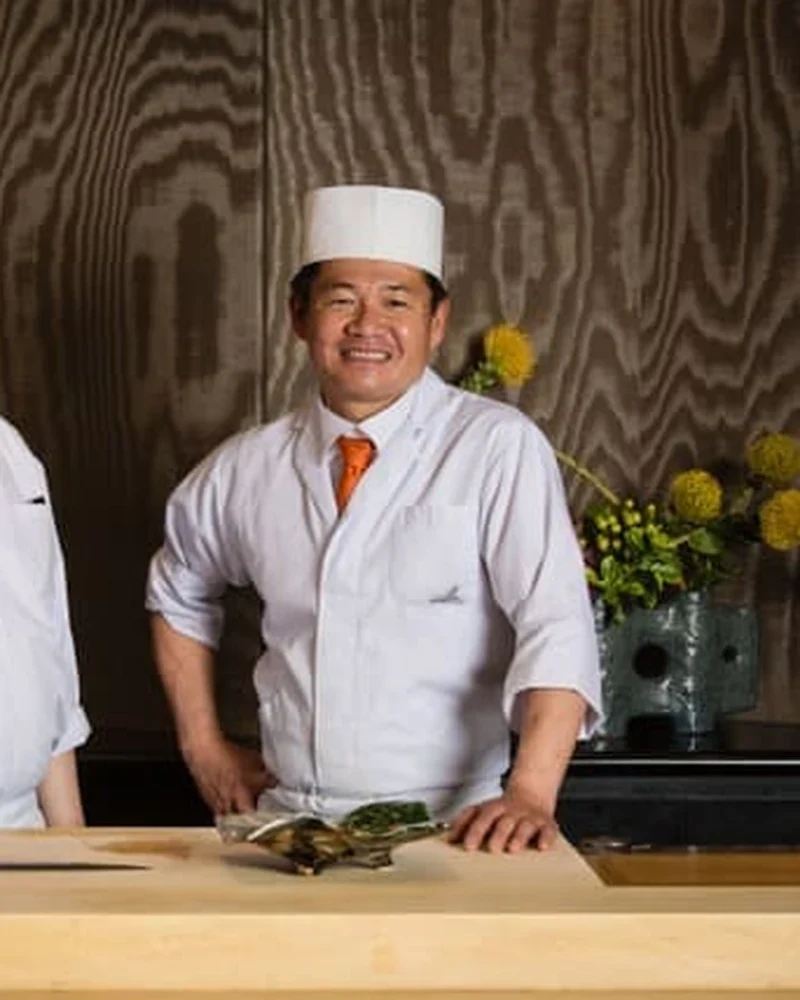
Made By profiles Koji Takahashi (Chef) and Norio Izawa (Chef) at Le Carillon.
How expensive is Le Carillon?
Le Carillon is listed at a price level of $$$.
Where is Le Carillon and what does it serve?
Le Carillon is in Goult, Goult, serving Provençal French Bistro.
The field
How it compares
| Place | Cuisine | Notes | Awards |
|---|---|---|---|
| Le Carillon | Provençal French Bistro | Goult, $$$ | · |
| Daniel | Modern French Fine Dining | New York City | Michelin 1 Star, World's 50 Best |
| Le Bistrot du Château de Berne | Provençal French Bistro | Flayosc | · |
| Miramar | Modern Mediterranean Seafood | Llançà | Michelin 2 Stars |
| Tantris | Modern French Fine Dining | Munich | Michelin 2 Stars, World's 50 Best |
| The Clove Club | Modern British Fine Dining | London | Michelin 2 Stars, World's 50 Best |
| Woven by Adam Smith | Modern British Fine Dining | Ascot | Michelin 1 Star |
In residence
Similar places
Modern French Fine Dining
Daniel
New York City, United States
★ · 50 Best
Provençal French Bistro
Le Bistrot du Château de Berne
Flayosc, France
Modern Mediterranean Seafood
Miramar
Llançà, Spain
★★
Modern French Fine Dining
Tantris
Munich, Germany
★★ · 50 Best
Modern British Fine Dining
The Clove Club
London, United Kingdom
★★ · 50 Best
Modern British Fine Dining
Woven by Adam Smith
Ascot, United Kingdom
★