Le Pasturier
In Residence
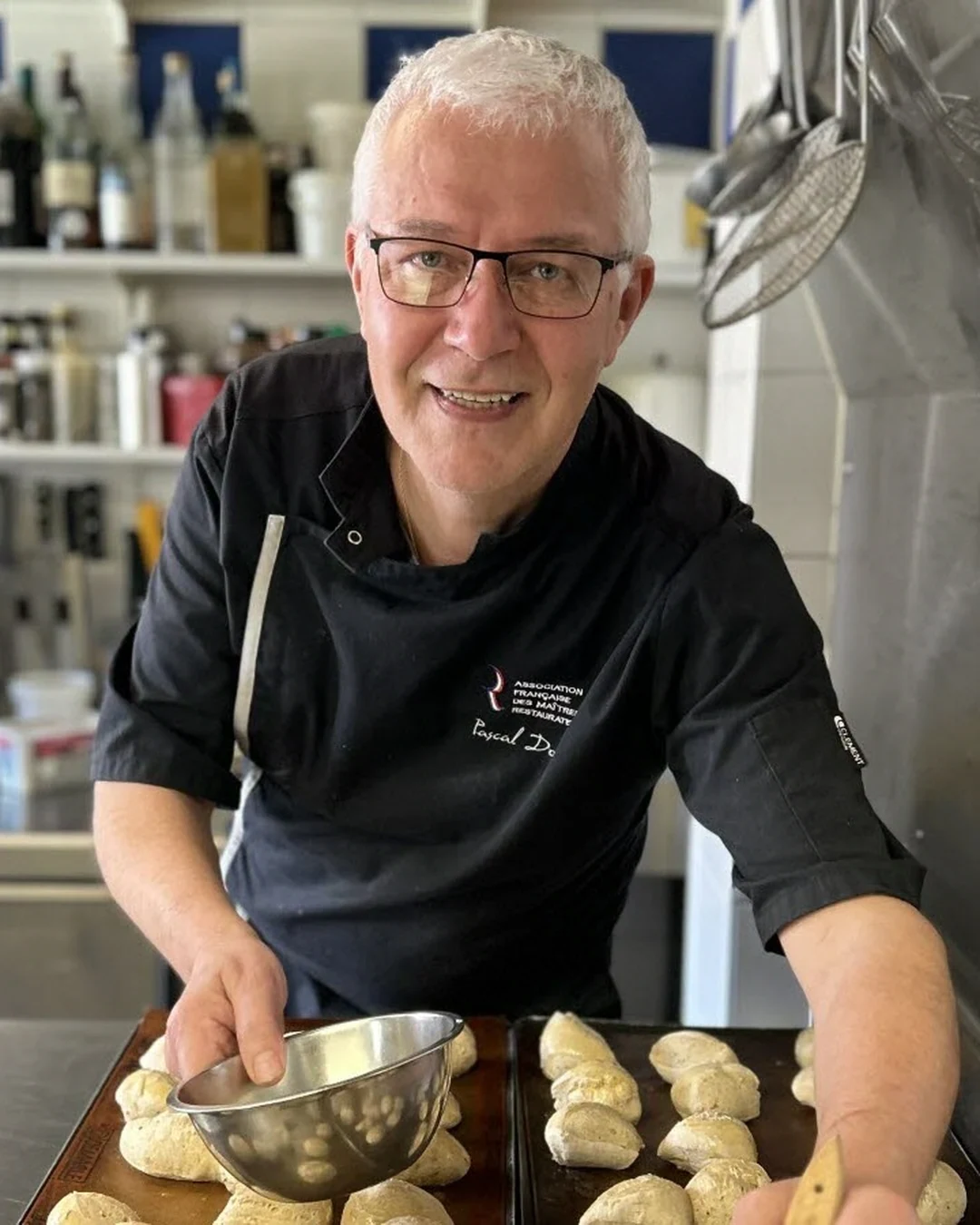
Pascal Dorche
Chef
- 01CuisineGastronomic French with Hautes-Alpes Products
- 02CityGap, France
Hautes-Alpes lamb, einkorn, truffle
- Gault & Millau Remarkable Restaurant: 15pts · 2025
Lamb, einkorn, and the same address
The lamb stays close to the market before Pascal Dorche, chef and owner of Le Pasturier in Gap, brings it to the pass. His cooking begins with Hautes-Alpes product, not decoration: country lamb as rack or leg, einkorn worked risotto-style, truffle from the Hautes-Alpes, eggs, vegetables from nearby producers, and the seasonal pull of the Gap market. Dorche founded the restaurant with his wife Djemaa, with the house roots given as 1987 and its opening with her given as 1989, and he remains the hand that defines its discipline. His Maître Restaurateur title sits naturally beside that position, because the cooking keeps returning to product, season, and controlled simplicity. In 2026, Gault&Millau PACA awarded Dorche the Trophée Techniques d'Excellence, and Gault&Millau gave Le Pasturier the Trophée d’excellence des Hautes-Alpes. In 2024, the restaurant received a third toque and was named a “table remarquable.” Dorche’s response to the later honours was spare: “I received it with a lot of emotion.”
The plate stays with the Hautes-Alpes
The method at Le Pasturier is traditional without being static. Dorche works in the register of generous bourgeois cuisine, but the bench discipline is technical: just cooking, balanced associations, reduced jus, herb infusion, mousseline, confit, and the restraint to let lamb taste of lamb. One signature combination puts gigot d’agneau des Hautes-Alpes with einkorn prepared risotto-style, seasonal vegetables, cumin, and thyme jus. Another Dorche has given publicly is einkorn risotto with truffles from the Hautes-Alpes, a recipe that makes the grain carry the territory as much as the garnish. The carte moves with the season and the cueillettes, drawing in country lamb, trout from La Motte-en-Champsaur, beef with mushroom cream, grilled sea bream with mussels and saffron, and noix de saint-jacques grillées with leek blanc and morels. The important measure is not volume. It is recurrence: the same local products returning in different weather, under the same hand, at the same address.
Wood, beams, and a quiet pass
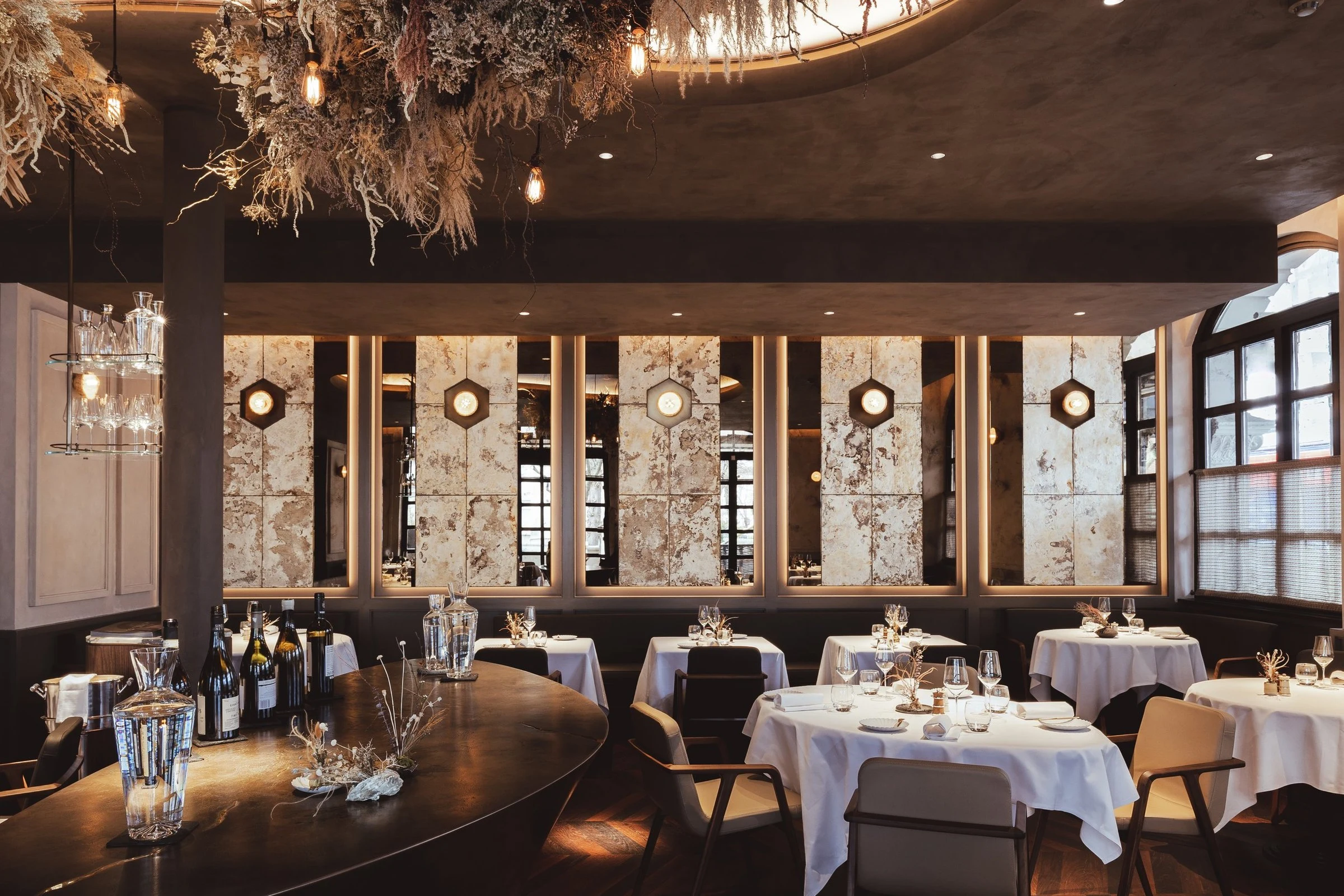
The room carries the old warmth of a Gap restaurant that has not traded comfort for theatre. Warm wood paneling, exposed beams, and a slightly old-fashioned coziness hold the dining room in a low register; the service is discreet and sincere, and the noise stays quiet enough for the plate to keep its place. This is not a room built around spectacle from the pass. It is a small, intimate house in the pedestrian centre-ville, with the feeling of a local appointment kept over time. The wine program is curated rather than performative, set to support lamb, truffle, scallop, trout, and the deeper notes of reduced jus. At the counter of the meal, Dorche’s cooking keeps returning to the same nouns: Hautes-Alpes lamb, einkorn, truffle, egg, vegetable, thyme jus.
Questions
Frequently asked
Who is behind Le Pasturier?
Pascal Dorche is the chef and owner, and he founded the restaurant with his wife Djemaa. The page gives the house roots as 1987, with opening with her given as 1989.
What kind of cooking does Le Pasturier do?
Le Pasturier serves gastronomic French cooking built around Hautes-Alpes products. Dorche’s approach is traditional and restrained, with a focus on season, product, and controlled simplicity.
What dishes is the restaurant known for?
Signature dishes include gigot d’agneau des Hautes-Alpes and noix de saint-jacques grillées. Einkorn worked risotto-style, truffles from the Hautes-Alpes, trout from La Motte-en-Champsaur, and grilled sea bream with mussels and saffron.
What recognition has Le Pasturier received?
In 2024, the restaurant received a third toque and was named a table remarquable. In 2026, Gault&Millau PACA awarded Dorche the Trophée Techniques d’Excellence, and Gault&Millau gave Le Pasturier the Trophée d’excellence des Hautes-Alpes.
How do bookings work at Le Pasturier?
Reservations are recommended, and booking is by direct booking platform. The restaurant is in the centre-ville at 18 Rue Peroliere in Gap, and street parking is available.
The field
How it compares
| Place | Cuisine | Notes | Awards |
|---|---|---|---|
| Le Pasturier | Gastronomic French with Hautes-Alpes Products | centre-ville, $$$ | · |
| Moor Hall | Modern British Fine Dining | Aughton | Michelin 3 Stars |
| Quince | Modern French Fine Dining | San Francisco | Michelin 3 Stars, World's 50 Best |
| Ricard Camarena | Modern Vegetable-Focused Mediterranean Fine Dining | València | Michelin 2 Stars, World's 50 Best |
| Row on 5 | Modern British Fine Dining with Mediterranean & Asian Influences | London | Michelin 2 Stars |
| Steirereck im Stadtpark | Modern Austrian Fine Dining | Vienna | Michelin 3 Stars, World's 50 Best |
| The Ledbury | Modern British Fine Dining | London | Michelin 3 Stars, World's 50 Best |
In residence
Similar places
Modern British Fine Dining
Moor Hall
Aughton, United Kingdom
★★★
Modern French Fine Dining
Quince
San Francisco, United States
★★★ · 50 Best
Modern Vegetable-Focused Mediterranean Fine Dining
Ricard Camarena
València, Spain
★★ · 50 Best
Modern British Fine Dining with Mediterranean & Asian Influences
Row on 5
London, United Kingdom
★★
Modern Austrian Fine Dining
Steirereck im Stadtpark
Vienna, Austria
★★★ · 50 Best
Modern British Fine Dining
The Ledbury
London, United Kingdom
★★★ · 50 Best