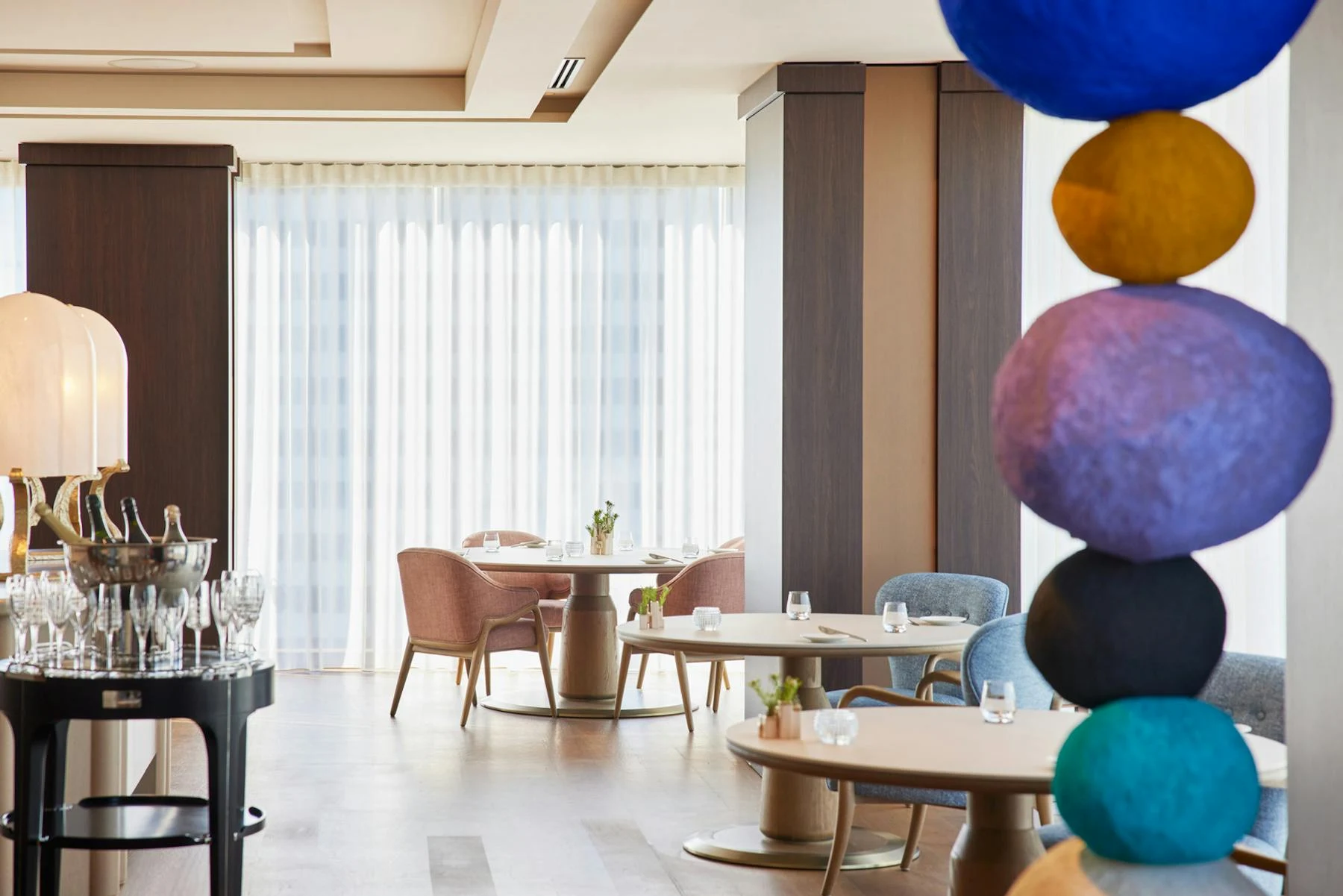
Le Saint-James
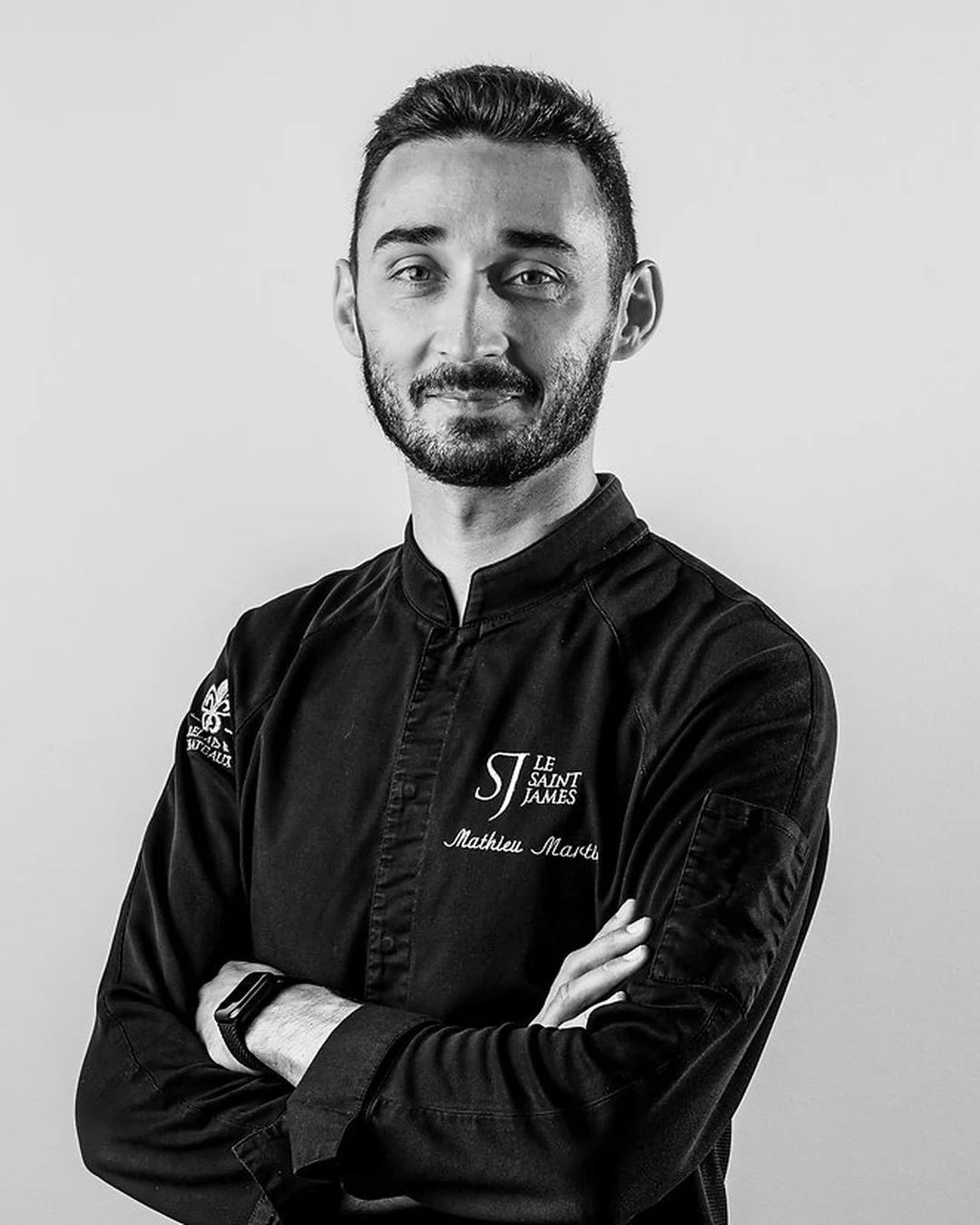
In Residence
Mathieu Martin
Chef
- 01CuisineModern French Fine Dining
- 02CityBouliac, France
- 03RecognitionOne Michelin Star
- 1 Michelin Star · Michelin Guide
- Michelin 1 Star · 2026
- Relais Chateaux Award · 2026
- Opinionated About Dining Classical in Europe Ranked #327 · 2025
- Relais Chateaux Award · 2025
- Michelin 1 Star · 2025
- Michelin 1 Star · 2024
- Opinionated About Dining Classical in Europe Highly Recommended · 2023
A Hilltop Above Bordeaux Where Architecture and Cooking Share Equal Weight
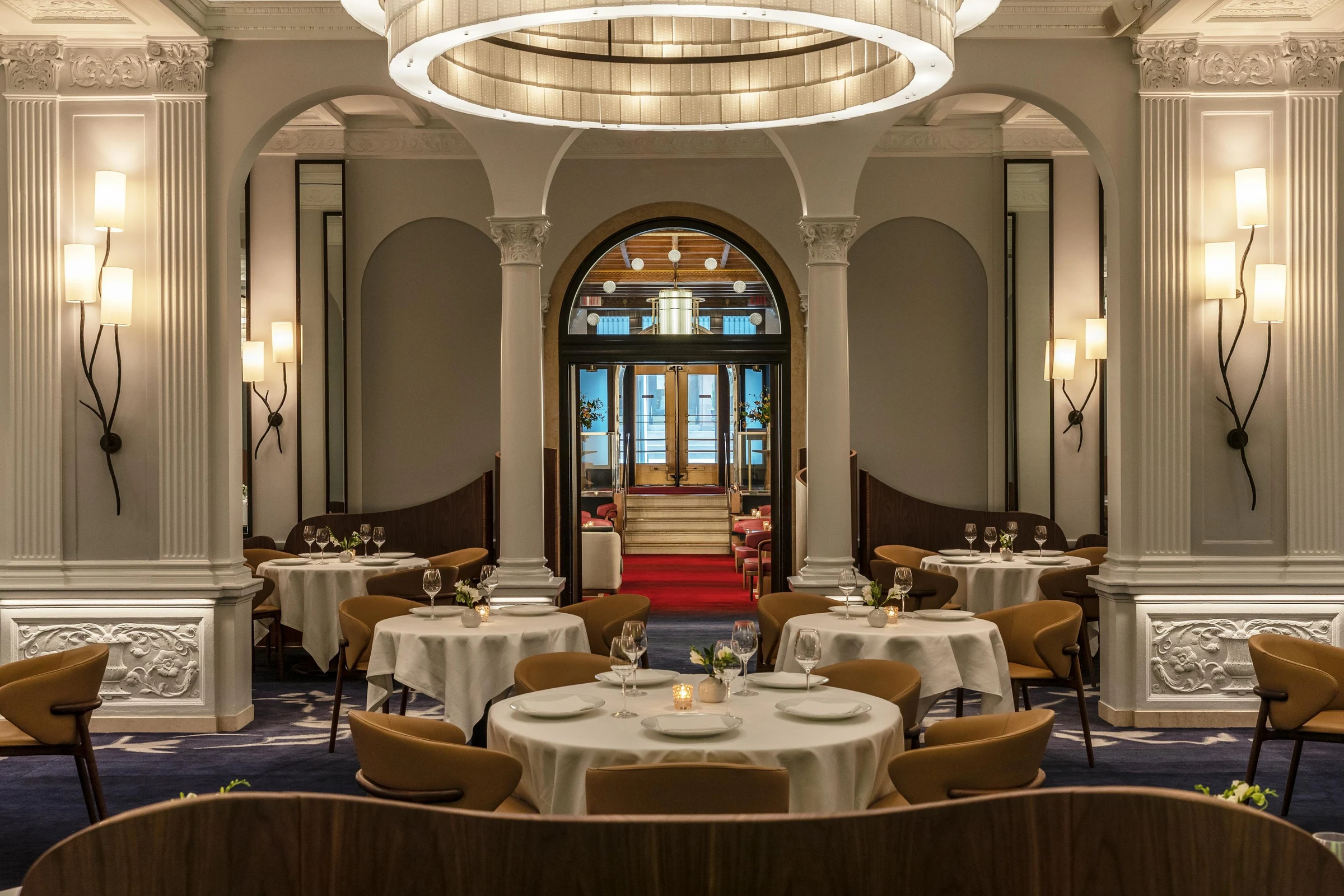
The approach to Le Saint-James sets expectations immediately. The village of Bouliac sits on a ridge south-east of Bordeaux, and the restaurant occupies a position that looks across the Garonne valley toward the vineyards of the Entre-Deux-Mers. Jean Nouvel designed the building in 1989, and the structure remains a studied piece of work: zinc cladding, vernacular agricultural references recast in contemporary form, and a deliberate tension between the rural hillside and the architectural precision of the facade. In France, where fine dining rooms often dress themselves in period grandeur, a Nouvel-designed property operating at this level represents a particular strand of thinking, one that treats the physical environment as seriously as the plate.
That dual seriousness runs through everything here. Le Saint-James sits in the upper tier of Bordeaux-area dining, carrying a Michelin star and a ranking of #327 on the 2025 Opinionated About Dining Classical Europe list. Those references place it in a comparable set that includes French regional houses where place and produce define the cooking as much as technique does. For comparison, the grandes maisons of the French table, from Auberge de l'Ill in Illhaeusern to Bras in Laguiole, derive their authority partly from rootedness in a specific territory. Le Saint-James operates on similar logic, with Nouvelle-Aquitaine as its declared frame of reference.
The Culinary Direction: Mathieu Martin and the Nouvelle-Aquitaine Argument
Modern French regional cooking at this level involves a particular kind of editorial discipline. The chef must decide which producers to champion, which techniques serve the ingredients rather than overpower them, and how to hold tension between refinement and honesty to the source material. At Le Saint-James, Mathieu Martin has built a programme around that discipline, using the Nouvelle-Aquitaine region, one of France's most generously stocked larders, as both subject matter and constraint.
The region's credentials are not incidental. Gironde caviar, produced from farmed sturgeon in the Gironde estuary, sits alongside the Atlantic coast's tuna from Saint-Jean-de-Luz, and Bazas beef, a breed with protected designation reared in the Gironde. These are not decorative regional gestures but specific, traceable products with defined geographies. Martin's approach, refined and plant-forward without abandoning protein anchors, uses vegetables as a primary register rather than a supporting cast. Tomatoes prepared multiple ways, clear broths, chilli notes: the cooking reads as contemporary without advertising itself as such.
The plant emphasis places Le Saint-James in a wider current visible across French fine dining over the past decade, where chefs trained in classical technique have progressively shifted weight toward vegetables and lighter preparations. This sits in clear contrast to the richer, butter-intensive register of an earlier generation of Bordeaux-area gastronomy. What Martin does at Le Saint-James connects to a broader national conversation about what regional French cuisine means when the emphasis is on freshness and producer relationships rather than accumulated sauce work. Other French houses working within comparable frameworks include Flocons de Sel in Megève and Mirazur in Menton, each anchored to a specific geography with distinct produce logic.
The Building as Context: Jean Nouvel's 1989 Commission
Architectural history of Le Saint-James is genuinely unusual in French gastronomy. Jean-Marie Amat, the establishment's founder, commissioned Nouvel at a moment when the architect was not yet the globally recognised figure he would become. The 1989 opening made the building a reference point in design circles before restaurant architecture as a discipline had fully established itself. Nouvel's approach at Bouliac drew on the surrounding agricultural vernacular, the tobacco-drying barns of the Garonne basin, reinterpreting their forms in zinc and glass rather than reproducing them literally. The result reads as specific to its landscape without being nostalgic about it.
Building is now undergoing significant renovation. Le Saint-James was closed from November 2023 through December 2025 for works affecting both the hotel and restaurant. The restaurant reopened in early 2026, though planned closure dates recur through the year: the restaurant closes again from 12 to 20 April 2026, on 5 May, 12 to 13 May, 14 July, 16 to 25 August, 8 to 16 November, and on 25 December 2026 and 1 January 2027. Anyone planning a visit should verify dates directly and book with those windows in mind. The renovation context matters editorially: it positions Le Saint-James not as a static institution but as a property actively reinvesting in its physical fabric, which carries some risk during transition but also signals sustained ambition.
Where Le Saint-James Sits in the Regional Dining Picture
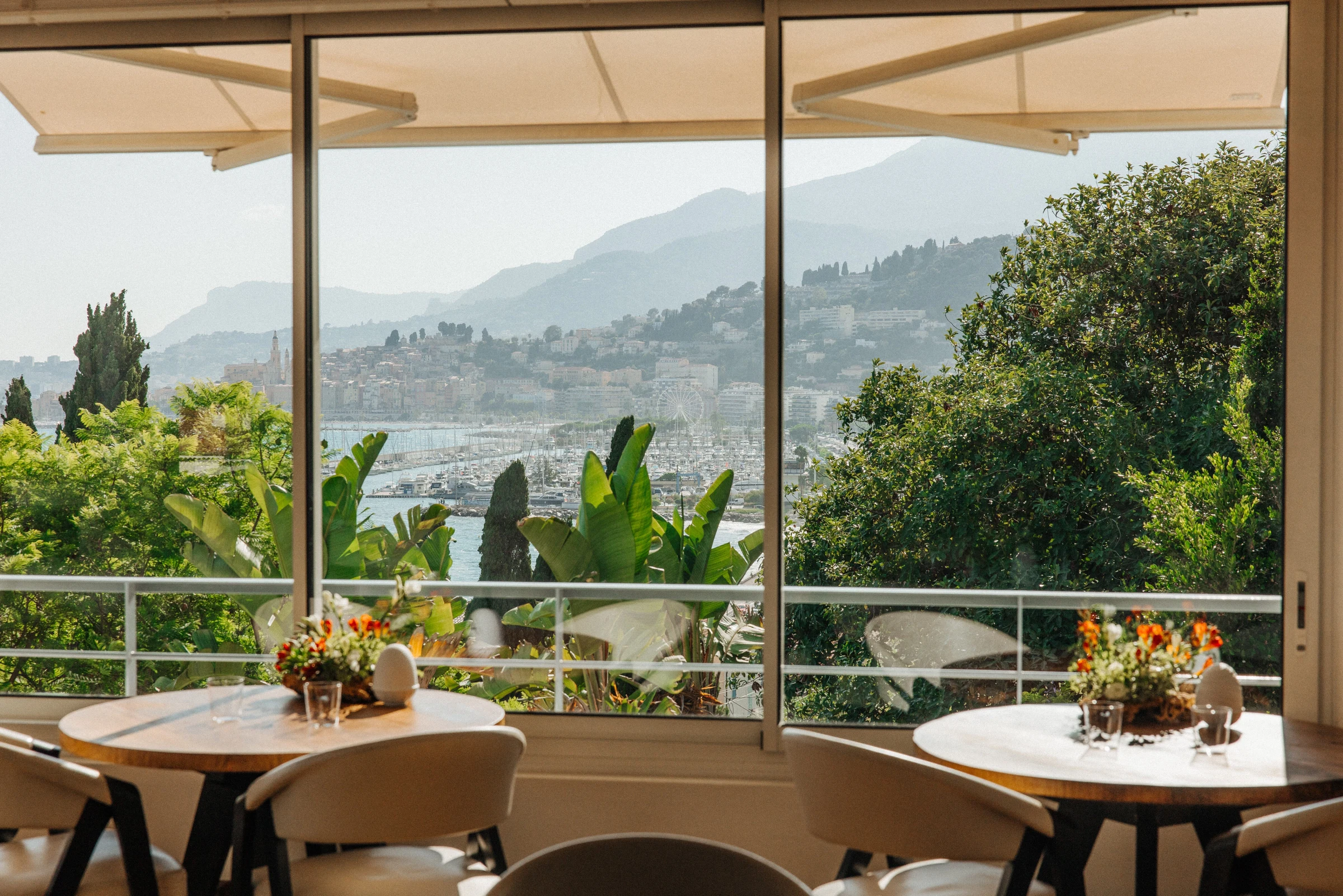
Bordeaux metropolitan area does not have a deep concentration of multi-star dining in the way that Lyon or Paris does, which means that Le Saint-James occupies significant territory by default. A Michelin-starred restaurant in a Jean Nouvel building, with panoramic views over vineyard country and a producer-focused menu, competes in a national rather than purely local comparable set. The Route des Châteaux runs through the same landscape, and the proximity to Saint-Émilion, Pomerol, and the Médoc means that the restaurant draws wine-focused visitors alongside pure gastronomy travellers.
That positioning matters for understanding who books here and why. The OAD Classical Europe ranking places it alongside other French regional institutions committed to a certain kind of cooking: product-led, refined, without the theatrical intervention that characterises more avant-garde houses. For a different register of ambition, Alléno Paris au Pavillon Ledoyen represents the maximalist, technically-driven end of French contemporary cooking. Le Saint-James operates on a quieter frequency. Its overall reception suggests consistent execution rather than polarising brilliance. The comparable institutions of French fine dining, from Troisgros in Ouches to Auberge du Vieux Puits in Fontjoncouse, each carry this kind of territorial authority that takes years to accumulate and cannot be replicated by technical skill alone.
Planning a Visit: What to Know Before You Go
The price range is €€€€, placing it at the upper end of the regional market, consistent with its Michelin-starred status. Advance planning is essential. The panoramic setting and the Nouvel architecture mean the experience extends well beyond the meal itself, so arriving with time to take in the building and the view is worth building into the plan.
Questions
Frequently asked
What recognition does Le Saint-James hold?
Le Saint-James holds 1 Michelin star.
Who works at Le Saint-James?
Made By profiles Mathieu Martin (Chef) at Le Saint-James.
How expensive is Le Saint-James?
Le Saint-James is listed at a price level of $$$$.
Where is Le Saint-James and what does it serve?
Le Saint-James is in Bouliac, Bouliac, serving Modern French Fine Dining.
The field
How it compares
| Place | Awards | Cuisine | Notes |
|---|---|---|---|
| Le Saint-James | Michelin 1 Star | Modern French Fine Dining | Bouliac, $$$$ |
| Daniel | Michelin 1 Star, World's 50 Best | Modern French Fine Dining | New York City |
| Mirazur | Michelin 3 Stars, World's 50 Best | Modern French Fine Dining | Menton |
| Odette | Michelin 3 Stars, World's 50 Best | Modern French Fine Dining | Singapore |
| Quince | Michelin 3 Stars, World's 50 Best | Modern French Fine Dining | San Francisco |
| Quintessence | Michelin 3 Stars | Modern French Fine Dining | Tokyo |
| Sézanne | Michelin 3 Stars, World's 50 Best | Modern French Fine Dining | Tokyo |
In residence
Similar places
Modern French Fine Dining
Daniel
New York City, United States
★ · 50 Best
Modern French Fine Dining
Mirazur
Menton, France
★★★ · 50 Best
Modern French Fine Dining
Odette
Singapore, Singapore
★★★ · 50 Best
Modern French Fine Dining
Quince
San Francisco, United States
★★★ · 50 Best
Modern French Fine Dining
Quintessence
Tokyo, Japan
★★★
Modern French Fine Dining
Sézanne
Tokyo, Japan
★★★ · 50 Best