- SCMP 100 Top Tables Restaurants · 2026
- Black Pearl 1 Diamond · 2026
- Michelin Plate · 2026
- Opinionated About Dining Top Restaurants in Asia Highly Recommended · 2026
- Michelin Plate · 2025
- Opinionated About Dining Top Restaurants in Asia Ranked #239 · 2025
- Michelin Plate · 2024
Causeway Bay's Indian Counter-Point
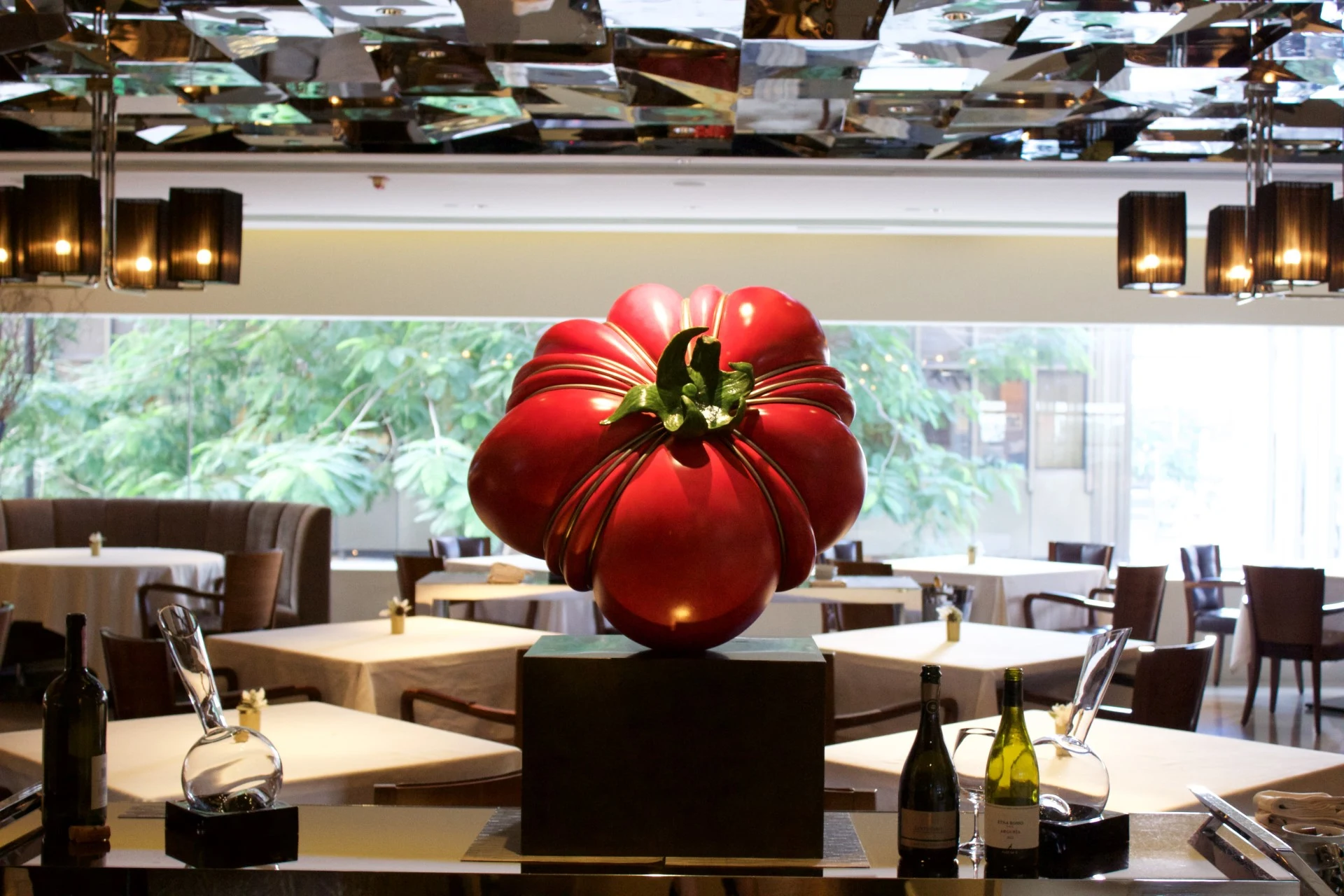
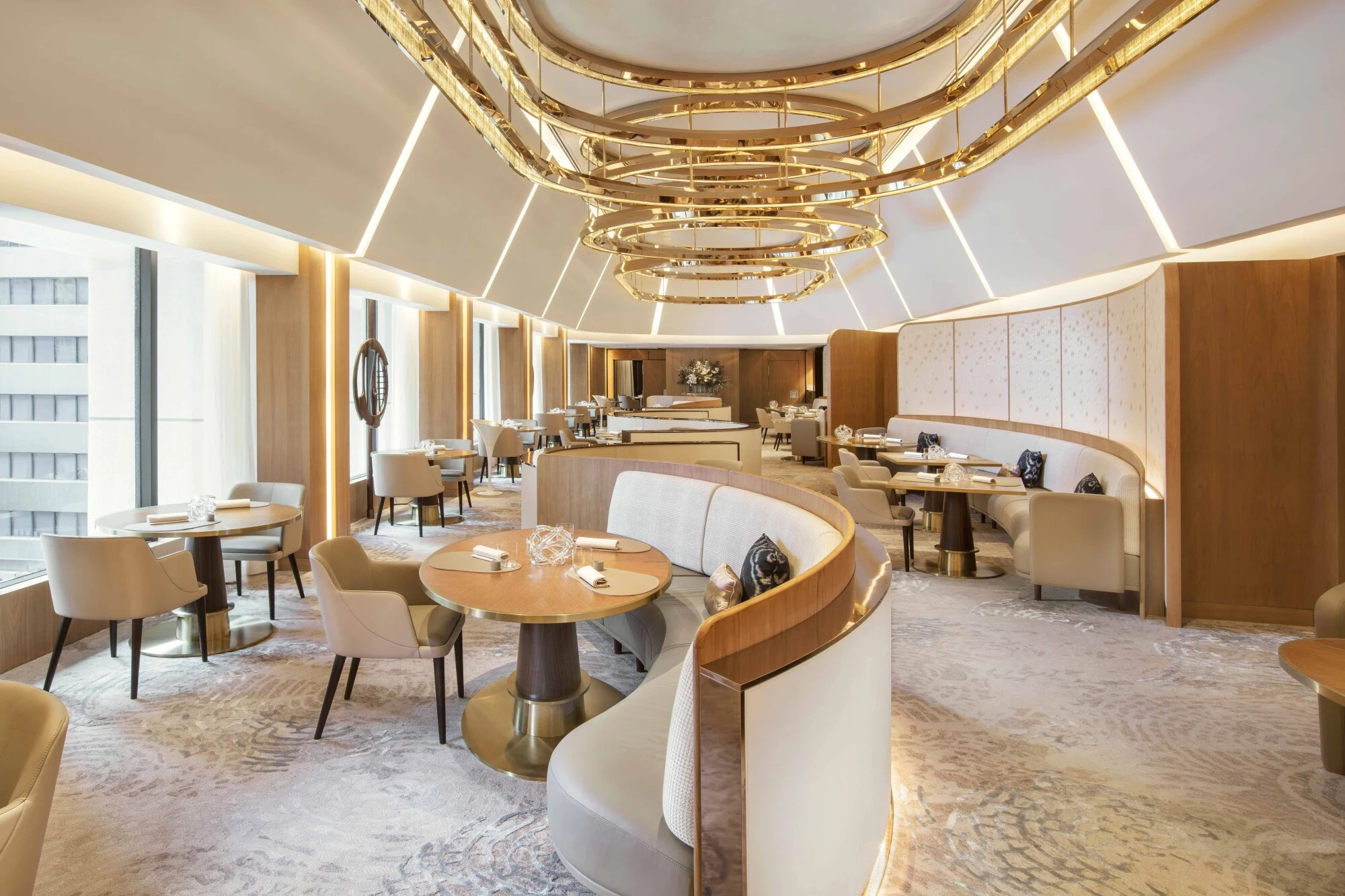
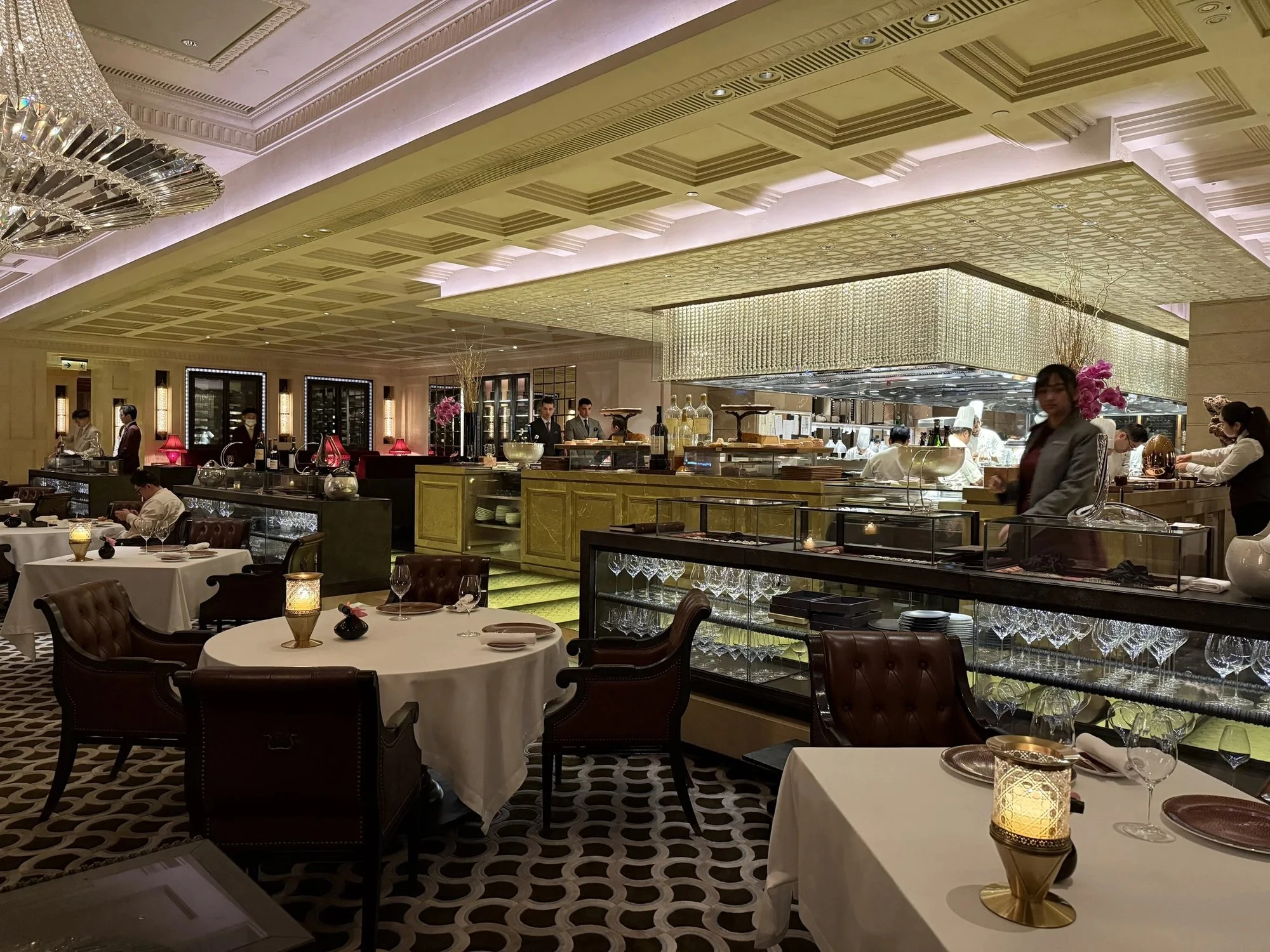
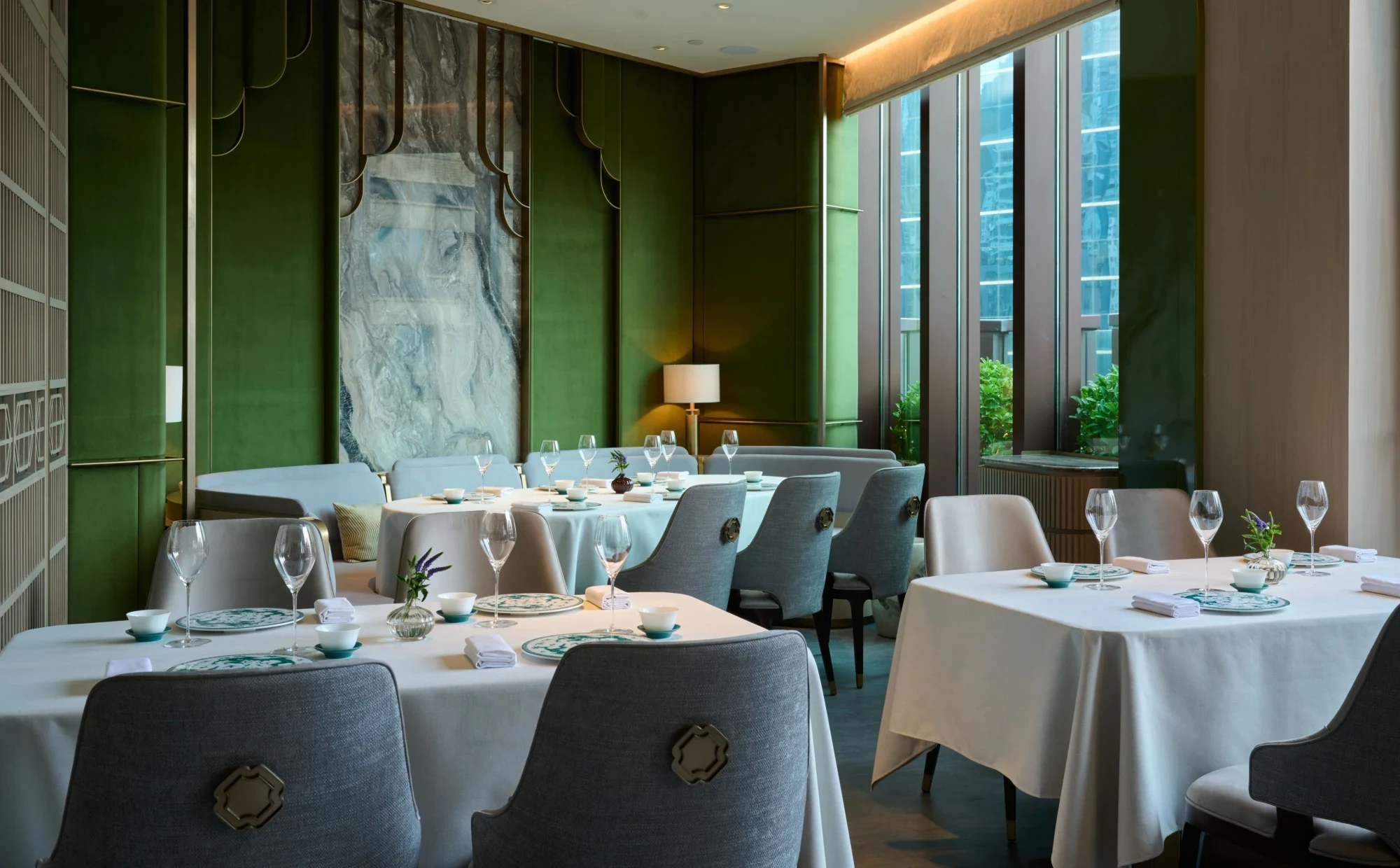
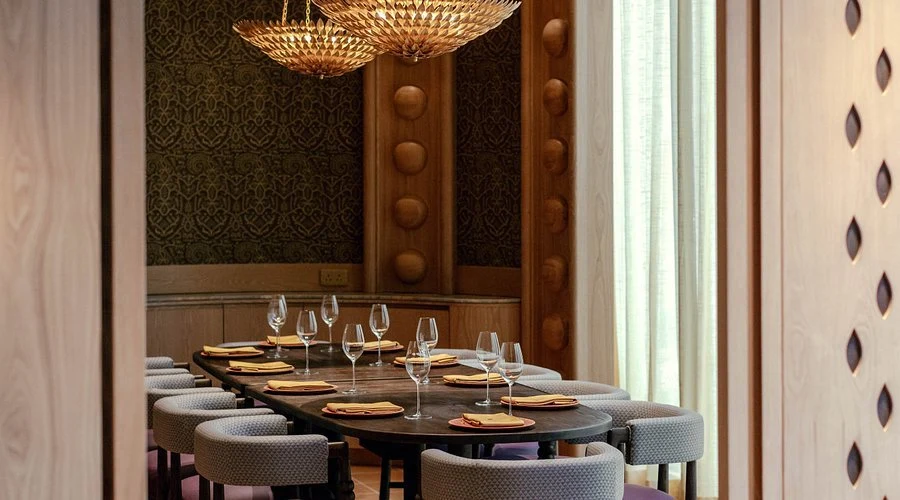
Walk through the retail levels of 1 Sunning Road in Causeway Bay and the shift at Shop 301 to 310 is immediate. The density and noise of Hong Kong's commercial mid-levels give way to a room that sets a different tempo. The colour palette deepens. The acoustics settle. Before a plate has arrived, the space signals that what follows will be structured, not casual. That architecture matters in a city where fine dining tends to be read through European or Japanese frameworks, Leela asks the room to hold space for Indian cooking at a similar register.
Hong Kong's fine-dining tier is heavily weighted toward French and Japanese traditions. Amber and Caprice anchor the French end; 8½ Otto e Mezzo Bombana holds the Italian position. Indian restaurants at the premium tier are a smaller category entirely. Leela's Michelin Plate recognition in both 2024 and 2025 places it clearly within that short list of Indian addresses the city's serious diners return to.
How the Meal Moves
Premium Indian cooking in Asia has increasingly organised itself around progression rather than the shared-plate model that defined earlier restaurant formats. The approach draws from classical Indian sequencing, the logic of a thali, the architecture of a tasting menu, but reorganises it around individual plating and deliberate pacing. At this tier, the interest is in watching a kitchen apply that structure to seasonal and regional ingredients with genuine command.
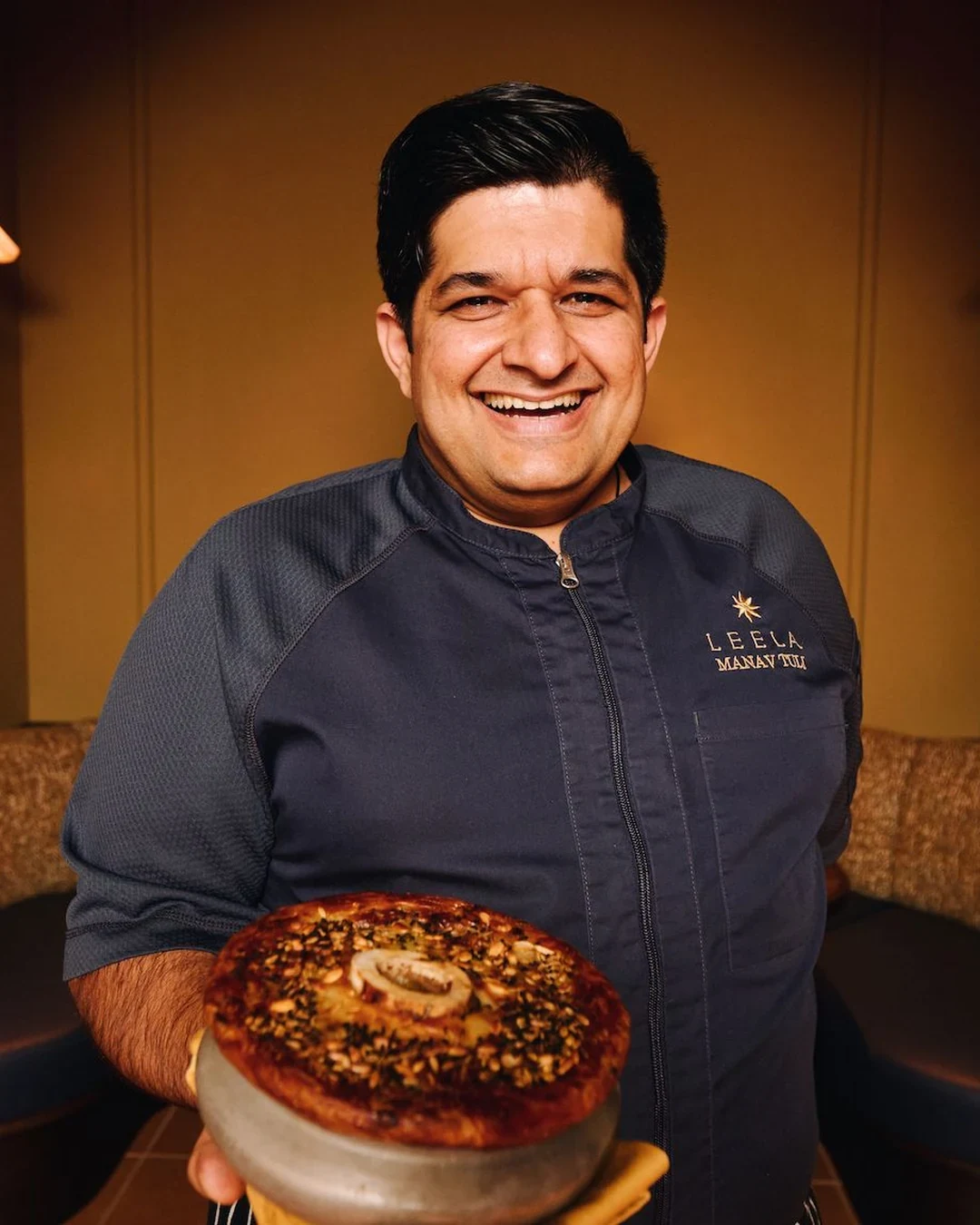
At Leela, under chef Manav Tuli, the meal is built to be read as a sequence. The early courses tend to address texture and temperature contrast, the way a colder, more acidic preparation can recalibrate the palate before richer, slower spice work arrives in the middle of the meal. This is a familiar technique in contemporary Indian kitchens but requires real calibration to execute without the progression feeling mechanical. The middle section is where the kitchen makes its strongest argument: longer-cooked proteins, deeper spice architecture, preparations that reward slower eating.
The close of the meal in Indian fine-dining contexts often receives less attention than it deserves. Dessert in this tradition draws from mithai culture, kulfi formats, and the use of cardamom, saffron, and rose in ways that read as both indigenous and refined. A kitchen that treats this section as an afterthought loses the coherence of everything that came before. The finish here is treated as part of the same narrative, sweet without being heavy, aromatic without tipping into the obvious.
That sequencing logic is not unique to Hong Kong. At Trèsind Studio in Dubai, the tasting menu format is pushed into modernist territory. Opheem in Birmingham operates with a similar structure but through a regional Indian lens. In Southeast Asia, INDDEE in Bangkok and Haoma, also Bangkok, each frame Indian cooking through a different editorial voice. What these addresses share is the same underlying argument: that Indian cuisine at the fine-dining tier demands the same interpretive framework as any other major culinary tradition.
Where Leela Sits in the Category
Within Hong Kong specifically, the peer comparison is narrow. Chaat, with its Arva Arora-led kitchen inside the Rosewood, operates at the top of the Indian fine-dining tier in the city and carries Michelin recognition. Prince and the Peacock occupies a different position in the same general neighbourhood. Leela at the $$$ price point sits between accessible Indian restaurants and the most expensive tasting-menu addresses.
The Opinionated About Dining ranking is particularly worth noting. A #239 ranking reflects consistent performance over time rather than a single strong season. For a cuisine category that remains under-represented in institutional fine-dining recognition across Asia, that placement matters.
Causeway Bay as a Dining Address
Causeway Bay has a different dining character than the Central or Wan Chai cluster that concentrates much of Hong Kong's highest-profile restaurant activity. The neighbourhood runs hotter commercially, it is one of the highest-rent retail corridors on the planet, but its restaurant scene is broader and less self-consciously prestige-oriented. Leela benefits from that context: it is not positioned as a destination-district restaurant in the way that Central addresses often are, which means the room's clientele tends to be local and repeat rather than tourist-heavy.
That distinction shapes the service dynamic. A regular crowd in a mid-premium Indian restaurant creates different expectations around the menu than a transient one. Dishes can carry more regional specificity, spice levels can be calibrated with more confidence, and the progression can assume a degree of familiarity. Whether that assumption holds on any given evening depends on the table, but the room is designed for it.
Know Before You Go
Address: Shop 301 to 310, 1 Sunning Road, Causeway Bay, Hong Kong
Cuisine: Indian (premium, multi-course format)
Price Range: $$$ (mid-premium; positioned below the city's top-tier tasting menus)
Chef: Manav Tuli
Awards: Michelin Plate 2024 and 2025; Opinionated About Dining Asia #239 (2025)
Google Rating: 4.4 from 215 reviews
Booking: Reservations are recommended.
Getting There: 1 Sunning Rd, Causeway Bay, Hong Kong.
Questions
Frequently asked
Who works at Leela?
Made By profiles Manav Tuli (Chef) at Leela.
How expensive is Leela?
Leela is listed at a price level of $$$.
Where is Leela and what does it serve?
Leela is in Wan Chai, Hong Kong, serving Modern Pan-Indian.
The field
How it compares
| Place | Cuisine | Notes | Awards |
|---|---|---|---|
| Leela | Modern Pan-Indian | Wan Chai, $$$ | · |
| 8 1/2 Otto e Mezzo Bombana (Hong Kong) | 3 Michelin-Star Italian Fine Dining | Hong Kong | Michelin 3 Stars, World's 50 Best |
| Amber | Contemporary French Fine Dining | Hong Kong | Michelin 3 Stars, World's 50 Best |
| Caprice | Contemporary French Fine Dining | Hong Kong | Michelin 3 Stars, World's 50 Best |
| The Chairman | Traditional Cantonese | Hong Kong | Michelin 1 Star, World's 50 Best |
| Vea | Modern Chinese-French Fusion | Hong Kong | Michelin 1 Star, World's 50 Best |
| WING Restaurant | Modern Chinese Fine Dining | Hong Kong | World's 50 Best |
In residence
Similar places
3 Michelin-Star Italian Fine Dining
8 1/2 Otto e Mezzo Bombana (Hong Kong)
Hong Kong, Hong Kong
★★★ · 50 Best
Contemporary French Fine Dining
Amber
Hong Kong, Hong Kong
★★★ · 50 Best
Contemporary French Fine Dining
Caprice
Hong Kong, Hong Kong
★★★ · 50 Best
Traditional Cantonese
The Chairman
Hong Kong, Hong Kong
★ · 50 Best
Modern Chinese-French Fusion
Vea
Hong Kong, Hong Kong
★ · 50 Best
Modern Chinese Fine Dining
WING Restaurant
Hong Kong, Hong Kong
50 Best