Les Pyrénées
In Residence
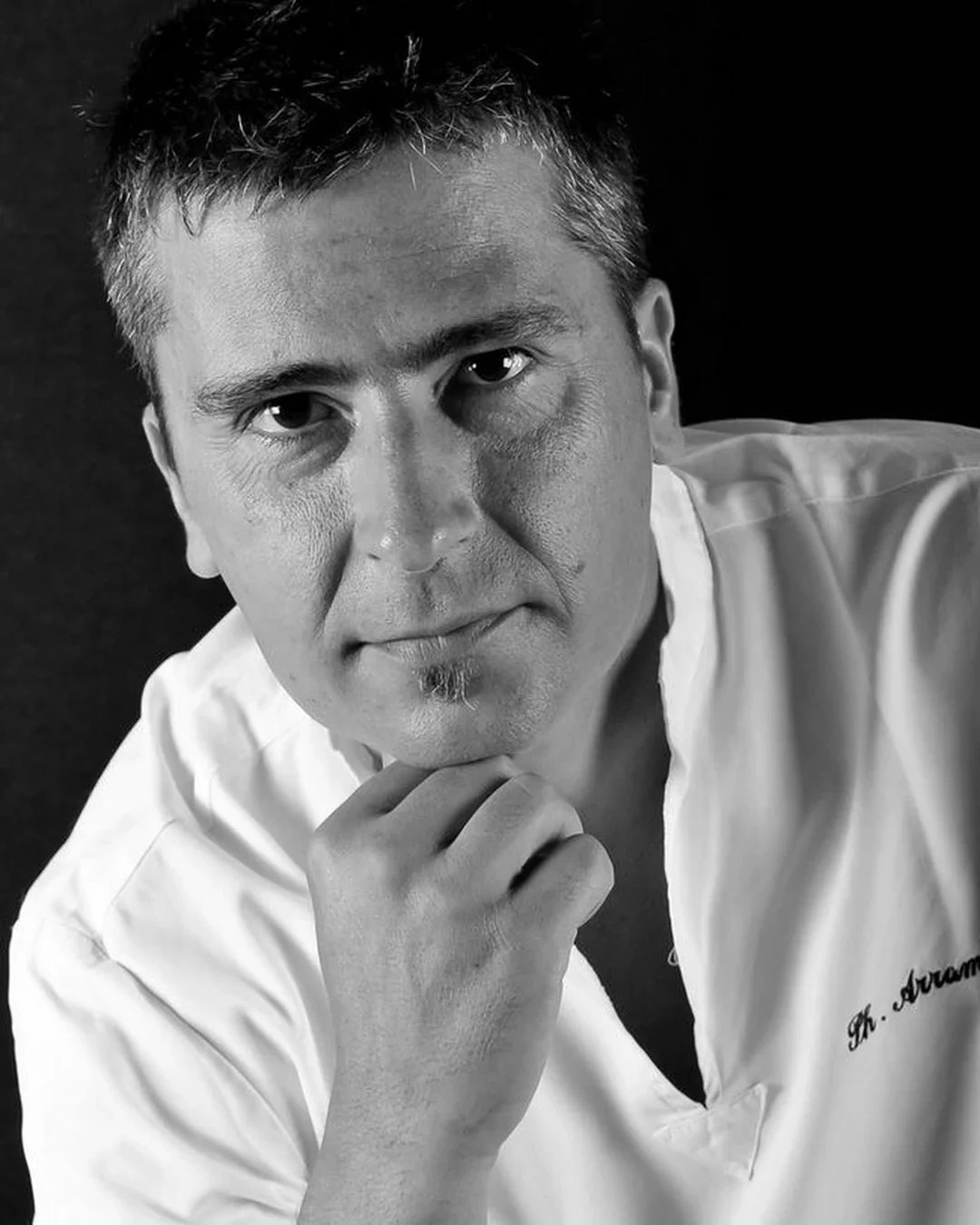
Philippe Arrambide
Chef
- 01CuisineModern Basque French
- 02CitySaint-Jean-Pied-de-Port, France
Fourth-generation Basque cooking at the pass
- Michelin Plate · 2026
- Opinionated About Dining Classical in Europe Ranked #360 · 2025
- Gault & Millau Remarkable Restaurant: 15pts · 2025
- Michelin Plate · 2025
- Opinionated About Dining Classical in Europe Ranked #288 · 2024
- Michelin Plate · 2024
- Opinionated About Dining Classical in Europe Recommended · 2023
The family line at the pass
The lamb reaches the pass with its garnish held close: Philippe Arrambide, chef at Les Pyrénées in Saint-Jean-Pied-de-Port, keeps the plate inside a family house rather than a borrowed style. Born in Bayonne in 1972, he came up with restaurant life already around him, and has put it in the plainest terms: “I started my first seasons as the son of a restaurateur.” At this address, that sentence matters because the dining room and kitchen have been an Arrambide concern since 1939, with the restaurant now in its fourth generation. His father, Firmin Arrambide, is the named predecessor in the house’s line, and Philippe’s work carries that paternal transmission into a more current Basque register. Training at Lycée de Biarritz gave him the formal base; the service gave him the daily test. Chef, owner, and director are not distant titles here. They keep standards, decisions, and the hand of the kitchen close to the same person.
Basque products, held in structure
The kitchen works from recognizable regional materials: duck foie gras, milk-fed lamb from the Pyrénées, line-caught hake, asparagus, Espelette-adjacent flavors, sheep’s cheese, black cherry, passion fruit. The method is modern without treating the product as a pretext. Foie gras de canard can arrive poached with leeks, toasted hazelnuts, and emulsion; agneau de lait des Pyrénées sits with beans and garlic rather than theatrical garnish. Filet de merlu de ligne has appeared with green asparagus, crisp spelt risotto, and a soy-lemon jus, while a hot passion fruit soufflé closes the meal with the precision of timing rather than weight. The formats move between à la carte and prix fixe, but the discipline is consistent: clear product, controlled finish, and a plate that remembers where it is. Arrambide has described the restaurant’s evolution as “really professional and precise.” The phrase fits the bench-side work better than any flourish.
The room under Basque memory
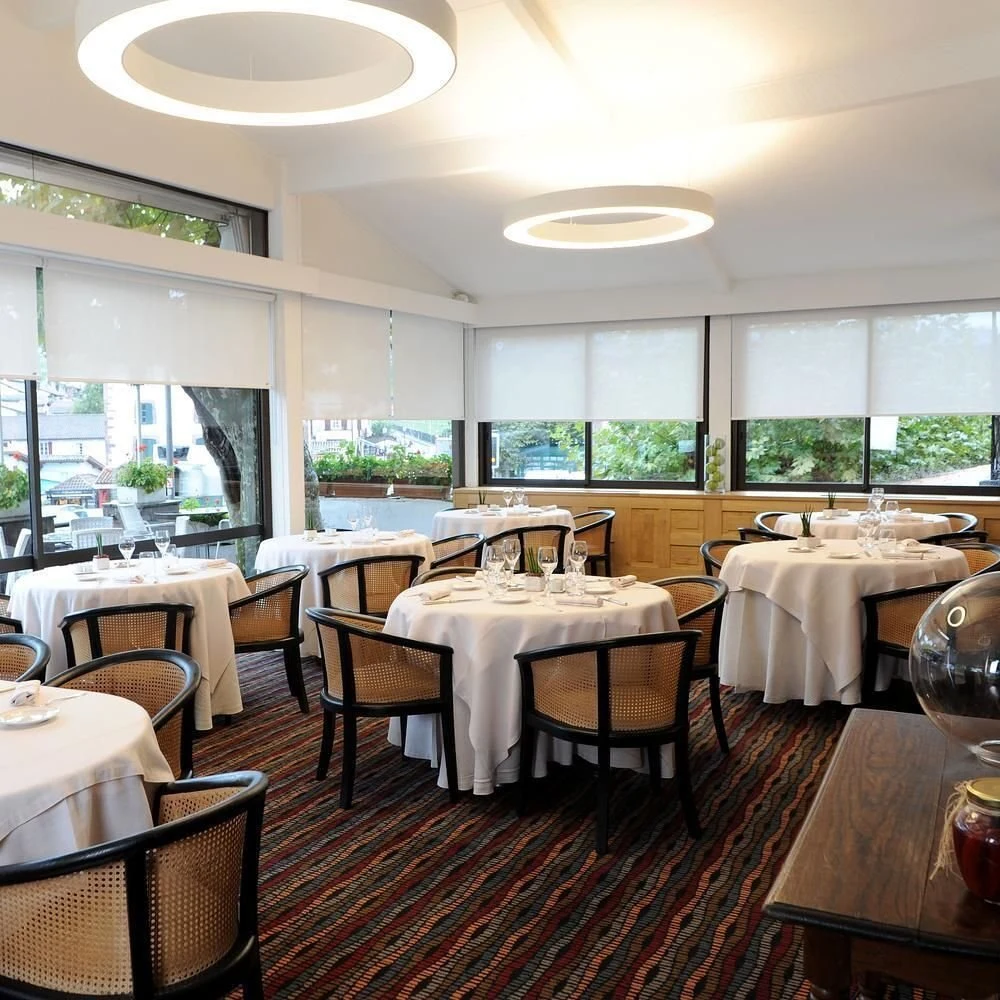
The room keeps its heritage visible in classic decor, crisp starched linens, comfortable chairs, and a kind of quiet that lets service set the pace. Saint-Jean-Pied-de-Port brings its own traffic, with pilgrims, hotel guests, and diners bound for the Pyrénées all passing through the town, but the restaurant does not lean on bustle. The service is relaxed and refined, a useful combination when the cooking depends on restraint. Local wines carry the beverage program, with French bottles beyond the region when the dish asks for another register. In that setting, the pass feels less like a stage than a continuation of the house: family, kitchen, dining room, and cellar held in the same rhythm.
A house measured by continuity
Les Pyrénées matters because its modern Basque cooking has not been separated from the family structure that made it. Philippe has called it “a work of depth, a beautiful complementarity, a beautiful family story.” End on the plate, and the story is still specific: Croustillant de Bleu Basque, carré d’agneau rôti, saumon sauvage grillé.
Questions
Frequently asked
Who cooks at Les Pyrénées?
Philippe Arrambide is the chef at Les Pyrénées in Saint-Jean-Pied-de-Port. The restaurant has been in the Arrambide family since 1939 and is now in its fourth generation.
What kind of cooking does the restaurant serve?
The kitchen serves modern Basque French cooking built from regional products such as duck foie gras, milk-fed lamb from the Pyrénées, line-caught hake, asparagus, sheep’s cheese, black cherry, and passion fruit.
What are some dishes associated with the menu?
Dishes named for the restaurant include foie gras de canard, agneau de lait des Pyrénées, and a hot passion fruit soufflé. Line-caught hake with green asparagus and crisp spelt risotto, and roast lamb or wild salmon as part of the cooking.
What is the atmosphere like?
The dining room keeps a classic feel with starched linens, comfortable chairs, and a quiet setting. Service is described as relaxed and refined.
What should a visitor know before booking?
Reservations are recommended. The restaurant is in Saint-Jean-Pied-de-Port, at 19 Plāce Chārles de Gāulle, and the dress code is smart casual.
The field
How it compares
| Place | Cuisine | Notes | Awards |
|---|---|---|---|
| Les Pyrénées | Modern Basque French | Saint-Jean-Pied-de-Port, $$$ | · |
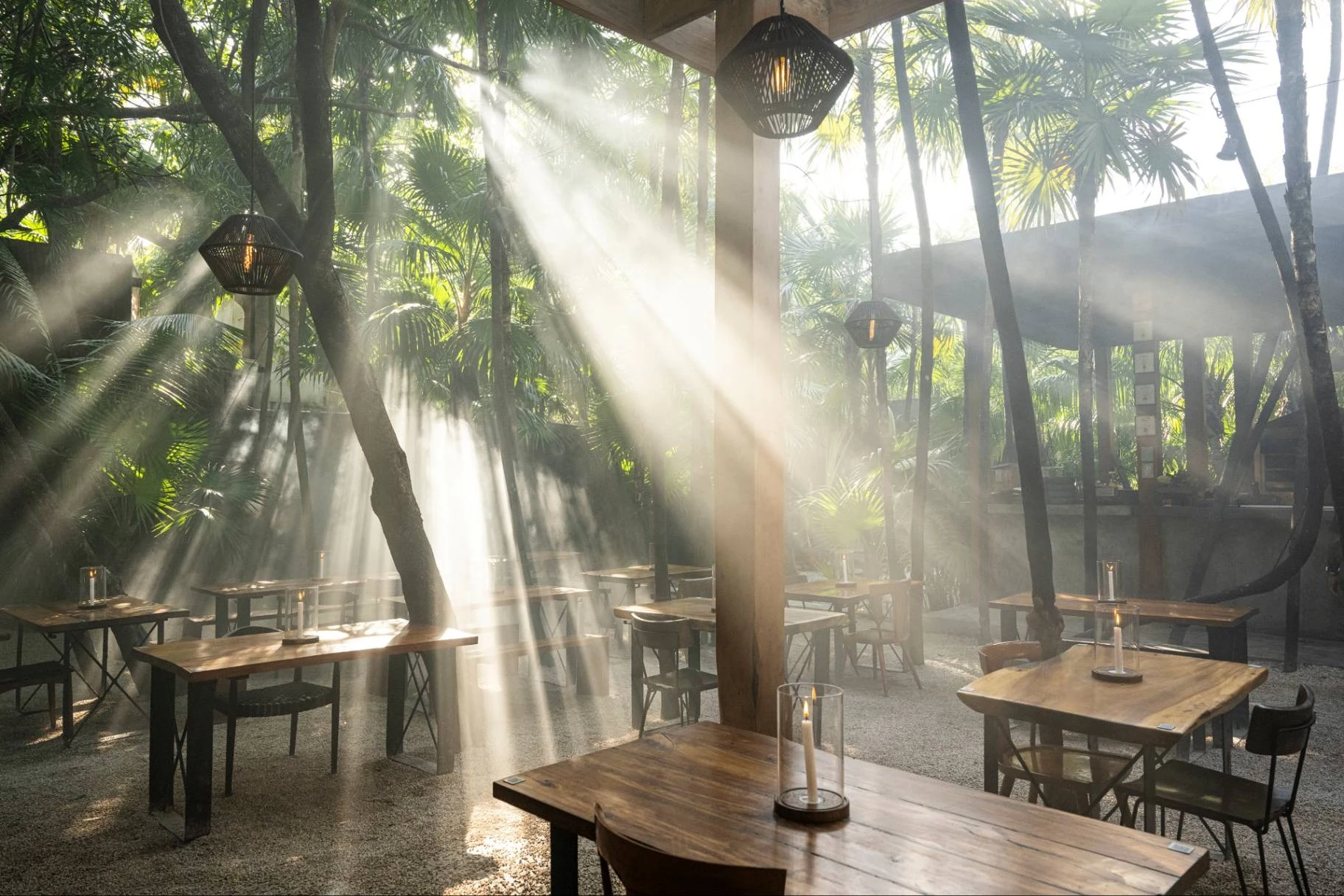
| Arca | Modern Yucatan Fire-Cooked Small Plates | Tulum | World's 50 Best |
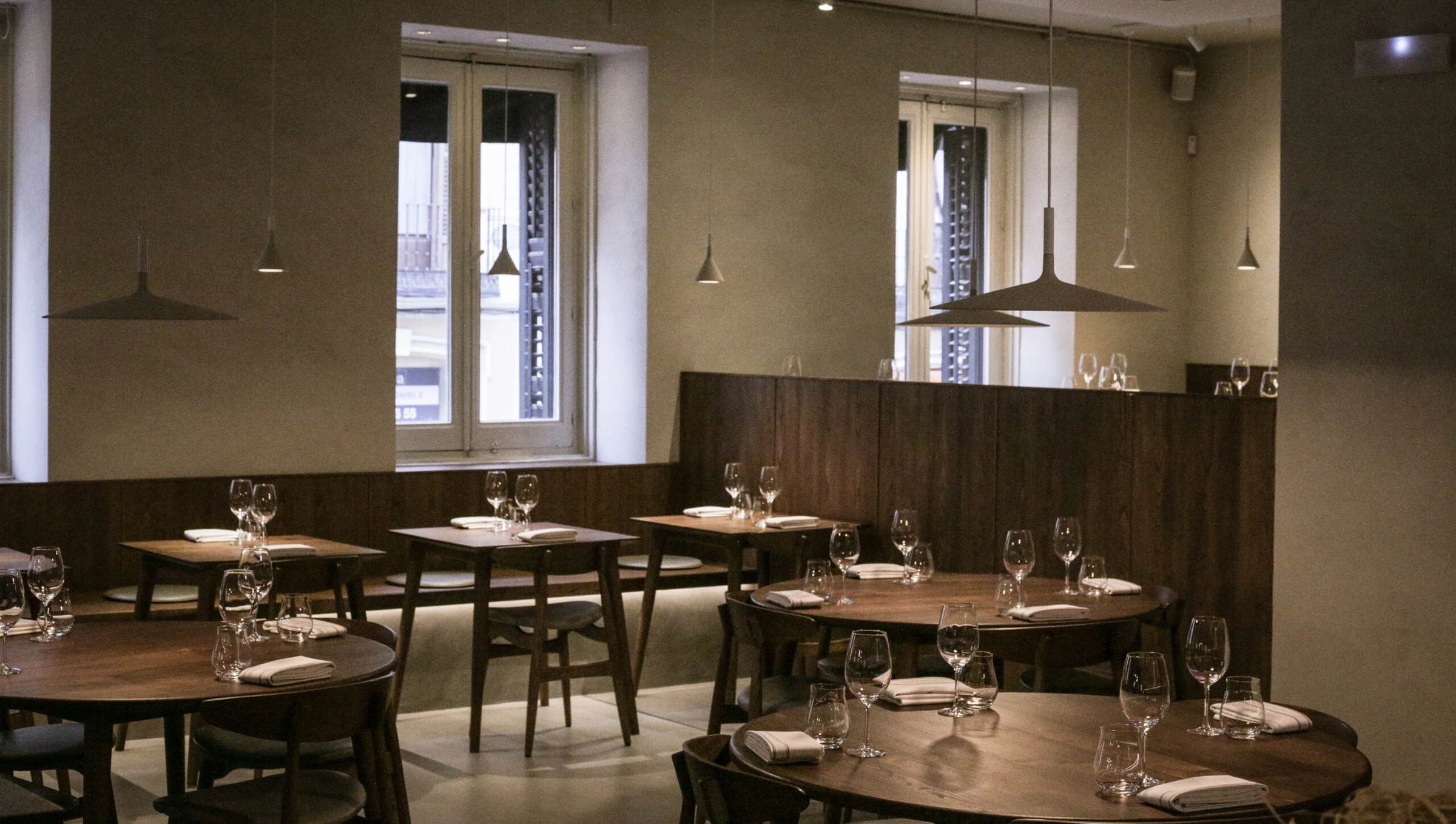
| DSTAgE | Avant-Garde Spanish Tasting Menus | Madrid | Michelin 2 Stars |
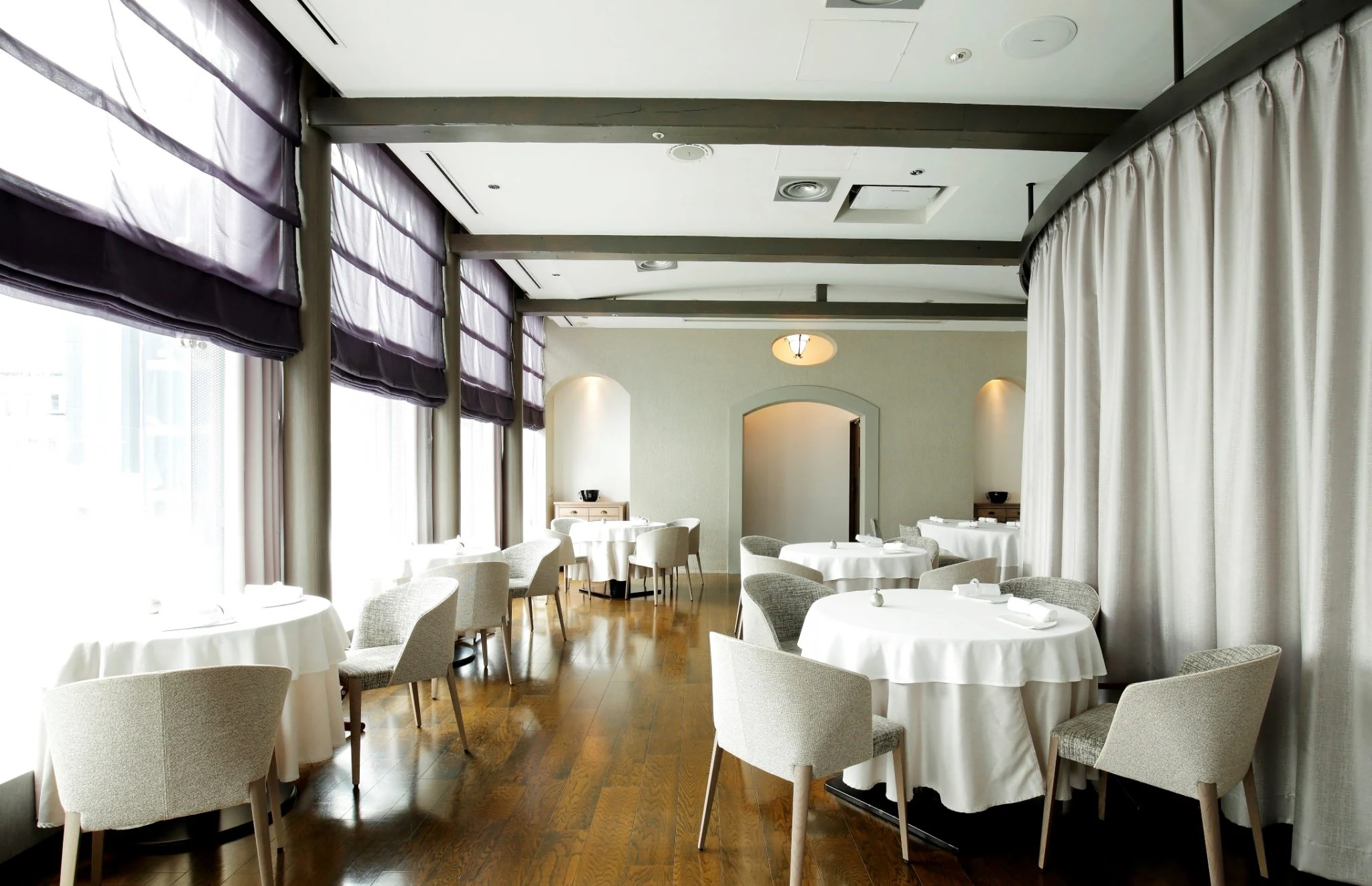
| ESqUISSE | Modern French with Japanese Influences | Tokyo | Michelin 2 Stars, World's 50 Best |
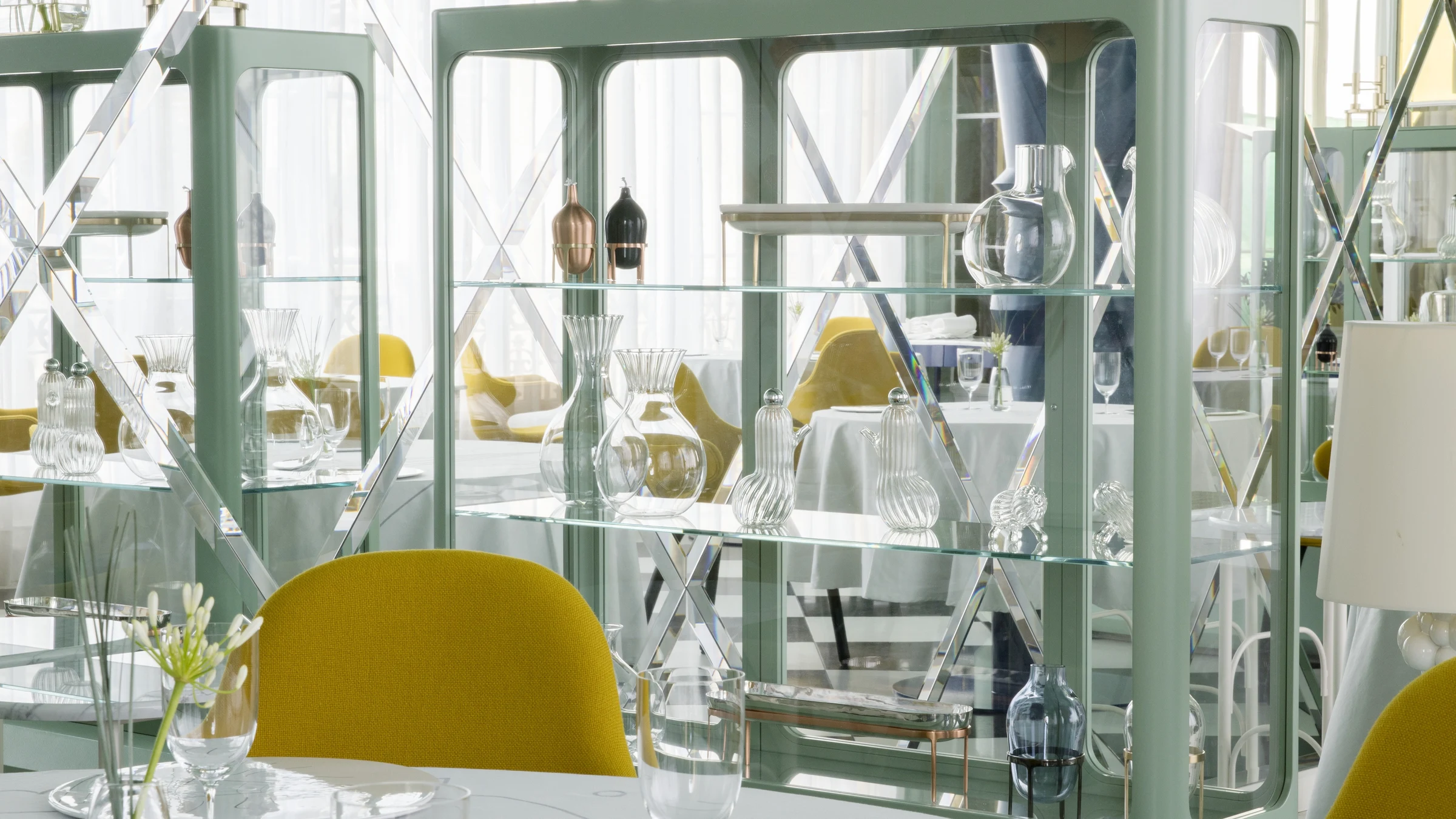
| Paco Roncero | Avant-Garde Spanish Fine Dining | Madrid | Michelin 2 Stars |
| Sorn | Fine Southern Thai | Bangkok | Michelin 3 Stars, World's 50 Best |
| Tantris | Modern French Fine Dining | Munich | Michelin 2 Stars, World's 50 Best |
In residence
Similar places
Modern Yucatan Fire-Cooked Small Plates
Arca
Tulum, Mexico
50 Best
Avant-Garde Spanish Tasting Menus
DSTAgE
Madrid, Spain
★★
Modern French with Japanese Influences
ESqUISSE
Tokyo, Japan
★★ · 50 Best
Avant-Garde Spanish Fine Dining
Paco Roncero
Madrid, Spain
★★
Fine Southern Thai
Sorn
Bangkok, Thailand
★★★ · 50 Best
Modern French Fine Dining
Tantris
Munich, Germany
★★ · 50 Best