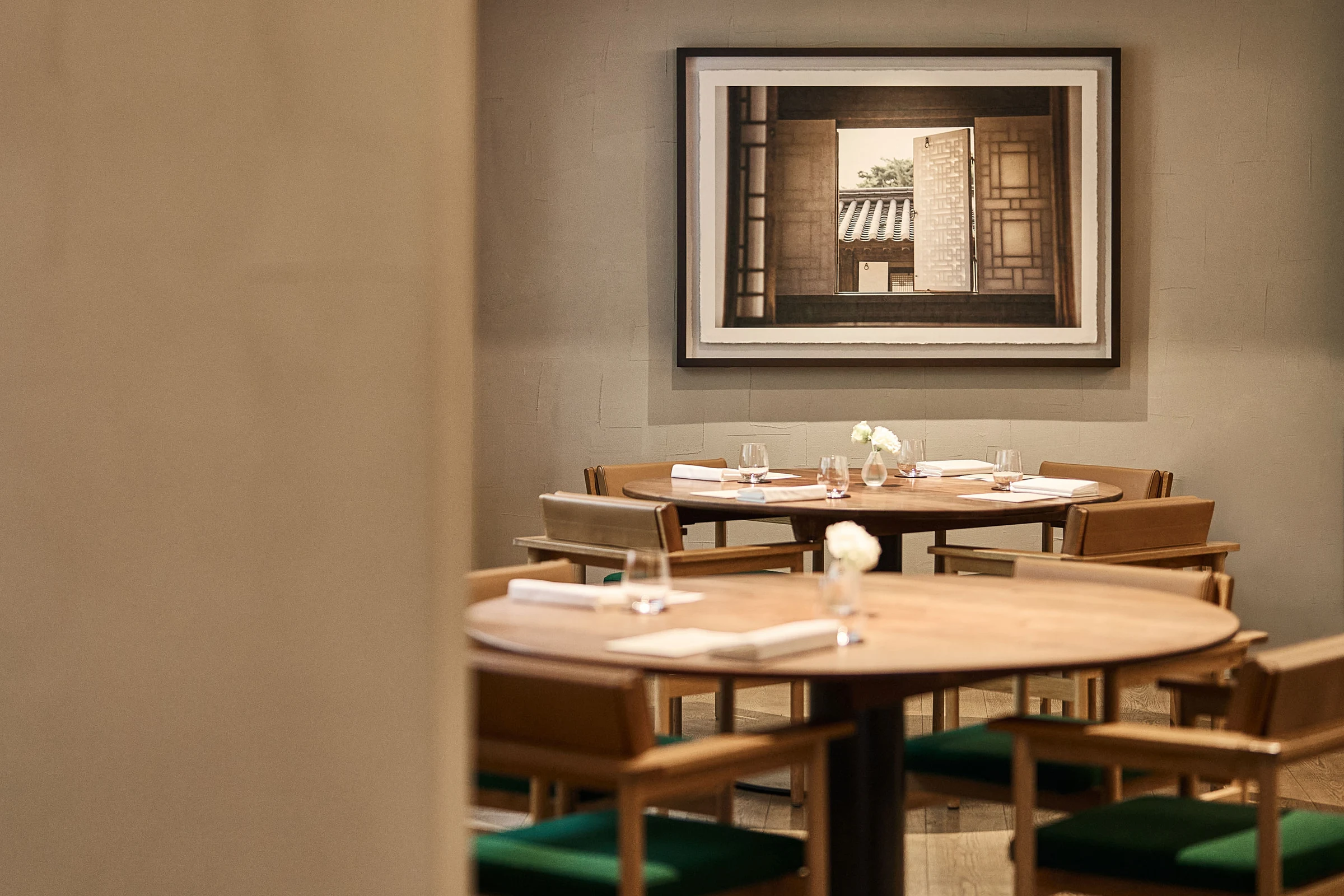
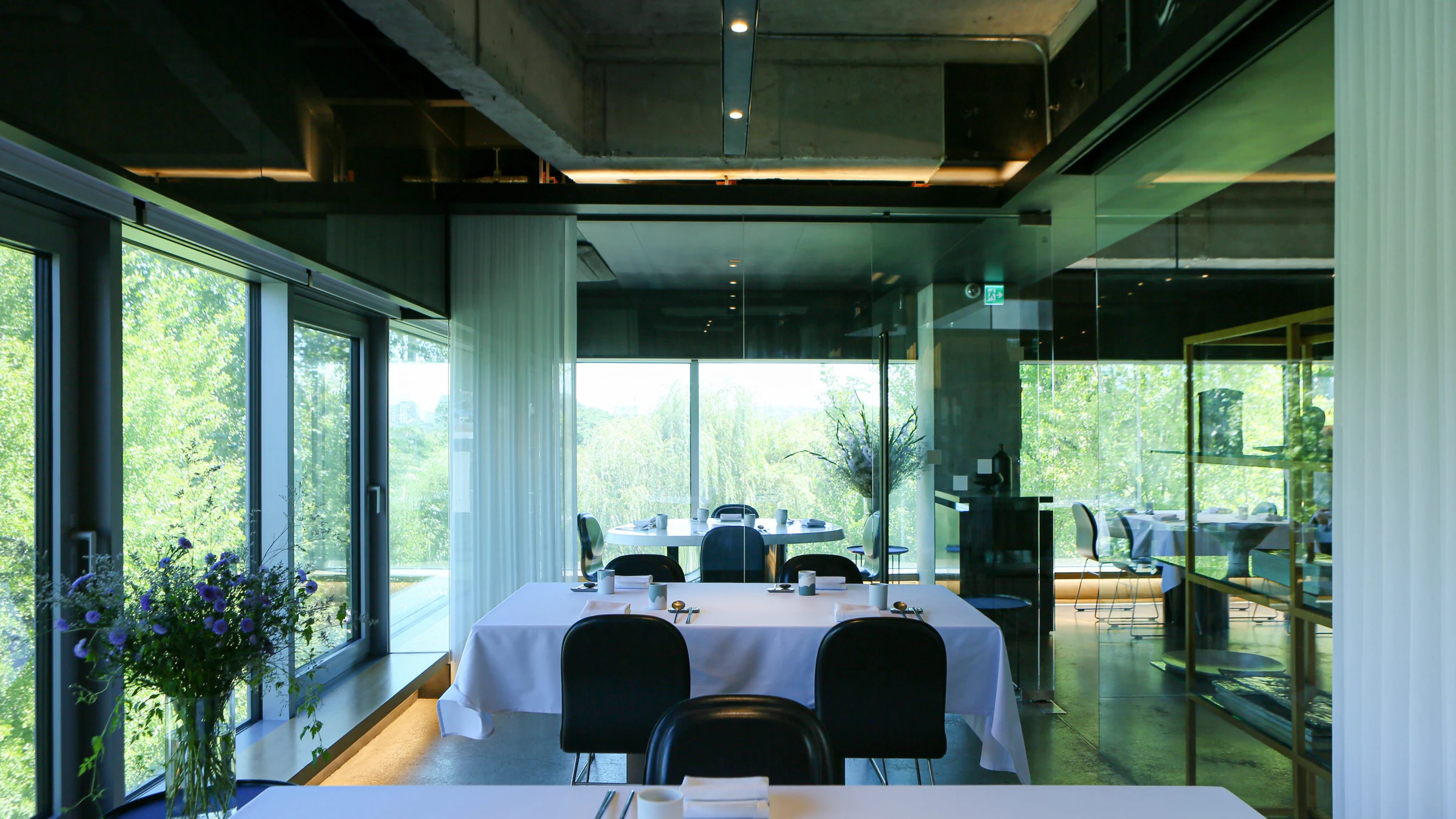
Légume

In Residence
Siwoo Sung
Chef
- 01CuisineContemporary Vegan Fine Dining
- 02CitySeoul, South Korea
- 03RecognitionOne Michelin Star
- 1 Michelin Star · Michelin Guide
- Opinionated About Dining Top Restaurants in Asia Recommended · 2026
- We're Smart World Top 100 #52 · 2025
- We're Smart World 5 Radishes · 2025
- Michelin 1 Star · 2025
- The Best Chef One Knife · 2025
- Michelin 1 Star · 2024
Where Korean Vegetables Become the Argument
Gangnam-daero is not the address you associate with austere, produce-led dining. The avenue runs thick with corporate restaurants, high-volume Korean barbecue, and the kind of polished international formats that Gangnam has imported and refined over two decades. Légume, at number 652, sits inside that context as a deliberate counter-statement: a Michelin-starred, fully plant-based restaurant in Seoul's Gangnam District.
That argument has earned recognition from two separate credentialing bodies. The restaurant holds a Michelin star as of the 2024 Guide Seoul, placing it in a small cohort of plant-forward addresses with formal Michelin recognition in Asia. It also carries a five-radish rating from We're Smart, the Belgium-based organisation that evaluates restaurants on plant-based cooking specifically, covering ecological approach, seasonality, creative range, and flavour depth. South Korea's first five-radish designation landed at Légume, which positions the kitchen not just as a local outlier but as a reference point in a growing international conversation about plant-based fine dining.
Korean Vegetable Culture and Why It Matters Here
To understand what Légume is doing, it helps to understand what Korean cuisine has always done with vegetables. Banchan, the small side dishes that frame a Korean meal, represent one of the most sophisticated vegetable-preparation traditions in East Asia: fermented, pickled, braised, dried, and raw preparations served simultaneously, each tuned to different textural and flavour registers. Temple food, codified across Buddhist monasteries from Seoraksan to Baegyangsa Temple in Jangseong-gun, has operated as a fully vegan culinary tradition for centuries, with its own logic of restraint, umami depth through fermentation, and seasonal discipline.
What contemporary restaurants like Légume are doing is distinct from that monastic tradition, though it draws on the same underlying knowledge base. The approach is secular, technically ambitious, and framed through a fine dining lens that prioritises presentation, progression, and originality alongside flavour. Chef Siwoo Sung, now designated as a We're Smart ambassador for the movement, has developed a kitchen identity that pulls from Korean vegetable culture while applying the kind of composed, course-by-course architecture that Michelin evaluators recognise. The result is a menu that reads as Korean in its material but contemporary in its structure, a combination that Seoul's dining scene has produced across several cuisines but rarely in a purely vegan format.
Where Légume Sits in Seoul's Fine Dining Tier
Seoul's credentialed dining scene has expanded rapidly since the Michelin Guide arrived in the city in 2017. The upper tier now includes multi-starred Korean fine dining addresses like Gaon and contemporary formats such as Jungsik, alongside tasting-menu-led rooms like Mingles. Within Gangnam specifically, addresses like 권숙수 (Kwon Sook Soo) operate at the upper end of the Korean fine dining register.
Légume's price tier, marked at ₩₩, is notably lower than many of these comparators, several of which sit at ₩₩₩₩. That gap is meaningful. Plant-based sourcing at high quality does not carry the same cost structure as premium seafood or aged beef, and a kitchen that has chosen to work exclusively within that ingredient set can pass some of that differential to the guest.
That positioning makes it relevant both to guests with plant-based commitments and to those with none. The We're Smart citation specifically notes that the kitchen's output appeals beyond a vegetarian audience, which aligns with the broader pattern visible at leading plant-based fine dining rooms internationally. Seven Swans in Frankfurt, Plates in London, and KLE in Zurich have each demonstrated that a plant-only kitchen can hold a mixed clientele when the technical level is high enough to make the absence of meat irrelevant rather than conspicuous.
The Creative and Ecological Logic of Five Radishes
We're Smart's five-radish standard requires that a restaurant satisfy criteria across five dimensions: ecological responsibility, seasonal sourcing, creative approach beyond the conventional, visual and flavour range, and what the organisation describes as plant-based flavour intensity. The combination is more demanding than a single sustainability certification because it evaluates culinary output alongside environmental practice.
Légume's citation language references ecology and seasonality alongside creativity and flavour density. That framing suggests a kitchen operating with ingredient traceability and sourcing discipline, not merely presenting vegetables with sophisticated technique. The distinction matters in Seoul, where supply chains for high-quality Korean produce have become more traceable as the fine dining sector has grown, but where rigorous ecological sourcing remains less common than in, say, Copenhagen or the Nordic markets where vegetable-forward fine dining first developed institutional frameworks.
Seoul's contemporary dining scene offers other points of reference for produce-led thinking. alla prima operates with an ingredient-focused approach in an innovative format, while Gosari Express draws on Korean mountain vegetable traditions in a different register. ALT.a represents another angle on contemporary Seoul dining with strong ingredient convictions. None of these, however, operate within a fully vegan framework at Michelin-recognised level, which is the space Légume has established for itself.
Gangnam as Context, Not Backdrop
The Gangnam District address is worth considering beyond its postcode significance. Gangnam has historically been Seoul's wealthiest residential and commercial zone, and its restaurants have tended to follow commercial logic: high-spend protein-led Korean cuisine, luxury Japanese formats, and international fine dining. The emergence of a plant-based kitchen with dual credentialing from Michelin and We're Smart in this neighbourhood signals something about where the city's affluent dining audience is heading, or at least where a portion of it has arrived.
That shift tracks with a broader pattern across East Asian dining capitals. Tokyo has seen plant-forward tasting menus gain traction at high price tiers. Hong Kong has watched vegan fine dining move from fringe to recognised category over the past five years. Seoul, with its deep fermentation heritage and vegetable knowledge base, is arguably better positioned than either city to produce genuinely rooted plant-based fine dining rather than imported formats applied locally. Légume, as the first five-radish restaurant in South Korea and a Michelin-starred kitchen at a mid-range price point, is currently the clearest expression of that potential.
Know Before You Go
- Address: 652 Gangnam-daero, Gangnam District, Seoul, South Korea
- Cuisine: 100% plant-based vegan, contemporary Korean structure
- Price tier: ₩₩ (mid-range relative to Michelin-starred Seoul peers)
- Awards: Michelin 1 Star (2024 Guide Seoul); We're Smart 5 Radishes (first in South Korea)
- Chef: Siwoo Sung, We're Smart ambassador
- Booking: Essential
- Dietary notes: Fully vegan kitchen; suitable for plant-based diets by design rather than accommodation
Questions
Frequently asked
What recognition does Légume hold?
Légume holds 1 Michelin star.
Who works at Légume?
Made By profiles Siwoo Sung (Chef) at Légume.
How expensive is Légume?
Légume is listed at a price level of $$$$.
Where is Légume and what does it serve?
Légume is in 잠원동, Seoul, serving Contemporary Vegan Fine Dining.
The field
How it compares
| Place | Awards | Cuisine | Notes |
|---|---|---|---|
| Légume | Michelin 1 Star | Contemporary Vegan Fine Dining | 잠원동, $$$$ |
| alla prima | Michelin 2 Stars, World's 50 Best | Modern Fusion Fine Dining | Seoul |
| Eatanic Garden | Michelin 1 Star, World's 50 Best | Modern Korean Contemporary | Seoul |
| Evett | Michelin 2 Stars | Modern Innovative Korean | Seoul |
| Jungsik | Michelin 2 Stars, World's 50 Best | Modern Korean Fine Dining | Seoul |
| Mingles | Michelin 3 Stars, World's 50 Best | Modern Korean Fine Dining | Seoul |
| Onjium | Michelin 1 Star, World's 50 Best | Modern Korean Royal Court Cuisine | Seoul |
In residence
Similar places
Modern Fusion Fine Dining
alla prima
Seoul, South Korea
★★ · 50 Best
Modern Korean Contemporary
Eatanic Garden
Seoul, South Korea
★ · 50 Best
Modern Innovative Korean
Evett
Seoul, South Korea
★★
Modern Korean Fine Dining
Jungsik
Seoul, South Korea
★★ · 50 Best
Modern Korean Fine Dining
Mingles
Seoul, South Korea
★★★ · 50 Best
Modern Korean Royal Court Cuisine
Onjium
Seoul, South Korea
★ · 50 Best